
This site Sexual Congress has nothing to do with political scandals; it is rather like a "hot or not" site where you will be shown two members of the US Congress, and you decide who is the sexier of the two. Politicians should be able to handle the scrutiny, if anyone can. You may choose to vote for men only, or women only, or skip to the current standings. The current leaders are Mary Bono Mack of California's 45th district and Aaron Schock of Illinois' 18th district, both Republicans. Link -via b3ta
Miss Cellania's Blog Posts

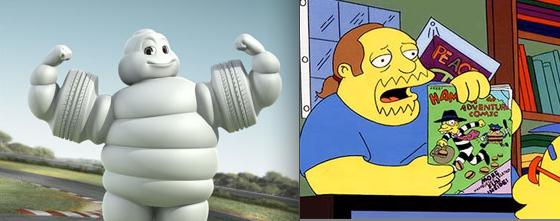
You know them, you love them (at least some of them), but you might not know that Captain Crunch, The Comic Book Guy, Mr. Clean, the Michelin Man, and the patient in the game Operation all have given names. It's true! Mental_floss dug them up, along with lots of other fictional characters with full names, just so you'll know. Link
With nothing more than his trusty Swiss Army knife, some duct tape, and a wad of gum, MacGyver can make his way out of any predicament ...or can he? It's time to fact-check the 1980s icon and his most outrageous escape tricks.
FLYING OUT OF A CUCKOO'S NEST
Episode: "A Prisoner of Conscience" Season 1, episode 21
Sticky Situation: MacGyver is locked in a mental ward, with only a lamp and a bunch of patients.
MacGyverism: In a flash of brilliance, Mac smashes the lamp's light bulb and pulls out the tungsten filament. He then uses the metal strip to pick the lock and make his escape.
Plausibility Meter: **** High. MacGyver moves too fast, though. While out tech-savvy hero picks the lock in about ten seconds, it took the Discovery Channel's Mythbusters, Adam Savage and Jamie Hyneman, more than 50 minutes to pull off the same stunt.
Also, for the trick to work, you need an incandescent bulb, which produces visible light by heating metal filaments with electricity. Modern compact fluorescent bulbs don't have filaments. Instead, they use electricity to excite a gas to produce ultraviolet light that's invisible to the eye. In fact, the UV is only turned into visible light thanks to a special coating on the bulb.
Best for: Dexterous mental patients.
BUILDING AN AIRPLANE OUT OF BAMBOO
Episode: "Legend of the Holy Rose" Season 5, Episode 1
Sticky Situation: MacGyver gets trapped on a construction site in Colombia while trying to rescue an injured American hostage. They both need out-pronto!
MacGyverism: In just four hours, Mac constructs an airplane out of bamboo, some trash bags, a wheelbarrow, duct tape, and the engine of a cement-mixer. Inexplicably sporting a Rambo-style headband throughout the adventure, Mac pilots his makeshift airplane away from the bad guys, soaring off a cliff to freedom with his injured friend in tow.
Plausibility Meter: *** Moderate. Mythbusters tried this one, too, and it took them three days to build their makeshift plane. (Even then, it crashed after takeoff.) That said, Mac has history on his side. Bamboo aircraft exist, and they don't require much in the way of modern technology. Way back in 1907, Brazilian aviator Alberto Santos-Dumont unveiled a 300-pound ultralight airplane made of bamboo. He christened it Demoiselle, French for "Damselfly".
Best for: Mechanics with a lot of time and bamboo on their hands.
TEARING DOWN THE WALLS OF SCIENCE
Episode: "Pilot" Season 1, Episode 1
Sticky Situation: While trying to rescue two scientists from a metallurgy lab, MacGyver finds himself blocked by a wall. He needs to blow through it in a hurry, because a missile is going to strike in five minutes! Luckily, he's got lots of laboratory-grade metal on hand.
MacGyverism: Mac creates a bomb by putting sodium metal inside a gel-cap and then immersing it in a bottle of water. When the gel-cap melts, the highly volatile sodium reacts with the water, blowing a hole right through the wall.
Plausibility Meter: * Low. You may remember from high school chemistry class that sodium in an alkali metal. That means it will react violently with water to release hydrogen and heat. The chemistry is accurate, but in MacGyver's case, the explosion would have been way too small to break through any sort of real wall.
Best for: Escaping from a paper bag.
JUMPING OUT OF A PLANE (IN A CAR)
Episode: "The Heist" Season 1, Episode 5
Sticky Situation: A diamond-mogul villain has captured Mac and his most recent love interest in the cargo hold of an airplane. The villain cackles, "Take it up to 30,000 feet. The lack of oxygen will kill 'em!"
MacGyverism: Conveniently, the cargo hold also contains a sports car and a comically oversized parachute. Mac attaches the parachute to the roadster (with its top down, of course), and then drives the car out of the airplane. The parachute releases just when oxygen levels are high enough to breathe. While gently floating to the ground, Mac makes out with his girlfriend and the credits roll.
Plausibility Meter: ***** Surprisingly high. First of all, the bad guy knows his science. At 30,000 feet, humans aren't getting enough oxygen and can suffer from hypoxia, a medical condition that can have fatal results. Climbers trying to reach the top of Mt. Everest (summit: 29,029 feet) often succumb to hypoxia, and that's after they've had days to acclimatize.
As for the parachute with the car, let's run the numbers. A sports car plus two passengers will add up to about 1.4 tons, and a large cargo parachute can easily handle two tons if dropped from that height. MacGyver and his lady friend can even put on a few pounds and still make the thing work.
Best for: Lovers.
Don't forget to feed your brain by subscribing to the magazine and visiting mental_floss' extremely entertaining website and blog today for more!

FLYING OUT OF A CUCKOO'S NEST
Episode: "A Prisoner of Conscience" Season 1, episode 21
Sticky Situation: MacGyver is locked in a mental ward, with only a lamp and a bunch of patients.
MacGyverism: In a flash of brilliance, Mac smashes the lamp's light bulb and pulls out the tungsten filament. He then uses the metal strip to pick the lock and make his escape.
Plausibility Meter: **** High. MacGyver moves too fast, though. While out tech-savvy hero picks the lock in about ten seconds, it took the Discovery Channel's Mythbusters, Adam Savage and Jamie Hyneman, more than 50 minutes to pull off the same stunt.
Also, for the trick to work, you need an incandescent bulb, which produces visible light by heating metal filaments with electricity. Modern compact fluorescent bulbs don't have filaments. Instead, they use electricity to excite a gas to produce ultraviolet light that's invisible to the eye. In fact, the UV is only turned into visible light thanks to a special coating on the bulb.
Best for: Dexterous mental patients.
BUILDING AN AIRPLANE OUT OF BAMBOO

Episode: "Legend of the Holy Rose" Season 5, Episode 1
Sticky Situation: MacGyver gets trapped on a construction site in Colombia while trying to rescue an injured American hostage. They both need out-pronto!
MacGyverism: In just four hours, Mac constructs an airplane out of bamboo, some trash bags, a wheelbarrow, duct tape, and the engine of a cement-mixer. Inexplicably sporting a Rambo-style headband throughout the adventure, Mac pilots his makeshift airplane away from the bad guys, soaring off a cliff to freedom with his injured friend in tow.
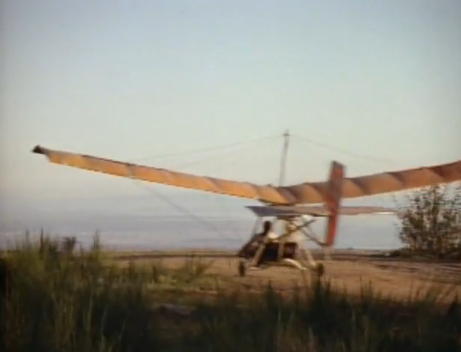
Plausibility Meter: *** Moderate. Mythbusters tried this one, too, and it took them three days to build their makeshift plane. (Even then, it crashed after takeoff.) That said, Mac has history on his side. Bamboo aircraft exist, and they don't require much in the way of modern technology. Way back in 1907, Brazilian aviator Alberto Santos-Dumont unveiled a 300-pound ultralight airplane made of bamboo. He christened it Demoiselle, French for "Damselfly".
Best for: Mechanics with a lot of time and bamboo on their hands.
TEARING DOWN THE WALLS OF SCIENCE
Episode: "Pilot" Season 1, Episode 1
Sticky Situation: While trying to rescue two scientists from a metallurgy lab, MacGyver finds himself blocked by a wall. He needs to blow through it in a hurry, because a missile is going to strike in five minutes! Luckily, he's got lots of laboratory-grade metal on hand.
MacGyverism: Mac creates a bomb by putting sodium metal inside a gel-cap and then immersing it in a bottle of water. When the gel-cap melts, the highly volatile sodium reacts with the water, blowing a hole right through the wall.
Plausibility Meter: * Low. You may remember from high school chemistry class that sodium in an alkali metal. That means it will react violently with water to release hydrogen and heat. The chemistry is accurate, but in MacGyver's case, the explosion would have been way too small to break through any sort of real wall.
Best for: Escaping from a paper bag.
JUMPING OUT OF A PLANE (IN A CAR)
Episode: "The Heist" Season 1, Episode 5

Sticky Situation: A diamond-mogul villain has captured Mac and his most recent love interest in the cargo hold of an airplane. The villain cackles, "Take it up to 30,000 feet. The lack of oxygen will kill 'em!"
MacGyverism: Conveniently, the cargo hold also contains a sports car and a comically oversized parachute. Mac attaches the parachute to the roadster (with its top down, of course), and then drives the car out of the airplane. The parachute releases just when oxygen levels are high enough to breathe. While gently floating to the ground, Mac makes out with his girlfriend and the credits roll.
Plausibility Meter: ***** Surprisingly high. First of all, the bad guy knows his science. At 30,000 feet, humans aren't getting enough oxygen and can suffer from hypoxia, a medical condition that can have fatal results. Climbers trying to reach the top of Mt. Everest (summit: 29,029 feet) often succumb to hypoxia, and that's after they've had days to acclimatize.
As for the parachute with the car, let's run the numbers. A sports car plus two passengers will add up to about 1.4 tons, and a large cargo parachute can easily handle two tons if dropped from that height. MacGyver and his lady friend can even put on a few pounds and still make the thing work.
Best for: Lovers.
________________________________
The MacGyver Fact-Check was written by Chris Higgins and appeared in the Scatterbrained section of the September-October 2008 issue of mental_floss magazine. It is reprinted here with permission.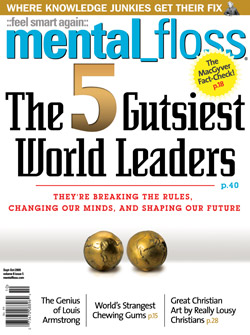
Don't forget to feed your brain by subscribing to the magazine and visiting mental_floss' extremely entertaining website and blog today for more!
Wired has a roundup of eleven of the strangest military programs you can imagine. Man made northern lights? Psychics? Nuclear weapons launched from a backpack? They're all here, including the plan to use bats in warfare.
The bats eventually had a successful test, although the bats themselves wouldn't consider it so. Link -via Digg
(Image credit: Flickr user Furryscaly)
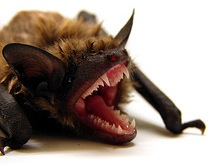
Toward the end of World War II, the Air Force was looking for a better way to burn Japanese cities to the ground. A dental surgeon contacted the White House, and suggested strapping small incendiary devices to bats, loading them into cages shaped like bombshells and dropping them over a wide area.
According to the plan, millions of bats would escape from the bombshells as they parachuted toward earth, and the flying mammals would find their way into the attics of barns and factories, where they would rest until the charges they were carrying exploded. In the early 1940s, a test with some armed bats went awry, and they set fire to a small Air Force base in Carlsbad, New Mexico.
The bats eventually had a successful test, although the bats themselves wouldn't consider it so. Link -via Digg
(Image credit: Flickr user Furryscaly)
You know how your Mom always said, "If your friends all jumped off a cliff, would you jump, too?" Apparently, the dinosaurs did just that. The Film Board of Canada presents this charming 1995 film by Munro Ferguson. Not intended for use as a science lesson. -via Everlasting Blort
To fill time while they waited for an appearance on The Jack Paar Program in 1964, Jim Henson, Frank Oz, Don Sahlin and Jerry Juhl decorated some pipes in their dressing room. They left a note that said, "With love, from the Muppets." It was just a spur-of-the-moment prank, and Paar mentioned they would be painted over the next day. But the pipes remained as they were for 46 years. Read the rest of the story at Muppet Wiki. Link -via Metafilter

Wildlife experts have found that perfumes made for humans can attract wild animals. Zoos use this knowledge to encourage big cats to explore their habitats. Researchers use perfume to "bait" camera traps, so they can photograph and identify a variety of species. The most successful scent found so far is Obsession For Men. Calvin Klein must be proud! Link -via Everlasting Blort

Dogs have contributed to our scientific knowledge in many ways, from the dog who sniffs out cancer to the Soviet space dog to prehistoric canine fossils. Pictured is Snuppy, the first ever cloned dog, beside his older, genetically identical progenitor.
Read about the other nine top science dogs in this slide show at Scientific American. Link -via Digg

The scientific breakthrough, led by biomedical scientist Woo Suk Hwang (who was later dismissed from the university for fabricating data on cloning human stem cells), was as laborious as Snuppy was adorable. Snuppy the puppy marked the single success out of 123 attempts spanning three years. Since then the gangly puppy has sired nine puppies of his own with two cloned females, marking the first successful breeding between clones.
Read about the other nine top science dogs in this slide show at Scientific American. Link -via Digg
Quick! How many stars are on this flag? No, it's not the American flag we use now, but a pattern with 51 stars, which will be needed if Puerto Rico becomes a state. Mathematician Skip Garibaldi worked out the most geometric layouts that will accommodate more stars if the flag has to be updated if and when states join the union. Slate posted an interactive flag calculator, in which you can enter a number of states, from one to a hundred stars, and see the best pattern according to a computer program Garibaldi created. Some numbers have more than one pattern, with up to six styles. Read all about it in this article from Chris Wilson at Slate. Link

What's this for? I don't know! Ain't it cool, though? Still, it might be better with some music. -via Gorilla Mask
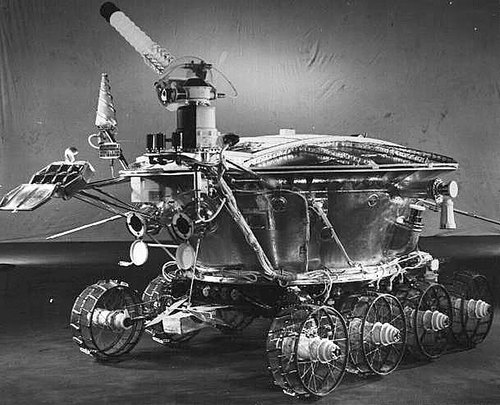
In 1970, during the Luna 17 mission, the Soviet space program landed the first ever remote-controlled vehicle on the moon. Lunokhod 1 spent eleven months taking pictures of the moon's surface, and sent back about 20,000 images. It stopped communicating with the earth in 1971. Fast-forward 40 years, and read about how a new use has been found for Lunokhod 1 at the blog Starts With A Bang! Link
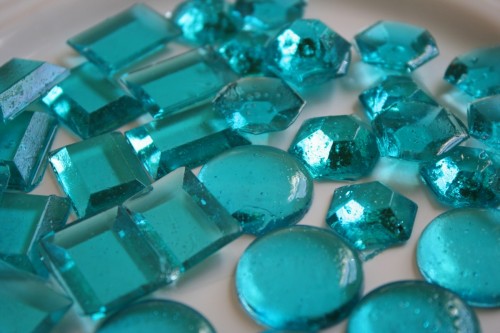
Think of them as edible rhinestones, or maybe lollipops without sticks. Chica and Jo not only have the recipe and step-by-step illustrated instructions for making hard candy jewels, but also warnings about what could go wrong and why. The results are lovely bright colored hard candies folks won't believe you made yourself! Link -via Evil Mad Scientist Laboratories
(vimeo link)
Oxygen tries to make friends with other elements, with varying results. This animation was Christopher Hendryx's senior project a year ago at the Ringling College of Art + Design. -via Metafilter
Yang Liwei became China's first astronaut when he orbited the earth in 2003. Cameras were rolling as Yang emerged smiling from the space capsule after his landing. It appeared to be a perfect mission. But was it?
Xia's account of the space mission agrees with astronaut Yang's story in his new autobiography of how he suffered injuries during the flight. Xia's lecture, which covered other news stories and how they were altered for the public, was posted on many Chinese websites and quickly deleted by authorities. Link -via Fark
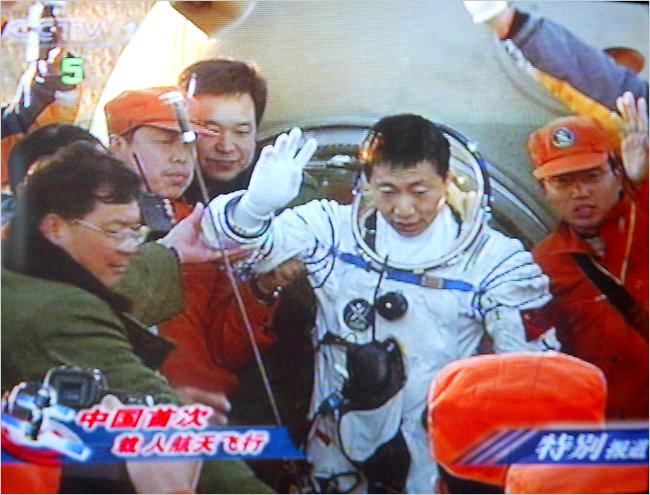
In a lecture he gave to a group of journalism students last month, a top official at Xinhua, the state news agency, said that the mission was not so picture-perfect. The official, Xia Lin, described how a design flaw had exposed the astronaut to excessive G-force pressure during re-entry, splitting his lip and drenching his face in blood. Startled but undaunted by Mr. Yang’s appearance, the workers quickly mopped up the blood, strapped him back in his seat and shut the door. Then, with the cameras rolling, the cabin door swung open again, revealing an unblemished moment of triumph for all the world to see.
Xia's account of the space mission agrees with astronaut Yang's story in his new autobiography of how he suffered injuries during the flight. Xia's lecture, which covered other news stories and how they were altered for the public, was posted on many Chinese websites and quickly deleted by authorities. Link -via Fark
Email This Post to a Friend