After an introduction by Ernie Kovacs, Richard Valentine Pitchford ("Cardini") performs the "intoxicated English gentleman" routine that made him famous. This recording from the "Festival of Magic" television program in 1957 is the only known footage of Cardini in action. He reportedly developed his ability to manipulate cards with gloved hands by practicing while in the trenches during WWI.
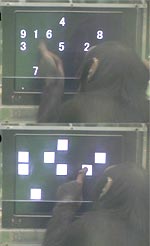
Studies performed at Kyoto University suggest that young chimpanzees have memory skills better than those of adult humans.
When they touched the first digit, the others were replaced with white squares, and they had to rely on their memory to press the right sequence. The young chimps took to this task particularly well and amazingly, they finished the task more quickly than human adults...
When the numbers were flashed for two thirds of a second, Ayumu's skills were the equal of 6 university students who pressed the right sequence 80% of the time. If the numbers were displayed for just a fifth of a second, the students couldn't cope. They didn't have enough time to make a single saccade, the small eye flickers that we make when we scan a page or image. Without the luxury of exploring the screen, the students only answered accurately 40% of the time. Ayumu, on the other hand, wasn't fazed and maintained his earlier high scores.
The researchers also postulate that human children may have similar eidetic abilities when they are very young, but lose this capacity by the time they finish school. Or something like that - I can't remember.
From the British Film Institute Archive comes this first-ever film adaptation of Lewis Carroll's book.
Made just 37 years after Lewis Carroll wrote his novel and eight years after the birth of cinema, the adaptation was directed by Cecil Hepworth and Percy Stow, and was based on Sir John Tenniel's original illustrations... With a running time of just 12 minutes (8 of which survive), Alice in Wonderland was the longest film produced in England at that time. Film archivists have been able to restore the film's original colours for the first time in over 100 years.
If you don't have the requisite time to view the video, you can view a summary at this tattoo.
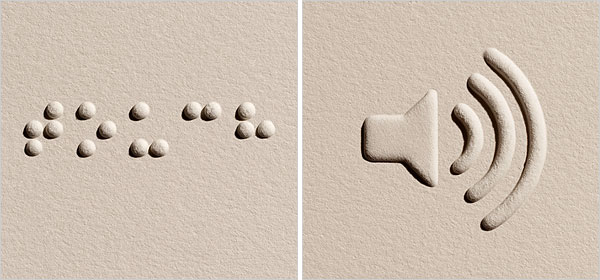
A fascinating article in the New York Times Magazine explains that knowlege about and usage of Braille by visually impaired people is declining as they shift to electronic means of acquiring information.
The trend is real and significant; nowadays fewer than 1 in 10 blind children learn Braille. Part of the problem is that Braille is intrinsically an inconvenient medium:
Braille books are expensive and cumbersome, requiring reams of thick, oversize paper. The National Braille Press, an 83-year-old publishing house in Boston, printed the Harry Potter series on its Heidelberg cylinder; the final product was 56 volumes, each nearly a foot tall.
The replacements for Braille are audiobooks, computer text-to-speech, and other auditory technologies. The upside for the visually impaired is a much more rapid acquisition of knowledge. The potential downside is a flawed understanding of language itself.
“What we’re finding are students who are very smart, very verbally able — and illiterate,” Jim Marks, a board member for the past five years of the Association on Higher Education and Disability, told me. "Now their writing is phonetic and butchered. They never got to learn the beauty and shape and structure of language.”
Horror stories circulating around the convention featured children who don’t know what a paragraph is or why we capitalize letters or that “happily ever after” is made up of three separate words.
The question extends well beyond obvious things like spelling words or distinguishing homonyms to the broader concept that the acquisition of the ability to read actually shapes the brain itself, and that people from literate societies actually think differently from members of oral societies.
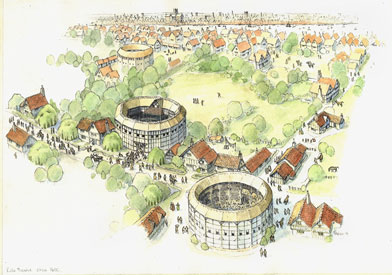
The two great theaters of Elizabethan London were the Rose, where Christoper Marlowe's plays were performed, and the Globe, home to the works attributed to Shaksper. Ongoing archaeological work at the sites is revealing information not only about the structures, but also about the theatergoers seated in the galleries and milling about the stage.
"Food remains and seeds indicate that the preferred snacks were oysters, crabs, mussels, periwinkles and cockles. Walnuts, hazelnuts, plums, cherries, peaches, dried raisins and figs were also popular..."
The distribution of food remains over the site suggested that there was a class divide in the consumption of snacks. [Museum of London archaeologist Julian] Bowsher explained that remains found underneath the gallery seating suggested that the wealthier classes munched on crabs and sturgeon, as well as imported treats like peaches and dried figs. Meanwhile, oyster shells were found scattered all over the yard area, where commoners stood.
"At that time, oysters were indeed the staple diet of the poor," Bowsher said.
The term "Indian" for native North Americans is of course wildly inappropriate, based on a 500-year-old error in geography, but the term is now thoroughly embedded in language and literature. Americans tend to have a provincial viewpoint that "Indians" are limited to the United States, or even to the American West. Those with a broader perspective extend the appelation to native Canadians, Mesoamericans, and South Americans.
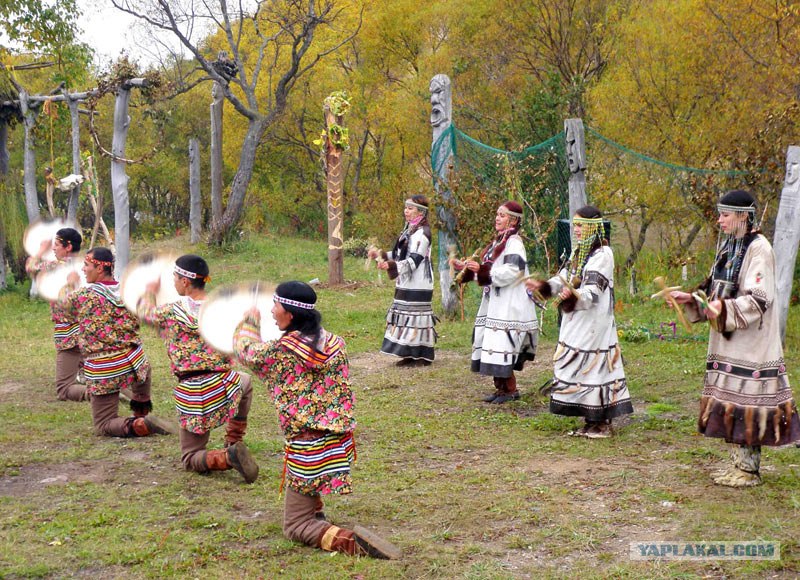
Now consider Russia, the ancestral home of the peoples who in prehistoric time migrated to the New World. The picture above comes from a photoset depicting the Itelmen inhabiting the Kamchatka peninsula in northeast Russia. Since the eighteenth century there has been extensive intermarriage with Cossacks, so that the term Kamchadal is now used for the resultant mixed population, but some ethnic Itelmen are making a valiant effort to preserve their culture and language.
Like Native Americans, the aboriginal Itelmen thrived on the immense salmon runs of the North Pacific; their dwellings and religious beliefs also have strong parallels with those of Native Americans. It's not clear whether the dress and adornments exhibited in the photoessay reflect a parallel cultural evolution, or whether the modern Itelmen have back-adapted the trappings of their more well-known North American counterparts.
Several months ago major news sites reported that a Belgian man, paralyzed for 23 years and supposedly in a vegetative state, was interacting with caregivers through the use of "facilitated communication." James Randi and other skeptics raised questions about the validity of the technique.
Faculty from the Department of Neurology at Liege University Hospital are now reporting that subsequent controlled studies have failed to confirm the initial findings.
Dr Steven Laureys, one of the doctors treating him, acknowledged that his patient could not make himself understood after all. Facilitated communication, the technique said to have made Houben's apparent contact with the outside world possible, did not work, Laureys declared. "We did not have all the facts before," he said. "To me, it's enough to say that this method doesn't work."
In the recent studies a facilitator, who helped the patient type answers on a computer screen, was not present when the test objects and words were presented to Mr. Houben.
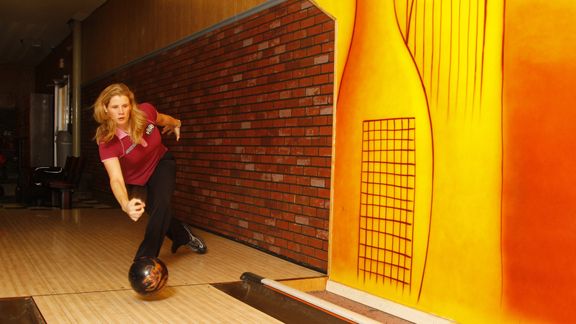
Kelly Kulick is a 33-year-old professional bowler who won the Professional Bowler's Association Women's World Championship. A new PBA rule allowed her to qualify for the men's tournaments. She entered arguably the most prestigious event - the Tournament of Champions - and beat 62 of the best male bowlers, defeating the world's #1 ranked bowler in the final match 265-195.
When Billy Jean King beat a mediocre Bobby Riggs, the world press covered the event. Auto racing's Danica Patrick and golf's Michelle Wie are household names. In a column at ESPN The Magazine, sportswriter Rick Reilly asks why Kelly Kulick's accomplishment is not receiving more publicity.
http://sports.espn.go.com/espn/columns/story?columnist=reilly_rick&id=4936940. Photo: Mark Peterson for ESPN Magazine.
In the era before Express Mail or Special Delivery, the Swedes and Finns used feathers affixed to mail by a royal seal to indicate a "need for speed." These Fjäderbrev were in use from the mid-eighteenth century until the mid-nineteenth century, when stamps were introduced. The item pictured above is...
An Official Proclamation letter sent to Helsinki on January 3, 1774, during the time of King Gustaf III, concerning the delivery of grain to the Royal or Military Storage House... The wavy line (known as a meander) with two horizontal lines through it and three stylized "crowns" in the spaces (all together known as a Crown Coil or Kronoslinga) was the indicia that this was to be sent through the Royal Swedish Crown Post... The two feathers (out of three possible) indicate it is a very urgent message.
Some sources suggest that black and white feathers were also used to indicate that travel should be done by day and by night. This philatelic innovation was commemorated on a Swedish stamp in 1984.
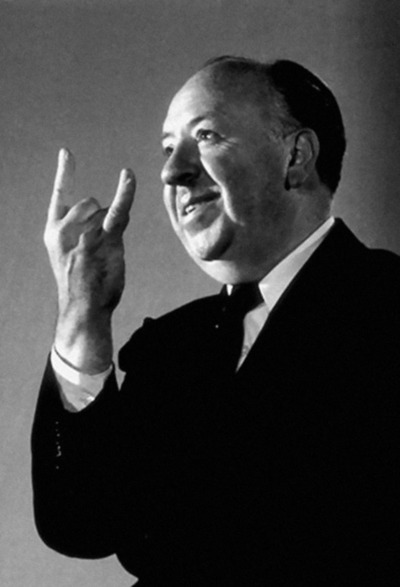
Since Alfred Hitchcock was not an American college student or a baseball player, we can assume that when he posed for this studio photograph he was making the "sign of the horns" to ward off evil or bad luck.
The gesture has a long and complex history, undoubtedly originating as a manual representation of the Devil's horns; Bram Stoker referred to it in his novel Dracula:
When we started, the crowd round the inn door, which had by this time swelled to a considerable size, all made the sign of the cross and pointed two fingers towards me. With some difficulty I got a fellow-passenger to tell me what they meant; he would not answer at first, but on learning that I was English, he explained that it was a charm or guard against the evil eye.
It has subsequently been co-opted by musicians, athletes, politicians, and celebrities for a variety of purposes and meanings. Students at several universities use the sign in support of their team. In baseball and football it can mean "two outs" or "second down." It is even reportedly an unofficial sign for "B.S." (as the horns of a bull) in American sign language!
The video depicts children in Duluth, Minnesota, jumping into a pool in a rocky crevasse. Locally known as "The Deeps," what is often mistaken for a quarry in still photos is actually a natural basalt formation at Amity Falls in Lester Park. Some techniques for accessing the water require jumping a considerable horizontal distance.
Via Shorpy, where a link to the video was posted in a comment on a still photo of the same site being used by theoretically-NSFW naked children a century ago.
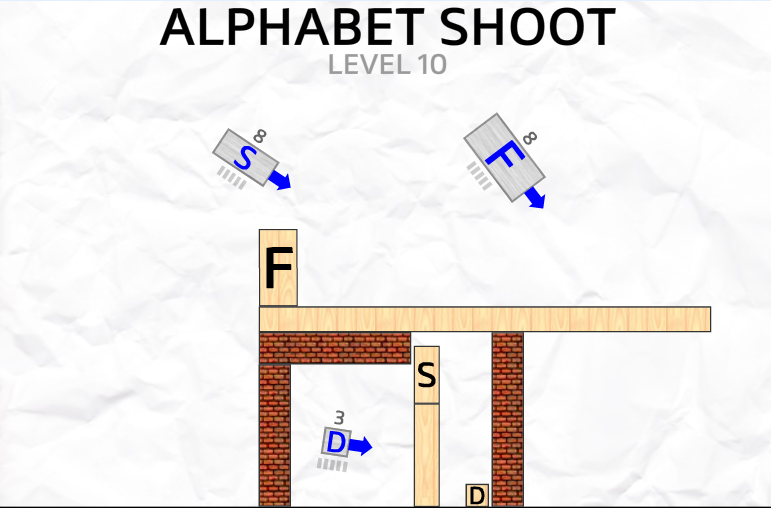
Those who wonder why in the world they ever took a course in physics can derive some satisfaction from playing this game successfully; it requires just a modicum of understanding of the basic principles of physics.
That's the provocative title of an article in this month's Archaeology magazine exploring the scientific, legal, and ethical considerations involved. Extensive information about the Neanderthal genetic code is available, and the technologic problems can apparently be overcome. Questions remain about how the process might best be accomplished, and whether it should be done at all.
The Neanderthals broke away from the lineage of modern humans around 450,000 years ago... As different as Neanderthals were, they may not have been different enough to be considered a separate species. "There are humans today who are more different from each other in phenotype [physical characteristics]," says John Hawks, a paleoanthropologist at the University of Wisconsin... Many of the differences between a Neanderthal clone and a modern human would be due to genetic changes our species has undergone since Neanderthals became extinct... Clones created from a genome that is more than 30,000 years old will not have immunity to a wide variety of diseases, some of which would likely be fatal. They will be lactose intolerant, have difficulty metabolizing alcohol, be prone to developing Alzheimer's disease, and maybe most importantly, will have brains different from modern people's...
"I think there would be no question that if you cloned a Neanderthal, that individual would be recognized as having human rights under the Constitution and international treaties," says Lori Andrews, a professor at Chicago-Kent College of Law. The law does not define what a human being is, but legal scholars are debating questions of human rights in cases involving genetic engineering...
Hawks believes the barriers to Neanderthal cloning will come down. "We are going to bring back the mammoth... the impetus against doing Neanderthal because it is too weird is going to go away." He doesn't think creating a Neanderthal clone is ethical science, but points out that there are always people who are willing to overlook the ethics. "In the end," Hawks says, "we are going to have a cloned Neanderthal, I'm just sure of it."
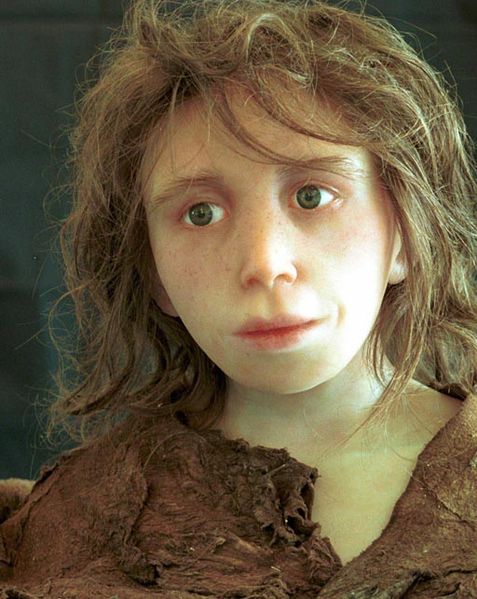
Much more at the link. The image is a computer-assisted reconstruction of a Neanderthal child by a research team at the University of Zurich.
Some residents in the Upper Midwest were surprised to be shaken by an earthquake last night.
The United States Geological Survey reported that the earthquake, which had an estimated magnitude of 4.3, was centered near Virgil, about 50 miles northwest of Chicago, at a depth of about three miles. There were no immediate reports of aftershocks... Amy Vaughan, a geophysicist with the agency, said that the tremor was only the second notable earthquake in more than 30 years to rattle the area. Even though the quake was relatively small, it was felt by residents as far away as southern Wisconsin...
One of the best sources for information on earthquakes is the U. S. Geological Survey; the map above shows that earthquakes are common along the Pacific coast, but in just the past week they have also been recorded near the New Madrid fault and in New Jersey, Tennessee, Texas, and the Rockies. A comparable map of world earthquakes is available at the same link.
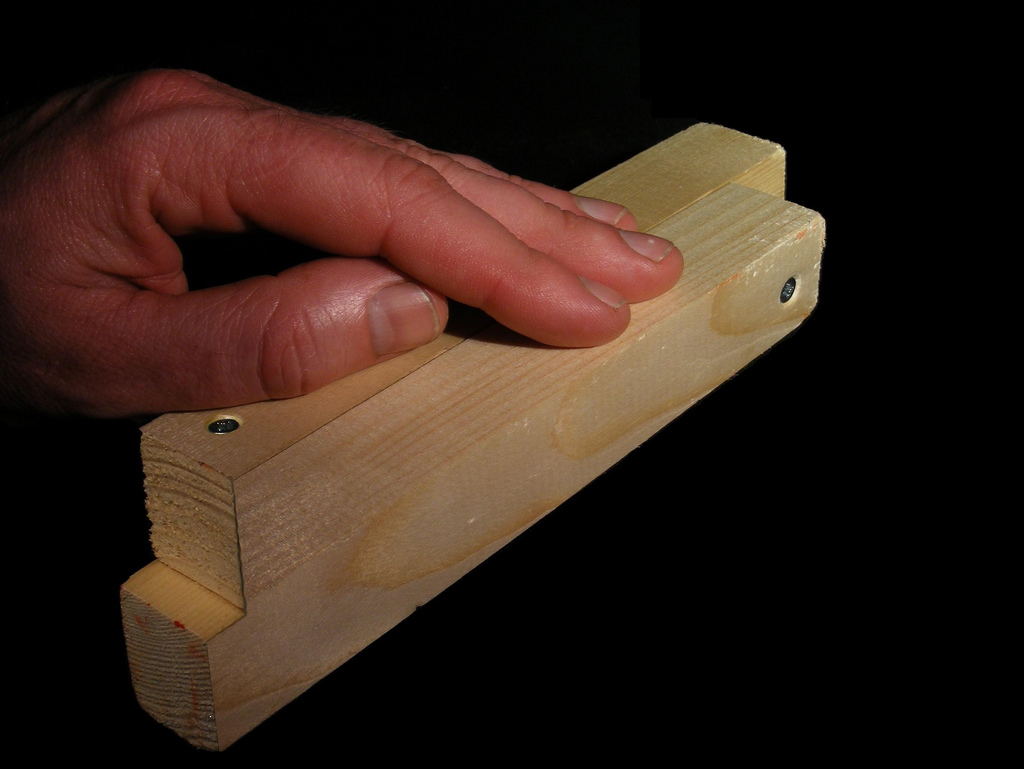
You may need to click/enlarge the image to see the subtlety of the optical illusion. Then the question to ponder will be whether this is the result of image editing, or whether it was created by clever woodcrafting with veneer.