(YouTube Link)
Courtesy of YouTube user mountain462, you can watch a kitten riding a tortoise. I advise you to turn the volume on your speakers all the way down -- the background music is really grating.
via Geekologie
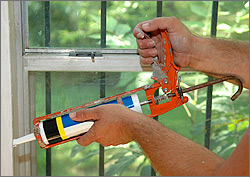
Just after he walked out to a red pickup truck at a gas pump, another man — who police later identified as Jose Alejandro Romero, 17 — walked into the store with a caulk gun partially visible under a white t-shirt, the affidavit said.
The man pointed the caulk gun at Limuel and demanded money, the affidavit said.
Limuel told police he thought it was a joke when he saw the caulk gun, but the assailant continued to demand money, the affidavit said.
The man struck Limuel with the caulk gun after he could not open the cash drawer, the affidavit said, then Limuel struck back, hitting the man with a plastic trash can.
In this photo provided by DoodyCalls Pet Waste Removal, Steve Wilson, a worker with DoodyCalls Pet Waste Removal holds a plastic bag of money May 30, 2010, in St. Louis. On a recent call, he noticed money sticking out from doggie doo and after cleaning the bills, placed them in a plastic zip-locked bag and returned what turned out to be $58 to the customer. The money was torn, but the serial numbers were identifiable, which means the bills could be returned to a bank and replaced with new money.
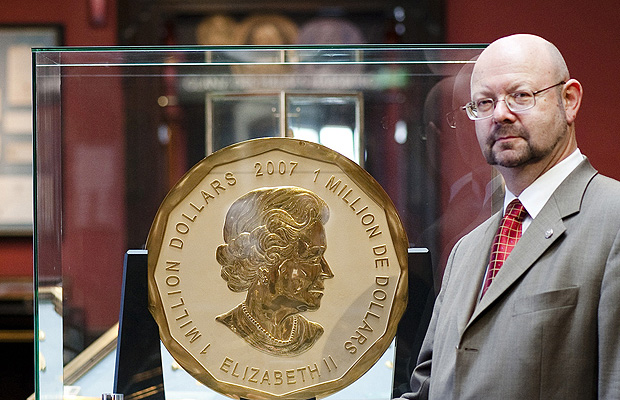
The 100-kilogram Gold Maple Leaf was, in fact, recognized by Guinness World Records in October 2007 as the planet's largest gold coin.
The four sold that year cost the buyers more than $2.3 million each based on the coin's intrinsic value at the time. The $1-million coin contains 3,215 troy ounces of gold.
But the price of gold has nearly doubled since then. Earlier this week, it reached a record high of $1,254.50 U.S. per ounce. Some analysts have predicted the price could hit $1,500 U.S. within a year.
At Friday's price of about $1,230 U.S. per ounce, the metal value of the coin to be sold in Austria was just over $4 million Cdn.
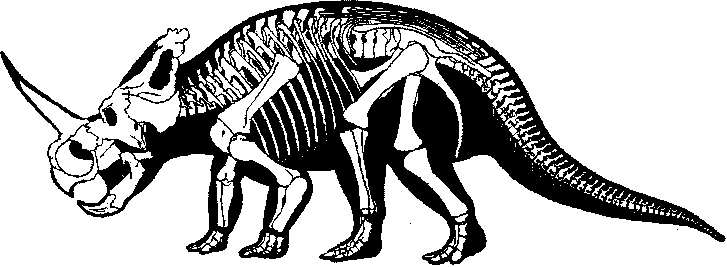
Rather than picturing the animals as drowning while crossing a river, a classic scenario that has been used to explain bonebed occurrences at many sites in Alberta, the research team interpreted the vast coastal landscape as being submerged during tropical storms or hurricanes.
With no high ground to escape to, most of the members of the herd drowned in the rising coastal waters. Carcasses were deposited in clumps across kilometres of ancient landscape as floodwaters receded.
“It's unlikely that these animals could tread water for very long, so the scale of the carnage must have been breathtaking,” said Mr. Eberth. “The evidence suggests that after the flood, dinosaur scavengers trampled and smashed bones in their attempt to feast on the rotting remains.”
The "Violí MIDI" and "Metal·lòfon MIDI" are part of the project to design and construct an automated musical environment. This environment must be able to play live, and that is why it has been designed to be easy to handle, reliable, stable and completely portable. The roots of the project lie in a reflection on the use of robotics as a tool for musical composition and performance. The media and surroundings influence and determine the artist's creative process. A new environment, a new language and a new interface will produce new creations and new musical styles. This is therefore a new format which calls into question the limits of the concepts of singer-songwriter or musical group.
Robotic instruments have so far been polyphonic percussion instruments and melodic instruments using plucked strings. Other musical timbres, registers and functions have still to be explored. On the horizon of the project is the creation of an interface adapted to the characteristics of each instrument, making the automated musical ensemble into an automated musical environment. The project is also based on constructive simplicity, the recycling of components and free hardware (Arduino), as well as the MIDI protocol due to its flexibility.
Mr Menees, a coach driver for gospel and rock musicians, managed the feat on Feb 11 at his Carbondale recording studio. He hit 0.393 hertz - a very low F-sharp. The previous record was 0.797 hertz.
But Mr Menees says he could have done better and will probably make another attempt if his new record is bested anytime soon.
Roth and his colleagues wondered how it is that some people can enter a state of frozen suspended animation and then recover from it safely, whereas in general such a change of body temperature is deadly.
The scientists now think they may be on the track of an answer, having learned how to perform the same trick reliably with other lifeforms; in this case yeasts and nematode worms.
Yeasts and worms, like humans, will normally simply die if they are chilled down past a certain point. But Roth and his colleagues have found that if the little creatures are starved of oxygen before turning on the cold, they will go into suspended animation from which they recover on warming and go on to live normal yeasty or wormy lives.
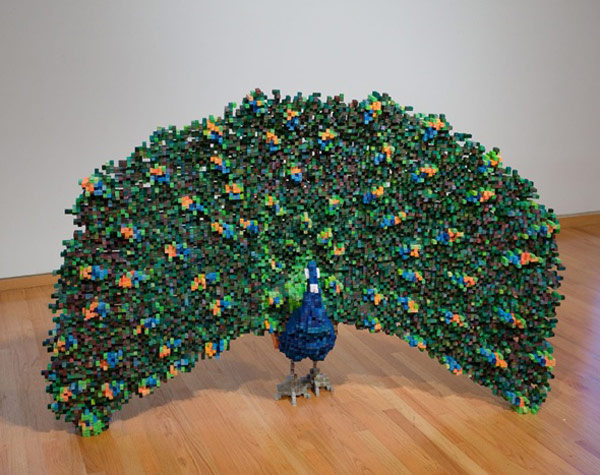
For the past few years, I have been creating a series of "Re-things." These whimsical sculptures represent pixilated animals and objects of nature. I find images of my subjects online and then create three-dimensional sculptural representations of these two-dimensional images. I build my "Re-things" pixel by pixel to understand how each pixel plays a crucial role in the identity of an object. Through the process of pixilation, color is distilled, some bits of information are lost, and the form is abstracted. Making the intangible tangible, I view my building process as an experiment in alchemy, using man-made composite and recycled materials to represent natural forms.