Jill Harness's Blog Posts

McFacts About McDonald's

On April 15, 1955, Ray Kroc opened his own McDonald’s franchise in Des Plaines, Illinois (seen below). While tons of people head to this so-called “first McDonald’s” every year, the fact is, the building standing there is not only not the first McDonald’s (Kroc actually opened the ninth location of the franchise), it’s not even the original building, but just a reconstruction. Even so, that spot of ground did have a huge impact on American life as we know it and spawned what was at one point the largest restaurant chain in the world --the title is now held by Yum! Brands (KFC, Taco Bell, etc.) and followed by Subway.
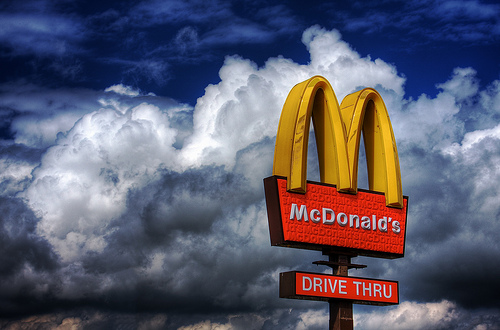
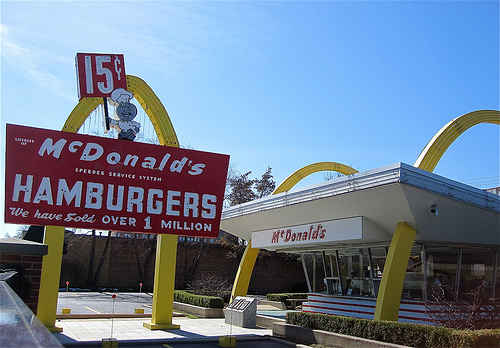
Image via ChicagoGeek [Flickr]

How Did McDonald’s Get Taken Over By Kroc?

When I was a kid, I always thought whoever Mr. McDonald was, he must be super rich. As it turns out, Richard and Maurice McDonald, who started the original restaurant, only made $2.7 million on the deal. While that does seem like a good amount of cash, just think how much the restaurant is worth these days. To make matters worse, the brothers insisted on retaining the rights to their first restaurant in San Bernardino, so Ray opened a McDonald’s restaurant right by theirs and ran them out of business. Worse still, even though the original deal involved the brothers earning 0.5% of the chain’s annual revenues, Kroc refused to honor that part of the verbal agreement after the McDonald’s brothers refused to sell him their original restaurant and the land it stood on.

And it’s not like the McDonald’s Brothers didn’t do anything but open an everyday burger joint; if they did, Ray probably wouldn’t have been so interested in taking the whole thing over. They innovated many of the ideas that have made modern fast food restaurants so successful, including assembly line kitchens, simplistic menus and self-serve counters. The menus had nothing on them but hamburgers, cheeseburgers, French fries, potato chips, sodas, milkshakes and apple pies. Because things were so quick and efficient, prices were about half of what it cost to get a similar meal at a diner.

Image via _skynet [Flickr]

McDonald’s Across the Globe

It wasn’t too long after Kroc took over completely that the chain expanded out of America, first to Canada, then Costa Rica, Panama, Japan, Europe and Australia. These days, there's McDonald's located all over the world. In fact, the image above shows just how widely spread they are in the U.S. While this world-wide globalization has led to many negative views of the corporation, some people say the company has actually helped improve the standard of service in some areas of the world. For example, when McDonald’s opened in Hong Kong in 1975, it was the first restaurant to consistently offer clean public restrooms. Soon afterwards, customers began to demand the same from other restaurants in the area. Whether McDonald’s has a positive or negative impact in the country it enters may be a matter of opinion, but one thing the restaurant takes great pride in is their localization of the menu based on the native tastes of the area. Some interesting menu items from around the world include:


  • Quebec has a regional treat known as poutine, which is a dish with French fries and cheese curds covered in gravy. McDonald’s in the area serve this as a popular side dish.

  • Throughout Canada, you can order chicken fajitas from McDonald’s. This seemed weird to me that you can’t find these in South Western American states where fajitas are a popular staple of Mexican restaurants.

  • In Egypt, you can find Big Macs with chicken or fish in place of beef and a “McFalafel” sandwich.
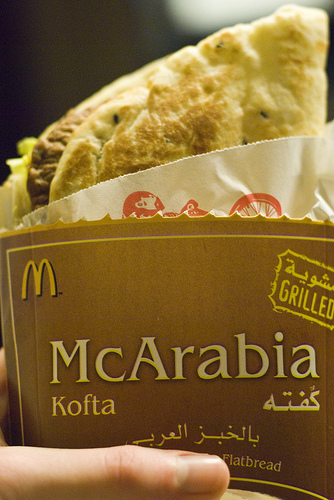

  • Throughout the Middle East, McDonald’s offers a “McArabia” sandwich, which is a piece of flat bread with chicken or beef patties. They also serve a special wrap called the Paneer Salsa wrap, which takes fried, seasoned cottage cheese and wraps it in flat bread with veggies.

  • Most Indian menus are largely different than those in America, as pig and cow products are not served outside of Southern India. The chicken and fish are also prepared in separate areas because or strict religious laws regarding the preparation of food for vegetarians. One of the area’s specialties is the Maharaja Mac, which was originally made with lamb meat but now is made with chicken. They also serve a dish called the McCurry pan, which consists of a bowl made from flakey dough filled with chicken in a tomato-curry sauce. Of all the international McDonald’s menu items, I think this is the one I’d want to try the most.


  • Throughout Asia, you can order a side of McRice in place of fries, this is just an order of plain rice with a cool name.

  • In China, you can enjoy pineapple and taro pies and a Shogun burger with teriyaki pork. You might also consider the Rice Fantastic, which is like a beef or chicken sandwich with rice patties in place of buns.

  • On the Chinese island of Cheung Chau, you can also enjoy mushroom burgers in place of beef during the local Bun Festival.

  • In Japan, they serve something called the Ebi Fillet-O, which is a fried shrimp sandwich. There is also a Tamago Double Mac, which has three beef paties, a poached egg, bacon and pepper sauce. You can even top off your meal with tea milkshakes.

  • In Thailand they sell corn pies.

  • In Finland and Norway, you can have wraps with fried fish instead of chicken or beef.

  • In El Salvador, you can often have French fries made with yucca instead of potatoes.

  • In Mexico, a popular breakfast option is the McMolletes, English muffins with refried beans, cheese and pico de gallo salsa.

  • In New Zealand, a popular favorite is the Kiwiburger, which has beef, a poached egg, veggies, cheese and beetroot.

Images via Weather Sealed, xetark [Flickr], Allan Reyes [Flickr],

Good Ol’ American Innovation

Even in America, certain locations have their own specialty treats. The McLobster and McCrab are served seasonally throughout New England. And in the late 1990’s, Chicago locations offered a hamburger with barbecue sauce and Canadian bacon that was dubbed “the Beef Wennington” after a notable Chicago Bulls player.
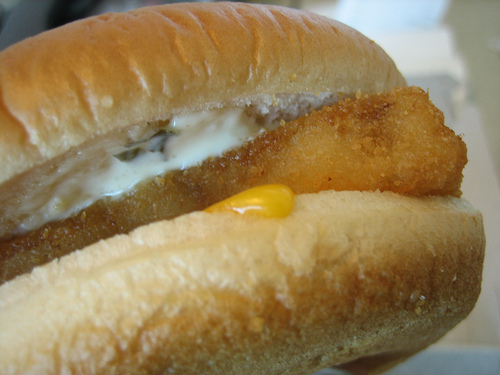
Many of the company’s biggest successes were actually created locally by franchisees, including the Filet-O-Fish, the Big Mac and the Egg McMuffin.  The Filet-O-Fish was made by a Cincinnati franchise owner who wanted to offer his Catholic customers a meal they could still eat on Fridays and during lent. Ray Kroc tried a similar idea at his original restaurant, but his Hula Burger, a sandwich a pineapple slice in place of meat was a huge flop.

As for the Big Mac, it was created by an early Pittsburgh franchiser who wanted to serve something adults would enjoy when feeding their kiddos at the restaurant. The corporate heads told him he could only create new menu items creating ingredients on the existing menu, which is where the Big Mac was born. The Egg McMuffin was in a similar position as the Big Mac inventor, only he went ahead and added a new creation to the menu without contacting headquarters. The corporation was quite upset that he started selling the McMuffin without their blessing, but they quickly changed their minds when they saw how popular it was. Image Via VirtualErn [Flickr]

McDecor

It’s not only the menu that headquarters like to keep consistent. Locations are largely required to look similar to one another on the inside. That’s not to say there aren’t a few stand out locations though. The “Solid Gold McDonald’s” by the Rock and Roll of Fame is themed after fifties rock and roll. Victoria, British Columbia has a restaurant with a 24-carat gold chandelier and other fancy light fixtures (seen above). The McDonald’s in Stratford-upon-Avon has a very subtle design, as all buildings in the area are required to conform to the historic look of Shakespeare’s birthplace. Whether you love McDonald’s or loathe it, there’s no arguing that the restaurant has had a huge impact on our society. Heck, Fast Food Nation has estimated that one of eight workers in America have been employed at the restaurant at some point of their lives. So you guys have any weird McDonald’s in your area? Maybe one with unique menu items or a strange design.

Image Via buschap [Flickr]

Sources Mental Floss #1, #2, Food Network Humor, Wikipedia #1, #2, #3

Multi-colored Easter Chicks

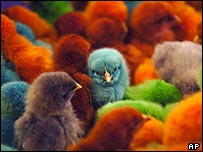
What could be better than little yellow chicks being born from multi-colored Easter eggs? Why multi-colored Easter chicks being born from regular eggs, of course.

The picture on the left is not photoshopped. That's really what the chicks look like. Their eggs were injected with dye, leaving the little ones colored upon hatching. Once their new feathers grow out, they'll be normal-colored again, but for now, they're mighty festive.

Link

Non-Foolery on April Fools’ Day

On its face, April Fools’ Day seems like a lighthearted opportunity to play practical jokes and pranks on your friends and coworkers, but it’s easy to see the problem with having such a wacky day filled with falsities and gags. Namely, what happens when something of real consequence actually takes place on April 1st, but people don’t believe it because they automatically think it’s a prank? Here’s a few true tales of actual events that occurred on April 1st that were anything but gags.

Giggling at Google

Google is known for announcing ridiculous news stories, such as telepathic search engines and job openings on the moon, on April Fools’ Day. The thing is, when you are known for this sort of tom foolery, it makes it difficult to be taken seriously when you have real news on April 1st. Humorously enough, the company has decided to take advantage of the viral marketing people give to the news they announce that day, so they have actually made announcements for real products and services at the same time. In 2004 (the same year they created job listings for the moon), they announced the release of Gmail. While this may not seem all that funny, many people still thought it was a prank because the idea of a mail service with one full gigabyte of storage seemed preposterous –at the time, Hotmail only offered 2 megabytes. They followed the success of this announcement by announcing the increase of the mail service’s storage to two gigabytes the next year, also on April Fools’ Day.

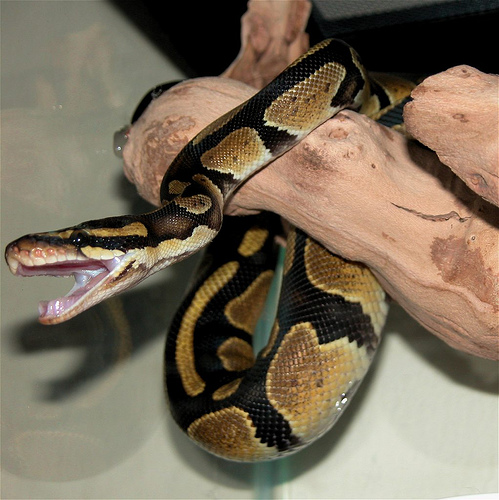
In a company that plays such major pranks on the nation every year, it seems likely that the employees must play some really great jokes on each other come April 1st. As such, when an employee’s pet ball python escaped its enclosure on the holiday, the news was met with some disbelief. Unfortunately, this time the news was real. An email was sent out to the entire staff that started out, “The timing of this email could not be more awkward.” It then moved on to say:

“Tempting as it might be, this is not an April Fool's joke! We are sending this message to alert you to the situation and to let you know what to do in the event you see the snake. “

At least the sender recognized the humor of the situation. In case you were worried about the critter, he was eventually found and returned to his owner’s house a few days later. Image via Char1iej [Flickr]

Dimming the Guiding Light

Whereas Google has mastered the art of cleverly announcing real news on April Fools’ Day in order to play with the minds of the public, CBS obviously has a lot to learn about making serious announcements on April 1st. Last year, they infuriated a number of loyal viewers by announcing the cancellation of the seventy-two year old daytime soap Guiding Light on April Fools’ Day. As one angry commenter wrote on TV Squad:

“If it's true, you're jerks for announcing it today. And if it's not true, then everyone who believes you was a jerk for believing such a story on April Fools’ Day.”

A Depressing Day For Death

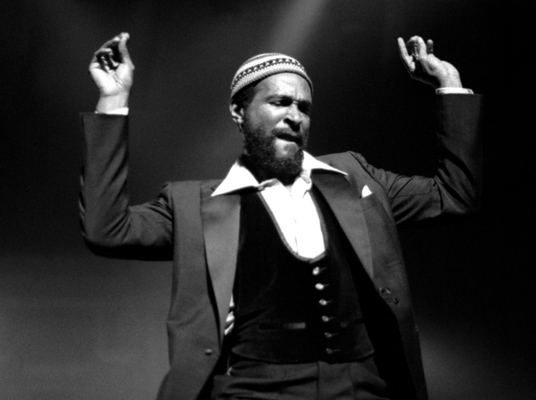
Unfortunately, not all real news on April Fools’ Day is as minor as a lost python or canceled TV show. There are many situations where people do not believe a person has died, simply because of the date. Unfortunately, the three best examples of this are all so strange that it’s not surprising that people believed the news to be a hoax. In 1984, one day before his 45th birthday, Marvin Gaye was murdered by his own father after intervening in an argument between his parents. Many fans refused to believe the news because it seemed so odd that his dad would have been the murderer. It wasn’t until the news was confirmed officially that many people stopped believing the murder was more than a cruel April Fools’ Day joke. Surprisingly, Marvin Senior was only found guilty of voluntary manslaughter and sentenced to five years imprisonment because his son beat him before the shooting.

Not A Set Up For A Tasteless Joke

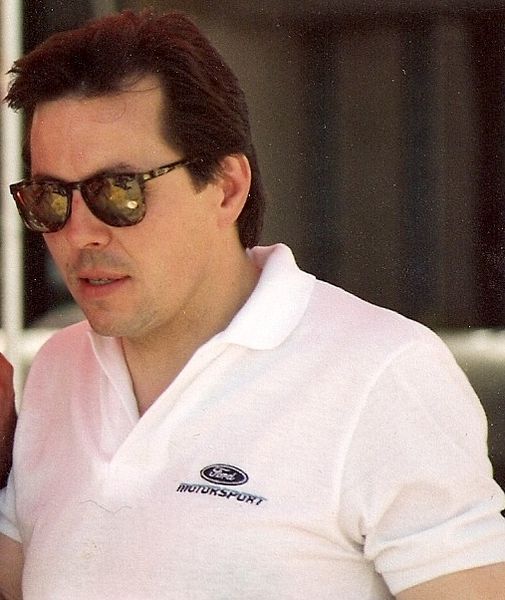
If you heard a NASCAR champion nicknamed "The Polish Prince" died in a Hooters corporate plane on April Fools’ Day, would you believe it? A lot of fans thought they were hearing a bad joke in 1993 when racing star Alan Kulwicki was announced to be dead in exactly those circumstances. Image via jbspec7 [Flickr]
A Funny Day To Announce An Unfunny Death

Is there a more fitting day for a comedian to die than April Fools’ Day? While Mitch Hedberg actually died on March 30, 2005, the news wasn’t spread to the media until very late on March 31st. Not surprisingly, many people thought the death was merely a prank or a bad publicity stunt put on by Mitch himself.

Don't Doubt The Danger Warnings

Perhaps the only situation that is worse than one person dying on April Fools’ Day is the so-called April Fools’ Tsunami of 1946, when over 100 people died, largely because they believed storm warnings were a joke. The incident occurred after an massive earthquake on the Aleutian Islands near Alaska, which caused a series of massive tidal waves that spread all the way to South America. Most of the damage hit Hawaii though, where the tsunami reached up to 45 feet tall. Unfortunately, because so many people doubted the news of the impending tidal wave and refused to evacuate, over 165 people died -159 of them in Hawaii.

Interestingly, perhaps this was a bit of a sick prank on the part of Mother Nature, because scientists are still unable to find any reason the 7.8 magnitude earthquake was able to launch such a massive tsunami. It was originally thought that the waves were intensified by a major underwater landslide in the area, but scientists have still found no evidence of this hypothetical landslide. One of the researchers who recently mapped the ocean floor looking for a landslide in the area summed up the matter by noting, "almost 60 years after the event, the 1946 tsunami is still making fools of all of us." What about you, readers? Have you ever thought something that happened on April 1st was actually a joke, only to find out later that it was actually 100% true?


Shove A Stick Up Your .... Food?!

With all the food monstrosities featured on Neatorama on a regular basis, is it any wonder that we are huge fans of March 28th’s Something On A Stick Day? After all, aside from wrapping something with bacon, how else can you improve any given food so easy? Of course, if you wrap bacon around most of these top ten foods on a stick, you could only make them better.

French Fry Wrapped Bacon On A Stick

On second thought, why wrap everything with bacon when you could just put a thick slice of bacon on a stick? To make things even better, try coating it with French fries glued on with corndog batter and then deep fry it. As the creator says, you could make it a bacon wrapped hot dog on a stick, but why bother with the inferior hot dog meat? Link

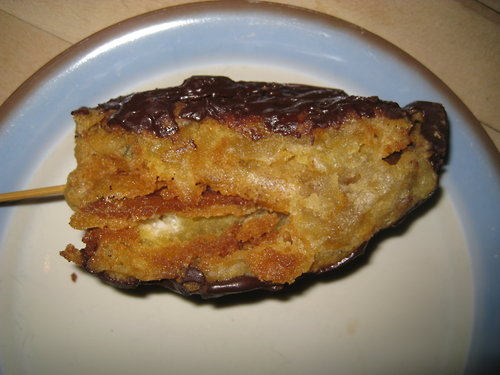
Angel Food, Bacon & Chocolate On A Stick

If you like your bacon to be served on the sweet side though, perhaps you’d prefer this delightfully disgusting treat. Simply take some thick-cut bacon and fold it around a stick, then wrap it in angel food, deep fry it all and then dunk it in chocolate. Got milk? http://thisiswhyyourefat.com/post/201014782/chocolate-bacon-pogo-on-a-stick-bacon-wrapped-in

Chicken Parts On A Stick

Perhaps fatty pig but isn’t your favorite deep-fried animal remnant though. Maybe you like chicken innards or blood. If you think gizzards and fried hearts are gross, you’d better stay away from the street food in the Philippines, where deep fried chicken intestines and gelatinous chicken blood are both served on sticks. At least the chicken blood is kind of good for you. Link #1, Link #2

Oddities On A Stick

The street food of the Philippines has nothing on the diversity of the food stalls on the streets of Beijing though. Many visitors to the Olympics have written about their surprise about finding scorpions, dung beetles, lizards, starfish, seahorses and more on a stick. According to Sun Hainan, a young food trader in the area, “Seahorses are good for men's kidneys and their virility, Crustaceans are good for girls  -they improve their skin and looks-  and lizards boost virility.” Link Image via AudreyH [Flickr]

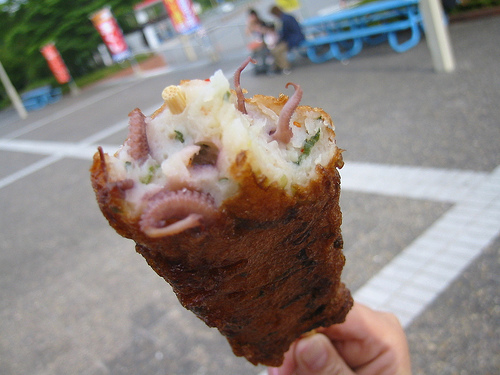
Tempura Octopus On A Stick

There’s something about batter that just makes things on a stick that much more delicious. Compare the image of seahorses on a stick to this delightfully Japanese treat of tempura octopus tentacles on a stick. It’s hard to deny this treat would only look half as tempting without the delightful tempura batter. Link

Dressing On A Stick

While other countries may think they have the on-a-stick concept down, I’m still convinced it’s something Americans have in their blood. After all, who else but a Southern woman (namely Paula Deen) would think to pair her deep-fried turkey with stuffing on a stick? Link

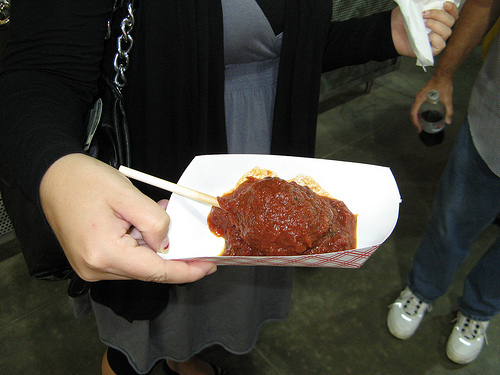
Meatball Dinner On A Stick

Americans even improve the foods of other nations. While the picture may look like a simple meatball on a stick, it is much more. There is actually pasta cooked right inside the meatball itself to create a full spaghetti and meatball dinner with just one stickful of goodness. Link Image via Deacon Steve [Flickr]

Pies On A Stick

Of course, not all foods on a stick need to be deep fried. These minipies on a stick aren’t exactly great for you, but at least they’re baked rather than fried. Think of them as soft, chewy lollipops, or as pies you can munch on the go. Link

Cinnamon Rolls On A Stick

Speaking of delicious sweet treats on a stick, how about some little cinnamon rolls? The creator, Zoe, apparently makes an array of bread products on sticks, but what could be better than a cinnamon roll pop? Zoe created these treats and others to compete in the prestigious Minnesota State Fair. Just check out some of their amazing stick-foods available. Link

S'more On A Stick

The Minnesota State Fair’s Oodles of Noodle booth just might have been where This Is Why You’re Fat reader Emily Fredrix discovered this ooey-gooey deep-fried s’more on a stick. http://thisiswhyyourefat.com/post/77794790/deed-fried-smore-on-a-stick-via-emilyfredrix

Hot Chocolate On A Stick

If you’re looking for a DIY on-a-stick project that makes a great gift, you might want to consider making some of these delicious and lovely hot chocolates on a stick. Simply use the stick as a stirrer in a cup of warm milk and you’ll have rich, creamy cocoa that’s sure to keep you warm in the winter. Link Your turn readers. What’s the weirdest thing you’ve ever seen on a stick? Also which of these would you most likely snack on? I have to admit, I think the s’more on a stick looks like pure heaven.


Celebrating Big Bird’s (41st) Sixth Birthday


March 20th is Big Bird’s sixth birthday. You may be wondering how he could be only six years old when he was the first Muppet on a show that has been on for over forty years, but the thing is that Big Bird (or just “Bird” as his friends like to call him) is always six years old. So although the Sesame Street favorite has been around for a whopping 41 years (meaning most of our readers had the chance to grow up watching him and that he got to meet Patricia Nixon while she was still the first lady), we at Neatorama are proud to say happy birthday to one of our favorite perpetual children.

Why Six?


Big Bird’s character was originally supposed to be more of a village idiot than a neighborhood friend, but within the first season, the writers and performers quickly started seeing a lot more potential in the innocent and sweet bird. They started envisioning him more as a curious child than a yokel and quickly morphed him more into a role model for the youngsters at home.

Big Bird’s young mind is always inquisitive and he always asks questions as a result. This not only gives kids a chance to learn the answers to questions he asks, but also teaches them that it’s good to ask about things they don’t understand. Big Bird helps children understand that it’s OK to not understand everything because even someone who’s eight feet and two inches tall still doesn’t know everything.

This also helps the character share morality lessons with kids without preaching to them because he is only reflecting on something he just learned.

All of Life’s Lessons


Big Bird continues to be one of the most prominent characters on Sesame Street. As such, he is often given the opportunity to teach some of the hardest life lessons to the home viewers.

Big Bird’s star role in the early 80’s episode about the death of Mr. Hooper was considered to be a milestone in children’s programming and may have been part of the reason he was selected to play such a key role in Jim Henson’s funeral, where he sang “It’s Not Easy (Being Green)” in memory of Jim, who created the Muppet family and played Kermit. At the end of the song, during which he almost broke into tears, he looked up at the ceiling and quietly said, “thank you Kermit.”


One of the other important lessons Bird taught kids was that just because adults don’t immediately believe you about something doesn’t mean you should stop trying to tell them about it. This came about when the producers of the show decided that the long running gag about Mr. Snuffleupagus never appearing when the show’s adults were around. When a string of sexual abuse cases hit the public eye in the early 80’s the staff worried that the gag might encourage kids to think that adults won’t believe them if they talk about something out of the ordinary, so finally Snuffy actually made himself known to the show’s adult characters. Perhaps Big Bird sums up the message best:
“Snuffy’s my best friend, he was never imaginary! It was just a matter of poor timing. Sometimes I would ask Snuffy to wait for me in one spot, then while I was away he would leave to go put on a tie or brush his teeth. And then when I came back he would be gone! But then one day he finally stuck around, and everyone could see that my friend Snuffy was real after all. I was so glad that day, because then I knew that my grown-up friends on Sesame Street would always believe me when I told them something that unusual but still true.”

He’s A Little Ahead of His Age


Just because he’s only six and a giant bird doesn’t mean Big Bird doesn’t have an array of skills and abilities. He can sing, dance, roller skate, ice skate, ride a unicycle, draw and write poetry. He also lives on his own in the nest on 123 Sesame Street. Well, actually, he does live with one friend, his teddy bear Radar, named for Walter “Radar” O’Reilly from M*A*S*H who was also naive and kept a teddy bear friend. Although Gary Burghoff gave Big Bird Radar during a guest appearance, later episodes claim that he was actually a gift from Mr. Hooper.

What Kind of A Bird Is He Anyway?


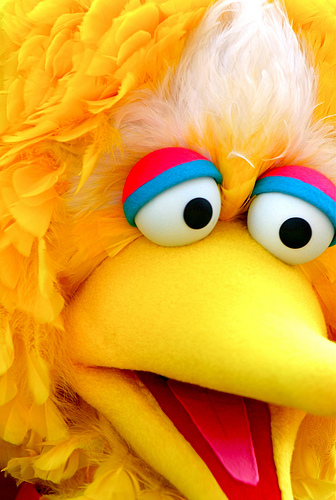
Image by Anthony Grimley [Flickr]


Big Bird’s species will likely remain a mystery through the ages, but that doesn’t mean it hasn’t been hinted at. He most commonly seems to say he is a lark, which started during a 1976 appearance on Hollywood Squares. He even reiterated this fact just last year in an interview with TV Guide. In the same interview though, he also calls himself a golden condor, an origin that started back in a 1981 episode of Mister Rogers’ Neighborhood.

While many people assume he is supposed to be a canary because of his yellow coloring, it was only said by Ma Bear during the 1987 filming of A Muppet Family Christmas. The Swedish Chef responds to this one by looking at the bird and calling him “gobbla gobbla humungo.”

Oscar the Grouch seems to have his own theories about Big Bird. While he often calls him a giant turkey, he also called him “part homing pigeon” in the 1978 Christmas Eve on Sesame Street special. While his calling Bird a turkey is supposed to be an insult, it actually helped him hitch a ride on a turkey truck in the 1985 movie Follow That Bird because Big Bird was able to explain that "my friend Oscar always says that I'm a big turkey!" In fact, this is actually true to some extent, since only turkey feathers are used for the character’s costume.

Perhaps the best answer for Big Bird’s species though is that he’s a bit of a mixed bag bird. After all, he does have his own scientific name, "Bigus canaries,” according to the book Sesame Street Unpaved. And, in the 2004 special A Celebration of Me, Gover, Big Bird says, "I wish I could fly like Super Grover. But my Grandpa was an emu bird. They can't fly. But they can run! Every fall, Grandpa ran south for the winter."

Of course, everyone’s just going to see what they want to see. The Egyptian god Osiris called Big Bird an ibis during the movie Don’t Eat the Pictures. Personally, I like to think that he’s a canary emu mix.

The Effects of Aging


Just because Big Bird is only six doesn’t mean he hasn’t aged quite a bit throughout the years. Of course, his species must age rather well because he seems to be looking better than ever. The original Big Bird was designed to be clumsy and goofy to go along with his yokel behavior. He had googly pupils on occasion and rather raggedy feathers. His puppeteer, Caroll Spinney remarked on this original incarnation by saying, "He didn't look too keen. I thought he was one of the ugliest things I'd ever seen!"

Of course, this goofy design didn’t quite work out for the eternal child character they decided he should take on, so near the end of the first season, he was given a makeover. He received more feathers on his head and his eyelids were made to raise and lower. The puppeteers figured out a great way to enable him to move his right arm, which was originally pinned to his side (Caroll Spinney has to use one arm to move his mouth and the other for his left arm, which left his right arm useless). By the second season, his feathers were better groomed and they were a more constant shade of his trademark golden yellow hue.


In season eight, Big Bird was given three bright yellow highlights around his head (like those seen in the image above by Flickr user Anthony Grimley), which he maintains to this day, although the color and size shift through the years. In season ten, Big Bird received a more rounded head and a more shapely neck that largely resembles the current inceptions of the puppet since.

The costume itself is partially assembled by American & Fancy Feather. Because 90% of the feathers selected for the costume are rejected, the company’s owner, Anthony Trento, says Big Bird is his toughest customer.

Puppeteering the Giant


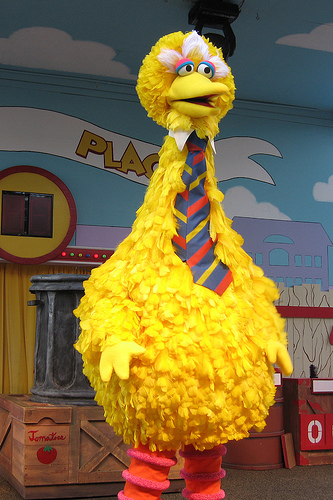
Big Bird is obviously one mammoth of a Muppet, so controlling him is quite a big job. Fortunately, the team has worked out some ingenious innovations to make Big Bird as lifelike as possible. For the most part, Big Bird is controlled by Caroll Spinney who uses his right arm to control big bird’s head, eyes and mouth movements and his left arm to control Bird’s left wing.

As I said earlier, the first version of the puppet was forced to have his hand tied down because it couldn’t be controlled. They fixed this first issue by tying fishing line to the puppeteer’s arm so the right arm would do the opposite of the left arm. When the arms need to be moved independently in movies, a green screen tool is used so a second puppeteer can stand behind the character and move his arm and then later be edited out of the shot. This cannot be done on the Sesame Street set because it is too vivid of a background.

That’s not the only major change the puppeteer has seen in his costume. While the early incarnations of Big Bird had a small mesh screen in the front of the neck for Caroll to see from, this was latter sealed off to make things look even more accurate. Instead, Mr. Spinney uses a video monitor in the front of the suit to navigate his way around. He says he also includes the scripts in his costume to make it easier to remember his marks.


When Big Bird performs on-location, he cannot use the monitor suit though, so the team uses a neck tie or tuxedo shirt to hide the screen on the front of the costume.

Image by Luis Rubio [Flickr]

Casting Call


Jim Henson was originally slated to play Big Bird and the first costume was actually built for him, but the man who built the costume told Henson that he wasn’t walking the way a bird should stroll, so Jim decided not to play the part. He then offered the role to Frank Oz, who is known for playing Bert, Grover and Cookie Monster, as Big Bird, but Oz refused largely due to claustrophobia related to being in the giant suit. Fortunately, Caroll Spinney took on the character and helped shape the creature into the endearing bird we know and love today.

Spinney has played Big Bird almost consistently since the show’s inception in 1969. Daniel Seagren performed in his place a few times when he was sick and also on a few appearances on other shows and in recent years, Rick Lyon and Matt Vogel (the main understudy) have taken on apprentice roles in anticipation of 76 year-old Caroll’s eventual retirement.


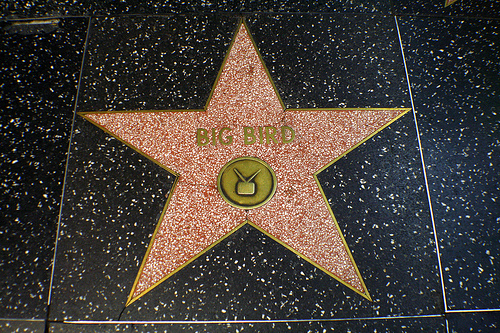
I don’t know about you, but I’ve always loved Big Bird, and so do millions of other Americans. After all, you have to be pretty popular to have your own star on the Hollywood Walk of Fame (pictured above thanks to Flickr user GrahamKing) and to be featured on a postage stamp. I hope you all enjoyed learning about the character that helped so many of us learn!

Sources: SesameStreet.org, New Yorker, Muppet Wikia, New York Times, Wikipedia, Jim Henson: The Works

Seal Photo Bomb


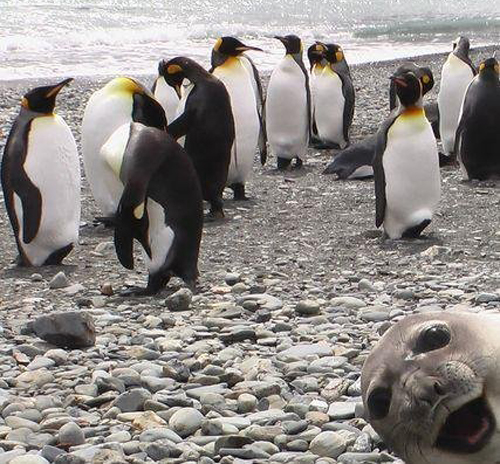
Squirrel photo bombs are sooo 2009. Seal bombs, now that's what's hip now!

Link

Happy National Crochet Month

March is not only National Craft Month, but also National Crochet Month, so it’s only fitting that we feature ten of the weirdest and coolest crochet and knitting projects ever made. As this is, of course, all a matter opinion, feel free to share your favorites in the comments!

Deep Sea Crafting

Coral reefs are some of the most beautiful underwater structures around. Unfortunately, a lot of people don’t get to see these beauties in their natural habitats. Enter the world of crochet coral, a collective project by The Institute for Figuring. Crafters from around the world have added their interpretations of crochet reefs and the entire exhibit has travelled through museums across the U.S. Image via Margaret Wertheim [Flickr]

I’m King of The World…He’s Prince of The Cosmos

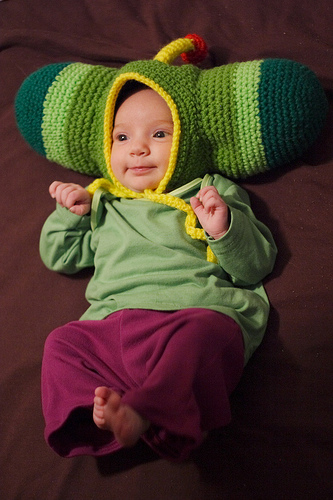
It’s one thing to say your baby boy is a prince, it’s an entirely different matter to say he is the prince of the universe. Fortunately, with the adorable hat pattern from Itchy Stitchy, you can dress him like the prince of the cosmos from Katamari Damacy without looking like an egotistical jerk. Image from the creator's Flickr stream.

Ukulele Gone Wild


If you’re going to make adorable art out of crochet critters, why not take it a step further and make a stop motion music video out of a pair of amagami playing the ukulele and singing? Apparently these two cuties make up a music group known as U900.

Pinhead Bunny Amagami

Etsy seller Moons Creations always has some interesting bunnies in her shop, including cathulus and Olympic skiers, but perhaps her greatest creation is the Pinhead bunny seen in this blog post. While this one is already sold out, if you PM her, maybe she’ll custom make you your own.

Ultraviolent Pleasantries

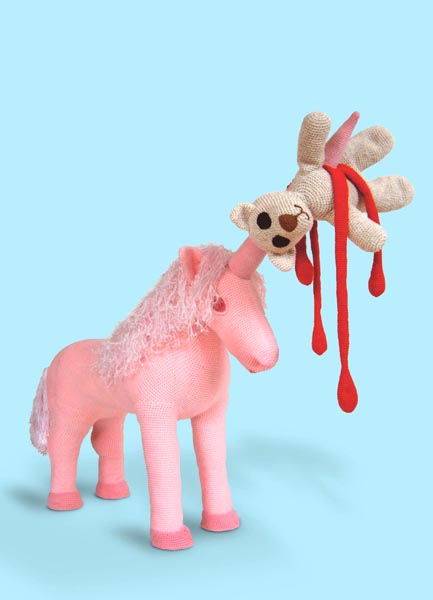
Crochet is normally such a sweet and happy medium but the designs created by artist Patricia Waller (some pics mildly NSFW) are anything but. Her goretastic crocheted plushie collection includes a bunny killed with a pitchfork, Miss Piggy falling into a meat grinder and a unicorn that has driven its horn through a teddy bear. While the pieces are quite impressive, it’s probably best to avoid letting your kids see them –unless you’re into the whole traumatizing-your-kid-for-life thing.

The Godfather Part Craft

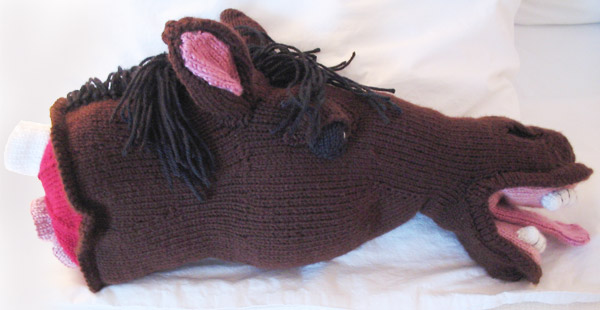
Perhaps you like your gory crochet pieces to send a message to your enemies though. This knitted horse head pattern from the Anti-Craft is a vegan-friendly way to remind your enemies about the offer they can’t refuse.

Crochetadermy?

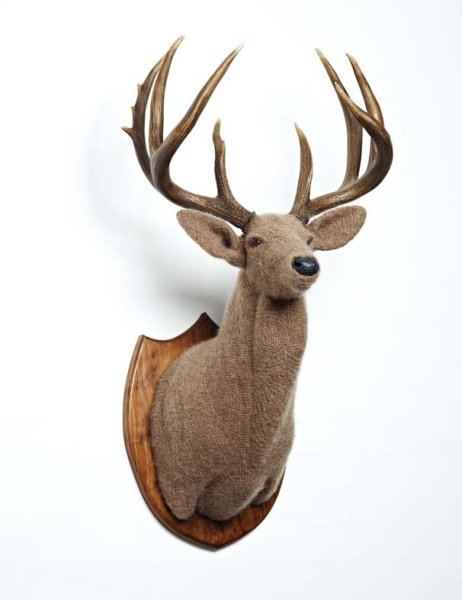
Speaking of vegan-friendly dead things,. Artist Shauna Richardson is quite possibly the authority on crochet animals in the wild and has quite the collection of taxidermied crocheted beasts. Anyone who loves taxidermy but hates to see the poor little dead animals is certain to enjoy her creepy-cool gallery.

Knitted Dissection

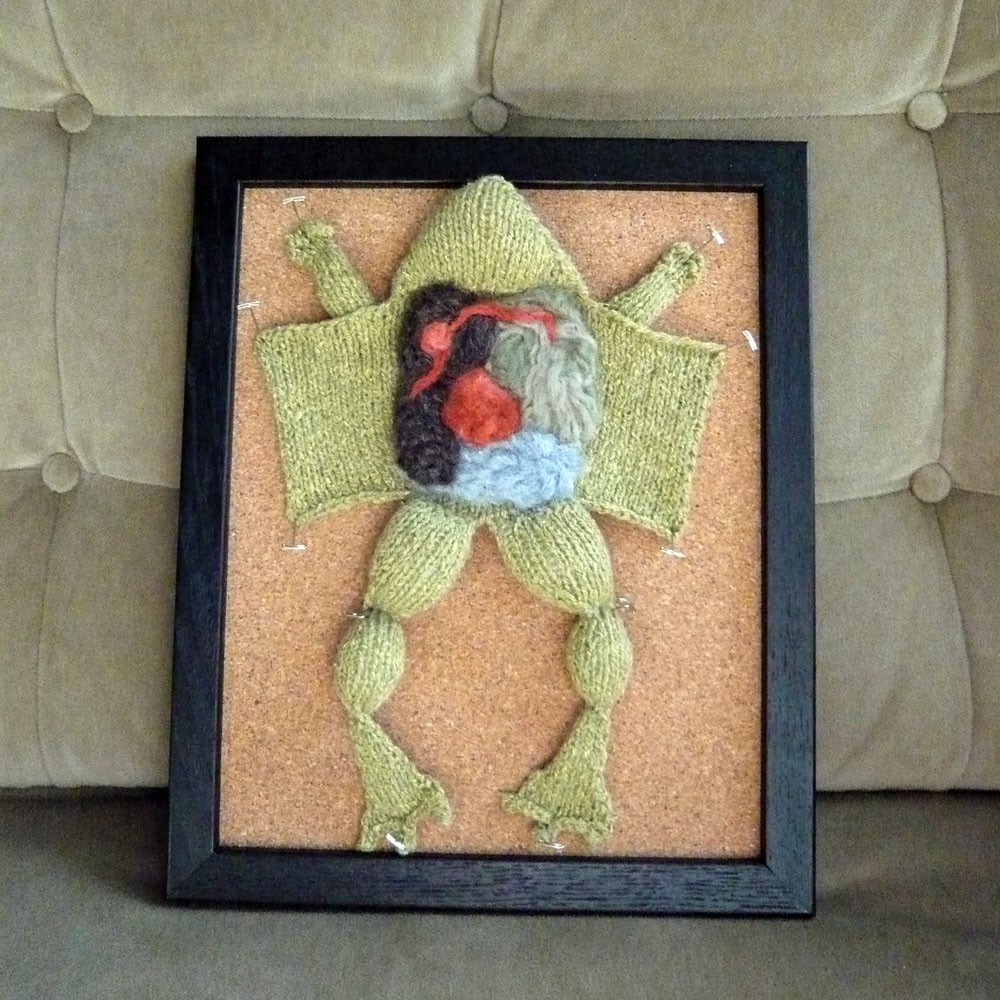
If you objected to dissecting frogs back in school, then this knitted frog dissection by Etsy seller craftyhedgehog might just be the ethical alternative you were dreaming of. It is also a great gift idea for anyone who overly enjoyed the frog dissection in school. If frogs aren't your thing, she also makes rat dissections as well.

Knitting For Miniatures

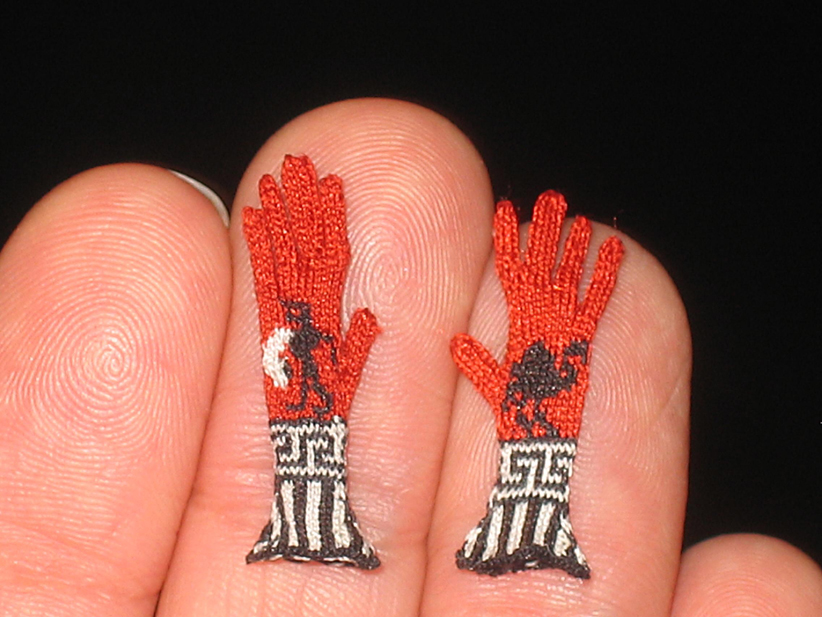
No article about crocheting and knitting would be complete without mentioning Anthea Chrome, the amazing artist who created all of the tiny clothing used in Coraline. While she’s best known for her work in the movie, her tiny sweaters are famous in their own right and have been a favorite of collectors and  have been featured in museums.

Underground Knitting

One yarn movement that’s been sweeping the country and has even made its way on to the homepage of Neatorama this week is the idea of Knitting graffiti. It has taken place in Massachusetts, Houston, Finland, Ohio, British Columbia, Sweden, and New York –be sure to click on this link for Deputy Dog to see pictures of all of these places. Some of the artists, like those from the International Fiber Collaborative, have obtained permission first, while others are acting rogue in the dead of night. The funniest part to me is that of all the articles I’ve seen, only one person seems to dislike the work. Mark Lukas, who has a winter home in Cape May, told the Press of Atlantic City that he found the tree cozies in his neighborhood hurt the charm and authenticity of the Victorian homes in the area, “I don’t think it’s appropriate. It’s a public space and people should not be able to go in and do what they want to do.” Am I the only one who thinks this guy is a total spoilsport?


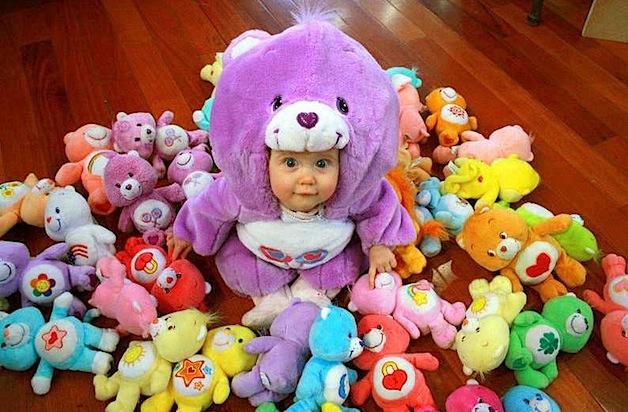
Baby Care Bear Costume


If you want your little one to look as adorable as this little angel, you're in luck, Sarah James of Instructables has instructions on how to make your own baby Care Bear costume from a dead Care Bear carcass.

Link Via Craftzine

Oriental Rug Made Of Carpet Foam

This might be the only time you'll ever want to put carpet padding on top of your carpet. The beautiful rug was constructed by artist Carolyn Salas.

http://carolynsalas.com/artwork/847321_Rug_Project.html Via Craftzine

Bunny Has Balancing Skills


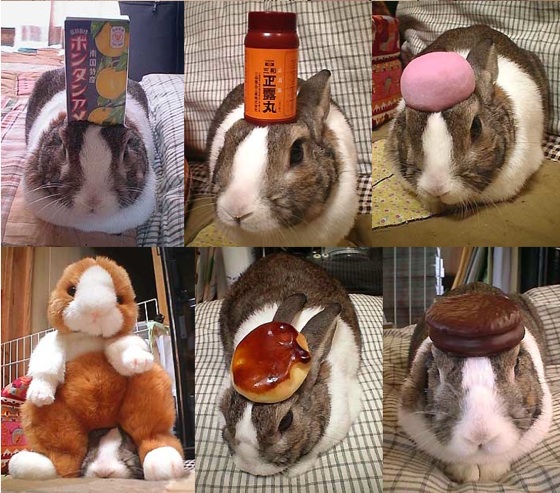
Feeling low? Is Stuff On My Cat just not cheering you up any more? Perhaps you need to move on to In Almost Every Picture 8, a collection of images taken by one Japanese man of his rabbit balancing an array of items on his unusually flat head. It's hard not to enjoy seeing the fluffball hold up drinks and desserts --unless you're in PETA.

http://www.amazon.com/gp/product/9070478285?ie=UTF8&tag=thechesguitol-20&linkCode=as2&camp=1789&creative=390957&creativeASIN=9070478285 Via CuteOverload

Beautiful Rays Of Light


Did you know there's a word for those stunning light beams that shoot through trees, clouds and stained glass windows? I sure didn't, but apparently the proper term is Crepuscular Rays and Environmental Graffiti has a great collection of photos that have perfectly captured these beams of light.

http://www.environmentalgraffiti.com/featured/incredible-crepuscular-rays/19284?utm_source=feedburner&utm_medium=feed&utm_campaign=Feed%3A+environmentalgraffiti+%28Environmental+Graffiti%29 Image by Mila Zinkova

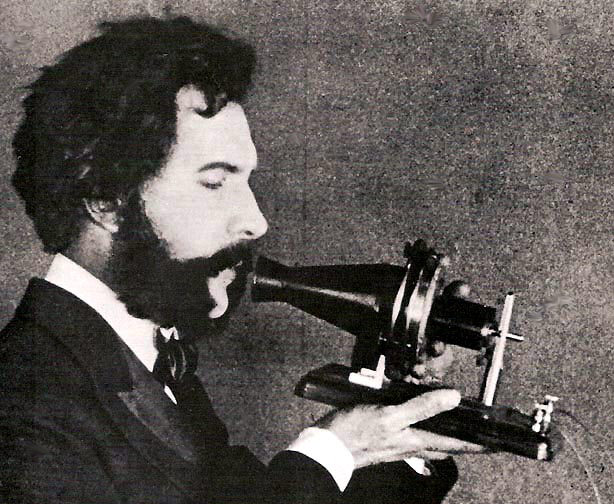
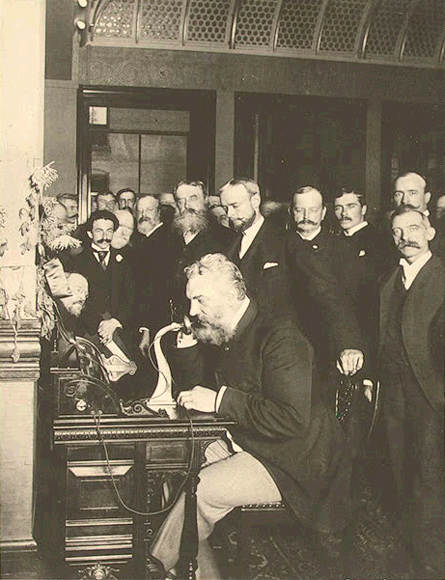
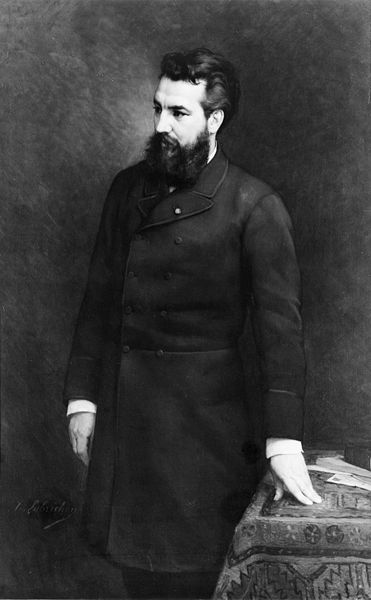
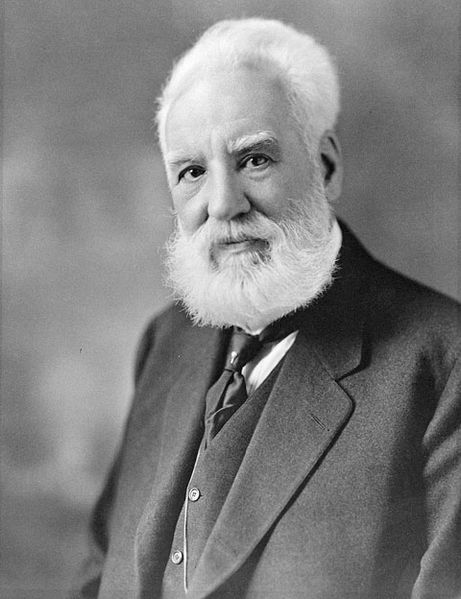
Sounds Like The Life Of Brilliant Man: Neat Facts About Alexander Graham Bell

Wednesday would have marked the 163rd birthday of Alexander Graham Bell, were he still alive. While his invention of the telephone has always been subject to controversy, there is no denying that the man was quite a genius. To celebrate the life of this great inventor, let’s take this opportunity to get to know Mr. Bell a little better.

He Wasn’t Always Alexander Graham Bell

At first, he was just Alexander Bell. When he turned ten though, he begged his parents to give him a middle name like they had given to each of his brothers. It wasn’t until his 11th birthday that the famous “Graham” was added to his name. His father chose the name in honor of a family friend, Alexander Graham, who had boarded with the family.

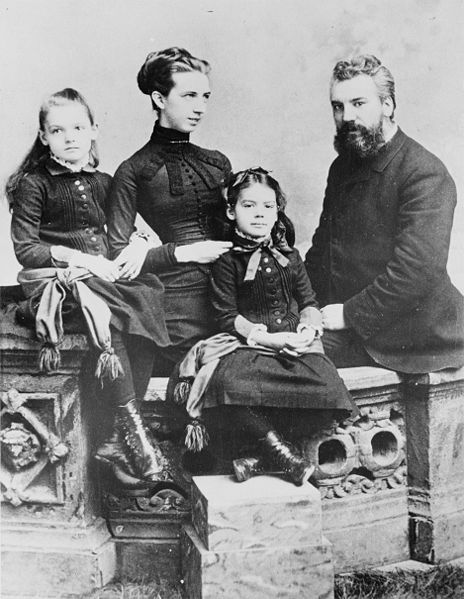
Of course, his family continued to just call him “Aleck” throughout his life. When he was married to his wife (seen with him in the above image) though, she insisted that he begin calling himself “Alec” and from that point on, he started signing his name as “Alec Bell.”

He Was Born Into His Line Of Work

Alexander’s entire family was tied in with the fields of elocution and speech. His father and grandfather (both of whom were also named Alexander Bell) worked in the field before Alec was born, and his brother also started working in the science. Additionally, both his mother and wife were deaf, which gave him even more reason to be dedicated to easing systems of communication. Even as a kid, Bell was fascinated with sound and he taught himself both ventriloquism and piano without any training.

Aleck Started Inventing Young

He finished his first invention, a dehusking device for a flour mill, when he was only 12. When his best friend, Ben Herdman, told him about the laborious process of dehusking at his parent’s flour mill, Bell quickly threw together a machine that combined rotating paddles with nail brushes. The mill used the machine for years to come and the boy’s father was so impressed that he gave the two boys complete access to a workshop in the mill so they could continue to work on inventions.

Despite His Brilliance, He Wasn’t Big On School

When Bell entered the Royal High School, he was known for having bad grades and a history of absenteeism. He excelled at science, but remained indifferent to all other courses. Eventually, he dropped out at only 15 and then moved to London, where he lived with his grandfather, who was able to finally get Bell interested in learning. It paid off too. Before he invented the phone, Bell was a teacher. He used his father’s teaching system to educate deaf students. One of his most famous students was Hellen Keller, who once said that Bell had dedicated his life to breaking through the “inhuman silence which separates and estranges.” Later in his life, he earned a series of honorary degrees from quite a few colleges, including Harvard, Dartmouth, the University of Edinburg in Scotland, the University of Würzburg in Bavaria and more.

The Road to Creation


Bell’s first work with what would later result in the invention of the telephone started when he was hired, along with Elisha Gray, to help find a way to send multiple telegraph messages along the same line. A few years later, he approached the director of the Smithsonian Institute, Joseph Henry, for his advice on an apparatus that would enable the human voice to travel via telegraph. Bell said he was worried he didn’t have the right knowledge to do it though and Henry inspired him by merely replying, “get it!”

Bell May Not Actually Be The Inventor of the Telephone

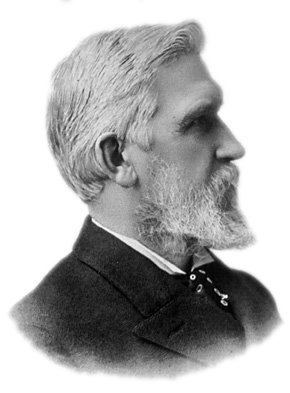
At the same time that Bell was working on his idea, the other man hired, on the telegraph project Elisha Gray (seen at left) had also been inspired to find a way to transmit speech through the telegraph. He filed a design for an acoustic telegraph that sent vocal transmissions through water the same day that Bell’s lawyer filed a patent for his telephone device. Aleck hadn’t actually gotten his phone working before he filed his patent. Three days after he was issued the patent, he used a liquid transmitter --just like the one Gray had designed, to get the device to work. He only used the water design as part of an experiment and never used the liquid transmitter in his demonstrations or commercial products, but he is still, to this day, accused of stealing the phone from Gray.

A man that worked at the patent office later swore in an affidavit that he had shown Gray’s patent to Bell’s attorney in an effort to pay off part of the debt he owed him. He also claimed that he showed the patent to Bell a few days later and that he was given $100 in return. While Alexander admitted that he learned some of the technical details from Gray’s patent, he swore that he had never paid the patent office employee, Zenas Fisk Wilber, any money.

Bad Business Calls

After Bell finished his work on the telephone, he offered to sell the patent for the device to Western Union for $100,000. The president of the company refused, claiming that the telephone was nothing more than a toy. Two years later, he changed his mind, saying he would consider it a bargain if he could buy the patent for $25 million. Of course, by that point, the Bell Telephone Company was not interested in selling the patent.

Continued Invention Theft Accusations

Throughout the years, the Bell company continued to make improvements on the telephone, even buying Edison’s carbon microphone in 1879. Unfortunately, quite a few inventors had started to work on improving the phone by this point and in only 18 years, the company had to fight over 600 lawsuits over legal rights to the patent. Fortunately, the fact that Alec had been working on sound and speech for his entire life gave him the credibility he needed to fight the lawsuits. Even so, the government moved to annul his patent on grounds of fraud and misrepresentation in 1887, but the Supreme Court ruled in the company’s favor and many other suits were dropped as a result. Through this entire period, the Bell company never lost a case, but the strain put on Alexander from all these court appearances eventually cause him to resign from the company.

His Work Didn’t Stop With The Telephone

While his most famous invention was the phone, Bell continued to invent throughout his life. He worked on optical telecommunications, hydrofoil planes and aeronautics. In 1880, he created the photophone, which he considered to be his most important invention. This creation would allow sound to pass through a beam of light and was the first wireless phone technology ever created. By the time he died, he had thirty patents. He had one patent for the phonograph, nine for transportation devices and two for selenium cells. He also invented a metal jacket that was supposed to help with breathing problems, a meter to detect hearing problems, a device to locate icebergs and more. He invented the first metal detectors, which he used in an attempt to uncover the bullet in President Garfield’s body. Although it worked perfectly in lab tests, it could not help doctors find the bullet, but that was partially because the president was laying on a bed with a metal frame and metal springs that disturbed the instrument and the surgeons refused to move him to a new location.

He Considered His Greatest Invention An Intrusion On His Work

While the telephone was Bell’s best known contribution to society, he considered his real work to be as a scientist and he refused to have a telephone in his study for fear it would intrude on his work.

He Was Far Ahead of His Time

At one point in his career, Bell and his team had considered the idea of pressing a magnetic field onto a record as a way to reproduce sound. While they couldn’t get their idea to work, this same concept was the basic idea behind tapes, hard discs, floppy discs and other media that were invented almost a century later. Also impressive was Bell’s environmentally-friendly inventions that were developed long before anyone had ever considered the idea of global warming. He worried about the effects of methane gas on the environment and experimented with composting toilets and devices that would capture water from the atmosphere. In an interview shortly before his death, he even mentioned the idea of using solar panels to heat houses.

The End of A Legend

Alexander Graham Bell died in August of 1922. Every phone in North America was said to be silenced during his funeral in his honor. Sources: AlexanderGrahamBell.org, Idea Finder, Biography.com, The Franklin Institute, American Heritage and Answers.com


Little Known Facts About American History

February is American History Month and here at Neatorama, we urge those of you who live in the states to celebrate your country’s past by getting to know a little more about its history. As a result, we’ve decided to bring you a selection of little known facts about American History. While the truth behind many stories may not be pretty, it’s far better to know the facts than to celebrate through myths.

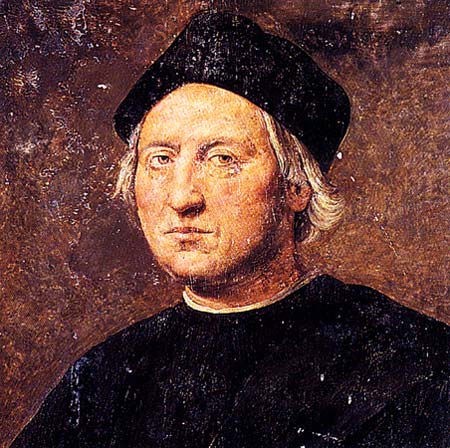
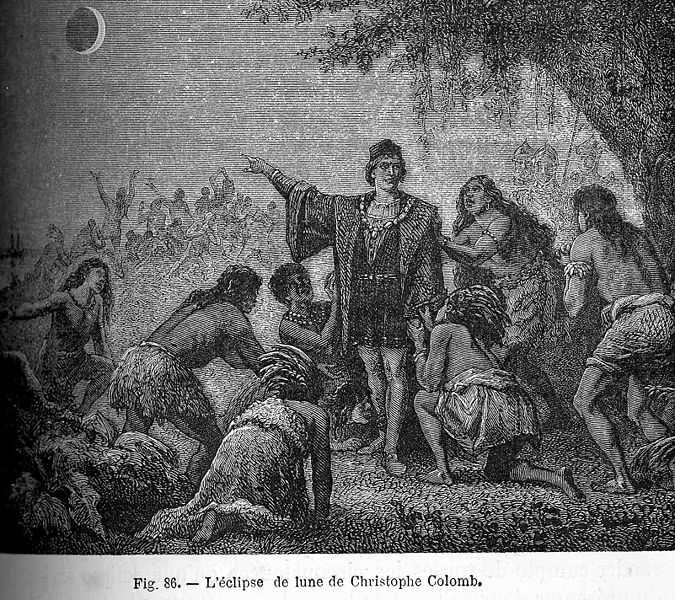
Christopher Columbus Wasn’t Such A Great Guy

The stories of Columbus celebrate him as an all-time American hero who was a genius explorer and first convinced the world that the Earth was round, not flat. In actuality though, the Columbus myth is far greater than the reality of the man’s accomplishments. To start with, Aristotle was the first person to prove the Earth was round and he did so by showing the earth casts a spherical shadow on the moon during an eclipse. By the time Chris was born, most people had accepted this truth.

It wasn’t until the 1828 biography of Christopher Columbus by Washington Irving (the same man that created The Legend of Sleepy Hollow) that this myth was born. Columbus simply believed that the circumference of the Earth was much smaller than it actually is and that by traversing the Atlantic Ocean, he could establish a faster trade route to India and China. Essentially, his discovery of the Americas was purely based on an economic scheme. Columbus was not even the first European visitor to the “New World,” as it is widely accepted that the Norse had made the voyage over 500 years before him. Of course, the Norse failed to mistake the new country for India (thus resulting in the title of “Indians” for the native populace) and they also failed to inform the rest of Europe that this giant mass of land happened to be sitting in the middle of the Atlantic.

Columbus was actually a bit of a barbarian. In fact, he was arrested and returned to Spain after being found to be too barbaric a ruler in his role as governor of the Hispaniola colony. 23 people testified about his cruelty --which, given the time period, means he had to be a really, really bad guy. He even refused to let the natives convert to Christianity because Catholic law dictated that baptized people could not be enslaved. Studies show that there were between 250,000-300,000 people in Hispaniola, but within 56 years of Columbus’ voyage, the number was down to 500. Also, another interesting fact, researchers believe his men were responsible for bringing syphilis into Europe and, thus, caused the deaths of as many 5 million Europeans.

The reason for his near-sainthood( literally, as the church considered turning him into a saint in the 1866) goes back even before Irving’s time. Essentially, Americans felt they needed a national hero and at a time when they resented the British rule over the colonies, he seemed like a great icon. By the way, all those pictures you've seen of Chris (including the ones used here), are not accurate. There still has not been an authentic painting of Christopher Columbus discovered to have been painted by his contemporaries.

Sources: Interesting History, Wikipedia, Christian Science Monitor, Columbus in History

Was Jamestown The First?

As you may have gathered from the bit about Columbus, Jamestown was not the first European colony in North America. In fact, the first temporary colony was created around the year 1000 and located in Newfoundland, Canada, by Norse mariners from Greenland. The first permanent colony in modern day America was actually located in St. Augustine, Florida and was set up by the Spanish in 1565. Jamestown was merely the first British colony, and the first colony in Virginia. These settlers were the first European colonists to do one thing though --resort to cannibalism. Yes, during the exceptionally rough winter of 1609, the colonists were forced to eat their feces and their dead to keep alive. While this fact is undeniably dark, it does show the hardships these settlers went through and their dedication to survival.

Sources: PBS, 100 Things You're Not Supposed to Know Image via Bill Barber [Flickr]

Sir Walter Raleigh Did Not Introduce Potatoes or Tobacco to England

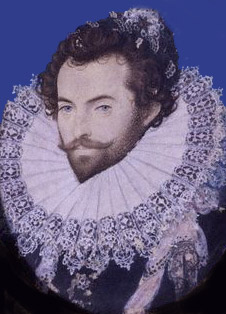
Speaking of the English connection to the new world, the famed explorer Sir Walter Raleigh is wrongly credited for two major contributions to English society. He did not introduce potatoes to England in 1586, as the veggies were first grown in Italy in 1585 and had already spread through Europe, including England) within the next year. As for tobacco, Jean Nicot (the inspiration for the word nicotine) introduced the plant to France in 1560, and it spread to England from France before Raleigh would have had a chance to bring it back to his homeland. Also, while Raleigh was certainly a stud (see image above), he did not ever lay his coat down over a puddle so Queen Elizabeth could cross. This lovely story is yet another romantic tale of a past that never existed.

Source: Greatest Historical Myths

Could Our First President Tell A Lie?

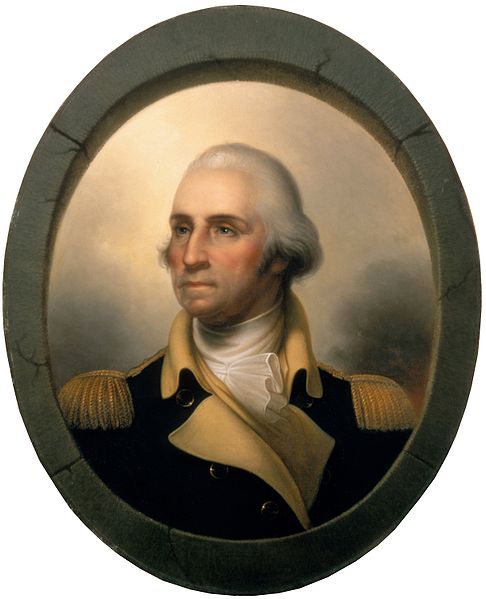
By now you probably know that George Washington never really did cut down the mythical cherry tree (this story came courtesy of Mason Locke Weems, a biographer that rivaled Washington Irving in presenting long-lived fabrications about their subjects). But were you aware that George Washington wasn’t actually the first president?

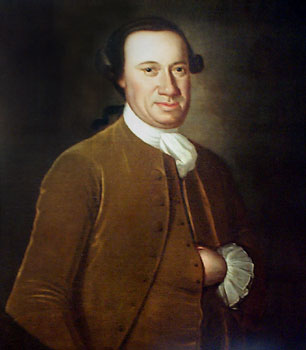
When you think back to history class, you may recall our first attempt at self-governance was chartered under the unsuccessful Articles of Confederation. Under this document, the first official President of the United States of America was actually John Hanson (seen at left). Hanson was actually quite a good leader and accomplished a good amount of work during his tenure, but he is poorly remembered as he led the country under the Articles of Confederation rather than the Constitution. As for Mr. Washington, he is very well-remembered, but not for his flaws. Washington was not generally the great war hero we remember him for. He actually lost ever major engagement during the first four years of the war. He wasn’t even the great president we have been told about in our school lessons. In fact, he was the first president to get caught in a scandal when the Philadelphia Aura reported that he embezzled over $6,000 more than he was permitted to take as his salary during his term as presidency.

Sources: Wikipedia, Marshall Hall, 100 Things You're Not Supposed to Know

No Wars Have Been Fought to Help Victims of Oppression

Many people think that we went to war with the south over slavery and that we fought in World War II to help stop the Nazis. In reality, the goals of these wars were much less noble. The main things that led the Civil War were economic issues and slavery was only a part of these problems. When the economic tensions got too hot, the South fought for its independence and the North fought to preserve the Union. Most Northerners didn’t care about slavery all that much and many Southerners simply couldn’t afford to own slaves.

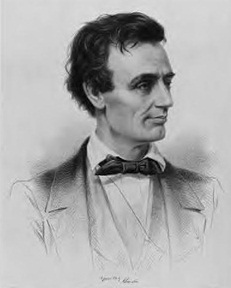
Even the reasons behind the emancipation proclamation were more political than moral. The so-called Great Emancipator, Lincoln himself, once said, "If I could save the Union without freeing any slave I would do it, and if I could save it by freeing all the slaves I would do it; and if I could save it by freeing some and leaving others alone I would also do that." The entire speech was merely a way to help de-motivate blacks who were fighting for the South so the North could get an advantage.

Prior to World War II, the majority of Americans were not only uninterested in the plight of the Jews in Germany, but many even supported the forced sterilization of the mentally incompetent, crippled or criminally-inclined. Many states also banned interracial marriages as an effort to prevent the tainting of the races. At least 10,000 Americans were forcefully sterilized, many after being labeled with such vague properties as “sexually wayward,” “depressed,” “deviant,” or “bad girls.”

As a matter of fact, America played a crucial role in Hitler’s rise to power and his efforts to create a “master race.” After funding a number of eugenics scientists in America, The Rockefeller Foundation helped create the entire German eugenics program and they even funded work by the infamous Josef Mengele worked before he went to Auschwitz. Fortunately for us, the researchers believed Americans were not ready to support any “final solutions,” which is why our eugenics program largely stopped at the forced sterilization stage and negligent medical care for the “unfit,” whereas the German program extended into unbelievable horrors. Of course, if the U.S. eugenics scientists hadn’t come up with so many scientific studies and so much research to back their claims, Hitler would have never been able to convince the rational German public to follow his plans.

Sources: Interesting History, HNN

The First Drug Laws Were Racist

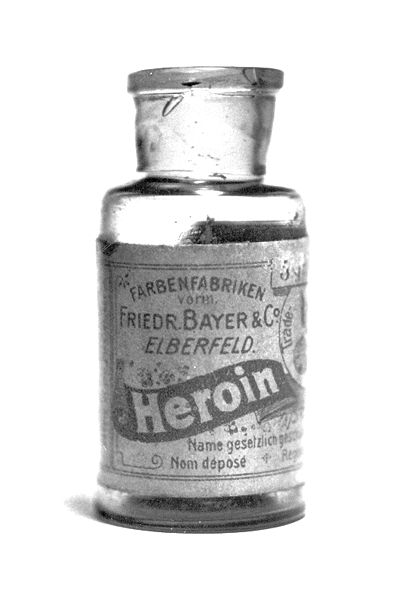
Regardless of your opinions on medicinal marijuana and the war on drugs, most people will agree that heavier drugs are not exactly great substances and shouldn’t be easily accessible to the general populace, particularly kids. A little over a century ago, public opinion was quite different and even companies like Bayer were producing opium products. In fact, Bayer invented heroin. These “medical breakthroughs” were even promoted for use on children.

So what would it take for the government to actually illegalize a drug in a time period like this? Racism. The first drug law in America was enacted in San Francisco and prohibited the use of opium in opium dens. The city claimed that they enacted the law because "many women and young girls, as well as young men of respectable family, were being induced to visit the Chinese opium-smoking dens, where they were ruined morally and otherwise.” Of course, using the drug outside of a Chinese opium den was ok.

Sources: Wikipedia on Drug Prohibition, Wikipedia on Heroin History I know you Neatorama readers are a smart breed, so many of you probably already know these facts and others. What’s your favorite little known history bit?


Happy Birthday Pluto!

Exactly 80 years ago today, the one-time ninth and smallest planet, Pluto, was discovered by Clyde Tombaugh. In this time, Pluto has gone through a lot of changes, both in space and in its reputation here on Earth. Let’s take a moment to celebrate everyone’s favorite dwarf planet by getting to know it a little better.

Disruptions of Uranus

The driving force that lead to Pluto’s discovery began when late nineteenth century astronomers noticed a strange disruption in the orbit of Uranus. They speculated this disturbance had to be caused by another planet beyond Neptune and in 1906, Percival Lowell started to seek out this so-called “Planet X” in the Flagstaff, Arizona observatory he founded fifteen years earlier. Lowell and his team worked diligently for the next seven years, but when the researcher passed on, the project was forced to temporarily close due to a messy legal battle with Lowell’s widow. Interestingly, during those seven years, the researchers did capture the first ever images of Pluto on March 19, 1915, but the team did not recognize them for what they were. In 1929, the search started back up again with promising, and young, astronomer Clyde Tombaugh (seen above) at the lead. His job consisted of looking at images of the sky taken weeks apart and then look for any shift in position of the objects imaged. On February 18, 1930, he discovered a moving object seen on photos taken in the past January.

Renaming Planet X

As soon as the news hit the papers, the observatory began receiving suggestions for the new planet’s name. The planet’s future name eventually came from 11 year-old Venetia Burney. She was quite the fan of mythology and thought “Pluto” (another name for the god of the underworld) would be an appropriate title for a cold planet so far away from the sun. Her name was officially selected on March 24 and she was given five pounds as a reward. Part of the reason the title was selected was based on the fact that the initials for the new planet would then share the initials for the man who started the whole project, Percival Lowell.

Sounds Like Hell

People were immediately enchanted with the newest member of our Solar System and quite a few things were named in the planet’s honor, including Disney’s newest character, a certain yellow dog you may be familiar with. A little over a decade later, a newly discovered element was named after the planet as well --you  may know it as plutonium. While most cultures use the name Pluto, a few languages have interesting translations for the dwarf planet. In Chinese, Japanese and Korean, the name is translated into “underworld king star” and in some Indian languages, the planet is named after Yama, the guardian of Hell in Hinduism. Image by Gene Duncan of Walt Disney World.

The Myth Of Planet X

Even though the discovery of Pluto occurred while astronomers were searching for a Planet X that would have thrown off the orbit of Uranus, Pluto is not Planet X. It only happened to be in the right place at the right time to get discovered, but its mass is not large enough to disrupt the orbit of Uranus. Scientists now believe there is actually no Planet X, which makes Pluto’s discovery all the more lucky. In 1992, data from Vogager 2 gave scientists new data on the mass of Neptune, which helped them recalculate its pull on Uranus, which eliminated any remaining suspicions about the existence of Planet X.

Getting to Know You

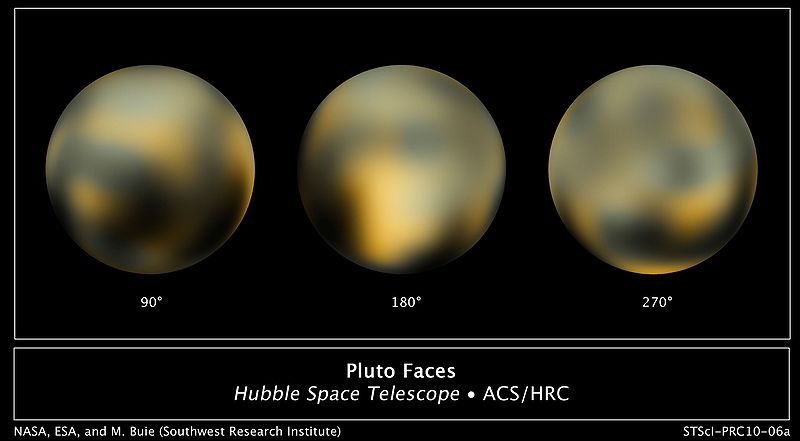
Eighty years after Pluto’s original discovery, scientists still know very little about the dwarf planet. Because it is so far from the Earth, investigation is difficult, in fact, NASA has compared it to trying to examine details in a soccer ball that sits over 40 miles away. They still have made some fascinating discoveries about Pluto though, including its composition, its rotation period, its orbit and the existence of three moons around the planet. One day on Pluto is equal to a little over six days on Earth. The planet rotates on its side, along its orbital plane, which makes for very extreme seasonal variations. During the solstice, one hemisphere remains entirely in the dark, while the other remains in permanent daylight. Because of these factors, the distance from the sun and Pluto’s chaotic orbit, the dwarf planet is said to be one of the most contrastive objects in the solar system. While it is impossible to directly photograph Pluto’s surface details, scientists have been able to process images using pictures from the Hubble Space Telescope. These images show that Pluto’s color seems to change between blue, black, orange, red, brown and white. Even stranger, the images show that it has increased in redness dramatically between 2000 and 2002. The changes are so dramatic, that the astronomer responsible for assembling the pixel-sized images into an actual picture has originally believed he made a mistake.

Knowing What Its Made Of

Using spectroscopic analysis, researchers have been able to discover that Pluto’s surface is made of 98% nitrogen  ice with methane and carbon monoxide. The planet’s strange axis orientation and small size make it always oriented towards the Charon moon with the same face at any given time. Interestingly, the face that is always oriented toward this moon contains more methane ice, while the other side has more of the carbon monoxide ice. The surface is believed to look something like what you see above. Image via L. Calcada [ESO]

A Chaotic Orbit

The orbit of Pluto cannot be calculated as far into the future as other planets because it has a somewhat chaotic orbit. Scientists can predict its position for the next 10 million years or so, but small changes in the Solar System can throw the orbit off. Despite the chaos though, certain factors ensure that the object will never stray too far or collide into another planet. Interestingly, Pluto’s wide elliptical orbit appears to put it in line to crash into Neptune, as it periodically crosses Neptune’s orbit and comes closer to the sun than the eighth planet. It stays within Neptune’s orbit for about 20 years and this occurrence happens only once every 248 years, or about once every Plutonian year. The last time Pluto entered Neptune’s orbit was in 1979 and it left this orbit in 1999. While it looks like Pluto could hit Neptune when the orbits are viewed from above, the dwarf planet is far from the planet in a 3D plane. In fact, it actually comes far closer to Uranus than Neptune.

Size Matters

As the popular shirt in the Neatorama store reminds us, Pluto provides ultimate proof that size matters. The dwarf’s entire mass is about a fifth of our moon’s and one third of its volume. When put up on a map of the Earth, like the one seen at right, the diameter of Pluto is just barely bigger than the length of the U.S. from north to south (Charon, it’s largest moon, is pictured beside it). From its initial discovery, Pluto has continued to “shrink” as scientific calculations help better estimate its size. Originally, astronomers calculated the size based on its perceived effect on Neptune and Uranus, but once it was proven that Pluto was not Planet X, its size was re-estimated. In 1955, calculations stated that it was around the size of Earth. Then, in 1971, it was estimated to be closer to the size of Mars. In 1976 though, astronomers in the University of Hawaii discovered that the planet contained methane ice, which meant it had to be highly luminous for its size and could not be more than 1% the size of the Earth. In 1978, when Charon was discovered as Pluto’s moon, it allowed scientists to properly estimate the mass of the dwarf planet. Now that we have a good idea of Pluto’s size, we know it’s smaller than seven of the moons of other planets. Image by Calvin J. Hamilton [Solar Views]

To Be, Or Not To Be (A Planet)

Here’s the part you all knew was coming, the controversial discussion about the little object’s role in our Solar System. As stated before, Pluto is relatively small. As a result, letting it stand as a planet would mean we would at least also have to add Eris as a planet, as this object also directly orbits the sun and is larger than Pluto. Pluto’s role as a planet began to come in question in the seventies, once scientists started to figure out just how small it was. It wasn’t long after that lots of objects that were similar to Pluto began to be discovered, including the aforementioned Eris. In 2006, the International Astronomical Union (IAU) released the first official definition of a planet, which met cutting Pluto from the lineup. Their rules for planethood said:


  1. The object must be in orbit around the Sun.

  2. The object must be massive enough to be a sphere by its own gravitational force. More specifically, its own gravity should pull it into a shape of hydrostatic equilibrium.

  3. It must have cleared the neighborhood around its orbit

While Pluto met the first two requirements, it did not clear the neighborhood around its orbit because it was part of the Kuiper belt of objects orbiting the sun. As a devastating consolation prize, Pluto was added to a newly defined group of objects called “dwarf planets.” Contrary to popular opinion, Pluto was not the first object to lose its planetary status. That titled belongs to Ceres, which was originally named the eighth planet in the Solar System in the 1800s, but lost its title when it was decided to be an asteroid instead. When Pluto’s planetary status came into question though, Ceres was once again on the table for being reinstated to its former planetary glory.

A Stellar Controversy

Many scientists still argue that the object should keep its status. One of the factors that has kept this argument so strong is the little amount of support, even amongst astronomers, as to the actual definition of a planet. As a matter of fact, only 5% of over 9000 astronomers in the IAU even voted for the definition, and of that number, not all voted in favor of the resolution. To make matters worse, many astronomers say this definition of a planet (particularly the part about clearing its own orbit) cannot not be applied to solar systems outside of our own, making it essentially useless. NASA leader Alan Stern has argued that the definition cannot even work in our own Solar System, as Earth, Mars, Jupiter and Neptune all share their orbits with asteroids. After the definition, some members of the California state assembly denounced the IAU for “scientific heresy,” while New Mexico and Illinois both passed resolutions declaring that Pluto is still a planet under the states’ skies. After the reclassification of Pluto, the American Dialect Society chose the word “plutoed” as its word of the year, meaning “to have demoted or devalued someone or something.”

Where Does It Come From?

Pluto’s origin was a subject of many theories since its discovery. One early hypothesis said that it was escaped moon of Neptune, but scientists criticized this idea since Pluto never comes within close contact of the planet. In 1992, astronomers found a whole population of icy objects beyond Neptune that seemed similar to Pluto. They named this group of objects, the Kuiper Belt (seen in the above image). Pluto is the largest of these objects, but it is believed that Neptune’s moon Triton was originally a part of the belt as well. Scientists now agree that Neptune likely underwent a sudden migration at one point and this helped it grab a moon and knocked some of the objects in the belt (like Pluto) into chaotic orbits. This theory may also explain Pluto’s unique relationship with its moon, Charon. As stated before, the dwarf planet and its relatively large moon are tidally locked together and always face the same side of one another. Image by WillyD [Wikipedia]

New Horizons For the Dwarf Planet

Up until recently, there were no serious attempts to explore Pluto more in depth. In 1992, NASA started working on a program called the Pluto Kuiper Express that would allow a closer investigation of the object, but the project was canned in 2000. In 2003 though, a new project started up called New Horizons. The craft was launched in 2006 and some of the ashes of the man who discovered Pluto, Clyde Tombaugh, were included on the spacecraft. New Horizons will make its closest approach to the planet in 2015, but only time will tell what well will learn of our little dwarf planet, or if it will even hold the same classification by the time the work begins. Sources: Nasa, Wikipedia, Nine Planets, Solar Views, ZD Net, Wired


Stunning Shots of Water With Rocks


Need a vacation? While we can't help you get out of the office, we can make it easier to imagine you are. The 26 photos on Web Ecoist's Water on the Rocks series is sure to help you feel relaxed and inspired.

Link

Email This Post to a Friend
""

Separate multiple emails with a comma. Limit 5.


Success! Your email has been sent!

close window

Page 313 of 344     first | prev | next | last

Profile for Jill Harness

  • Member Since 2012/08/04


Statistics

Blog Posts

  • Posts Written 5,147
  • Comments Received 14,072
  • Post Views 13,051,083
  • Unique Visitors 10,255,915
  • Likes Received 7,303

Comments

  • Threads Started 578
  • Replies Posted 563
  • Likes Received 280
X

This website uses cookies.

This website uses cookies to improve user experience. By using this website you consent to all cookies in accordance with our Privacy Policy.

I agree
 
Learn More