Jill Harness's Blog Posts

The Big, Busy World of Richard Scarry

While most people cite Dr. Suess as their favorite children’s author, they often overlook another childhood favorite, Richard Scarry. Surprisingly though, Scarry is the number one selling children’s book author in the world and his titles are far more popular than the good Doctor’s. With a career spanning over four decades during which he wrote and illustrated more than 300 books that have been translated into 30 languages, Richard Scarry is the widely successful, but often overlooked, children’s book author that most of us have grown up reading.
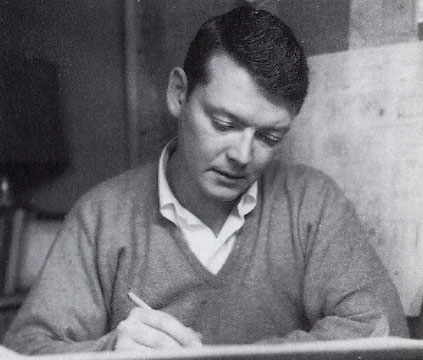
It’s time to celebrate the not-so-scary Mr. Scarry in honor of what would have been his ninety-first birthday this June 5. Image via Amazon

The Great Teacher Was A Horrible Student

While most Richard Scarry books are incredibly educational for kids, he was a terrible student and hated school. He excelled at scaring the girls in his school in Boston and was permanently banned from the library after bringing in too many snakes to slither along the tables and bookshelves. He received so many poor grades that he almost dropped out of school in junior high and ended up taking five years to finish high school after being held back due to excessive absences. During this period, many other children were dropping out of school to help keep their families afloat during the Depression, but Richard’s family owned a successful shop that helped keep them living comfortably despite the economic downturn.
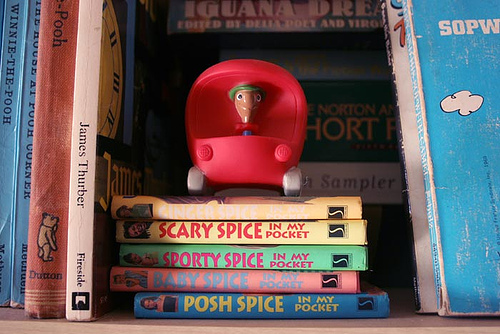
Around this time, his artistic talents began blooming and on top of practicing his mother’s handwriting for excuse notes to get out of class, he also started finding himself quite able when it came to drawing the human form. Unfortunately, his parents were far from excited when they learned about his new talents --as they made the discovery by finding his stack of charcoal drawings depicting nude girls. His dad asked him, after discovering an image of a beautiful woman with tassels on her breasts, “What's going to become of you, Richard?” A born artist and trouble-maker, he already had a response ready, “if I'm going to be an artist, sir, I have to learn how to draw the human form.”

While his father desperately wanted him to go to an Ivy League school like Harvard, Richard’s terrible grades and bad attitude ensured that was little more than a pipe dream and he instead was sent off to a local business school where he again did miserably and he dropped out within his first year. After long last, his father gave up hopes of having a child do anything more than be an artist and he finally sent the boy to the School of the Museum of Fine Arts in Boston, where he flourished until he joined the army to fight in World War II. Scarry never did obtain a college diploma.

Image via Gwen [Flickr]

Artistic Advances In The Army

When Richard first joined the army, he listed his occupation as artist, which caused them to put him in radio repair school. Angered at the prospect of more schooling, he bombed the entry test and earned the esteemed reputation of having the lowest score ever recorded on the test --a negative 13. He later joked, “My exam mark was minus 13, so they decided to make me a corporal." Because he did so badly, he was instead assigned to be a military art director and was instructed to tell the troops why they were fighting and to share news from home. To do this job, he paraphrased clips from Time magazine and illustrated them and then sent them off as fliers.

He impressed his superiors enough that they soon promoted him to be the editor and writer of Publications for the Information and Morale Services section of the Allied Force Headquarters. With his new position, he was given enough leisure time to visit Africa, Algiers, Italy and France, an experience that left him with a lifelong drive to travel. When the war ended, Scarry’s job had provided him enough experience developing content for a publication with over one million readers every week and he was able to get great positions in the New York art world without ever having to work his way up.

Big Success In New York, New York
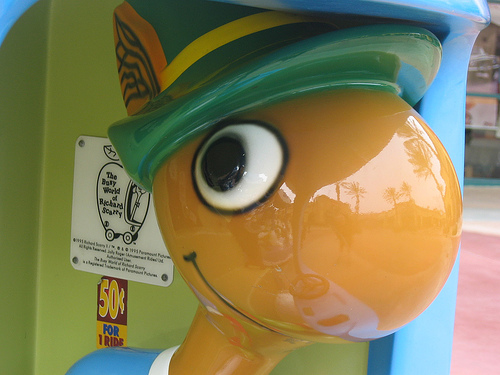
Immediately upon moving to New York he was given an illustrator job at Vogue, but he was fired three weeks later, when they claimed he just wasn’t right for the position. He was soon able to get a few positions at other magazines but really made a name for himself doing freelance children’s illustrations. It wasn’t long before he submitted his impressive portfolio to the Artist and Writers Guild, a subsidiary in New York that was just about to start mass-producing a new line of children’s books that would sell for 25 cents each. He was immediately hired and started out doing artwork for other writers, including his future wife, Patricia Murphy, who he married in 1949. By the early fifties, Scarry was inspired and experienced enough in children’s books that he decided to start writing his own titles. His first book, The Great Big Car and Truck Book, was published in 1951. It did moderately well and featured many of his interests, such as travel and technology, but it was most notable for being his only title to use humans instead of athropomorphized animals.

His second book, Rabbit and His Friends, introduced his use of talking animals, but his true success didn’t take place until the 1963 title The Best Word Book Ever. This groundbreaking work served as a sort of picture dictionary that was broken up by word type, rather than being organized alphabetically. This was also the first place he featured many of his famous anthropomorphic characters that would later be the backbone of his Big Busy World and Busytown. Image via Senor Ryan [Flickr]

The Secret Behind Scarry Success

The reason the classic Scarry books have done so well to this day is because they are so complex, yet so easy to follow. Children love that they can flip through the pages before they can even read and make up stories about the characters. At the same time, there is so much going on in his pictures that they often re-read the books over and over to make sure they catch all the action on every page. This seems to be what Scarry was going for. He once said, "I'm not interested in creating a book that is read once and then placed on the shelf and forgotten. I am very happy when people write that they have worn out my books, or that they are held together by Scotch tape. I consider that the ultimate compliment."

That’s not all there is to like. When parents read the books to kids, they enjoy the fact that the questions proposed throughout the pages start getting the children thinking and talking, meaning Scarry’s books help educate youngsters on an array of levels that go far deeper than most children’s books. Another positive aspect of the titles is his use of animals. While they are certainly cute, they also serve to be much more enjoyable and identifiable to children. One of the reasons his books have done so well throughout the world is the fact that animals do not have racial characteristics, which allow all children to connect with the little girl bunny or little boy cat. He explained "children can identify more closely with pictures of animals than they can with pictures of another child. They see an illustration of a blond girl or a dark-haired boy, who they know is somebody other than themselves, and competition creeps in. With imagination -- and children all have marvelous imagination -- they can easily identify with an anteater who is a painter or a goat who is an Indian."

Images via Pinot & Dita and beccaplusmolly [Flickr]

Controversy Quickly Corrected

Of course, that’s not to say Richard’s work was always free from issues revolving around political correctness. While his Big, Busy World books were based around real observations he noticed while traveling, the post seventies world was far less accepting of a near-sighted panda from Hong Kong or Manuel of Mexico with a pot of beans on his head. As a result, he largely stopped writing these titles and Random House stopped distributing the titles. As if that weren’t enough controversy, mothers soon started being offended by Scarry’s decidedly fifties roles of housewives taking care of the children while the husbands go off to work. Really though, Richard wasn’t sexist, he was just not with the times. As soon as he heard the complaints, he happily revised his images to show female farmers and police officers and men pushing strollers and cooking in the kitchen. If you're interested, the differences between the versions are well documented in this Flickr set by user Kokogiak.

The Patented Scarry Work Process
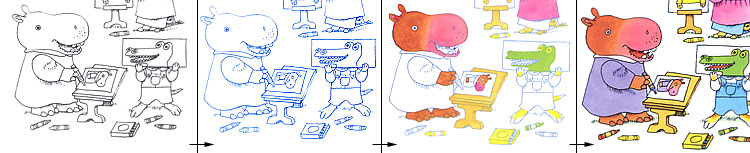
While the artist originally started painting his works in full-color watercolors, his signature books are all done using a work process he perfected throughout the years. First he would sketch out his panels with pencil, then he would re-draw the finalized versions with blue pencil. Then he would color in all the red areas on every page, then blue, then yellow, etc. and at the end, he would draw in all the detail lines with a pen. After he finished the works, he would tape on his narrative texts that quickly pecked out on a typewriter. Many of these contained spelling errors and other typos, but he left that to the editors to worry about.

Despite his popularity, Richard was always an artist first and a writer a distant second. While he always hated leaving white space and loved complicated machineries and cut-away diagrams, his early titles aren’t as loaded with these aspects. When things progressed on though, his titles were increasingly complex. By the time he completed his final work, Richard Scarry's Biggest Word Book Ever, the sixty-six year old Scarry’s eyesight was failing miserably, but that didn’t stop him from finishing the artwork for the monstrous 15 3/4 x 24 inches book. It was so large that Random House had to charge $29 per copy, but it was so popular that the first printing sold out in no time despite the price. Image via Rotten

A Family Affair

In their later years, Richard and his wife bought a chalet in Gstaad, Switzerland. Here he worked diligently on his books, sitting at his desk every day between 8 A.M. and 4 P.M. After his eyesight failed, he stopped working on his books, but he still lived happily with his wife until he passed away from a fatal heart attack on April 30, 1994.

These days, his son Richard Scarry Jr. carries on the tradition, writing and illustrating books under his father’s name and periodically under the name “Huck Scarry,” which he adapted from Huckle Cat, one of the most common characters in the Busytown world.

Image via JB Publishing

Sources: Ciao UK, Wikipedia, Barnes & Noble, Carnegie Museums, Kirjasto and Rotten


The Coolest Bikes on Two (Or More) Wheels

With the fear global warming taking over the minds of Americans everywhere, it’s no wonder that bicycles have gone through a renaissance in the last decade. True to form, the bike renaissance comes with a lot of innovations to make our old two-wheeled cycles safer, faster and cooler than ever. Some of these bikes are really futuristic advances, while others are just plain cool, whichever you prefer, there’s plenty to see here.

Why Strain When You Can Relax Under the Sun?


The Cycle Sol prototype may look a little strange, but its solar-charged battery makes it an inspiring piece of machinery. Soaking up the sun help to charge the battery, which can help push the bike to speeds up to 15 MPH. Its greatest attribute though may be the convenient push you’ll feel when tackling tedious hills. Also a plus, if it is left in the garage or used on a cloudy day, you can still plug it into an outlet to get the full battery charge you need to get moving.

Link

The Bike That Is Actually A Computer


Talk about a bike of the future. This stream-lined prototype incorporates an on-board computer that can help count the calories you burn, play music and serve as an unbreakable lock. It was designed by Gold Medalist Chris Boardman, who believes his creation could be an everyday product within the next twenty years. Similar to the Cycle Sol, this bike will also have a solar-powered battery to help you out when you’re tired of pedaling.

If you’re wondering how a bike computer could incorporate an unbreakable lock, it’s all through the magic of fingerprint identification. Of course, if the bikes are considered valuable enough, then you may run the risk of losing your digit all together when some really motivated thieves approach you –a fate that has already befallen one iPad user.

http://www.thisislondon.co.uk/standard/article-23730599-cycle-champion-chris-boardman-reveals-intelligent-wheels-of-the-future.do

Is the Shweeb the Next Schwinn?


One of the biggest drawbacks to cycling is the danger inherent with sharing the road with vehicles. The Shweeb individual monorail system eliminates this problem and gives you the safety and serenity only possible in your own personal bubble. The company working to make these mini-monorail systems a part of your daily commute claims they are “a personal, efficient, and cost-effective transport solution with applications for urban commuting, recreational and fitness markets.”

Link

Dissecting the Attraction of the Di-Cycle


If the classic bicycle design of two wheels in line with your body is just too outdated for you, then perhaps the Di-Cycle’s two side wheels are more your style. Perhaps the coolest advantage of the Di-Cycle though is its ability to operate on both land and water.

Link

Speed And Safety: Together At Last


The Hyperbike may not ride on water like the Dicycle does, but its massive side wheels are instead designed to help protect you in the event of an accident. Also nice, its design, which includes both feet and hand pedals allows you to travel at speeds up to 50 MPH.

Link

Why Snowboard When You Can Bike Sideways?


On the other hand, if you’d prefer to sit on your bike sideways while it moves to the front, then perhaps the Sideways Bike is more to your liking. Inspired by snowboarding, this one allows you to sit and pedal while facing sideways and then to look to your left or right while steering. I’d be terrified to ride this next to the road, but maybe that’s just me.

Link

The World’s Cheapest Bike


If money is your main concern, then this handy $30 bicycle might be more in your price range. It’s cool, it’s collapsible, it’s recyclable, and not to worry, it is water proof. The inventor claims that one of the biggest advantages though is the fact that it will probably not get stolen. On the downside, it doesn’t go very fast and if you bike regularly, you’ll need to replace it every six months or so.

Link

The Nothing Bike


When you’re looking for something a little more flashy, but just as bare-boned as a cardboard bike, the Nulla minimalist bike is a great choice. It’s spokeless, stylish and light, as it is stripped of all non-essential components. The name Nulla even translates to “nothing” in Italian, which means it’s also a perfect ride for any existentialists out there.

Link

The Relaxed Minimalist Design


Minimalists who prefer recumbent cycles are likely to find this spokeless cycle, created by designer Mathew Zurlinden, to offer many of the same advantages as the Nulla, only with the critical difference in the rider’s body position.

http://www.coroflot.com/public/individual_file.asp?specialty=4&is_featured=-1&c=1&portfolio_id=813629&individual_id=94738

Row Row Row Your Bike


If you were on your college rowing team or if you are simply much more muscular on the top half of your body, then why not row your bike home? Unlike a regular bicycle, even a standard hand-operated bike, this one is not powered by rotating pedals, but instead through pushing and pulling the handle bars. Using it can burn up to 850 calories per hour and it’s supposedly easier on your joints than a standard bike.

Link

Now it’s your turn readers. I’m sure many of you have seen some cool and crazy bikes in your time. Feel free to share them in the comments. Also, which of these designs would you prefer?

Does Viral Marketing Make You Sick?

Viral marketing has become so commonplace that it is now a household term even in the least media-savvy households. Even so, many marketing agencies have managed to fool the world into thinking that certain outrageous stories are genuine articles and not simply a clever ruse to bring nationwide attention to a product or event. These viral marketing campaigns have managed to trick their way into the public eye and managed to fool us all into believing their ads were real.

The Blair Witch Panic

One of the first and most famous viral marketing campaigns was the one involving the promotion of The Blair Witch Project. Those of you who remember when this film hit the theaters likely remember at least one person you knew thought this was a real documentary and that a group of student film makers was really killed while getting the footage. Some people were so terrified of this mediocre fear-fest that they actually lost sleep after seeing it. It was so successful that the maker of the movie, Eduardo Sanchez claimed, “One of the guys from Artisan told me the other day, 'Everything that could possibly go right on the film has gone right on this film, and you're never going to experience that again in your career and I'm never going to experience it again in my career.'” Sources CNN, Viral Blog

Should We Ban RayBan?

More recently, you probably remember the video featuring the hipster who was apparently stupid enough to get Buddy Holly sunglasses tattooed on his face. This one spread throughout the web before anyone started realizing that maybe, just maybe, he was actually working with RayBan. Humorously, even after everyone discovered he was working with the company, no one has yet proven if the tattoo is real or not. This wasn’t the first time RayBan managed to fool the masses though, remember the two guys who managed to keep catching RayBans on their faces?


Source: Mashable

Denim Devotion


Levis had a similar success story as RayBan when blogs across the net picked up on this clever video showing a guy jumping into his pants. The commercial isn’t branded, but people started being tipped off when they heard the comment on the tape that mentions “at least there’s no zipper” and then noticed the video was put on YouTube by "unbuttonedfilms."  Levis is the only jeans company that markets their button-up flies, which really helped limit down the choices when it came time to figure out who made the promotion. A while later the company tried to pull a similar stunt with their helium-inflated pants video, but no one really picked it up because it was a) obviously impossible (there's no where near enough helium in his pants to lift him off the ground) and b) an obvious advertisement. Instead the company decided to just use the ad as a television commercial. Sources: Trend Hunter, Gawker, Adrants

Don't Try This At Home


What happens when you combine illegal activities, extreme sports and poor video quality? You get a surefire viral video hit that’s sure to spawn some idiotic imitations. That’s how Quicksilver landed a major success with this questionable video showing someone surfing in an English river thanks to a hefty load of dynamite. Source: Daily Mail

Bike Hero Or Bike Huckster?


This video was obviously branded for Guitar Hero, but it originally seemed to be a fan project. It also made its rounds on the blogosphere before someone discovered it was created by an advertising agency and not “Kevin in Indiana” like the YouTube profile page indicated. Source: Multi-Player Blog

Fake Science In Fake Virals


Do you remember when everyone thought for a split second that cell phones popping popcorn with radiation could be the new Mentos and Coke? That is until people actually tried it and realized it was a complete hoax. Then the news quickly arose that the video was actually created by a Bluetooth headset company called Cardo. Lets just hope people were smart enough to test this bunk science before running out and buying a headset. Sources: Boing Boing Gadgets Now it’s your turn readers. There’s been thousands of these promotions in the last ten years, most of which were unsuccessful. But I’m sure many of you have fallen for these tricks at least once? What was the most convincing viral ad you’ve seen?


The Divine Dali Drama

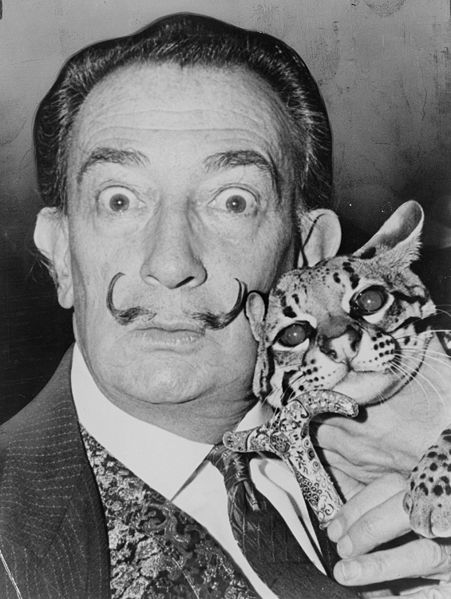
This month’s birthday article is a little belated because I had some personal projects I had to take care of, but Salvador Dali is a May baby and his creations just make him too great to pass up, even if his birthday was back on the 11. So without further ado, I bring you a brief history of Dali and his infinite weirdness in celebration of his much belated birthday.

The Reincarnated Salvador Dali?

The Dali we all recognize was actually the third Salvador Dali in his family. His father also had the name and his parents had another son that was also named Salvador, but he died nine months before Dali was born. For this reason, Dali’s parents always believed that he was the reincarnation of his brother, a belief the artist also held throughout his life. In many of his writings, he claimed that he felt deep stress from the pressures of living as both himself and his dead brother.


Humble, But Flashy Beginnings

Dali’s family was decidedly middle class and his mother was incredibly supportive of his work…until she died when he was only 16. The next year, he moved to the student housing at an arts school in Madrid and he immediately started to stand out through his eccentric methods of dress. The young student enjoyed wearing knee breeches with sideburns and long hair, similar to something Oscar Wilde would have worn forty years earlier. While he made friends with a number of students at the school, he was not an ideal student and was expelled shortly before he completed his courses after he refused to be tested by anyone in the faculty, saying, “I am very sorry, but I am infinitely more intelligent than these three professors, and I therefore refuse to be examined by them.” It wasn’t long after this that his unique painting style, which seamlessly blended classic influences like Raphael with modern avant garde styles like those of Joan Miro, started to garner him quite a bit of attention in the art community. Not to be outdone by his own artwork, Dali promptly started to grow his trademark moustache, which was influenced by the seventeenth-century painter Diego Velazquez.

His Wife Was a Bit of a Groupie

When Dali met his future wife, Gala, in 1929, she was already married to a prominent French poet. She soon left this artist for Dali, who was ten years her junior, but after their 1934 marriage, she continued to have many other affairs with young artists and even a rockstar in the 70s –all with Dali’s permission of course. While Dali was said to have a terrible fear of the female genitalia (part of the reason he was so accepting of her affairs was because he preferred to watch, but not partake in the activities), he was still unquestionably in love with Gala all the way up until his death. “Without Gala,” he said, “Divine Dalí would be insane.”

When To Make An Apology…And When Not To

Dali was a prominent player in the surrealist movement, but many of the surrealists actually disliked him. This was for a number of reasons, but one of the biggest issues was the fact that surrealists did not believe that anyone should ever apologize for their art. To some extent, Dali did agree with this sentiment and when his father demanded an apology for a painting the young artist made that bore the words “Sometimes, I spit with pleasure on my mother's portrait.” While it seems unlikely that Dali actually even meant it about his own mother because he adored her, he still refused to tell his father he was sorry, which resulted in his being thrown out of his childhood home, written out of his father’s will and being threatened by his pop that he should never step foot in Cadaquès again. When Dali and Gala caused a serious scandal in America, shortly after his work was introduced into the country, though, he quickly changed his tune. The incident in question involved the couple showing up to a masquerade party in New York dressed as the Lindbergh baby and his kidnapper. After facing great outrage on the part of the American press, he apologized, but he only ended up facing more outrage from the surrealist group he was a member of when he returned home. Of course, they were furious about the apology, not the act.

Political Abstinence

Around this same time, the majority of surrealists began to lean to leftist politics, but Dali further incensed them by always maintaining an ambiguous position on the matters. Dali disagreed with the idea that surrealism should involve politics and at the same time that he refused to support fascism, he also refused to denounce it. Eventually he was subject to a mock trial in his surrealist group and was expelled largely for his absence of political beliefs. His politics didn’t just bother the surrealists. Dali moved to France at the outbreak of war and only moved back after World War II ended. George Orwell denounced him for this, stating, “When the European War approaches he has one preoccupation only: how to find a place which has good cookery and from which he can make a quick bolt if danger comes too near.”

All About The Benjamins

Another major problem the surrealists had with Dali was his apparent willingness to sell his soul for money. As some started referring to him in the past tense, although he was dead, others preferred the nickname “Avida Dollars,” which is more than just an anagram for his name, it also sounds the same as avide à dollar, which can be translated as “eager for dollars.” More Surreal Than The Surreal Dali is famous for quipping, "the only difference between me and the surrealists is that I am a surrealist,” but perhaps even that was a bit of an understatement, as he developed many of his best known works by connecting with his subconscious not through drugs, but through sleep manipulation. He claims he would sit in a chair with a metal spoon in his hand, directly above a metal pan. When he started to fall into deep sleep, he would drop the spoon, the clang of the spoon hitting the pan would wake him up. Perhaps this method is what he used to create his most enduring surrealist works, the lobster telephone and the Mae West Lips Sofa.

Deeper Meanings of Dali

The surreal nature of his works should never be taken as a sign that Dali’s work was without meaning though. In fact, Dali was a huge fan of Freud and believed in a much deeper meaning of dreams, which is widely demonstrated in his artwork. Here are a few interesting symbolisms to look for next time you enjoy some of his artworks:


  • Melting clocks. These are probably the most famous of all Dali’s symbolisms and they represent the changing nature of time and eternity. Interestingly, he got the idea for these classic representations when he was looking at a melting piece of Camembert cheese on a hot summer day.

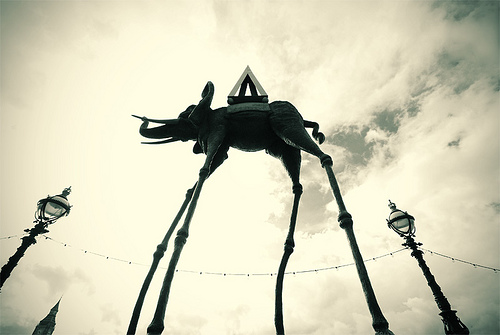
  • Absurdly tall elephants. Other classic images of Dali’s are the long-legged and multi-jointed elephants carrying huge obelisks on their back. These are used largely to represent men struggling to reach new heights while burdened with the weight of reality.

  • Drawers. Many of his human subjects are made up of a number of drawers, which are representative of the secrets of the soul and the hidden sins of the individual.

  • Eggs. If you’ve ever seen the Dali Theater-Museum in Spain, you probably noticed the massive eggs adorning the building’s roof. While it is easy to realize that these represent maternity, femininity and the prenatal, they also, in turn, are used to indicate hope and love.


  • Ants. Ants are seen in a number of his works, even those where you don’t immediately notice them. These insects are used to show death and decay.

  • Grasshoppers and locusts. These two critters are used for both fear and waste. (An interesting side note: Dali was terrified of grasshoppers as a child and the other kids would throw them at him to scare him.)

  • Crutches. While the obvious symbolism behind crutches is to show handicaps and man’s weakness, he also used them regularly to show man’s ability to overcome these problems in a feat of ingenuity.

Image via Kaneda99 [Flickr]

His Portfolio is Massive

Throughout his life, Dali painted over 1,500 works. This number is on top of the many illustrations, lithographs, theater sets, costumes, drawings, photographs, sculptures, films, holographs, and other works he helped to create. He loved to experiment with new mediums and even stepped into the world of high fashion, designing a few outfits for Elsa Schiaparelli and Christian Dior. He also created the rainbow-colored Chupa Chups logo. Even more amazing is the fact that his portfolio only recently expanded to include his completed Disney animation, Destino. While he started it with Walt in 1946, the pair soon found themselves out of money for the project. It was instead completed in 2003 by Roy Disney and Baker Bloodworth. That wasn’t his only film contribution though. He also worked on the famous surreal art piece Un Chien Andalou, worked on a dream sequence for Hitchcock’s Spellbound, and narrated about a search for magic mushrooms in Impressions of Upper Mongolia. Image via pecaenrique [Flickr]

Dedicating A Museum to Himself

As a matter of fact, Dali was one of only a few artists to actually play an active role in the museum dedicated to his works. His Theater and Museum in Figueres goes beyond showcasing his paintings, it is in its own way, another work of his. It’s hardly surprising that a self-obsessed creator like Dali would make a museum for himself, after all, he was famous for once saying, "every morning upon awakening, I experience a supreme pleasure: that of being Salvador Dalí." He started working on the building in 1960 and he continued adding to it all the way through the mid-80’s.These days, it houses the largest collection of his works, followed by the Salvador Dali Museum in St. Petersburg, Florida. The most interesting place for his work to be displayed though was the Rikers Island jail in New York. Dali donated a crucifixion drawing to the warden and it was hung in the dining room for years before officials decided to move it into the lobby so it could be kept safe. Humorously, after spending 16 years in a jail dining room, the painting wasn’t lost or damaged until it was moved to the lobby, where it was stolen in 2003. It is still missing to this day.

The Death of an Immortal

When Dali went on 60 Minutes in the 70’s, he told Mike Wallace that, “Dalí is immortal and will not die.” Unfortunately, like all self-proclaimed immortals, he was wrong. In 1980, his health started to fade and when Gala started dosing him with unprescribed medicine, it only made things worse as her drug cocktail damaged his nervous system. In 1982, Gala passed away and this made Dali’s health fade away even faster as he lost his will to live. He started dehydrating himself and a few years later a fire broke out in his bedroom. Both acts may have been accidents or he may have been trying to commit suicide, no one knows for sure. After the fire though, he started living in his museum until the end of his life. In 1989, Dali died of a heart failure, shortly after King Juan Carlos visited him on his deathbed and confessed his lifelong adoration of Dali’s works. Dali quickly sketched a drawing for the king and it turned out to be the last artwork ever done by the artist. I love Dali, so I was really excited to write this article, but I must admit, he was a bit of a freak. There is so much information about him, particularly his crazy stunts, that I couldn't even begin to describe them all here. So, instead I leave them to you. What are your favorite Dali tales? Sources: Wikipedia #1, #2, Artcyclopedia, Smithsonian Magazine, BBC News, Salvador Dali Museum, and Neatorama


Boxer Survives Getting A Nail In the Head


Max's owner was working on the deck in their back yard and accidentally shot the pup in the head when he started acting too playful and got too close to the action. Fortunately, he was rushed off to the vet, who was able to remove the nail and keep the dog alive. Be sure to click the link to see the amazing photos of the X-rays and removed nail.

Link

Hipster Puppies


Have your selection of animal blogs gotten a bit too repetitive? Then maybe it's time you check out Hipster Puppies. If you submit your dog pics now, you might even have a chance to get in their upcoming book.

Link

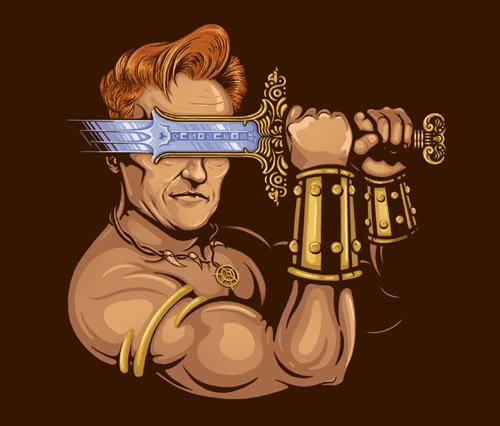
Conan the Barbarian Shirt At Threadless


If you were one of the many supporters of Team Coco in the recent late night battles, then you're sure to appreciate this glorious Threadless shirt featuring Conan in his true barbarian form.

Link Via Laughing Squid

Preposterous Pet Pampering Products and Services

This week is the American Humane Society’s “Be Kind to Animals Week,” and while I certainly support their objective of stopping animal abuse and educating people about how to be a better pet owner, it’s easy to take the notion of “being kind” a bit too far. Sure we’ve all seen friends or family members that have spoiled their pets a little too much (even I have a few shirts for my pup), but these products and services simply cross the line of acceptable pampering. Special thanks to my friend Lady Bee from InventorSpot who provided a huge boost to my research on this article with her exceptional animal products blog.

Say Hello To Your New Dinner Guest

Remember how people used to teach their dog not to beg at the table? This pup high chair mocks your concepts of table manners and good conversation. Sure your pet may be a member of the family, but I don’t think most dogs would want to sit in this high chair, even in exchange for a fine dining experience.

Wash Up!

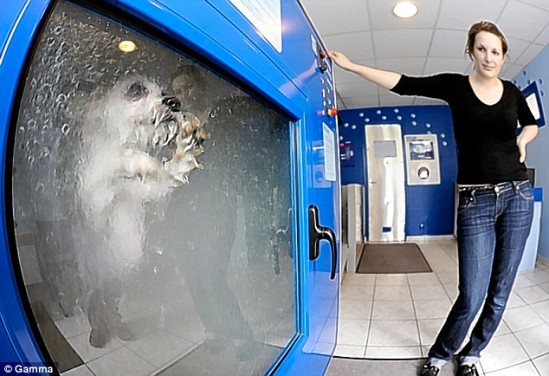
Of course, if Fido is going to join you for dinner, you’d better make sure he’s clean first. This Dog-O-Matic washing machine may sound like a sketch comedy show commercial, but it is absolutely real and the owner just swears that dogs love it –and who wouldn’t love getting stuck in a metal box and sprayed with soap and water?

Breathe Easier

Sure your home ionizing air purifier may still provide cleaner air to your pup, but is it enough? And what about when he’s outside and is breathing all that dirty, unpurified fresh air? Fortunately this Mini Ionizing Air Purifier for Pets can help your little one breathe easier as they track it through the house and yard on their collar. It also has scent cartridges to help make your dog stink less, but there’s no point in pretending those are really for the pup.

Oxygen Overload

If the air purifier wasn’t enough, maybe your animal needs a full dose of oxygen therapy. This dog oxygen chamber allows your animal to take part in the same trendy breathing exercises that are available to human clientele the world over. Apparently, they’re very popular with the pets in Japan, and its easy to see why --just look how happy the dog is in the photo.

Down Boy Down

Once your pup is properly oxygenated, you’d better spritz on some Sexy Beast perfume to help ensure she maintains a delicate and lovely fragrance throughout the day. Sexy Beast is normally extravagantly overpriced at $50 for a 1.7 ounce bottle, but if you really want to throw down, you could instead buy the limited edition version with a bottle covered in Swarovski crystals. It’s only a mere $850 for a 3.4 ounce bottle and surely it will only rise in price, after all, it is limited edition.

Over the Top Dress Up

When you really want to feel like you’re on the same level with your dog though, it’s all about the clothes. And while most people feel content with dog shirts and the Snuggie for Dogs, you’re in a whole different plane of existence when you decide that your dog needs a $3000 dress covered in Swarovski crystals. Sure the dress is cute, you know what else is cute though? The 200 animals you could help provide food, shelter and care for if you donated your $3000 to the humane society instead of spending the money on a dress your dog will probably destroy within the week (I got that figure from a donation flier they sent me last year).

Out On the Town

Now that you and Fluffy are all dolled up, maybe it’s time to head out to the L.A. dog bar, SkyBark, and enjoy a brew with your furry friend. Lucky for you, SkyBark even serves beer made for dogs. Happy Tail Ale is a carbonation-free, alcohol-free beverage brewed especially for dogs.

Tweeting The Night Away

When your dog wanders off at the bar to get some privacy with a hot collie, now you can even track her with your smart phone via Twitter. Just get her this great Puppy Tweets accessory and everything she does will show up on her own special Twitter feed.

Puppybjorn?

When you’re dog is to tired to carry itself home from the bar, you have your option of carriers and while pet carriers are nothing new, and neither are Babybjorns, you get something delightfully new when you mesh the two together. Now you can carry your four-legged friend on your chest and display a whole new level of crazy. The funny thing is this gesture isn’t  viewed as “I love my dog,” but instead as “I desperately want a child.” And once again, this creation is simply not something animals really want. After all, do you really think your pet is happy sitting up like that with his arms swinging?

Bye Bye Brown Eye

I admit it, the concept of butt covers for pets really bothers me. At least the similar product of dog panties is more like silly clothing and innocent costume play for the pooch. All these "Rear Gears" do is hide the animal’s butt. If you’re really that insecure about your animal’s behind then you probably aren’t going to clean up after your dog on walks and you probably leave your kitty litter dirty for months at a time…bottom line, if you think you need these, you probably shouldn’t have a pet. Oh, and good luck removing the butt cover when your animal does its business despite your cartoon coverup.

Big Ballin'?

If you want to find the ultimate method of pretending to pamper your pet when the only one receiving benefit is your self-confidence though, Neuticles are the way to go. Despite constant messages from vets and other animal care workers telling us that animals don’t notice when their testicles are removed, Nueticles prides itself in helping you fool your animal into thinking nothing’s different by switching their natural testes with silicone replacements. Of course, the products do help promote neutering among people who still can’t deal with having an emasculated dog and for that, they should be commended, but the idea itself is still solely for the vanity of the owner.

Can You Ear Me Now?

Where Neuticles actually at least promote a healthy practice amongst dog owners, the company’s other product PermaStay Ear Implants actually help promote an outdated and unhealthy practice. Most modern vets will not even crop dog’s ears because the unnecessary surgery can result in both anesthesia dangers and infections. That doesn’t stop the PermaStay folks from urging pet owners to not only get the procedure, but then to put their dog under additional stress and danger if the cropping fails and the animal’s ear becomes floppy. When this happens, the owner is not supposed to just lovingly accept their dog’s floppy ear, but to put the dog under anesthesia and have plastic implants added to prevent the floppiness. While the inventor, Gregg Miller, claims the dog doesn’t feel the implant in his ear, the problem is that dogs actually suffer immense pain after ear cropping. So Happy Be Kind to Animals Week everyone, but remember, not everything that claims to be invented for your pet is actually a good way to be kind to them. I know I couldn't possibly list all the wacky pet products here, so what are your favorite weird animal items?


Catching Up With The A-Team

The A-Team movie is coming out soon and its sure to stir up the standard anger from the show’s loyal fans like most of these things do, but what is it about the A-Team that has made it such a cultural icon? Is there more to this ragtag group of mercenaries than meets the eye? You bet there is. So let’s take a deep look at the je nais sais quoi that allowed this somewhat formulaic show filled with cartoonish levels of violence to become a long-standing success story. Image via Wikipedia

A Custom Role For Mr. T

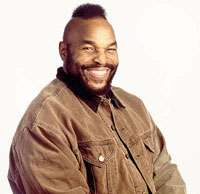
Almost everyone’s favorite character in the show is B.A. Barracus, played by Mr. T. The funny thing is that the entire concept of the character, and largely the overall show, was based around Mr. T’s public persona. In fact, when NBC Entertainment President Brandon Tartikoff pitched the show, he presented is as a blend of The Dirty Dozen, Mission Impossible, Seven Samurai, Mad Max and Hill Street Blues, with “Mr. T driving the car.” Naturally the character based after Mr. T shares his love of gold and his mohawk. In the show, he got to point out that the look is not related to the Mohawk people, but is instead an African symbol. Image via Wikipedia

What’s With B.A.?

Since the show’s inception, B.A. was said to stand for “Bad Attitude.” It was even spelled out in the pilot episode when reporter Amy Allen explains, "Bosco Baracus. Known as B.A. for 'bad attitude.' The man is a mechanical genius. He also has one of the worst conduct records in the army. He likes to slug officers." In season 4, you learn that the letters are actually his real initials, as his real full name is actually Bosco Albert Baracas. In other countries (the show has been notably popular outside the U.S., particularly in the U.K.), his character’s name changed so he could maintain a cool nickname. In Spanish-speaking countries, his character is named Mario Baracas, so the M.A. can stand for “Mala Actitud,” which is an accurate translation of the original. In Russian, he is D.N., or “Durnoi Nrav,” which similarly means “Bad Attitude.” In Italian, his name is P.E. Baracas, which stands for “Pessimo Elemento,” which is similar to saying “Bad Guy.” In Hungary, his name also means Bad Guy, but they simply call him “Rosszfiu.” The weirdest translation I found was the name they give the character in Taiwan, “Guay Tou” which seems to translate to “Wacky Head.”

Mercenaries or Heroes?

The members of the A-Team are often referred to as mercenaries because they are such tough guys who are willing to kick butt for money, but the plots almost always required them to fight bad guys for an innocent client (usually a girl) and they often refuse to accept payment in the end. Additionally, the team is made up of loyal Army soldiers who are only on the run due to a serious misunderstanding. The story is that during the Vietnam War, they were given orders by their original commanding officer to rob the Bank of Hanoi to help put an end to the war. Unfortunately, when they returned to base after the mission, they find that it was burned down and that their commander was killed by the Viet Cong. This erased all evidence that they robbed the bank under orders and they were court-martialed for the crime. They were sent to Fort Bragg, but escaped prison. Image via herzogbr [Flickr]

Ratings Rule The Plot Twists

When the show came out, it was incredibly successful. The first episode was broadcast after Super Bowl XVII on January 30, 1983 and reached over 25% of the viewing audience. Over the first three season, ratings continued to place the show consistently in the top ten for its time slot, but by the fourth season, viewership started to decline. Some people say this was because more people started to watch family-friendly programs like The Cosby Show, but the network execs thought it might have to do with the show’s predictable plot lines. As a result, they changed things up in the fifth season by letting the team get captured by the Army and work to do suicide missions in exchange for a pardon. Unfortunately, fans hated the idea of the team working under someone else’s orders and viewership decreased even more, resulting in the cancellation of the show after a total of 98 episodes.

Star Power

The show was big enough at its peak to attract a number of popular celebrities of the day, including Boy George, Isaac Hayes, Hulk Hogan, Rick James, Pat Sajak and Vanna White. Also, a bit of merchandise was released during the show’s reign including everything from action figures to a Mr. T cola-flavored popsicle.

Cartoon Violence Brought To Life

One of the most widely-remembered things about the show is its cartoonish levels of violence, which almost never actually resulted in injury or death. While some estimates claimed that the show often had as many as 46 different violent acts per episode, co-creator of the program Stephen J. Cannell argued that these acts were not of any consequence because the violence was so unrealistic. Cannell also admitted that the violence without injuries even got to the point where it was a running joke for the writers, who would often test the limits of realism on purpose and incorporate things like unbelievable helicopter crashes where the victims would simply get up and walk away. Image via SiamEye [Flickr]

Sexism On and Off The Screen

During the show’s run, critics often called it sexist because the females on the show were almost always playing the damsel in distress. The only recurring female characters were those of the “assisting reporter.” It’s one thing to have the appearance of sexism on screen, but both of the actresses were notably disliked by other cast and crew members who simply didn’t think a woman needed to be on the show. The first of these two actresses, Melinda Culea, was fired after she started demanding more lines and more action scenes. She was quickly replaced mid-season with Marla Heasley who was expected to be more fragile and feminine. Even so, she was quickly let go by the start of the third season when the producers decided they didn’t need a woman cast member. Heasley claims that her first day on set she was approached by George Peppard, who played Colonel John "Hannibal" Smith on the show. He told her:

“We don't want you on the show. None of the guys want you here. The only reason you're here is because the network and the producers want you. For some reason they think they need a girl.”

Later on, he shared his same sentiments in an interview with the Australian paper, the Sunday Mail:

“Whenever the studio slips an actress on to the team, she becomes a distraction. She always slows down the action. She's someone who's only there for the glamor shots. Everything stops for the sexy smiles - and I can't see why that's necessary on The A-Team.”

Dirk Benedict (seen above), who played Lieutenant Templeton "Faceman,” recently remarked that the show was made to be a guy’s show and that if it had to be made in modern times, they would force it to me so much more feminine that a more proper name would be, “The Gay-Team.” I can’t help but wonder if he feels that way about the new movie, particularly considering that Jessica Beil is playing a ruthless Army officer dedicated to tracking them down. Image via Marrevee1 [Wikipedia]

Changes For The Big Screen

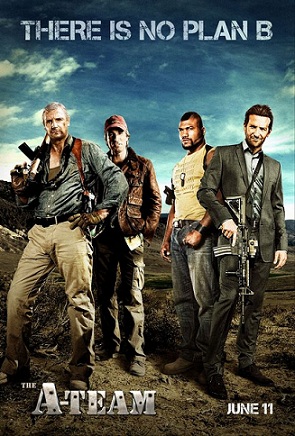
Speaking of the movie, that’s not the only major change that’s taking shape in the plot. Instead of being Vietnam vets, the team now served in The Gulf War. They are still on the run after being accused of a crime they did not do and are branded war criminals. Both Jules Daly and Stephen J. Cannell, the show’s original creators, are working on the project. One thing you’ll have to say goodbye to though is the cartoon violence as one of the lead writers has said they intend to have the film be far more gritty and in the vein of Casino Royale and Batman Begins. Mr T. was offered a cameo, but he turned down the offer and Ice Cube was originally offered the role of B.A. Baracus and John Singleton was assigned to direct the film, but both ended out being pulled from the project. Instead of Mr. T or Ice Cube, MMA fighter Quinton “Rampage” Jackson will be playing B.A. Baracus. Poster image via Wikipedia So how about it A-Team fans, are you going to check out the flick? Sources: Imdb, Telegraph UK, Wikipedia #1, #2, #3


Fabulously Funny Facebook Fan Pages

By now, you probably know there’s a Facebook fan page for just about every subject under the sun, even for people who hate that everything has a fan page. Even so, you’ll probably be surprised by just how specific some of these fan pages can get. To that end, here’s a collection of some of the weirdest and funniest fan pages around. I’d like to dedicate this post to my cousin Jon who both inspired me to write this article and gave me a leg-up on the research after he joined so many weird fan pages.

Hateful But Humorous

We know the internet is full of haters, but when does a pet peeve become something greater: when thousands of people share your anger at the subject. Whether you hate people who eat string cheese without peeling it, 6 year-olds with cell phones, Ed Hardy, getting your feet tickled or orange-skinned Jersey Shore girls, there’s certain to be some group on Facebook that’s sure to make your hatred of a random subject seem at least somewhat legitimate. There is even a group for people who hate having to tell Microsoft Word that their name is not a misspelling.

Image via www.votejoec.com [Flickr]

Only On The Internet

Sometimes, it’s important to remember just how much the internet has changed our lives. Take, for example, the fact that now when you want to tell your friends how your day was you often have to remember that your family could also be included in the message.

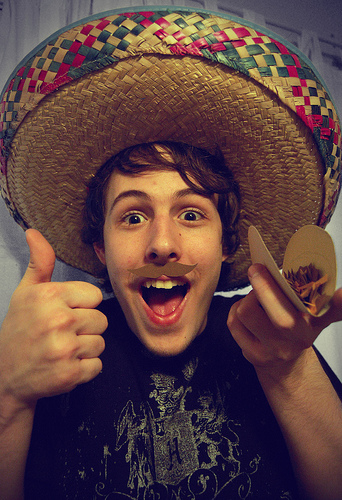
You might also recall how much our vocabulary has changed in the last decade. It’s to the point where LSHMSFOAIDMT(Laughing So Hard My Sombrero Falls Off and I Drop My Taco) would be a legitimate expression if it weren’t just so darn long.

Image via anniebby [Flickr]

Celebrating the Little Things In Life

Even now though, the internet does not control our entire lives, it’s still about the simple things and you don’t need to own the Book of Awesome to remember how great it is to get the extra item in the vending machine, push the buttons on your soda cups or to laugh so hard you feel like you’re exercising. We also all remember how great it was to make a robot voice with the help of a fan when we were kids. And let’s never forget how great it can be to enjoy free samples at Costco.

Image via Chapandra [Flickr]

Daily Observations

Similarly, sometimes it’s just comforting to know that you aren’t the only one to know you feel a certain way or notice certain things. Whether you’re the person who constantly questions where you got that bruise or scratch (I certainly am) or the type who finds themselves periodically thinking ‘I’m so glad my laugh doesn’t sound like that,’ it’s always nice to know you’re in good company. There’s even a group for all of you grammar Nazis out there where you can celebrate knowing the difference between the three spellings of “there.”

Image via Unhindered by Talent [Flickr]

Marvellously Nerdy Movie Fans

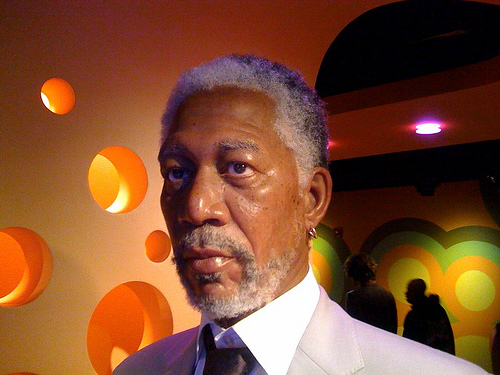
While most people just become the fan of an actor or movie they like, some people have strangely specific Facebook fan pages made after them, like the group dedicated to Morgan Freeman’s voice. This is particularly ideal for those who love the way he talks but hate his movies. Alternatively, some people choose certain parts of a movie to relate with, for example those who are fans of “I Hate It When Someone Puts Your Name In The Goblet of Fire Without Telling U [sic].” There are even fan pages based around character’s names, or rather getting someone’s sister to name their baby after a character name…specifically Megatron. Interestingly, the person who started the group said that if it got over one million fans, his sister would go ahead with the Megatron title. The page currently has 1.7 million fans already, so I guess we’ll know in August (when the baby is due) if the sister is true to her word.

Image via Kenya Allmond [Flickr]

Schooltime Facebook Fun

While most Neatorama readers have graduated long ago, it is still refreshing to learn that high school today is still largely the same as it was in our day. Fortunately, “Pretending to Look For Your Homework When You Know You Didn’t Do It,” and “English Teachers Put More Thought Into A Novel Than The Actual Author Did,” can help us remember just what it was like to suffer through the day-to-day drudgery of English essays and math exercises.

Image via beautyfromashes [Flickr]

Somewhat Unrelatable

I have to say that one of the funniest groups I’ve seen is one that you probably won’t get unless you live in my hometown of San Diego. For those of you who have spent a good amount of time in America’s Finest City (I’m not bragging, that’s its real nickname), there is the page for those of us who once thought the Mormon Temple in La Jolla was actually a castle. Even if you’ve never seen it in person though, the picture is sure to give you some idea about what we’re talking about here.

Image via San Diego Shooter [Flickr]

I Hope We All Feel This Way

Sometimes the funniest groups are simply those that celebrate something that’s so obvious it seems preposterous to not be a fan of the idea. For example, I don’t need to join the Facebook fan page just to prove that I support not being stabbed repeatedly, but apparently some people can’t feel strongly enough about the subject.

Image via cookiealbarn [Flickr]

Now it’s your turn readers, I’m sure you’ve seen some wacky groups and fan pages that the rest of us have never even heard of, so share already!


Dancing To The Beat Of A Different Bass

Rock and roll may be good for your soul, but it sure wouldn’t have its own soul without the shredding goodness of the electric guitar. Because April is National Guitar Month and because we love bizarre creations, we’ve decided to celebrate this important rock and roll tool with a collection of the wackiest, wildest and just plain wild guitars seen around the internet.

Shoot Me With Some Sweet Tunes


When you think about it, it’s not all too surprising that killer rock is sometimes performed on gun-shaped guitars --after all, many guitarists love to take on a tough guy persona. This gun guitar seems a little fantastical with the crazy sight piece at the top, but it would certainly make an excellent souvenir for anyone visiting Japan with an extra 80,000 yen in their pockets.

With its shotgun design, this designer guitar by Doc George Oates is decidedly more all-American. Is it just me, or does it seem like Ted Nugent needs this thing?

When you need a gun guitar that could actually harm someone though, it’s all about the flame-thrower guitar that was used by Kane Robert while he played with Alice Cooper. This bad boy was shaped like an M-60 machine gun and at one point, it even hit Alice Cooper with a ball of flames while on stage.

Images via Gizmodo, Doc George Oats, and FoundryMusic

Let Me Ax You’re a Question About These Axes


It’s admittedly cheesy to constantly refer to your guitar as an “axe,” but what about when your guitar actually is an axe? The Gizmodo writer who discovered the Japanese gun guitar also found this glorious Gundam axe guitar.


If you prefer realism though, there’s no beating Gene Simmons’ classic axe guitar. These signed collector items fetch quite a sum these days because less than 500 are said to be in existence.

Images via Gizmodo and Ed Roman Guitars

How Many Ways Can You “Play” A Guitar?


On the complete opposite end of the cool spectrum lie these guitars that look like they would be bigger amongst the Devo crowd than the Slash fans. Whether you prefer Sega or Nintendo is a matter of personal preference, but both of these geek guitars are pretty gosh-darn great.


Images via Kotaku and Cool Buzz

More Geektastic Guitars


When it comes to geeky guitars though, videogame consoles are by no means the end-all-be-all of this specific genre. In fact, both this steampunk guitar and this Lego guitar are sure to strike a chord with any futuristic voyagers.


Images via BoingBoing and Geektastic

The Not So Tiny Little Teenar


If those guitars aren’t outlandish enough for you, then maybe the Teenar girl guitar is enough for you. Inventor Lou Reimuller created this creepy monstrosity that can be played with only a tiny tilt.

Image by Lou Reimuller

Beautifully Backwards Bass


This two string bass is possibly even more visually striking than the creepy girl guitar only because it’s the exact opposite of what you would expect to see in a bass. It’s played by Stig Pederson in the Danish band D-A-D.

Image by Guitarz

Dressing Up Your Inner Rocker


Sometimes though, the coolest guitars are those that aren’t technically guitars, like this amazingly rocktastic shirt actually plays cords and strums.

Image via ThinkGeek

Unusable Unusual Guitars


The guitar shape is cool enough that sometimes just the icon is enough to provide for a rocking design. Take, for example, this awesome motorized guitar boat by Australian musician Josh Pyke.

Neatorama readers though will probably appreciate this nanoguitar that’s only 10 microns long and is made with one single crystal of silicon.

For those that think bigger is better though, why not enjoy the 43 and a half feet long World’s Largest Guitar that’s still playable –if you live up a beanstalk. It was made by school students and set a Guinness Book of World Records in 2000.


Images via Daily Mail, Lutherie and Gizmodo

Chilling Out With Formal-Feathered Friends

International Penguin Day occurs on April 25, but don’t confuse this day, which marks the start of the Antarctic penguins migration period, with Penguin Awareness Day, which takes place on January 20. There seems to be no reason for the date of Penguin Awareness day, but International Penguin Day was started years ago when researchers in the Naval Weapons Center in California first observed the migration patterns of Antarctic penguins. Personally, I can’t think of anyway to celebrate my favorite birds in all their formal-wearing glory then to go into a little detail about the birds and their fascinating lives. While the holiday marks the migration period of Antarctic penguins, we at Neatorama don’t like to discriminate, so we’ll be talking about all penguins in general rather than focusing on just those from the very far south.

They’re Almost All Southerners

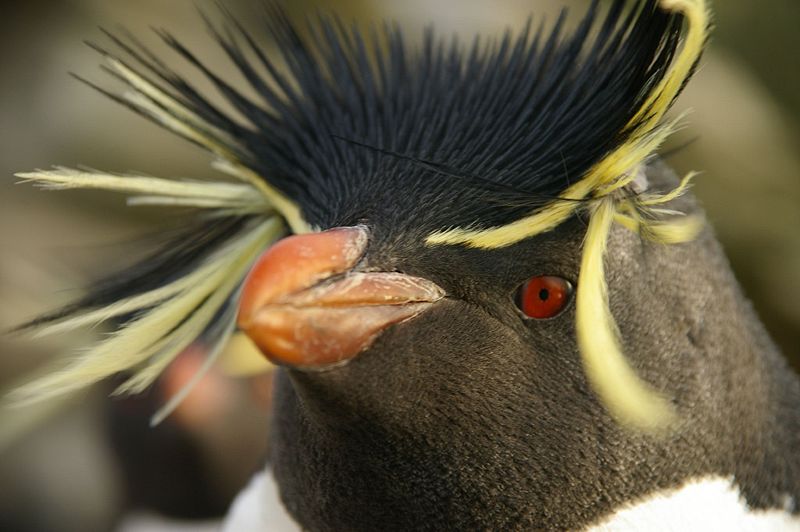
Almost every wild penguin lives somewhere in the southern hemisphere with the exception of the Galapagos Penguin, which lives in the area it is named for. While many people envision penguins living in frigid conditions, only a few actually live so far south and many live in rather temperate zones. For the most part, the larger penguins live in cooler areas and smaller ones live closer to the equator. Rock Hopper Penguin image via Ben Tubby [Flickr]

Back In The Day

That’s not how it’s always been though. Prehistoric species of penguins were sprawled across the southern hemisphere with no distribution based on size. One giant penguin species lived only 1250 miles south of the equator. Prehistoric Penguins were so different in size that there was even a 6 foot tall penguin called the Nordenskjoeld's Giant Penguin and a 173 pound species called the New Zealand Giant Penguin.

They’re Just Big Boned

These days though, the largest species of penguin is Emperor Penguin, which grows to around 3 and a half feet tall and 75 pounds. These are arguably the most famous penguins around as they are not only the largest, but some of the small handful of penguins that live in Antarctica. You may remember these guys as the stars of March of the Penguins. The species is also unique for being the only penguin to breed in the middle of the harsh Antarctic winter at temperatures as low as -40 degrees. They are also the only penguins that leave the incubation duties to only one sex and one of only two species to lay only one egg at a time --most deliver two at a time. The females lay an egg and then the males incubate the egg on their feet while the females return to the sea over the next two months to feed. The males huddle in a large circle and rotate each individual’s time in the center. When the eggs hatch, the males have normally fasted for over 115 days. When the mom’s return, the males leave the new-born chick with their partner and take their turn to go feed. When the chicks are strong enough, they huddle amongst themselves for warmth while the mothers and fathers feed and eventually they begin to grow their adult feathers and join the feeding process around the summer time. While all penguin species have a somewhat high mortality rate amongst the young, Emperor Penguins have the highest rate of death during the chick’s first year. In fact, 90% of all of the chicks will die during this time. Image via ianduffy [Flickr]

Don’t Count Out The Tinier Species

On the other side of the spectrum is the Little Blue Penguin (a.k.a. the Fairy Penguin), which grows only 16 inches tall and weighs a little over 2 pounds. These little ones are much less famous than their massive Emperor cousins, even so, you may recognize these little ones as the inspiration for the Linux logo –the creator of Linux was bitten by a Little Penguin while in Australia and the memory stayed with him through his life. Because they are so small, they are not well adapted to frigid weather and they instead live in Australia and New Zealand and do better in areas free from cats and foxes. They have also been spotted in Chile and South Africa, but researchers aren’t sure if they are part of a colony or somehow ended up in the countries. Little Blue Penguin image via CrazyCh3m [Flickr]. Linux image via Larry Ewing
They Stay Faithful…To Some Extent

Penguins tend to be monogamous each year, but they will often find a new mate each consecutive year. In species such as the Emperor Penguin, the lack of year-to-year monogamy (only a 15% rate) is believed to be due to environmental pressures that limit the amount of time they have to search for their past partners. Some of the penguins in warmer climates, like the Little Blue Penguin, do stay loyal to their partners until one of the mates dies. Females are the ones who select their mating partner and in many cases, females will compete for an attractive male partner. As for the eggs themselves, penguins have some o the smallest proportioned eggs of all birds when compared with the size of the parents. The Little Blue Penguin lays eggs that are only 4.7% of its weight and the Emperor Penguin’s eggs are only 2.3% of their total weight. The eggs also have some of the thickest shells, which weigh between 10-16% of the egg’s weight (it takes the Emperor Penguin chicks about 2-3 days to hatch out of their shells) and they have some of the largest yolk ratios of all birds --the yolk takes up 22-31% of the egg volume. Image via Jerzy Strzelecki [Wikipedia]


They’ve Got Each Other’s Backs

Aside from mating, penguins have a very high level of social interaction and all penguins communicate through visual and vocal displays. Their vocal calls not only help the penguins choose mates, but also lets them find their mate and their nest when they come back from feeding. The penguin females often show a great level of empathy for one another; when one mother loses a chick, she will often attempt to take one from another’s nest, but many of the nearby females will usually help defend the mother.

Humans Also Have Their Backs

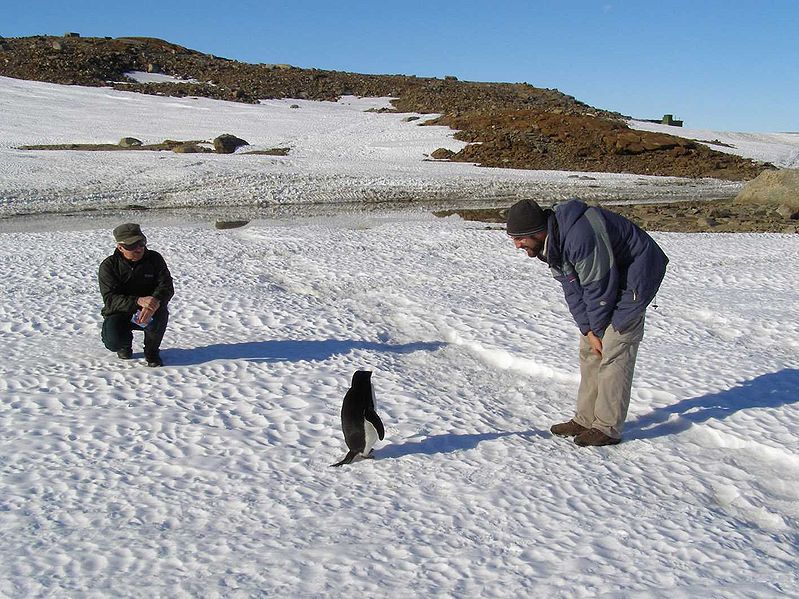
Penguins have a lot of human friends and all species are protected even though some species are at no risk of extinction in the near future. Perhaps part of the reason we connect with the birds, besides their inherent adorableness, is the fact that they are rarely afraid of humans. Many species of penguins, particularly those from the Antarctic, have no fear of humans at all because they have so few predators on land. While seals attack by the water, the few air and land predators penguins sea will only eat chicks and eggs. For this reason, people who visit penguin habitats are often surprised to see the birds will often approach them out of pure curiosity. This comes in handy in zoo and research facilities because the researchers can often get close to the birds without having to worry about throwing off the animal’s natural behavior patterns. For one specific African penguin living at the California Academy of Sciences, this met an additional benefit when he started to go bald, which left him shivering in his tank. The keepers first tried to warm Pierre up with a heat lamp, but he still couldn’t enter the water, which is a major part of any penguins life (most species spend anywhere from 50-70% of their lives in the water). Eventually, one of the biologists, Pam Schaller, realized that if wet suits keep humans warm in frigid temperatures, it might just work for little Pierre. The modified suit worked brilliantly and Pierre was quite happy to have his life back as he frolicked with his 19 friends in the tank’s pool. Image via Roux [Wikipedia]

They Love To Get Wet

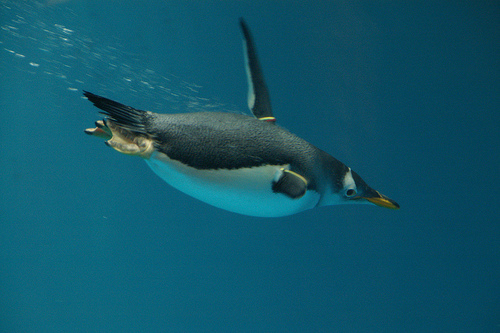
The reason poor Pierre was so cold when he started losing his feathers comes down to a unique aspect of penguin anatomy. The birds aren’t kept warm with a layer of blubber (although the Emperor Penguins are benefited by being so large), but mostly by their waterproof feathers. The feathers trap air, which insulates their body and helps them to float. While they can’t use their wings to fly, they instead work as flippers and penguins are great swimmers accordingly. Their style of swimming looks surprisingly like flight in other birds and they can reach speeds of 17 miles per hour, although most stay closer to 5 miles per hour during their swims. Most penguins do not swim very deeply and only dive for a minute or two, but the Emperor Penguin has been recorded going as deep as 1,800 feet for up to 22 minutes. No matter how deep they swim though, penguins have to return to the surface to breathe and most of the smaller species will leap in and out of the water like porpoises to breathe. While underwater, penguins occasionally play, but they mostly swim to eat. Their main sources of food are krill, fish and squid. While it seems like their stark color contrasts would make them an easy target for underwater predators, since they largely stay near the top of the water surface, all the underwater predators (like orcas, seals, sea lions and sharks) can see is a white belly, which blends in with the water surface. From above, their dark backs help them blend in with the depths of the sea. Penguin’s eyes are well adapted for seeing under water as, well as the rest of their bodies. In fact, a supraorbital gland allows them to filter excess salt from their blood stream and release it from their nasal passages. In a way, it’s quite fortunate that penguins have so few predators in the land and air. When they cruise on the land, their wings and tails help them keep balance, but they waddle quite a bit. Many penguins will also toboggan along the snow to help them move quickly and with minimal energy. Image via ken2754@Yokohama [Flickr] Sources: Discovery, Wikipedia #1, #2, #3, Seaworld


Doctor Who? What?

If you’re like me, you were counting the hours until the new season of Doctor Who premiered. For those of you who did watch it, did you like it? How did you feel about the new doctor, played by Matt Smith? If you are a fan, then hopefully this bit of trivia about the show and The Doctor will help hold you over until the next episode comes on.

Notable Achievements

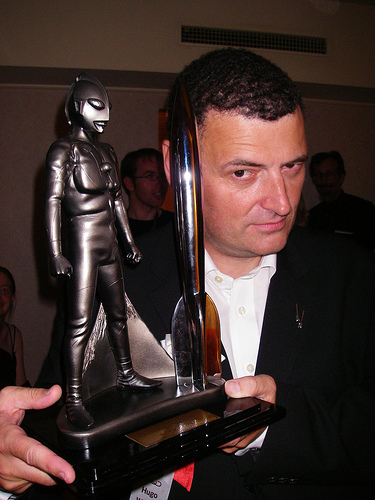
Running on more than 30 seasons, Doctor Who is the longest-running science fiction show in the world and considered the most successful science fiction show of all time based on ratings and sales. In fact, more than 750 episodes have been broadcast since the show started. (Take that Star Trek.) Even one of the top directors of all time, Steven Spielberg has said that "the world would be a poorer place without Doctor Who.” Image of writer/producer Steven Moffat with his Hugo Award via Dennis Schnapp [Flickr]

Spiraling Spin Offs

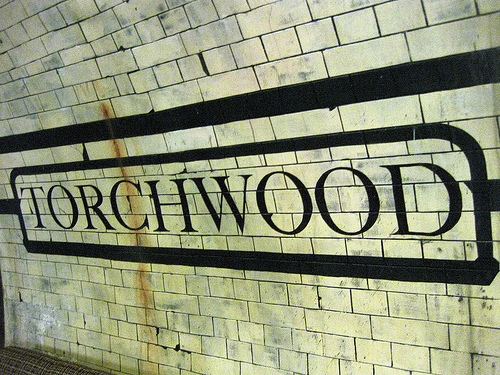
In addition to re-spawning the show in 2005, the Doctor Who series has resulted in at least five attempts at television spin-offs –the most successful of which is probably Torchwood –an anagram of Doctor Who. (On a side note, am I the only one who considers Jack Harkness, the main character of Torchwood, to have a name that's almost too bizarrely close to my own? Think about it, Jill Harness & Jack Harkness...maybe we're name soul mates.) Not all of the spin-offs are so good though; there's a very good reason K-9 and Company, a very 80’s detective-like show featuring K-9 and Sarah Jane, never made it past the pilot episode. Image via Foomandoonian [Flickr]

Regenerations That Survive The Generations

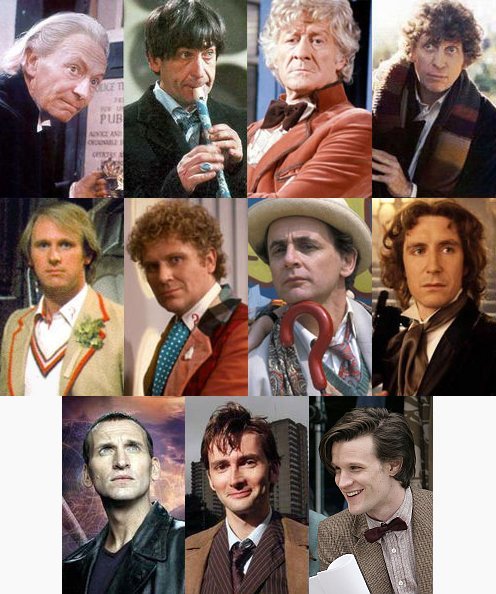
A lot of people who are familiar with the show but who don’t actually watch it wonder how one character can be portrayed by so many different actors. Those of you who do watch the show know that it’s because The Doctor is a Time Lord and his race regenerates every time they should die. Not all fans of Doctor Who know that a Time Lord is only supposed to be able to regenerate a total of 12 times though and The Doctor has so far regenerated a total of 10 times (he’s on his 11th body now). Assuming the show continues to do well, do you think The Doctor may be able to cheat this standard Time Lord rule and regenerate more than 12 times, like his enemy The Master? Unsurprisingly, the ability to regenerate was developed as a means to keep the doctor alive after the first actor, William Hartnell, announced his desire to leave the show in 1966. In fact, regeneration was never even conceived of until they needed an excuse to keep the show going. A recent BBC archive release stated that the team based the regeneration cycle on bad LSD trips. The memos said the transformation was a horrifying experience, like the "hell and dank horror" associated with a bad acid dose. Doctor collage via Wikipedia

Ch- Ch- Changes

After each regeneration, The Doctor looks completely different and takes on a slightly modified personality. This is because each body is supposed to represent a different aspect of the same character. He always maintains the same memories, but his emotions and personality will change to some extent. Because the purpose of regeneration is partially to allow The Doctor to enjoy a new and youthful body, his character becomes younger every time he regenerates. Fans of the show may recall how old the first Doctors were, particularly when compared with 26 year-old Matt Smith.

Matt Smith, Meet The Doctor

Funny enough, Matt Smith is still much younger than anyone on the show or the network wanted The Doctor to be. Few people believed that a 26 year-old could adequately portray the knowledge and life-experience that helps to define The Doctor. Even so, when he auditioned for the role on the first day, the production team, particularly head writer and producer Steven Moffat were so blown away by his acting abilities, that they immediately knew he was the one. When they announced their decision, they stood firm behind his casting, stating, it had “always been Matt.” Because Matt was so unknown at the time, the announcement of his casting led both Reuters and The Independent to announce the news as a question, their headlines proclaiming, “Doctor Who?” Image via Alun.Vega [Flickr]

A British Staple or A Gorefest?

Many people, including Caitlin Moran, a reviewer for The Times, have noted that Doctor Who is “quintessential to being British.” Many fans believe part of any English childhood should be spent watching Doctor Who from “behind the sofa” and popping your head out when the scary parts are over. Unfortunately, it’s these scary bits that made the show a target for morality police during the 1970’s. Legendary campaigner Mary Whitehouse repeatedly filed complaints with the BBC about the show’s frightening and gory content. Every time she complained though, it only helped to boost the show’s rating. It got to the point where the show’s producer during the 80’s, John Nathan-Turner, said that he looked forward to her comments because the show’s ratings would jump as soon as she made them. On the other hand, Whitehouse was definitely onto something. A BBC study in 1972 found that Doctor Who was the most violent of all dramatic programs produced by the network at the time.

Educational Intentions

Perhaps part of the reason the show survived throughout these controversies though was its noble goal of educating children and providing a family-oriented show for all ages. The plot originally alternated historical stories and futuristic stories in an attempt to get children interested in both history and science and The Doctor’s original companions were even a science teacher and a history teacher. They soon started cutting back on the historical episodes though because the production team didn’t enjoy making them as much as the sci fi ones and the ratings were never as high anyway. (Personally, I’m a sucker for the historical episodes, but I’m a history nerd anyway.) Image via Stuart Bryant [Flickr]

Monstrous Success Stories

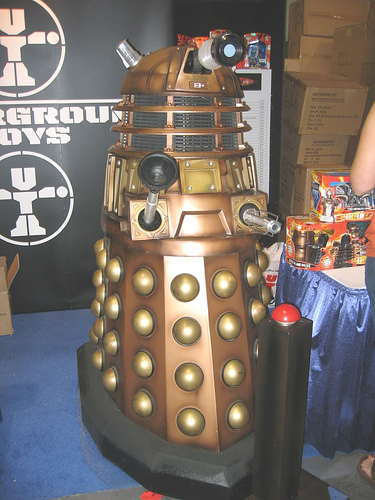
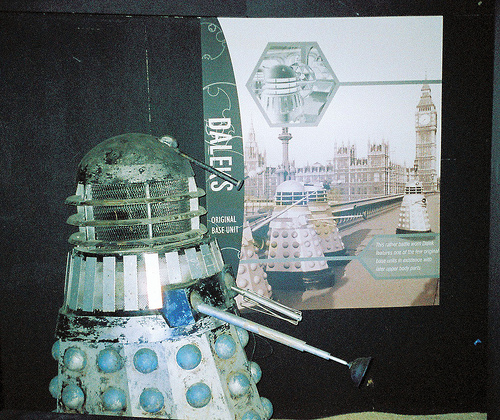
Another thing that always seemed to score high with the viewers were monsters, particularly the Daleks. To some extent, the Daleks, are even more famous than The Doctor himself. The Daleks became so popular during the 60’s that they even spawned what was known as Dalekmania, where the public would eat up anything related to the Daleks, including the 1964 board game, "Dodge The Daleks." The phenomenon was so major, they even made a film titled Dalekmania in 1995 that focused on the fad obsession with the aliens. In 1964, there was a single released by The Go-Go’s (not the 80’s girl band) called “I’m Gonna Spend My Christmas With A Dalek.” The Clash even referenced them in the song “Remote Control,” saying "Repression — gonna be a Dalek / Repression — I am a robot / Repression — I obey." If you think the obsession was over, then consider the 2008 study that showed 9 out of 10 British children could correctly identify a Dalek and that Daleks were featured on an English postage stamp in 1999. In recent years, they were even featured in two separate, unauthorized pornographic movies. Dalek even appears in the Oxford English Dictionary, as does T.A.R.D.I.S., and is often used as a metaphor for authoritarian people who act robotically. Image via Heath bar [Flickr]

The Time And Relative Dimension In Space Box

Speaking of the T.A.R.D.I.S., it’s another classic Doctor Who staple that’s become more recognizable than the actual Time Lord inside of it. If you’re not an avid viewer of the show, you may wonder why the spaceship looks like a police box. All T.A.R.D.I.S.s are made with a Chameleon Circuit that allows them to blend in with the surroundings it lands in. The Doctor’s Chameleon Circuit broke when he was in 1960’s Britain when the ship was in the shape of a police box. He liked the look enough that he decided to not bother fixing the circuit. When the BBC tried to trademark the famed blue police box in 1996, the Metropolitan Police filed an objection to the claim, arguing that they created and owned the rights to the box design. The Patent Office has since ruled in favor of the network, pointing out that the police never trademarked the box and that they never complained about the fact that the BBC was selling merchandise with the design for more than three decades. It’s also worth noting that the Doctor Who police box has never actually been a faithful replica of the real boxes used by the Metropolitan Police. The “dimensionally transcendental” properties (as The Doctor says) of the T.A.R.D.I.S. make it much larger inside than it appears to be. While no one has ever made a map of the interior of the ship, it is quite expansive and contains living quarters, an art gallery, a greenhouse, a library, a bathroom, a swimming pool, a medical bay, a multi-storied wardrobe, storage areas, an attic and a secondary control room. If you’ve ever wondered why such an incredible machine is always breaking down (aside from its age), then it may be beneficial for you to know that when The Doctor acquired his ship, he actually stole it from his home planet and the Type 40 T.A.R.D.I.S. he took was already unreliable and obsolete at the time. Image via traed mawr [Flickr]

So Is He Really A Doctor?

People who don’t watch the show often wonder things like, “what kind of a doctor steals space ships and fights off alien robots?” The thing is, no one actually knows if The Doctor is actually a doctor. At times seems to have some medical knowledge and he’s even claimed to have studied medicine, but he also has said specifically that he’s not a physician. When he’s with Martha Jones, he tends to insist on her doing anything medical-related, saying, “she’s a doctor; I’m The Doctor.” Perhaps the person who explained it the best was his nemesis, The Master, who quipped that it was quite sanctimonious for The Doctor to label himself as "the man who makes people better.”

Consistent Inconsistencies

It’s not too surprising that a sci-fi show about time and space travel that’s lasted for so long has started to build up some inconsistencies. Fortunately, the new head writer/producer, Steven Moffat (who also created Coupling), has great ways to answer all of those burning fan questions regarding the show’s continuity problems. One of the biggest issues with The Doctor is the matter of age. At first the writers decided that every time he regenerated, his age should be turned back, but this only lasted through the first regeneration and since then, his age was recorded as going forward. At times The Doctor claims to be 450 years old, 650 years old and even 906 years old. Steven Moffat has simply explained that The Doctor does not know his own age because his non-linear existence via time travel has made this calculation impossible. In other situations, the entire history of races, such as the Daleks, have been rewritten as time has progressed. Steven Moffat simply explains these concerns away by noting, "a television series which embraces both the ideas of parallel universes and the concept of changing time can't have a continuity error — it's impossible for Doctor Who to get it wrong, because we can just say 'he changed time',” Are you a fan of the show? And those of you who are fans, how do you feel about the spin offs and do you know any interesting trivia I didn’t mention here? Image via Jim Linwood [Flickr] Sources:  BBC #1, #2, Dr. Who Profile, BBC News #1, #2, #3, #4, Wikipedia #1, #2, #3, #4, #5

Uncovering The Secrets of Hidden Mickeys

When I went to Disneyland over the weekend, Alex asked me if I could take some shots of the hidden Mickeys around the park. I knew there is supposedly at least one on every ride, so I agreed, thinking it was an easy project. Little did I know just how difficult hidden Mickey spotting can be and how much debate goes in to the definition of a hidden Mickey. So on top of sharing some hidden Mickey images with you, I'd like to open the floor to your interpretations and ask if any of you readers have photos of the phenomenon. Let me start off by saying just how difficult it can be to spot hidden Mickeys (let alone photograph those of them on the rides). On our first day in the park, my boyfriend and I spent about an hour in The Golden Horseshoe eating ice cream and enjoying the musical stylings of Billy Hill and the Hillbillies. While in the saloon, I looked ceiling to floor to find a Mickey. Eventually, I decided there must not actually be one in The Golden Horseshoe. When I got back to the hotel though, I thought I'd check the internet just to make sure. That's when I discovered that the only one in the building is one tiny Mickey in the central vent under the stage. That's when it started to strike me just how hard this project was really going to be.

That's also when I started to realize just how hard it is to define a hidden Mickey. While it seems like a basic concept, the definition of "hidden" is quite open. I read a few forums where people argued about this idea and even as we started spotting our own hidden Mickeys, my boyfriend and I started debating over what was too obvious to be considered hidden. For example, I thought these Mickey rivets should be considered hidden because they weren't something you'd expect and you certainly wouldn't notice them on first glance. On the other hand, he felt they were simply decorations and too in-your-face to be hidden.

Mickey's House in Toon Town proved to be an excellent example of this concept as everything is already Mickey themed. Do the obvious music notes and metronome count?

And if those are considered to be too obvious, then what about the tiny Mickey heads on the book backs of both Mickey and Minnie's favorite titles?

Were these lights in the movie theater too obvious?

The matter only became more problematic from that point on. While some Mickey's were very obvious and intentional, like the rock formation below, it's sometimes hard to determine if any given arrangement of three circles beside one another would count.

Did the Disney gardeners intentionally clip the cactus so it would form a Mickey head?

Does a hidden Mickey have to be completely closed and circular to count?

And what about the layout of the three umbrellas in this billboard seen in California Adventure?

On our final day, we thought our questions may finally be answered when we ran across a book titled Disneyland's Hidden Secrets: A Field Guide to Disneyland Resort's Best Kept Secrets. Once we started browsing through the book though, we soon realized that it was not written by an imagineer or someone else with a definitive authority on the subject, but simply an avid Disney fan. In fact, the book had many of the questionable hidden Mickey examples that we also saw on line. For example,can Smee's eyes and nose on this wood carving really be considered a Mickeyface?

And is this decoration on the stalls in Downtown Disney really secret enough to be considered hidden?

I guess that like so many other things in life, there is no definitive answer as to what is, or is not, a hidden Mickey (at least not until the imagineers come forward and list off every one they intentionally embedded in the rides and shops.) So rather than speculating, let's just step back and appreciate the pictures of the following "subtle Mickey" images from around the park.

Continue reading

Charlie Chaplin: Celebrating The Classic Comic

Charlie Chaplin was one of the greatest directors and actors the cinema has ever seen, but, like most great artists, his life was filled with controversy and struggle. While most people in modern times only know about his brilliant works, his private life and public scandals were equally fascinating. To celebrate this great man, let’s take a look at all those little things you may not have known about Hollywood’s favorite Tramp.

He Had Exceptionally Humble Beginnings

Charles Spencer Chaplin was born in London to two music hall actor/vocalists on April 16, 1889. His parents separated when he was only three and he lived with his mother and younger brother. When Charlie was only five, he got his first taste of acting when he had to take stage to fill in for his mother, Hannah Chaplin, after her voice went out in the middle of a show. Throughout his childhood, he had to help his mother scrimp and save, particularly when she started losing her voice and increasingly began suffering from mental illness. The family was so poor, Hannah even pawned off her children’s spare clothing just to help make ends meet.

By the time Charlie was seven, the family was forced to go to a workhouse and after only a few weeks, Charlie and his brother were sent to an orphanage. Hannah regained control of the boys soon after, but when she suffered from a serious mental breakdown, they were forced to live with their father and his mistress for a while. This was when Charlie joined up with his first acting troupe, the Lancashire Lads. Only a few years later, his father died of cirrhosis of the liver. By 1910, Charlie had established a strong reputation in the local acting scene and he was able to tour the U.S. as a featured player in the Fred Karno Repertoire Company.

The American Dream

Upon traveling to America, he quickly became a favorite performer in the troupe. He returned home to England for a short while before touring America a second time in 1912. This was where Charlie got his big break. When the troupe was seen performing by director Mack Sennett and actors Mabel Normand, Minta Durfee and Fatty Arbuckle, Charlie was spotted and offered a contract with the Keystone Film Company. Funny enough, one of the biggest names of film history actually had a hard time adjusting his acting methods to translate to film. Originally, Sennett thought he had made a big mistake after working with Charlie on his first film, Making a Living. Fortunately, Mabel Normand convinced the director to give Chaplin another chance and soon enough, a star was born.

The Gentleman Meets The Tramp

Charlie’s best known role was as the iconic “Tramp” character, which he portrayed in a number of films throughout the silent era of film and even in a few pictures after “talkies.” He first developed the character for his second movie role in Mabel’s Strange Predicament. Mack Sennett had told Charlie “get into a comedy make-up,” but Chaplin didn’t really know what that meant, so he freestyled it. Charlie put together a cane, baggy pants, a tight coat, huge shoes and a small derby hat. Because his character in the movie was supposed to be old, he added a small mustache so he could look older by still show expressions. Charlie said the character of the Tramp came as soon as he was dressed:

“the clothes and the makeup made me feel the person he was. I began to know him, and by the time I walked on stage he was fully born.”

If you’re wondering just where Charlie got the Tramp’s clothing, you have his friends on the movie set to thank. Fatty Arbuckle provided the pants and the hat was Fatty’s father-in-law’s. Chester Conklin gave him the coat and the shoes belonged to Ford Sterling. The shoes were so large that Charlie had to wear them on the wrong feet just so they would stay on. Interestingly, Charlie’s first movie featuring the Tramp character wasn’t the first one released to the public. Instead, it was his second film, Kid Auto Races at Venice. Also interesting, the Tramp was in the first ever movie trailer shown in an American theater.

But What He Really Wanted Was To Direct, And Produce, And Compose…

Charlie’s sense of humor and immaculate comedic timing led to his quickly being trusted to direct and edit his own films at Keystone. In his first (and only) year with the company, Chaplin made 34 shorts and a feature film. In 1915, signed with Esseney Studios where he was also able to direct his own pictures, but he left their company within a year to begin working with the Mutual Film Corporation who gave him an even larger salary and nearly complete creative control. He started producing films in 1916 and when he started working with First National in 1917, he was given complete control of all of his projects.

He was a self-taught musician and played the cello and violin and even started composing the music to his films in 1918. In 1919, Chaplin decided he had enough of the existing Hollywood studios and he co-founded United Artists with Mary Pickford, Douglas Fairbanks and D.W. Griffith. This allowed him complete creative control on all of his projects for the rest of his life. In July of 1925, Charlie was the first actor to be featured on “Time Magazine.”

Silence in the Era of Talkies

One of the reasons Charlie’s Tramp character did so well was that it was able to transcend language barriers and cultural differences. People from all over the world could view a Chaplin film and identify with the gentlemanly vagrant and laugh at the bumbling authority figures. Charlie was so good at filming silent pictures that he continued to do so for years after the public demanded movies with dialogue from all of his peers. Some of his best known silent classics, including The Circus and Modern Times, were actually made after talking became commonplace in movies. Modern Times even does contain talking, although it is still considered a silent movie. It’s just that the only things that really talk are inanimate objects like radios. At the very end, audiences were able to hear Chaplin’s voice on film for the first time, while he sang gibberish lyrics. This was the last film Charlie made with the Tramp and it let the character take a quick step into modern movie history while staying true to his silent roots.

A Perfectionist That Hated Commitments

Charlie was considered a difficult director to work with because he was so intent on ensuring everything looked perfect on the film. He was notorious for shooting several takes of every scene during the silent films era, a time period where it was rare to reshoot even one scene. Some people even said that he was willing to shoot the same scene more than one hundred times until he was satisfied. He was known to get so upset about the wasted time and film that he would lash out at his actors and crew members and often would shut down production in a fury. At the same time though, Charlie almost never used scripts until he started working on talking pictures in 1940. He developed a method where he would start with a vague premise and then build a set and start working on gags and plot devices. He often would work out the ideas on film and then end up having to redo whole scenes because the narrative structure ended up making a scene no longer make sense in the context of the story. Strangely, no one in the general public knew about his filming techniques until after he died and the film Unknown Chaplin was released with outtakes and cut sequences showing his filming style.

A Daring Political Stance

While The Great Dictator is considered a classic these days, it was somewhat controversial when it came out in 1940 because the U.S. was still following a policy of pacifism. Chaplin’s Adenoid Hynkel infuriated the person it was based on, Adolf Hitler, and, unsurprisingly, the film was banned in Germany. While the movie was nominated for Academy Awards in the Best Picture, Best Original Screenplay and Best Actor categories, it did not bring home any awards, which many people believe had more to do with the politics of the film than its actual timing.

Being Persecuted By The Mann

Although Chaplin was obviously against Hitler and was encouraging the U.S. to join the war long before Pearl Harbor, he was still the subject of public anger when he declined to support the war effort once it did get started. The biggest reason he did not help drive the sales of bonds, like he had in the first World War, was that he was in the middle of a political scandal that involved both civil and criminal charges.

In 1942, he had a brief affair with a young actress named Joan Barry, and at one point, he may have paid for her to go to New York City, where they shared a hotel room together. Unfortunately, Joan got pregnant in the next year or so and publicly claimed that the child was Chaplin’s (it wasn’t). When the news went public, it meant that Charlie had to go to court for child support hearings and it meant that federal investigators could chose to try him under the Mann act. The Mann Act made it a crime to transport a woman across state lines for immoral purposes. While it was created to prevent prostitution, it ended up being used as a way to prosecute people who were seen as immoral.

Charlie beat the criminal charges, but he lost at the civil trial and was forced to pay child support even though a blood test proved that the child wasn’t his. This case was largely responsible for a change in California law stating that blood tests could be used as evidence in civil trials. Even if he had won though, the damage to his reputation could never be removed.

He Had A Thing For Younger Ladies

Speaking of Charlie’s love life, he was always attracted to women who were far younger than he was. When he spent the night with 22 year old Joan, Chaplin was 53, and that wasn’t the largest age gap of his relationships. In fact, biographer Joyce Milton claims that Charlie was the inspiration for the book Lolita. His first marriage was to a 16 year-old actress, Mildred Harris (seen above), and took place when Charlie was already 29. Chaplin’s next wife was also 16 when they started dating, only at this point, he was 35. When he was 43, he started dating his next wife, 22 year old Paulette Goddard. The worst age difference though was between Chaplin and the wife he stayed with until death, Oona O’Neil. Charlie was 54 years old at the time of the wedding, while the bride had just turned 18.

McCarthyism Crushes An American Success Story

Modern Times was considered to be a bit critical of capitalism and when Charlie urged America to set up a second European front to support Russia, it was more than enough to convince J. Edgar Hoover (seen above) that Chaplin was a communist. The fact that he married two 16 year old girls by this time hadn’t helped improve his image with the feds. Hoover ordered the FBI to keep detailed reports on him and tried to end his U.S. residency. At one point, congress tried to bring him in as a witness during the McCarthy hearings, but they kept pushing the date back and eventually canceled the order. In 1952 though, Chaplin visited the U.K. to help push his newest film, Lamplight, and Hoover took the opportunity to exile him for good. He was able to pull some strings and get Charlie’s re-entry permit denied so he could not return to America. Rather than fight the decision, he got fed up and decided to instead move to Switzerland, saying:

“Since the end of the last world war, I have been the object of lies and propaganda by powerful reactionary groups who, by their influence and by the aid of America's yellow press, have created an unhealthy atmosphere in which liberal-minded individuals can be singled out and persecuted. Under these conditions I find it virtually impossible to continue my motion-picture work, and I have therefore given up my residence in the United States."

Keeping Hope Alive

Chaplin didn’t let a little thing like relocation stand in the way of his work though, he instead started making films in Europe instead. Unsurprisingly, his first of these movies, A King in New York, was a satire of the political prosecution he had recently undergone. Ten years later, he made his final film, A Countess from Hong Kong, which starred Sophia Loren and Marlon Brando. Charlie’s only appearance in the film was a brief cameo where he played a seasick man. He also composed the music for this film and the theme became a number one hit in the U.K. His health started to fade around this point and he then started writing his autobiography, which was published in 1964. Next, he worked on composing original scores for his early silent pictures and re-released them. He also created a pictorial autobiography that was published in 1974.

Delayed Recognitions

Charlie was first suggested for knighthood in the thirties, but he was never actually knighted until 1975, when he was 85 years old. He also was given a star on the Hollywood Walk of Fame in 1970 after many people were angered that he was not one of the people originally honored in 1961. Funny enough, he had his handprints and footprints immortalized in the cement outside Grauman’s Chinese Theater, but after all the scandals, the section of cement was removed and now many believe it is lost. Although Chaplin won one Academy Award at the first ceremony in 1929, he never one another until 1972 when he was awarded an Honorary Award. It was his first visit to the U.S. since he was denied re-entry and he received the longest standing ovation in the award show’s history.

Death And Travel

In the late 60’s, Chaplin’s health began to deteriorate and he eventually died on Christmas Day 1977 at the age of 88. All in all, his entertainment career lasted over 75 years. Unfortunately, his trip underground wasn’t the last of his travels. His body was stolen in 1978 in an attempt to extort money from his family. After the robbers were captured, Charlie was buried under 6 feet of concrete to ensure this never would happen again.

Sources: Trivia Library, Wikipedia #1, #2, Time, BBC #1, #2, CharlieChaplin.com, Biography, Herald Sun, and IMDB.


Email This Post to a Friend
""

Separate multiple emails with a comma. Limit 5.


Success! Your email has been sent!

close window

Page 312 of 344     first | prev | next | last

Profile for Jill Harness

  • Member Since 2012/08/04


Statistics

Blog Posts

  • Posts Written 5,147
  • Comments Received 14,072
  • Post Views 13,051,088
  • Unique Visitors 10,255,920
  • Likes Received 7,303

Comments

  • Threads Started 578
  • Replies Posted 563
  • Likes Received 280
X

This website uses cookies.

This website uses cookies to improve user experience. By using this website you consent to all cookies in accordance with our Privacy Policy.

I agree
 
Learn More