Mutt fell into the corner of the transport clutching Ivy’s satchel, unable to cope with the rupture of his family. If there was a single value he learned from his mother, it was the duty of a man to protect those he loved, to let no harm befall his wife, no tragedy come to his child. Yet here he sat helplessly having witnessed goons rip them away for horrors he could only imagine. They would meet again, he was certain, for Muglair had taken great pains to ensure the world of his commitment to keeping families intact, even Inta families, a subject of frequent eloquence in his speeches. The transport rumbled along dirt roads, every mile increasing the distance from his loved ones, every mile increasing his anxiety. What was this system that was consuming them? Would they be held in temporary shelters and returned to the Notches at the cessation of hostilities? Surely the conflict could not continue too long. This was a dispute over water. Arland was bombing Shamba that very moment and he had no doubt that when finished the great nations would negotiate a treaty.
He pondered the state of the Notches and its inhabitants then remembered with a shiver the murder of Volp. His boss’s fate was likely shared by dozens of people he knew. The sloplady, the father, their son, Glon squared, Orly, Esma and Muwild, Hope’s friends, Kippers, who among them had survived? The Notches lay in ruins and Mutt needed to purge his mind of fantasies of resurrecting the New Normal. He could not underestimate the evil of Muglair or take at face value his pronouncements of peace and good will. He could not rely on the auspices of a madman to rescue him, or his loved ones, from peril of the madman’s own creation. He would have to figure a way out of this trap on his own initiative. When the transport stopped a soldier boarded and yanked him out the rear. He fell from the bed onto the ground clinging to the half slope while soldiers carried Arlanders to a processing tent. An agent of Interior approached and seized the satchel. Mutt would not let go and the agent summoned a soldier to shoot him. He waxed indignant before the soldier could aim his muzzle.
Still at Sanders after the release of the system, Baer (along with engineers Larry Cope and George Mitchell) continued to hatch numerous game ideas. He developed the first detailed concept for an arcade game loosely based upon ABC- TV’s Monday Night Football. It was a complex game that involved offense, defense, coaching, and a joystick that let you move in eight directions. Mitchell and Baer took their machine on the road to Kenner, Bally, Coleco, Ideal, and Mattel, but they couldn’t drum up any enthusiasm. Bally in Chicago was the worst. In the meeting Baer saw a group of well- dressed people who looked very grim, uninterested in his idea and generally angry with him. He was glad to get out of there.
Occasionally, he peppered Magnavox with ideas for new games, not the least of which was Run Silent, Run Deep, based on the World War II submarine warfare movie starring Clark Gable and Burt Lancaster, from United Artists. Magnavox always balked. For Centronics’ Gamex division in Las Vegas, Baer designed the display portion for the first electronic casino blackjack game, along with a horse racing gambling game called Photo Finish. Just as the manufacturing process was about to commence, all work stopped: Word was that certain unsavory characters had strongly suggested that Gamex get the hell out of Dodge. While the lead engineer was hired away to Bally in Chicago, most of the others ran for the hills like Sonic the Hedgehog on speed. The mob controlled much of Vegas in those days, and their grip only began to let up after the FBI’s massive assault on gambling crime in the late 1970s. That was too late for Gamex and, by default, Ralph Baer. But Baer wasn’t done. To Campman’s joy, he created video-game training exercises for the military. Later, with two cohorts, he invented the Simon memory game, a popular toy that used flashing light sequences. Milton Bradley’s marketing of Simon was sheer Madison Avenue genius, and included the adver- poem: “Simon’s a computer. Simon has a brain. You either do what Simon says or else go down the drain.” Also in the seventies, after a panicked call from Coleco about the Telstar, Baer helped to get a nasty bug out of the three- game console in which Coleco had invested $30 million. The Telstar was emitting too much interference for the FCC to approve its distribution to toy stores. Baer added a simple resistor to the inside that fixed the problem. Baer did this even though he knew Coleco’s game system was very like the Odyssey and thus a competitor to his baby.
It took Magnavox another eight months to begin work on the project in earnest at their Morrison, Tennessee, manufacturing plant. For the Brown Box to hit store shelves in time for Christmas, Magnavox engineers had to break their backs working overtime as the deadline approached. They had proved their mettle as far as Baer and his team were concerned. Meanwhile, Sanders was doing poorly in the recession, and Baer became concerned about the future of his job. To make matters worse, he heard some disturbing news from Magnavox. For cost reasons the company axed the golf putt add- on and the fireman game with the pump, which would have required a higher retail price tag. There had also been heated discussion about whether or not to make the Brown Box work with four players at once, but this, too, never made it past the planning stages. Adding circuitry for color spots on the TV screen was also nixed. Only those overlays remained.
“You know the one thing that bothers me,” Baer told Harrison in their small office.
“What’s that?”
“The fact that it won’t be in color. Color would make a big difference.”
Harrison nodded. That was all he could do. Just as sad was that once Magnavox licensed the idea for TV Games, Ralph Baer didn’t have much say in anything that happened, not even in the product’s new name, Skill-O-Vision. To Baer, the moniker sounded like a cheap sideshow penny arcade game.
Was it possible to explain to an Inta toddler why his life was forfeit for this better future? Was it possible to explain to his parents why their child must be butchered for the Hutman cause? Was it possible to justify to these parents the bayonets thrust into their own bosoms? Was it possible to reclaim the gentle spirit of the agents carrying out these acts for the greater good? None of this was possible, yet progress required it. The world had seen too much bloodshed and Muglair was going to end it once and for all with an explosion of violence so spectacular none could succeed it. Would future generations thank him? Undoubtedly not. The streets and monuments and cities named in his honor would be stripped of the distinction, but that was a fate he could tolerate because those future indignant souls, practicing the same sentimental morality that had so long enslaved the Hutman, could maintain power in a world free of the Inta even with their indulgence. If there was a weakness besetting the planet, it was the belief that the common people should be left alone free of the interference of the state in their personal affairs, as if great conflicts did not arise from the individual choices of these same people. Muglair was resolving the greatest conflict of all, Hutman versus Inta, and some future government could embrace for itself the morality of leaving common folk alone at a time when they could be left alone without consequence. Muglair thought long and hard about taking these Inta rounded up from the provinces and now the cities and dumping them over the Edge into Arland. But to what purpose? So they could develop their own Inta cause with the aim of reclaiming former holdings in Skava? Arland would undoubtedly aid them in their plots and likely employ the Armada to force upon some future Hutman regime, one plagued by traditional weakness in the face of aggression, a resettlement plan and renewal of ancient conflicts. A man like Muglair did not come often in history. Indeed, the ancient conquerors, renowned for their lack of mercy, were a vanishing breed and Muglair might very well be the last. No one rejected the blessings secured for the Inta or the Hutmen by the creators of their nation states, the heroes of yore, however repugnant and bestial the founding acts were. And no future Hutman would reject the blessings bestowed upon him by Muglair with his indomitable will today. This was a unique moment in history that must be fully exploited to rid Skava forever of the Inta claim to power, and history had smiled upon the Hutman in the person of Muglair Putie. What some might call dystopia was the first stage of utopia, the purging from Skava of the bacillus causing infection. Muglair would not flinch from his task as long as he drew breath, however horrific the sacrifice it required, however much blood must be spilled. Strength in the face of resistance would be the defining characteristic of the Hutman cause as long as he was its leader.
Dunder did not have a disposal plan for the enormous number of corpses generated by the slaughterhouse. The perimeter expansion was visible to prying eyes and as a result bodies were again piled high in the courtyards of the interior barracks. Sackcloth was spread across window exteriors of the barracks to form crude curtains but Ivy could easily see the scope of the butchery through the many moth holes. It was unlike any horror she had witnessed in Dunder and there had been many. Disposal of these carcasses would require an enormous commitment of prison labor, for the prep work and launching were beneath the station of overseer. The barracks chief rounded up a detail for marching into the courtyard. Ivy mustered for the call out of fear of remaining with the Arlanders, not knowing their place in the scheme of slaughter. The fire pit had been filled in and regraded after the first wave of corpses from the Edge battles was incinerated. Fortunately the administration had the foresight to produce huge numbers of bladders so that future immolations would not be necessary, although even a warehouse full might not have proven sufficient for the new mounds of bodies rising as high as twenty feet in the courtyards. Work details periodically swapped assignments to gain the experience necessary to supplement labor needs as they arose. Prisoners trundled in carts of bladders which Ivy’s detail carried one by one to staging areas in the central courtyard for corpse launching. Another detail removed bodies from the piles, working in tandem on stepladders to reach the summits, and moved them to the center for linkage to bladders. One of the inefficiencies of Bogin’s method of killing was that perfectly good clothing went to waste, too drenched with blood and torn by blade work to salvage. Details stripped the corpses naked ripping off clothes with box cutters, removing jewelry and personal effects, and searching cavities for valuables.
Historically the camp disposed of one body at a time tied to a bladder filled slowly by hose with upwater. A sidebrick placed in a pocket of the bladder provided a slight off-line trajectory so that a corpse disarticulating in space or detaching from a bladder would not fall back to Skava. When the bladder had sufficient buoyancy a tether hook would be released and its cargo of stilled flesh, covered in cloth to maintain deniability, rocketed skyward never to return. Prisoner details were now instructed on a new method, one of Bogin’s innovations, of tying a rope with adjustable collars to multiple bodies to form a chain with bladders spaced at intervals to provide buoyancy. The overseers called these arrangements daisy chains and they yielded significant efficiency gains. Bladder capacity wasted on individual corpses could be conserved with a daisy chain by calibrating more precisely the number of bladders required for uplift. Where under the old method six bladders were needed for six bodies, even for children and petite women, under the new method three or four might suffice. It was also quicker for details to launch multiple bodies at once, with the bladders filled simultaneously and a single lever kick, rather than repeating the launch sequence individually for each corpse. No attempt was made to cover the daisy chains in cloth, the sheer scope of the effort not allowing time for such niceties. A debate was raging in camp administration over possible new efficiencies like the daisy chain. All these bodies, healthy and well-fed unlike longstanding prisoners, were wasted resources launched into the ether. Could not the meat and skin be put to good use, the meat for the protein needs of prisoners to engender a stronger and more productive labor force, the skins for assembly of bladders for disposal of more corpses? These were not times for ancient taboos of bodily integrity, not in a war of all against all. The supply of thabans was dwindling and their flesh and hides could not meet current needs. The camp had facilities in the pens for butchering and skinning and carving and curing and tanning and what Hutman could risk failure of the cause over sentimental attachment to the dignity of Inta death? This was not a debate to be resolved in Dunder without guidance from the top, and a query had already been sent to Leri Deri.
Ivy’s detail was assigned the task of linking together daisy chains in the courtyard center while another detail filled bladders on the ropes with upwater from hoses connected to underground storage tanks. Her first chain consisted entirely of small children who were among the first victims of the slaughterhouse because of the burden of their care. Her mind was scrubbed of feeling in this awful task but it occurred to her that she could not tell the difference between Hutman and Inta once stripped of clothing and adornments. The Interior Ministry published numerous diagnostics complete with diagrams and measurements distinguishing the races but to Ivy’s eyes they looked the same. Indeed she herself passed as Inta her entire life despite being born of Hutman parents because there was no reliable visual difference. Muglair liked to preach of the Inta’s rotund faces and squat bodies and walleyes but there was no evidence of this. She herself read in school, before the full flourishing of the cause, that there were no consistent physiological differences between Hutman and Inta whether by height or weight or phenotype other than slight statistical variations in hair and eye color. But the differing physical traits were so commonly shared across populations, and intermarriage was so prevalent, that one could not infer ethnicity of an individual based upon them. What distinguished the Inta was their self-appellation, their culture and traditions, and, in the villages at least, their peasant dress with macramé panels and abalone jewelry and pull-on footwear without ties. The children in Ivy’s ring were no older than Hope, toddlers only, little girls with hair in glittery bows, little boys in jumpsuits with button panels, all speared through the chest with bayonets in a binge of violence. What passed through their young minds watching companions slaughtered awaiting their turn? Probably an unthinking terror and failure to foresee their own fate even as a blade punctured their chests, even then expecting a parent to save them from the horrific pain and gush of blood, a mother to kiss the wound and make it better. Ivy clasped the collars around the necks of these little ones, their slaughter fresh and bodies lithe, following instructions to tighten without regard to airway constriction, a pointless but instinctive concern for dead throats, while the bladders filled to the point of levitation, the tethers growing taut and tugging on buried anchors. An overseer kicked a lever sending the daisy chain skyward, these bodies forever lost to the planet that generated them. A small troupe of living children was led into the courtyard as the slaughterhouse backed up and their minders could think of no other option but to consolidate the processes of killing and disposal. Ivy thought she was beyond capacity for horror but was proven wrong as she watched live children forced to the ground squirming with collars tightened around their necks to the point of choking, bladders growing tumescent, and a mindless kick on a lever sending them skyward to expire if not from the collars then from the thinning air of space.
A swarm of starlings swirled above the courtyard moving as a coordinated mass like a whirligig or banner flapping in the wind, settling down into the courtyard before taking flight in unison from the shooing of agents to darken the sky in a vortex. Overseers and prisoners pointed westward at approaching shapes visible through the multitudinous flock. Arland had been monitoring the slaughter in the camps and decided in its helplessness to dispatch small flotillas from the Armada to bomb the charnel houses. Air defenses around the camps were minimal, the Defense Ministry content to let Arland kill Skava’s traitors if it wished to waste ordnance. The flotilla rolled cluster bombs onto the plain before the camp opening a gaping hole across the outer perimeter and killing dozens of new arrivals in their path. Freshly impounded Inta, knowing the fate that awaited them in the slaughterhouse, poured en masse through the opening chased by detachments of perimeters guards mowing them down with semi-automatic weapons. The bombing raid continued across the camp taking out several barracks and production facilities but not the locus of killing in the slaughterhouse, Arland having no reliable information on camp layout and unable to discern from aerial observation. The processing of bodies from butchering to disposal momentarily ceased as the details returned to barracks. Agents and overseers departed on a zealous hunt for escapees, combing the streets of Dunder, attics, closets, cellars, sheds, wells, ditches, barns, outbuildings, stump holes in former orchards, and most intensively the hinterland forest. The authorities resolved to track down all fugitives and return them to the camp not out of vengeance but from adherence to plan. For they all knew that Inta scum would escape given the chance to continue their poisoning of Hutman society. That they had done so added no new information about their character. It was the duty of Skavian forces to see that historical justice was carried out in the manner prescribed by the coordinated Ministries. Because of the disorganization at intake the camp administration never achieved an accurate tally of escapes and blanketed the nearby villages with notices to beware desperate convicts who would rape their women and kidnap their children. Bogin ordered expeditions into the forest to root out bands of subversives with the ultimate goal that not a single Inta survive. Within a day the camp surveyed the damage from the bombings and restarted the process of extermination. The Inta awaiting slaughter had spent the day surrounded by guards terrified of their fate, some choosing to resist meeting instant gunfire, others choosing to pray and make peace with their maker. The field coordinator was proud to report to Interior that not a single agent was lost to Inta treachery during the search operation, so professional was its execution.
Overseers entered the barracks to muster details for renewed disposal duty, the piles again growing high from the death factory. The chief did not organize details this time and Ivy was segregated with Arlanders due to her Inta wristband. After the Skavians left for the courtyard a cohort of special agents arrived to round up the Arlanders. Ivy presented her band saying she was miscategorized and was struck across the face with a pistol butt. The agents marched the Arlanders toward the outer camp apparently to join the masses awaiting slaughter. Ivy had her own special escort presumably due to her impudence in displaying her band. But the agent ordered her to turn from the column toward the Interior bunker and followed behind with his pistol drawn. She passed through the special gate now wishing for an anonymous death in the slaughterhouse. For the diversion here by a special agent could only mean she was going to headquarters in Leri Deri. Whatever the horrors of death in Dunder, the purpose of the slaughter was simply to kill, not to torture. She knew that headquarters viewed interrogation as an exercise in crushing the spirit and maximizing bodily pain before death. Entering the bunker basement she realized how close to death she already was, her body wasted and mind shattered from the relentless horror. The director greeted her escorting agent, avoiding eye contact with the prisoner and feigning indifference to the routine transport of a wench. He was embarrassed to admit, even to himself, how Ivy Morven had outmaneuvered him on her previous two visits. Whatever his failures in handling this prisoner, she would now be in Bogin’s hands and his was a power she could not resist.
The director and two agents from headquarters loaded her into a transport in an underground garage connected to a tunnel emerging beyond the camp perimeter. The vehicle contained a flywheel revved in its casing to a high-pitched whine to supplement sidewater propulsion. She sat in a back seat with agents on either side, the director in the front next to the driver, all deathly quiet. Was she buying at least a few more hours of life with this detour? The fear and silence of the moment vaguely stimulated her conscience and she thought of how terribly she missed her husband and daughter. This was how it was going to end, in the torture chambers of Bogin, her loved ones probably already dead, their frozen bodies journeying across space, none of them ever knowing the fate of the others, none having appreciated the finality of their separation in that edge transport. The truck rumbled for hours across bumpy roads stopping twice at regional stations to retorque the flywheel and refill tanks. They passed within miles of Shamba where the Flume continued its mortal drain of the Sea, the column of water massive and uncontrolled, widening relentlessly from erosion. Eventually she saw through tinted glass the Stairway to the Sun angling heavenward to vertiginous heights, the architectural symbol of the Skavian capital with its ancient temple at the summit rededicated under Muglair as a shrine to the Hutman martyrs. The transport navigated the stone pavement of the capital through greens and monuments and canyons of concrete before descending a ramp into the bowels of the Interior Ministry headquarters a block off the plaza across from the cathedral. She had seen in her peripheral vision evidence of substantial bombing – entire neighborhoods flattened – but the infernal building into which she was descending was, as far as she could tell, unscathed, protected by the Almighty himself as Muglair proclaimed.
Agents in business attire approached the transport and asked the director to exit. For a moment Ivy detected fear on his face and almost felt pity. Interior had no reason to call him to Leri Deri other than to execute him. They could acquire whatever information he had to offer through reports and could undoubtedly extract more information from the subject by their own methods. Ivy wanted to feel sympathy for this man who had so brutally murdered inmates at Dunder because she believed her humanity required it. Did he have a wife? Did he have children? Did this cruel man who believed he was on the side of right and justice deserve the fate that beckoned? She could not find pity within her heart, only the suspicion that she was hopelessly blackened by its absence. She herself faced a more horrific death, the sadistic torture of Bogin designed as scientific inquiry to see how far a body and spirit can be broken before extinction. The director would likely receive a quick and painless death.
In her Harmour days she was once told of a loyalty chair in the bunker levels of headquarters. Agents subject to performance reviews would sit in the chair with arms clasped on armrests, necks collared against a backrest, a steel beam cocked behind their heads in a pneumatic tube. The reviewer had two buttons to press, one launching the beam instantly snapping the agent’s neck, the other releasing the clasps indicating satisfactory performance. Failure to submit to the loyalty chair was itself evidence of disloyalty, the punishment for which was confinement to the loyalty chair, with a predictable button selection based upon insubordination. The pneumatic tube could be pressurized so high that the beam would shear the head from the neck but this was unnecessarily messy. The point of the chair was not to inflict pain or bodily outrage but to gauge the devotion of agents and to cull underperformers. Or, in the case of the regional director of Dunder, to eliminate agents who knew too much. The chair was not a torture device but a tool of human resources. That the director would never have a moment to reflect upon why the launch button was pressed was a sign of Interior’s humanity. As a rule they did not torture their underperforming agents for fear of eroding morale among surviving colleagues. And the director himself was not an underperformer; his excellent work in the Dunder bunker would attest to that, as could the chief of Barracks No. 23 from the mutilated corpses her detail disposed. No, there were considerations more important than the life of a regional director, and where such a man had contact with a possessor of state secrets of the highest order, his continued breath was a threat to national security no matter how stellar his reviews.
Ivy remained seated in the transport waiting for the order to exit but the chassis pivoted one-hundred eighty degrees and the vehicle rolled back up the ramp. The vehicle nearly struck a pedestrian darting across the street, an insolent peasant who cursed the driver and slapped the car for the near miss not knowing the evil he was taunting. It occurred to Ivy that Interior must have sites blacker than headquarters. For all its renown the fact that headquarters was a known entity was a liability. The true work of professional interrogators, those who played the human body like a finely tuned instrument, would be carried out in some basement not found on any map, at the end of a long road guarded by sentinel booths descending into a bunker beneath a field carefully landscaped to blend with surrounding farmland, a bunker in which truth artists could perform, artists who had honed their skills through hundreds of performances and firsthand observations of the mastery of virtuosos. She pondered her stupidity for not acting on the Second of Skitton when she had a chance to stop all this, the loss of her family, the mass extermination of Inta, her impending execution, the apocalypse to follow. Through the fog of her altered state, from a tiny crevice in her sleep-deprived food-deprived water-deprived emotion-deprived body, she knew why she failed to act. It was her destiny to suffer, all fate had conspired to make it so, and she had merely intuited divine will. God had no plan for her distinct from the torturer. The infliction of suffering was the purpose of her being, and no higher aim was needed. Bogin was the closest person on earth to God, one who took great pride in the infliction of pain in myriad creative ways, for he knew, as did the Creator, that the human capacity to suffer far exceeded the capacity to love, and to fully utilize His creation one must inflict upon His subjects a neverending series of indignities, all for the joy of tragedy, for the delight of watching feeble hopes and bonds and affections give way to the only truths that matter, those of destruction and pain and loss, looking death in the eyes and accepting its inevitability with no satisfaction of a loved one to bid farewell, no hope for salvation in an afterlife, no fulfillment of earthly dreams before demise, no tying up of loose ends, just a cruel and painful and meaningless cessation of living.
Ivy would be the perfect victim of fate, of Bogin and of God, for she had nothing in Harmour, gained everything in the Notches, and lost all in Skava in agony and suffering. For only one who has known love after deprivation can fully appreciate the horror of losing. Her journey would now end with the scalpels and probes and needles and drills and slicing and flaying and tourniquets and shackles and vises and burning and bone work and alcohol and acid and insects and vermin of Bogin’s artists all surrounded by mirrors to witness with eyelids surgically removed the slow desecration of body in disorienting lights and sounds calculated to induce resignation with the drone of a torturer feigning logic and humanity while slowly ripping away tissue one layer at a time to see if he can break his record for sustaining life in the remnants of a butchered anatomy, to watch breathe a tangle of mutilated flesh with exposed organs and missing extremities on the delicate edge of succumbing for as long as possible, and thereby achieve the envy of colleagues and the glory of the status of maestro. Somewhere in the higher planes the force that gave birth to this awful planet was rubbing His hands in anticipation of the show to follow, all orchestrated by His faithful servant here on earth, Interior Minister Bogin.
Ivy’s life was one of endless black episodes punctuated by a single burst of light in the Notches. It was so black now her only solace was the numbness of her heart. No doubt the torturers would nurse her back to emotional health so she could experience the full horror of death. But as the transport rolled on, stopping to recharge the flywheel, she felt a new sensation. What if she were not being shipped to death? There remained a force on this planet that willed her salvation, an even greater evil than Bogin, one that knew of spiritual suffering beyond the capacity of ordinary mortals to inflict. She could be saved by this greater force but only for a new chapter of evil, a damnation eternal in scope without the relief of earthly demise, but it would close the current chapter in Skava and perhaps qualify as a form of hope, that the hell she believed she could not escape in Skava would by miracle be transformed into a more profound hell she could resist, for integral to this new evil was the playing of a game with cosmic consequences, and had she not demonstrated her resourcefulness time and again when given a chance, and was not the essence of a game that each player have a chance?
She was hooded by the agents and could no longer view the countryside. But the driver made no effort to mask the direction of travel and she knew they were driving north. On this planet driving straight in any direction long enough always led to an edge. And she knew what lay over the edge north of Leri Deri. That was the meaning of the cryptic word she heard in the Notches throwing cookie dough, the word she mysteriously uttered to her husband when forcibly separated in the edge transport, the name of a meeting place where one of two destinies would prevail. The vehicle stopped and she was dehooded and escorted to a crossing station at Skava’s edge with Leland. Elbows secured by agents, her emaciated form was nudged onto a sled manned by personnel from the governing directorate of this neutral side who had received word of transfer of a prisoner to be granted refugee status without inquiry. As the sled descended she watched Skava disappear like a floor through the open door of an elevator, a wretched country she hoped never to see again, a place of evil dressed in progress, where children perished on the tips of bayonets for grand lies, where whole peoples disappeared so that survivors could seek new divisions to justify murder. She was convinced that only one man on the planet had the power to save her from Muglair, a man with gifts not earthly in character, and he would be waiting for her here in Irla, the administrative capital of Leland, expecting as reward submission of the one who defied him, victory in the cosmic game. She would have no choice but to offer that reward because it was her only chance for reunion with those she loved, and fate had ordained that her suffering continue.
Inventing was natural to Baer, Harrison, and Rusch; as engineers, they got it. But Baer lay awake at night thinking about the company president’s dictum. Over and over, he asked himself, “How do we sell this? We’re a defense contractor. We can’t manufacture this. We don’t have the infrastructure. Do we license it to someone? How do we do that?” To complicate matters, he still had no business plan whatsoever. By mid-June, management was unyielding; they demanded precise details. The business plan questions kept coming with far more frequency.
Baer racked his brain. His first plan was to involve the nascent cable TV industry. Cable TV, available in the United States since the late 1940s, was in the doldrums. Americans didn’t want to pay for television programming unless mountains interfered with their over- air signals. In the late sixties, people were more than content with innovations in network television—like the first Super Bowl, Gene Roddenberry’s Star Trek (which dealt with societal issues in a science fiction way), and the ever naughty Smothers Brothers Comedy Hour (on which British mod- rockers the Who went wild and maniacally destroyed their instruments). Baer believed his TV Games idea could give the cable industry a “shot in the arm.” To Campman, Baer suggested, “We could create the action, and the cable company would provide colorful backgrounds for our games” from their studios. Especially since the plastic layovers Baer and his team had been able to create were graphically unimpressive, the plan had merit. Cable companies could provide an almost photographic level of detail for backgrounds.
Baer and his wife, Dena, would occasionally canoe in the Merrimack River and walk hand in hand through the Manchester, New Hampshire, snow as it fell. They loved the quaint town. But the weather could be as hostile as the tundra- like blizzards that fell in Capcom’s treacherous Lost Planet. The heavy snows just made Baer work harder. The game box became a consuming project that bordered on obsession. Inventors are like that: zealous to the exclusion of others. It was that way with surveyor George R. Carey, who had the idea for an early TV, the tectroscope, in 1877. It was that way, too, with the twenty- two inventors who tried to make a practical lightbulb after Humphry Davy created incandescent light in 1802, more than seventy- five years before the compulsive Thomas Edison and his team made a bulb that could last twelve hundred hours.
By the time Baer, Harrison, and Rusch were deep into it, the trio had tested many prototype machines, drably named TV Games #1 through #7. To the untrained eye, the inner workings seemed like a vision of chaos. The insides of even the later prototypes looked like a mass of angel hair pasta swirling in a pot of boiling hot water.
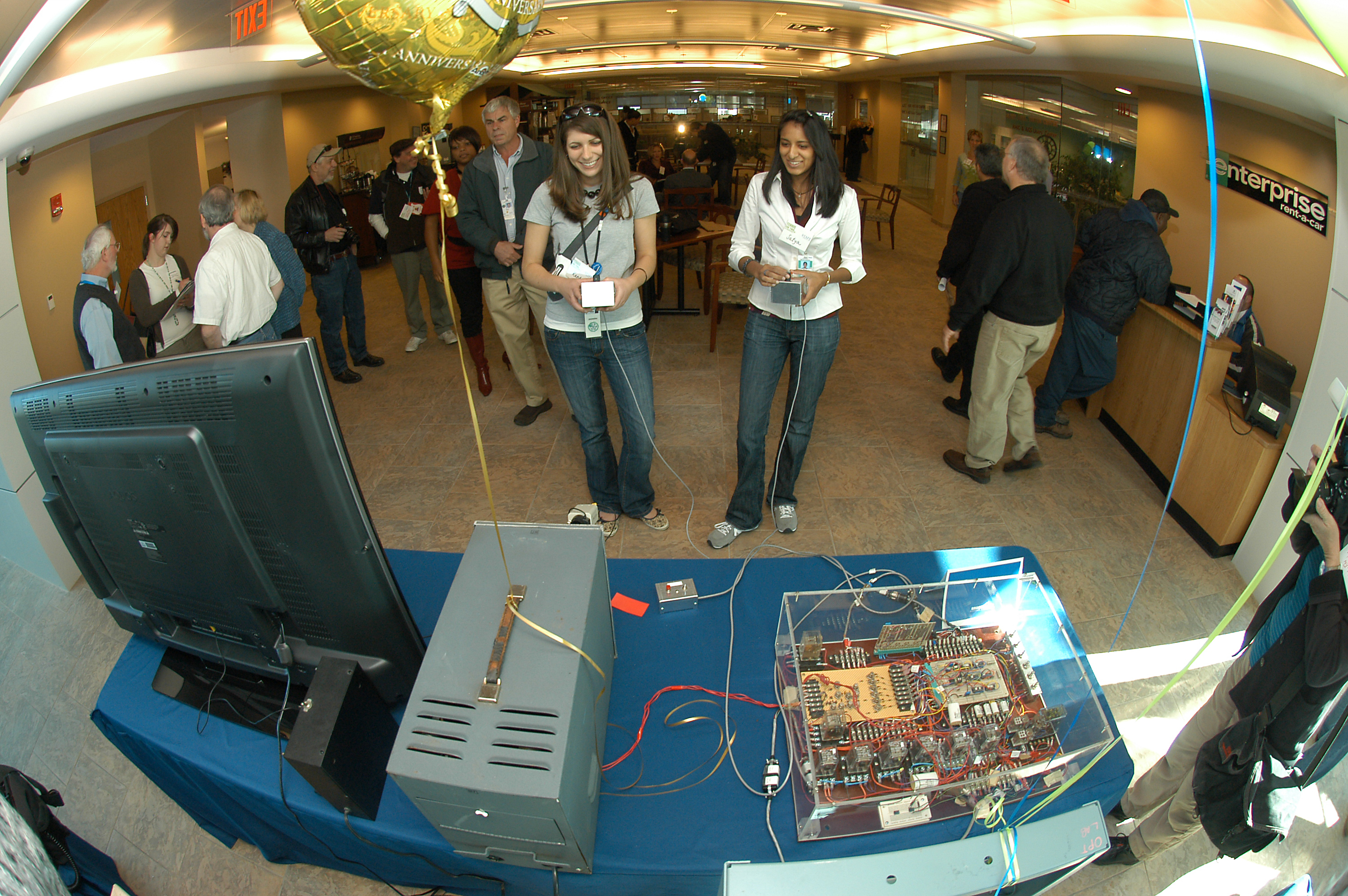
Yet the machine worked like magic. It hooked up to a TV’s antenna terminals and used the frequencies of channel 3 or channel 4. On the screen were what Baer called “spots,” little white squares that could be moved around smoothly like a puck on the ice. Attached were two metal boxes that had knobs for vertical and horizontal manipulation. TV Games #1 used four vacuum tubes. There were no circuitry chips; they were luxuries that were too expensive at the time. And there were no transistors. Although Higinbotham used them in his tests, Baer didn’t yet trust transistor technology. But when the box was switched on and that spot moved on- screen for the first time, it was quite the eureka moment. Baer didn’t jump up and down or wave his fist in the air. But inside, he was thrilled and amazed.
The barracks chief had taken a liking to the strange woman from the Notches. After her second disappearance into the bunker the chief scanned the corpse pile looking for her mutilated body. It would be a pity to see bones protruding from her knuckle stubs, or her forearms snapped at two-inch intervals by a zig vise, or her genitals ripped open by garden trowel, whatever had caught the interrogators’ fancy that day, her death scowl frozen in rigor mortis awaiting decay. But instead the woman returned from the bunker after a week, her wrist bandaged from an apparent suicide attempt. How she had survived remained a mystery for the stranger was not talking.
By the time the Arland contingent could stand on Skavian soil, the camp’s stitching needs were met by other inmates and they were assigned to fruit gathering along with Ivy. The detail was assembled by overseers in the main yard and divided into groups of three. If any one person disappeared, her companions would be executed. They were given two empty baskets apiece balanced on a pole resting on their shoulders, and in this manner marched through the village of Dunder on the road to the surviving apricot groves. The townsfolk looked upon the column with scorn and pity, sending children inside and standing rigidly as the procession passed. What these women had done to deserve their fate was not the business of these citizens. The world was full of enemies. Had not the numerous plots against the Party and the Great Man himself, the acts of sabotage against the nation’s rail and other infrastructure, the collapse of the platform on the great sandstone plaza, the ballistic assault on the Stairway to the Sun, proven this beyond doubt? Did not the history of Arland oppression demonstrate that the Hutman must be hammer to the Inta nail? No one in the village knew what crimes these women had committed but it was reasonable to assume they were among the plotters responsible for attacks on the homeland. Skava had enemies, and Skava had a leader who would deal with them decisively. It was proof of Muglair’s efficacy that so many plots had been foiled.
In 1966, Ralph Baer, a short, bespectacled man with a deep, radio- quality voice and a sharp wit, had been a successful engineer for thirty years, overseeing as many as five hundred employees at Sanders, a large New Hampshire manufacturer whose primary contract was with the United States Defense Department. Much of Baer’s work revolved around airborne radar and antisubmarine warfare electronics. In the late summer of that year, he was sitting on a step outside of the busy Port Authority Bus Terminal in Manhattan, waiting patiently for a colleague and about to head to Madison Avenue for a meeting with a Sanders client. Manhattan’s traffic ebbed and flowed and taxis honked and the passing parade went by. Suddenly, Baer began furiously writing notes with a number 2 pencil on a spiral- bound yellow legal pad. It was like some spirit, some videogame ghost, was doing the writing.
When he was done, he had a title page and four single- spaced pages of notes. His brainstorm produced a passel of ideas for an ingenious “game box” he initially called Channel Let’s Play! In that detailed outline, he described Action Games, Board Skill Games, Artistic Games, Instructional Games, Board Change Games, Card Games, and Sports Games, all of which could be played on any of the 40 million cathode- ray- tube TV sets that were ubiquitous in America at the time. He even detailed add- ons, like a pump controller that would allow players to become firemen and put out blazes around a virtual house displayed on- screen.
With its expensive germanium transistors, the game was state of the art in 1958, a time when technology was speeding forward rapidly in many industries. The world itself was infected by space fever. Sputnik went 60 million miles as it orbited Earth; the world was entranced. The Cold War had frozen relations with the USSR, and Nikita Khrushchev became its cunning, fi st- pounding premier. Americans were mired in a heavy fear and paranoia about a coming nuclear war. On January 13, 9,235 scientists, led by the father of molecular biology, Linus Pauling, took out ads in newspapers, begging the United States to put a permanent halt to its nuclear testing. One of those scientists was Dr. William Higinbotham, the head of the Instrumentation Division at the Brookhaven National Laboratory.
Higinbotham had worked on the Manhattan Project, and like many scientists who worked on the project, he was plagued by guilt when the bomb was used on Hiroshima. To understand why Higinbotham made the game, you have to look into his personality. On May 18, 1958, just months before he created Tennis for Two, Parade magazine profile led Higinbotham in a three- page article entitled “A Scientist You Should Know . . . Wonderful Willie from Brookhaven.” Like many Parade profiles, the story was a puffy feature. But it spoke volumes about the five- foot- four, 125- pound personality who invented an electronic bombsight, one of the first digital computers, and who helped to create the Atomic Energy Commission. Not mentioned in the Parade story was that, as the chairman of the anti- bomb Federation of Scientists, Higinbotham was considered to be a communist sympathizer by paranoid, self- serving senator Joe McCarthy. Because Higinbotham had given his life to science and the government, the label haunted him.
On a freakin’ cold, windy fall Friday, the 7:39 a.m. commuter train rolled through Queens, frozen wheels squeaking and moaning. I passed indistinguishable tall apartment complexes with ratty balconies like something out of Gears of War. As the city morphed into the equally indistinguishable suburban sprawl of Long Island, bleary- eyed reverse commuters checked their BlackBerries, ready for the week to end.
But forget their sour faces. I was going to visit the Brookhaven National Laboratory, where Dr. William Higinbotham made the first videogame—more than fifty years ago. Higinbotham’s Wikipedia entry doesn’t reveal much about the origin of his game, Tennis for Two. Mainly, it tells readers that his son, William Higinbotham Jr., thinks his father didn’t want to be remembered primarily for creating a game. The party line was that he really wanted to be remembered for his work in nuclear nonproliferation. Fair enough. But that begs the question, Why did Higinbotham take time to make a game at all? No one forced him to design relays and transistors in such a way that he could hook them up to a big $200,000 Systron Donner 3300 computer, which his instrumentation department had used mainly for multifarious mathematical calculations. Not the government, not the lab, not his department. No, Higinbotham did it himself with the aid of lab technician Bob Dvorak. They took three weeks to make it work and two more days to work out the bugs. So what was it about the scientist that made him want to entertain others by making a game on a five- inch screen?
The barracks chief was surprised that Ivy returned from the bunker with only a bloody lip. Usually prisoners taken for questioning did not return at all and were presumably either sent to headquarters or executed. Occasionally she recognized a body in the courtyard staging area where corpses were launched into space. It was her job to provide labor details for body disposal and she could tell the victims of interrogation from the missing digits, severed ears and gouged eyes, broken bones and genital mutilation. Ivy did not know what the director would do next. She had bought time invoking his superstition and self-preservation but ultimately he would report to headquarters. He was a tool in the bureaucracy, stupid and brutal, and such people always reverted to form. He would be better prepared for her next time and she did not wish to face his vengeance. He would plan out elaborate torture culminating in the signing of a confession, a document she would have signed without coercion, to be followed by an excruciating death quite possibly at the hands of Bogin himself in Leri Deri. She knew full well what Interior did to people like her. She had seen photographs in Harmour circulated among functionaries to build morale. At the time she accepted that the torture depicted in the photos was just desserts for enemies of the people but even then she had doubts. Could a party that resorted to such barbarism, cutting off tongues and boiling children alive before their parents, truly be the engine of history? She had rediscovered her humanity upon fleeing that awful place and finding an angel in Mutt but she was home again in Dunder, only this time on the other side. She was now the enemy destined to receive her just desserts.
There was nothing she could do about Interior until recalled to the bunker so she resolved to adapt to barracks life. She developed sores on her body from the hardness of the corner. Her body wedged into the planks during sleep pressing her flesh until welts emerged. She pleaded for a haysack but there were only a handful which the chief reserved for the sick. She drank buckets of mop water hoping to expedite her conversion, urinating through a hole in the corner she cored with a hand drill. She did not belong to the Skavians originally in the barracks or to the Arlanders captured in the salient. She was from the Notches, quite possibly the only survivor, and had no natural allies in Dunder. Her survival depended upon infiltrating networks, on proving herself useful to those who could be useful to her.
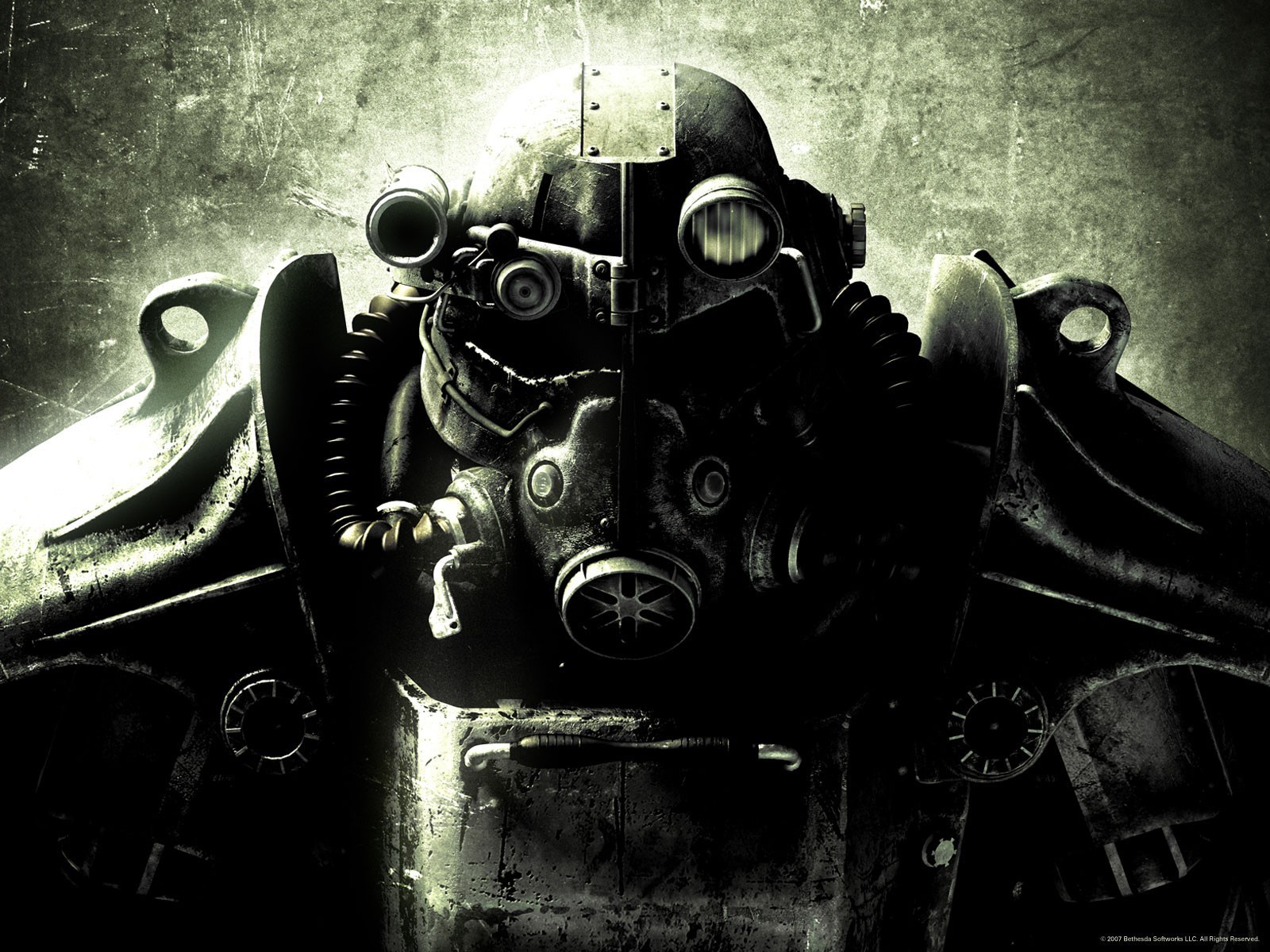
I am Nightmare. I am Nightmare in the deepest darkness and I am Nightmare even when the brightest halogen burns. I am Nightmare when life is tough, and real people around me die. I am Nightmare when I am completely angry at life and need to lash out.
I, as Neil Gaiman says, am a dark and stormy Nightmare. I have the voice, frightening, growling, ready to attack, like Mercedes McCambridge as the demon Pazuzu in The Exorcist. I carry the sword, the long, heavy magical blade called SoulCalibur. Within my chest is a jagged maw. It is forever open to reveal a blood red beating heart engorged after devouring the countless souls whose bodies I chopped and cut with the burdensome SoulCalibur. Always, I wear a black iron mask for I am awesomely ugly and evil. So don’t mess with me. You will not survive. Give me more souls. I need to snack.
Skava lacked transit facilities for its prisoners and threw them into a holding pit surrounded by armed guards. Male prisoners with Arland gravity were given shovels and told to widen the eastern wall of the pit, the only place where Arlanders could stand. Motorized edge transports arriving from crossing stations dumped transverse prisoners into potholes on the surface where they were forced to cling for their lives, as if in shallow alcoves on the side of a cliff, pending creation of adequate room in the pit. The shovelers were ordered to dig graves along the wall for expected casualties and told that whoever dug the least would be the first to occupy one. True to their word the soldiers used a boy for target practice when his grave came up half as deep as the men on either side. The commanding officer reprimanded the privates for wasting ammunition before taking aim with his pistol at the eye socket of the corpse, crowing at a direct hit. The boy’s fellow diggers were ordered to dump the body into the shallow grave and cover him up, which they did without protest, not wanting to be next. Ivy was left on a pothole on the lip of the pit with a bright orange band wrapped around her wrist, Hope taken from her hands by a female orderly. She did not understand that her daughter was being permanently removed to a separate facility. She perched more securely than Arlanders in her pothole with her half-slope gravity.
When her line of prisoners was thrown into the pit she had no flat surface to occupy and rolled into a corner. A soldier shouted at her to join the fellow prisoners, too stupid to recognize her orientation, and trained a gun on her preparing to waste ammunition. She held up her orange band not knowing what it meant but hoping it reflected her status as a high value prisoner, a subject for interrogation. She was thrown a shovel and ordered to dig a half-slope ledge for herself in the corner. She lacked her husband’s muscular build, a trained ditch digger he was, but knew from gardening how to throw her weight onto a shovel head and get underneath the blade to pry the earth up. There was no water, no food, the soldiers deliberately depriving their captives’ bodies of nourishment to condition them to bestial treatment. Why waste good water on Arland scum? Why feed human food to rodents? No one in Muglair’s army could think of a good reason, so the prisoners suffered.
*** Orly invited the family to his side of the canvas. On principle he did not share his work with subjects until complete because he did not want their reactions to taint his artistic vision. Mutt was quite impressed at his visage, Ivy even more so, serene and reflective, handsome and virile, at most one-eighth goofy. Ivy herself was the picture of fecundity, a word Mutt now understood, enticing the viewer with her locks and engaging eyes, her delicate nose and dimples framing a subdued smile, her softness and vulnerability, her power to bring forth life, leaning into her husband, their spines forming a triangle with the floor encapsulating their beaming daughter, the only member of the family whose face showed no restraint. Ivy saw in her daughter the magical product of her marriage and felt an erotic thrill at the sex of which she was proof. This is what the man did to me, she thought, and she loved him for it. Mutt decided he was not so bad looking but hardly a match for his wife. His one objection was the ridiculous hummingbirds floating above their scalps. Was this truly how they dressed in olden times? The couple never thought to ask Orly what he would do with the portrait. As it turned out he had already sold it to the tram operator. Ivy found this creepy. Why would that old man want to hang a portrait of her family in his cottage? Still, she did not want to show ingratitude to the painter. He had to earn a living and surely her family could not afford such an elaborate production. Orly sensed their disappointment and offered a consolation prize. In a back room hung a large painting of various couples arrayed in oversized perspective emerging from the angled plane with the lands of Arland and Skava falling away to either side, the canteen and hammer and rotating cube looming in the background. Ivy recognized Glon and Glon, the father and the sloplady, Esma and Muwild, Lurek and Nelada, Bluitt and Edsall, and many others. Beneath the portrait a caption read “The New Normal.” Ivy immediately got the pun. Mutt oscillated back and forth between the two meanings of the word, understanding them both but unable to grasp that the painter intended a double entendre.
“Shall I add you to the portrait?”
“That would be lovely,” Ivy replied.
Orly was going to paint over a couple who repented and returned to Arland, a process requiring public recantation of deviation and, usually, a return to hidden ways. Mutt recalled Ivy’s acceptance of love in all its forms on the day of their fake wedding and admired her graciousness. He would never rid himself entirely of the notion that something was wrong with Glon squared – when he thought of the physical act inherent in their union he recoiled – yet he was learning to accept their love. He was proud to stand with his wife in the New Normal and repressed the condemnation so deeply ingrained in his psyche. Ivy requested that Orly add Oolan to the painting as the only unattached person. He died suffering a lover’s rejection and should be celebrated, and redeemed, along with those whose love endured. No one had a picture of Oolan so soon he had taken his life after arriving in the Notches, but Orly painted an imagined version to Ivy’s side reaching down to hold Hope’s hand. The New Normal was the painter’s gift to the Notches and would be circulated among the homes of all the depicted. He proposed that the forester’s hut display it first and Ivy gladly accepted. Mutt was tired of Looda steamboats, even Ivy was, and they would welcome a new sight on their walls.
Orly had been admiring Ivy’s curves and felt she would make a superb subject. Mutt did not find this appropriate and answered no on her behalf.
“How about you?” Orly thought he would make a passable male specimen himself.
Mutt found this a more reasonable request and paused to reflect upon the merits of disrobing for art until Ivy slapped his arm. The painter saw the marital discord his proposal generated and offered a compromise.
“Let us paint all of you together, the mother, the father, and the child.”
Mutt was horrified.
“Clothed,” Orly clarified. “It will be a portrait of erotic love and its offspring, a celebration of fecundity and the adoration of a child.”
Mutt had never heard the word fecundity before but figured it was worth celebrating. Ivy found a family portrait an excellent idea. She viewed them as an attractive couple and took pride in their daughter, imagining her as the solution to a peg-in-hole problem suggested by the shapes of their bodies. From the canteen they followed Orly to the painter’s studio in a cross-gabled field cottage by the southern terminus of the tram, Hope perched on Mutt’s shoulders sporting a bountiful stalk. Much to Ivy’s disappointment, the little girl’s hair had retained her father’s sandy tint with only mild darkening. She was not going to make it to charcoal. The parents agreed the child had her mothers’ facial features yet somehow combined them into her father’s ingenuous expression, half her mother, half her father, and all herself. She was three years and one day old, no longer a baby sprouting limbs but a perfectly proportioned little person. Her celebration the day before degenerated into an epic cookie-throwing contest with launchings from the den to the loft and extra points for catching a fan blade, but fortunately Mutt used a no-crumble recipe. Unfortunately the cookies tasted like modeling clay which was why none of them were eaten. He built a deluxe birdfeeder with perches for winged visitors from Skava and Arland and swapped it for a tricycle, a birthday gift much to Hope’s liking. Ivy worried she would find a way to pedal off the edge but Mutt assured her the railing was all intact, neglecting to mention a large gap on the Arland side where a delivery truck rolled over. The party was Mutt’s affair, Ivy being occupied by her new position as youth representative on the governing council. She was nominated by a current member whose children she was tending, stood unopposed, and now found herself assigned the thankless task of allocating a millage across the sculpture gardens of the Notches.