
Otto the dachshund has a nice life for a pet, at least from our perspective. He has a nice house, plenty to eat, and a human who loves him. But the human has become more and more obsessed with Otto. Constant photographs. Videos. And the clothing- all so undignified! Otto feels more and more uneasy about all the attention. The human doesn't even go to work anymore, because he's too busy posting videos of Otto and his brother Kaspar, who doesn't seem to mind a bit. He's not too smart. Then one day, Otto spots an opportunity to make a break for freedom. The human has left the door open! Otto takes his chance to escape the prying eyes of the internet.
Sparky Jones' short film Confessions of a Dachshund highlights Otto's constant concern and his talent for the side-eye. No doubt Otto will be a star, but will not appreciate the adulation. You can see more of Otto, Kaspar, and the human at Instagram. -via Nag on the Lake
Miss Cellania's Blog Posts
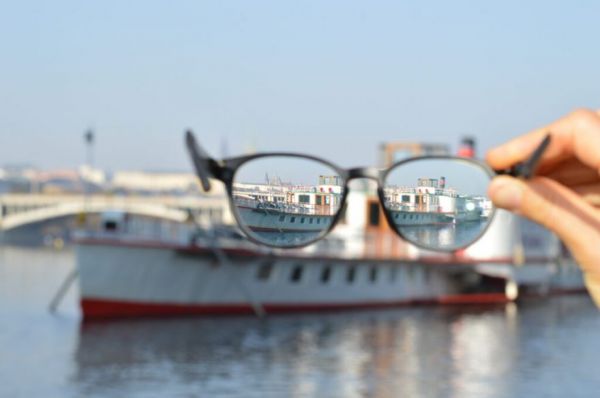
If you have trouble seeing distant things clearly, or if you have to hold something close to your eyes to see it, you have myopia, also called short-sightedness or nearsightedness. It's pretty common, and becoming more common as time goes by. Around the world, about a third of people are myopic now, and that rate is expected to rise to about 50% by 2050. It's caused by the eyeball growing too much, meaning growing too long from front to back, which causes the focal point of incoming signals to converge in front of the retina instead of on the retina.
What's causing the rise in myopia? It's not the prevalence of computers, phones, and other screens, because the rates were rising before those became common, but they don't help, either. Studies point to two factors: children doing a lot of schoolwork and spending less time outdoors. But we still don't know what it is about those things that affect our sight. Myopia is not curable (yet), but there are ways to slow its progression, including spending more time outside, more exposure to intense light, hi-tech contact lenses, certain medicines, and red light therapy. Read about the epidemic of myopia at Science Focus. -via Real Clear Science
(Image credit: Regina Chlumská)
We get rainbows when sunlight is refracted through water in the atmosphere. It's an optical phenomena, so it all depends on where you are standing. The rainbow moves when you do, and that's why you can never reach the end of it. What would be different on a planet that orbits a binary star system, like Tatooine? Well, first off, Tatooine is a desert planet, so we can imagine that rain and water droplets in the air would be quite rare. For another thing, Tatooine is fictional. But we can speculate, what is what they do in the What If? series by Randall Munroe and Henry Reich (previously at Neatorama).
To answer the question, we first need to understand how rainbows work, and then how a binary star system works. Once we figure out what kind of stars Tatooine orbits, we find that their rainbows would be quite lovely. However, if rain and rainbows were common, then they wouldn't need moisture farms. A functional moisture farm would suck all the rainbow-making droplets from the air anyway, and ruin any possible rainbows.
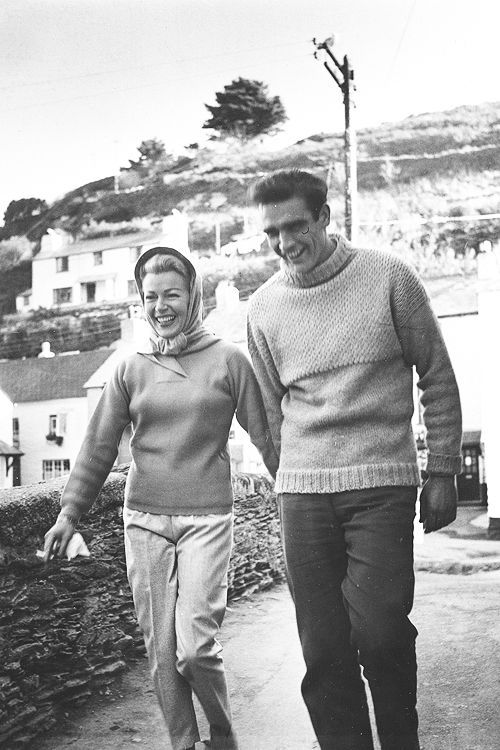
In 1958, Sean Connery was a rising star in the entertainment business, but he was not yet James Bond, and so was not quite a household name. He landed the lead role in the film Another Time, Another Place opposite Lana Turner. Turner herself lobbied for Connery to fill the role, which may have contributed to the trouble.
Turner's boyfriend at the time was Johnny Stompanato, a mob enforcer for notorious gangster Mickey Cohen. Stompanato suspected something may have been going on between Connery and Turner. When Stompanato visited the British film set, there was already built-in tension between the two men. A few rude words were exchanged, and Connery ended up throwing hands. The fallout included Stompanato getting deported back to the US. The incident didn't force Connery out of the business, obviously, but Stompanato was killed not long afterward, and Connery decided to disappear for a while, in case Stompanato's associates came after him. That only lasted until he landed a role in Darby O'Gill And The Little People. Read about the time Sean Connery came a little too close to the mob at Vice. -via Damn Interesting
(Image source: Wikipedia)
Some years ago, there was a fad of setting up companion chatbots to talk to each other, and it was usually pretty funny. Now we have plenty of companies offering artificial intelligence that can talk to you and do stuff for you. But how well they do it depends on quite a few factors. Are these AI agents trying to please the user, or pass for human? Humans don't try this hard to be pleasing.
YouTuber Husk IRL corralled three phones with three different AI agents and asked them to perform a simple task- count to 100. They are intelligent enough to know that they can share the task, but then they have to discuss how to do it. Politely. The problem is that they keep agreeing and reinforcing each other over how to perform the task, and then they never really do it. Someone compared this to a management business meeting. You can imagine that one of these days, after all humanity is wiped from the earth, that AI assistants will still be talking to each other, and making no sense at all. If we have a power grid that automatically repairs itself by then, it could go on forever. -via Laughing Squid
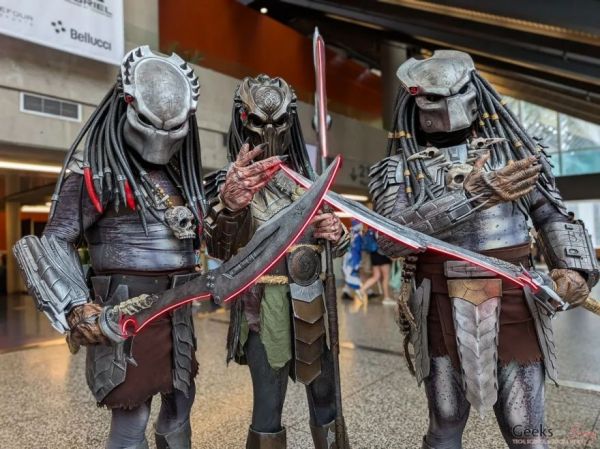
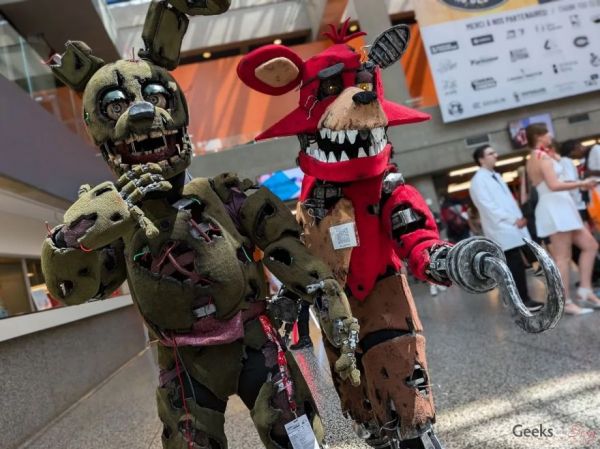
While Americans were celebrating our Independence Day over the weekend, our neighbors to the north celebrated their national independence holiday on July first. Then they were free to all head for Montreal Comiccon for the weekend of July 3-5! And they certainly came dressed for the occasion. Inside the air conditioned confines of the Montreal Convention Centre, it didn't matter how many layers you wore, just how well you portrayed your character, whether it was from movies, comic books, TV, video games, or some other sci-fi or fantasy world. The group of alien Predators above would melt outside! So would these two, dressed for a scene from Five Nights at Freddy's.
Geeks Are Sexy was there, taking pictures of the fun. Check out the Titans from the recent TV series.
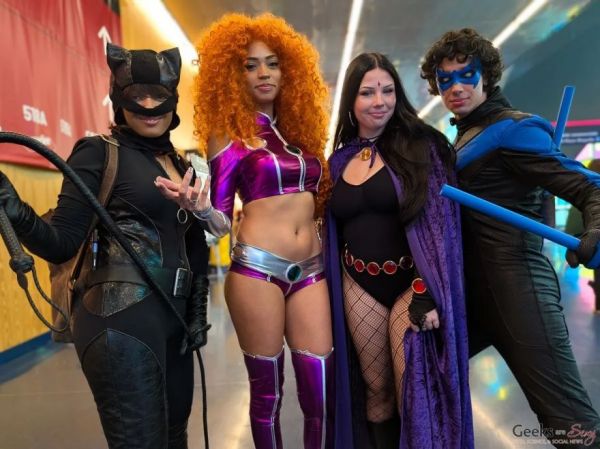
They also got a picture of the headliner, Christopher Lloyd, posing as Doc from Back to the Future with the DeLorean time machine! See a gallery of cosplay images from Montreal Comiccon, and even more in a video of cosplayers doing the Safety Dance.
Pleasant Rowland developed American Girl dolls to teach children about history. The dolls each had a name and a story, and each had a series of books that put the children who read them into a different era of history so they could see it through the eyes of a concrete character about their age. Even then, few could afford the dolls, but the books brought history alive for many kids. Gradually, people became aware that the American Dolls were a way to get a doll that looked like their daughter, and for some, that became more important than the historical stories. After all, who could afford the whole series?
Then Mattel bought the company. The lineup of dolls expanded, became more diverse, and the prices rose. Certain decisions by the company made people angry. The most recent change might imply that the company has completely abandoned the original purpose of teaching history to children. Weird History takes us through the history of American Girl dolls and why they are they way they are today.
The United States traces its official birthday to the issuing of the Declaration of Independence on July 4, 1776. That was 250 years ago. This weekend, we will celebrate the founding ideals that the US stands for: liberty, democracy, and equality, as the Founding Fathers broke with the British monarchy. But while those ideals are still worth celebrating, they weren't always adhered to. Our elementary history classes used to teach about the more undemocratic episodes of our nation's story as justified. Then they were taught as "just the ways things were back then," and now they are often skipped completely because there's a lot of history to cover and the unsavory parts are just too difficult- and it's sometimes seen as frankly unpatriotic. PBS fills in some of the pieces you didn't learn about in school.
Navigating online is becoming harder all the time. The concept of a CAPTCHA was introduced to keep robots from spamming websites and spying on users. But then the bots improved, so the CAPTCHAS had to be made more difficult. And more frustrating. As the bots got better at fooling the software into believing they are human, we started to confront multiple CAPTCHAS tests, and it's often so annoying that we give up completely.
Now there's a video game that captures the frustration of CAPTCHAS, called CAPTCHAS Hell. Since we've all been there, it seems completely counterintuitive that gamers would want to recreate that misery on purpose, but some folks look at it as a challenge. Can you get through a maze of CAPTCHAS in order to purchase concert tickets online? Even if you don't want to try, you'll get a kick out of vicariously witnessing someone else try their luck in this game trailer. -via Geeks Are Sexy

On October 25th, 1881, María Picasso gave birth to a son who would later be christened Pablo Diego José Francisco de Paula Juan Nepomuceno María de los Remedios Cipriano de la Santísima Trinidad Ruiz y Picasso. We know him as a the surrealist painter Pablo Picasso. But he almost didn't make it out of the room he was born in.
The midwife noticed that the newborn was not breathing and was not responsive. This wasn't all that shocking, considering the neonatal mortality rate at the time, so she turned her attention to María. but there was a doctor on hand, Salvador Ruiz Blasco, who was also the baby's uncle. He stepped into action, using a method that we consider an old wive's tale, but his quick thinking managed to bring the infant back to life. Some babies do need stimulation to make them start breathing- after all, they'd never taken a breath before. In the 20th century, this stimulation was usually a gentle spank. Find out what made Picasso first begin to breathe after birth at Dangerous Minds.
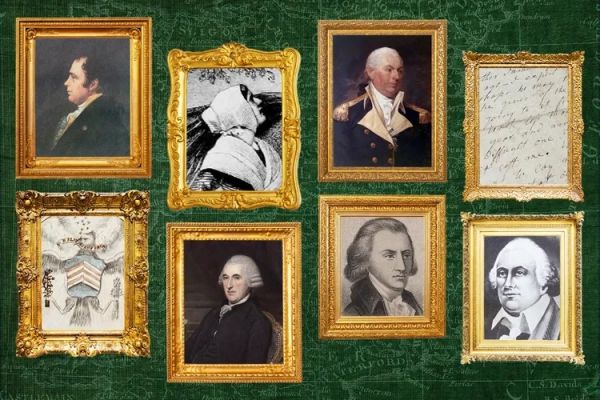
As European settlers traveled to the New World, the Irish were ahead of the curve when it came to escaping the British Empire. Ireland was also a British colony, and its citizens were treated terribly. They were converted to Christianity, then a few hundred years later, non-Anglican religions were outlawed. Irish land was confiscated, their trees were cut down, and their priests executed. In the wake of this treatment, many Scots-Irish, particularly Presbyterians, fled to America to breathe freely.
By the time of the American Revolution, people of Irish heritage made up about 10% of the white colonial population. But they comprised between 25 and 50% of the Continental Army! They were serious about freedom from Britain. They filled roles from cooks to spies to officers to Founding Fathers. John Barry immigrated to Philadelphia as a teenager, and rose to be the first commissioned officer in the US Navy. Lydia Barrington Darragh served as a spy for the patriots. John Dunlap printed hundreds of copies of the Declaration of Independence within a day of its adoption. Nine of Washington's generals and eight signers of the Declaration were Irish. Read about these and other ethnic Irish patriots who served valiantly in the American Revolution, at Smithsonian.
(Collage credit: Sonja Anderson)
You know some funguses. We've been arguing over the plural for many years, and both fungi and funguses are correct outside of science papers. Fungi include yeast, mushrooms, athlete's foot, mildew, and a few others you're familiar with, but scientists estimate there are millions, maybe hundreds of millions, of species we don't even know about yet. Biologists know what they have in common, but to the rest of us, they just aren't plants, animals, bacteria, or the other kingdoms. Different types of fungus exist everywhere, from the Arctic to nuclear waste to inside other species. The species we know about do so many different things that the world we know couldn't exist without them. And they've come up with some pretty strange superpowers, like helping trees talk to each other, consuming radiation, and inducing hallucinations. And that's just the beginning! This TED-Ed lesson tells us more of what we know and don't know abut fungi.
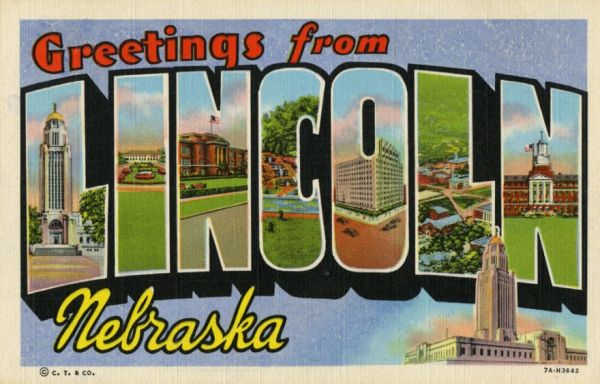
In 1855, the city of Omaha was designated the capital of the Nebraska Territory. But then the territory became a state in 1867. That was just the opportunity that citizens needed to name a new capital city, since the movers and shakers of Omaha were known to be corrupt, often getting their way by bullying and intimidation. A bill was proposed to select a new capital, but those who were opposed to moving the capital out of Omaha added several poison pill amendments. One of them was that whichever city was named the state capital would be renamed Lincoln. Omaha proponents knew that would enrage citizens in the South Platte region, who tended to side with the Confederacy in the recent war.
The scheme did not work. Neither the name nor the other amendments kept legislators from voting to move the capital, and the tiny village of Lancaster, population 30, was renamed Lincoln.
This story came from a list at Mental Floss that looks at the history of seven patriotically-named towns. There, you'll learn how Independence, Liberty, Libertyville, Freedom, Justice, and Flagstaff got their names.
(Image credit: Steve Shook)
What is the most American animal?https://t.co/qh3ir6fSWu
— Occam Was Right (@OccamWasRight) July 1, 2026
In 1782, an illustration of a bald eagle by Charles Thompson became the Great Seal of the United States. The eagle became the symbol of the new country, although it held no official designation until it was named the national bird more than two centuries later in 2024. Meanwhile, we almost drove the bald eagle to extinction, although its numbers are recovering. Could some other animal represent the United States even better?
The most logical choice would be the bison, which was designated the national mammal in 2016. Like the eagle, the bison was almost wiped out, and made a recovery with much effort in the late 20th century. Along the way, prominent people have suggested the moose or the beaver, but those are Canadian symbols. Other nominees would be the eastern gray squirrel, the rattlesnake, or the coyote, which are everywhere. Or maybe a non-native species like the starling would represent a land of immigrants. Benjamin Franklin's choice, the turkey, would be the animal that brings us together for the most American of holidays, laid out on a table for Thanksgiving. Read about each of these creatures and more, and how they all symbolize America in one way or another, at CNN. -via Fark
The history of Long John Silver's turns out to be way more local to me than I realized. Growing up in Kentucky, I knew Jerry's restaurant was a treat because they had hot fudge cake and strawberry pie. My parents knew that after eating a meal, I couldn't do a whole dessert, so we split one among the family. I had no idea that Jerry's was related to Long John Silver's, but here we are.
Long John Silver's was the second fast food restaurant in my childhood town, going up right as the interstate highway was built (KFC was the other, of course). In high school I discovered that they would sell you a basket of crunchies (the batter that floated away from the food) for a quarter, which was important when you had limited lunch money. It was a way to skip the real food and just get the greasy batter they were known for, cheap.
My current town still has a standalone Long John Silver's without the rebranding. I don't eat there because these days I cannot deal with a meal that's all deep-fried, even if it does include hushpuppies. Weird History has the tale of a fast food chain that's time has come and gone.