
John Farrier's Blog Posts

The copepod is just a single millimeter long. But for it's size, it's the strongest, fastest animal alive. The ability to escape or resist predators is a major evolutionary advantage:
Together with researchers from DTU Aqua and DTU Physics and with the aid of high-speed video recordings, Thomas Kiørboe has been able to give a detailed picture of the copepods’ escape jump. The powerful jump has made an incredible impression upon the researchers.
“They jump at a rate of half a metre per second, and that’s within a few thousandths of a second,” says Thomas Kiørboe, continuing: “It shows that copepods - in relation to their size - are more than 10 times as strong as has been previously documented for any other animal or even man-made motors...”
Link via io9 | Photo: NOAA
Previously: Marine Biologists Filmed Copepod Going to the Bathroom
The Croy Brae or Electric Brae is a road in rural Scotland that can disorient drivers. Some people think that it's due to unusual variations in magnetism that pull cars uphill:
Consequently, it's a popular spot for tourists in the area. But mathematician Philip Gibbs says that there's no paranormal or magnetic phenomenon at work. It's just an optical illusion:
Paranormal explanation and scientific explanation via The Presurfer | Photo: Ayrshire government
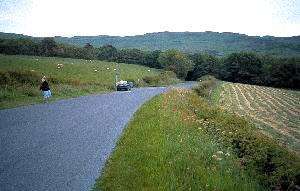
The road appears to slope downward, and drivers assume that the slope will accelerate the vehicle. Yet if they slow down, they are likely to grind to a complete halt. Despite every appearance to the contrary, the road runs uphill, not downhill. Unable to believe what has happened, many motorists stop-only to find that their cars begin to slide backward, a “uphill.”
Consequently, it's a popular spot for tourists in the area. But mathematician Philip Gibbs says that there's no paranormal or magnetic phenomenon at work. It's just an optical illusion:
There are several things that enable us to sense which way is up. The balance mechanism in our inner ears is one system we have, but visual clues are also important and can be overriding. If the horizon cannot be seen or is not level, then we may be fooled by objects that we expect to be vertical but that really are not. False perspective might also play a role. If a line of trees get larger or smaller with distance away, our sense of perspective is thrown off. Objects far away may seem smaller or larger than they really are.
People often overestimate the angle of a slope. If you are standing on a slope of 1 degrees it will seem like a slope of 5 degrees and if you stand on a slope of 5 degrees it may seem like you are on a slope of 30 degrees. Because of this effect the anti-gravity illusion can seem stronger than it should be even when you know the cause
Paranormal explanation and scientific explanation via The Presurfer | Photo: Ayrshire government

The Plaza Athénée, a luxurious hotel in Paris, has decorated a number of rooms with a Barbie theme. They're made for children (sorry, Alex) and are pricey at €1,600 per night. The rooms will be available from August 5 through September 5.
Link via Ace of Spades HQ | Photo: Plaza Athénée
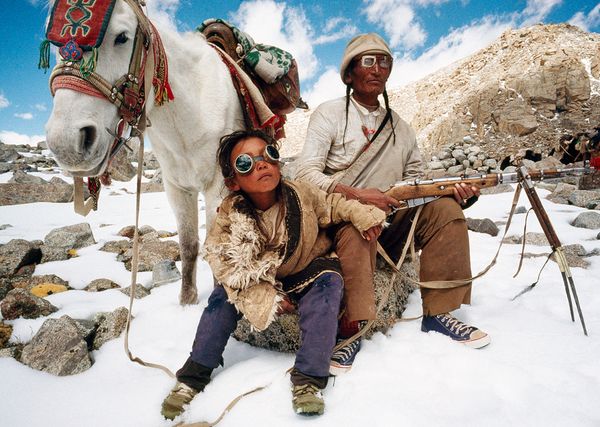
A new study suggests that ethnic Tibetans have certain evolutionary advantages that help them survive at higher altitudes. Among other traits, they have lower hemoglobin levels than non-Tibetans. This is a significant advantage when living at higher altitudes:
Tibetans also tend to have wider blood vessels and take more breaths per minute.
Link | Photo: Lynn Johnson, National Geographic
UPDATE: If you're curious about the identity of the rifle held by the Tibetan man in the picture, James Rummel is holding a discussion on it.
"Usually, if you or I or any nonadapted person went to high altitude, we would increase our hemoglobin levels to compensate for the low amount of oxygen."
But high hemoglobin levels have been linked to complications such as hypertension and chronic mountain sickness, Simonson said.
These negative effects could have led to a genetic mutation among Tibetans that "prevented them from making as much" hemoglobin, she noted.[...]
Several variants of genes associated with high-altitude living, such as those that process oxygen, were found in Tibetans but not in their low-living neighbors. That includes the two genes that are strongly associated with low hemoglobin production.
Tibetans also tend to have wider blood vessels and take more breaths per minute.
Link | Photo: Lynn Johnson, National Geographic
UPDATE: If you're curious about the identity of the rifle held by the Tibetan man in the picture, James Rummel is holding a discussion on it.
(YouTube Link)
Alec Brownstein, a writer, needed a job. So he chose the names five NYC advertising directors that he'd like to work for. Then he bought an advertisement in Google that would be displayed when each person searched for his own name. So when they Googled themselves, they saw an ad from Brownstein asking for a job. He got two job offers. The cost was just $6.
Link via Urlesque
UPDATE: Google ads, not search results. I misunderstood and have corrected the post.
Paul English is the entrepreneur who created Kayak.com, a commercially successful travel website. He has a plan to provide the entire continent of Africa with Wi-Fi access in the hope of spurring economic development there:
Link | Image: NASA
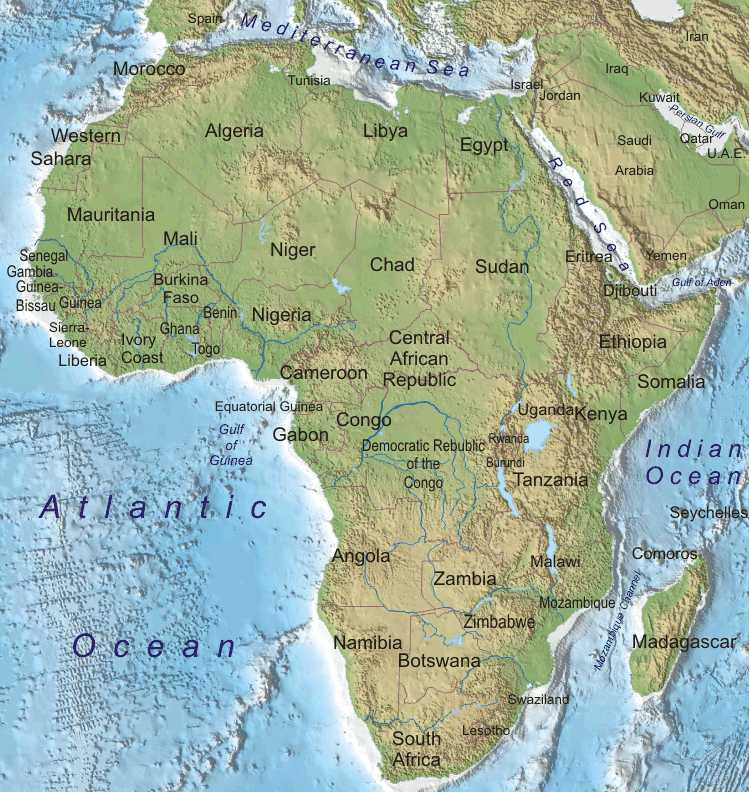
English plans to kick off the nonprofit/for-profit hybrid this summer and begin creating partnerships between JoinAfrica and local African for-profit telcos. JoinAfrica would first branch out existing Web connections in villages using, for example, simple WiMAC hubs. Through these hubs, JoinAfrica would provide residents with free basic Web service, including access to email, Google, Wikipedia, and various news sources. Downloads of data-rich video, porn, or other non-essential sites would be limited (similar to what libraries in the U.S. do now), via a process called "bandwidth shaping." Local for-profits would charge for upgraded access and faster connection speeds, and English is also searching for ways to make sure these local companies continuously improve the service and lay more fiber.
Link | Image: NASA
(YouTube Link -- video preceded by commercial)
A new ATM in a luxurious hotel in Abu Dubai dispenses little gold bars and coins to customers. It's updated every ten minutes to stay current with prices on the world gold market:
The exterior of the machine is coated with a thin layer of gold and offers customers 320 items to choose from, ranging from gold bars that can weigh up to 10 grams, to customised gold coins.
Gold rates are constantly updated inside the shiny machine in the hotel's lobby, courtesy of a built-in computer connected to a dealer which sells gold online
Link

I've been skeptical of the utility of Twitter, but one man in Japan found it to be essential at a very unfortunate moment. He was in the restroom of an electronics store in Tokyo when he ran out of toilet paper. So he whipped out his phone and sent this tweet:
Urgent request, toilet paper in Akihabara Yodobashi Camera 3rd floor men's restroom
Twenty minutes later, help arrived. Thank you, Internet.
Link via Kotaku | Image: Naika Tei
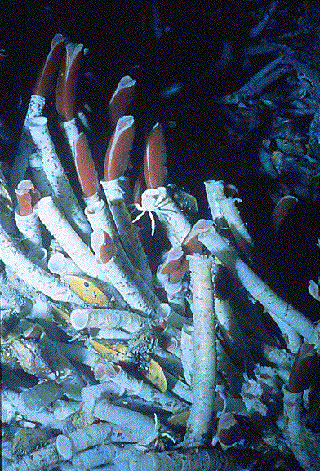
At io9, Annalee Newitz argues that five earth-bound creatures that live under extreme conditions make the idea of life existing on other planets realistic. One of them, pictured above, is a tube worm that lives in the extreme heat of the ocean floor near volcanic vents:
They live at the edges of molten-hot volcanic vents deep beneath the ocean, and they feed on sulfides delivered to them by local bacteria. These giant tube worms, which can reach 7 feet in length, live a mile below the ocean surface under extreme pressure. Their tips are bright red because they're filled with blood - these worms are seriously packed with blood vessels. And they prefer live at the edge of "black smokers," volcanic vents where temperatures can be extremely hot.
What does this tell us about life on other planets?
The interesting thing about giant tube worms isn't that they can withstand extreme heat, but that they can gain nourishment in an environment with chemistry radically different from our atmosphere. They're basically eating sulfides, which are abundant on planets like Venus, where it occasionally snows iron sulfide. Could tube worms thrive on Venus, with its heat and high pressures and sulfide weather?
Link | Photo: NASA

The planet Jupiter has lost one of its belts -- the Southern Equatorial Belt (SEB). It's made of mostly ammonia ice, phosphorus, and sulfur, and apparently disappears now and then:
The belt took leaves of absence in both the early 1990s and in 1973, so its disappearance now, if anything, is a bit overdue (it seems to be on a roughly 15-year cycle).
But due to the orbital dynamics of Earth and Jupiter, this particular disrobing was far more abrupt. Jupiter has been hanging out on the other side of the sun since late 2009, obscured from our view for the last few months. The belt disappeared while Jupiter was hiding, making for quite a drastic change in appearance when it recently re-emerged.
http://www.popsci.com/science/article/2010-05/while-hiding-behind-sun-jupiter-loses-one-its-belts | Image: Anthony Wesley
The government of the Swiss canton of Fribourg has hired an actor to dress as an angel, stand in the middle of roads around the canton, and urge people to drive slowly:
Link via Fast Company | Photo: Daily Mail

The ‘road angel’, who forms part of a safe-driving campaign, will wave and flap his wings at motorists travelling too fast. [...]
'The idea is to provide a sort of concrete protection, to have a real angel telling drivers to be responsible,' Benoît Dumas, a Fribourg police spokesman, said.
'To have a physical presence like that makes the message more visible, and it's out of the ordinary.'
The actor, whose identity has not been released for privacy reasons, works 20 hours per week and will ‘appear’ in different parts of the 670-square-mile region of western Switzerland.
Link via Fast Company | Photo: Daily Mail
People in the Indonesian village of Tuban like to eat "ampo" -- a snack literally made from dirt:
The food is said to have a "cool, creamy texture."
Link and Gallery via The Presurfer | Photo: Reuters
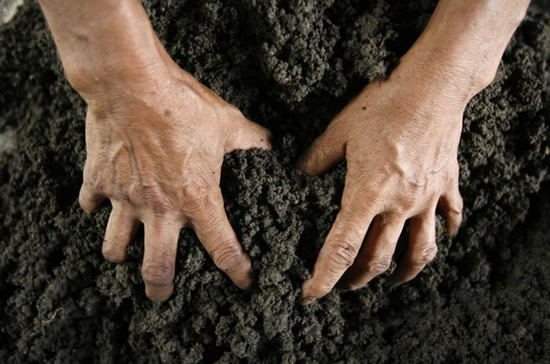
Although there is no medical evidence, villagers believe the soil snacks are an effective pain-killer and pregnant women are encouraged to eat them as it is believed to refine the skin of the unborn baby.
There is no real recipe: makers of the snack use a wooden stick to pound the soil into a hard, solid mass.
Rolls of dirt are then scraped off the with a bamboo dagger, baked and smoked in large clay pot for half and hour and then they're ready to serve.
The food is said to have a "cool, creamy texture."
Link and Gallery via The Presurfer | Photo: Reuters

Dancers Among Us is a project by photographer Jordan Matter. He placed professional dancers in motion in the middle of scenes of ordinary life in New York City in order to explore how people identify themselves.
I wondered about the impact of the recession on people’s identities. If a woman loses her job, does she lose a part of her identity as well? Who is the journalist, if he is no longer employed to write? Who is the chef without a kitchen? Is our identity formed by our passion, or our employment?
I believe in the strength of a life’s mission. If you dedicate yourself to a career that inspires and excites you, this commitment will be your foundation. As these dancers ride the subway, go to a baseball game or cross the street, they remain dancers; it is their lifeblood.
Gallery via Urlesque
Email This Post to a Friend