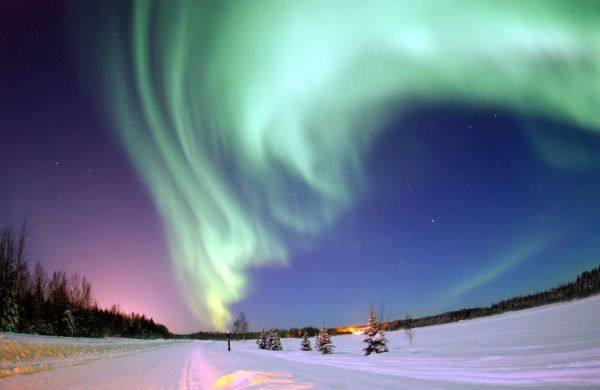
Although neither astronomers nor meteorologists can say for sure, the convergence of two phenomena could mean that the Aurora Borealis will be at its peak in March. First, there is the equinox. The vernal equinox is on Friday, March 20, when the angle of the earth sees the sun cross the equator, which doubles the chance of auroral activity. Second, the sun is still in its solar maximum, the peak of the sun's magnetic activity in an eleven-year cycles. The actual peak was last October, but it is a months-long maximum.
So when an equinox occurs during a solar maximum, the aurora lights up the sky more spectacularly than ever. Will the Northern Lights be visible further south than usual? We don't know, but if you were ever planning to travel to the higher latitudes to see the lights, now would be a good time to do so. LiveScience explains the phenomena that make it happen. -via kottke
(Image credit: United States Air Force/Senior Airman Joshua Strang)