
In early television history, tapes were sometimes recorded over or preserved in slipshod conditions, which is why, for example, many early episodes of Doctor Who are missing. Their rediscovery is a source of joy to fans.
This is the equivalent experience for medievalists.
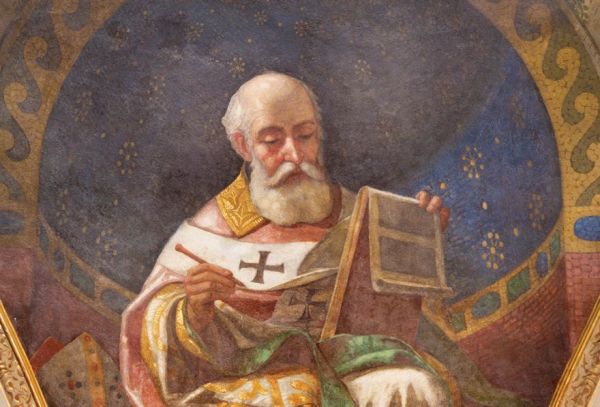
St. Augustine of Hippo (354-430) lived during the twilight of the Western Roman Empire, dying as the Vandals were literally at the gates of the city where he lived. He was a classically trained Roman intellectual who synthesized Platonic philosophy and Christian theology to a greater degree than previously accomplished.
Many but far from all of his voluminous written works survive to this day. But it was in only 2024 that Latin scholar Christian Tornau at University of Würzburg translated a manuscript discovered in Poland that contained six sermons by Augustine. Two of them were previously unknown.
Both sermons, which are concerned with the Witch of Endor, are confirmed to be very much in Augustine's style and thought, so Tornau is convinced that they are genuine. You can read more about this discovery at the webpage of University of Würzburg.
-via David Hines





Please be specific about errors. I actually read Confessions and studied this era of history back in college, so I'm genuinely curious about what I got wrong.
Commenting on Neatorama will earn you NeatoPoints!