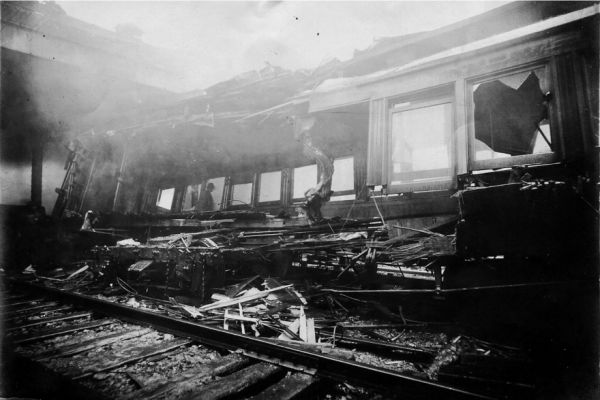
In the late 19th century, the Vanderbilt family owned the railroad passing through Park Avenue in New York City. In response to complaints about the noise and smoke of the coal-powered steam locomotives, they constructed a shallow tunnel to conceal the trains. But the smoke not only filled the Park Avenue Tunnel, it still escaped into the city. Commuters still needed to get into the city, and so rode through the dangerous tunnel. That is, until January 8, 1902. That day, a commuter train was stopped in the tunnel, and the smoke escaping out of the end was so thick that the next train didn't see the signals nor the stopped train at all. Its last two cars were smashed like an accordion, and 15 people were killed.
The wreck was a reckoning for the city. Something had to be done about the trains. If they were electric, they could all be run underneath the city in tunnels without the danger of steam or smoke. It would be an expensive upgrade, but railroad engineer William J. Wilgus, who headed the project, came up with a way of funding it. The underground tracks would free up so much New York real estate on the surface that the system would pay for itself. His plans led to the beginnings of New York's subway system, and also the design and construction of Grand Central Station. Read how all that happened at Smithsonian.