A breakthrough in testing may have a global impact on the infrastructure we've built in dairy processing. When dairies produce milk, it is tested for protease, an enzyme that breaks down proteins. Protease is important for digestion, but it's not great for commercial milk supplies. Some milk products are more sensitive to protease than others. The problem is that protease testing normally takes about three days, and by the time the results get back, that milk has already been designated for fresh milk, UHT milk, yogurt, cheese, or other products.
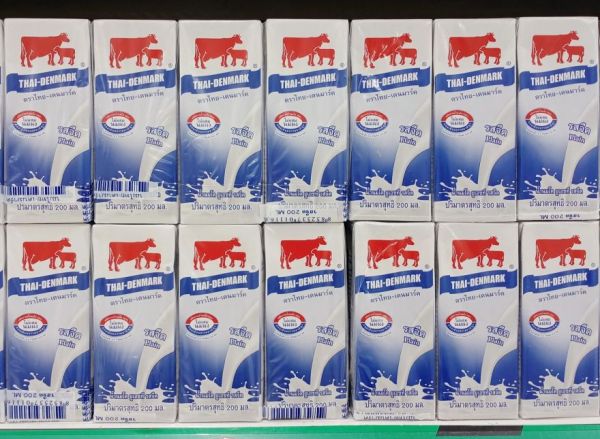
UHT milk, the shelf-stable kind that needs no refrigeration, is not all that popular in the US, but globally it makes up more than half of all milk purchased. It is particularly important in countries that do not have reliable refrigerated transportation and storage. UHT milk is also the milk product that is most sensitive to protease. A new testing process called Cybertongue, developed by PPB Technology in Canberra, Australia, can detect the amount of protease in milk in just three minutes! That means that milk with more protease can be diverted to make products like cheese that are less sensitive, or it can be treated with protease inhibitors. Milk with little or no protease can be made into UHT milk, which would extend its shelf life. The innovation could cut into the millions of tons of milk that are wasted every year. Read about Cybertongue and what it can do for the dairy industry at the Australian Broadcasting Company. -via Metafilter
(Image credit: Per Meistrup)