Listen to this super nostalgic mashup, new from Bill McClintock! It's a medley of disco hits from the 1970s, set to the tune of Huey Lewis and the News' 1985 song "The Power of Love." The first disco song is "Disco Inferno" by The Trammps. I was a little disappointed there, because it's my favorite disco song mainly because of the lush instrumentation. But that's just the beginning- you'll also hear "Lady (You Bring Me Up)" by the Commodores, "All Along the Watchtower" by Jimi Hendrix, and "Serpentine Fire" by Earth, Wind & Fire.
The five songs are accompanied by a video that incorporates the music videos from each song, plus the movie Back to the Future, which is where we got "The Power of Love." You'll want to get up and dance, but keep in mind the disco hits are all a little slower to match the tempo of "The Power of Love." But that's okay, because if you recall all these songs, you probably dance a little slower than you used to.

There is a $5,000 reward offered for information leading to the capture of an escaped giraffe in Texas. Gracie is a 3- to 4-year-old reticulated giraffe who went missing from Cedar Hollow Ranch, an exotic animal facility in Real County, Texas. Gracie is described as 10 to 11 feet tall with a case of wanderlust. She managed to escape from an area of the ranch that had an eight-foot gate and a rock slab barrier, although no damage to the gate was reported. A search by helicopter covered a 7,500-acre area, but no sign of the giraffe was found.
Ranch manager Vick Jones is not too concerned with Gracie's wellbeing while on the lam. The surrounding area offers plenty of vegetation a giraffe could eat, and she is unlikely to be bothered by native wildlife. One would imagine that native wildlife would be terrified by an 11-foot animal. The question that remains is how she managed to remain free for this long. Read about the case of the escaped giraffe at Smithsonian.
(Image credit: Real County Sheriff's Office)
The usual way to make classic cartoons is to record the voices first, and then draw the animation to match. When Robin Williams recorded lines for the Genie in the 1992 film Aladdin, the crew knew that letting him loose with the script would produce magic. Williams recorded hours and hours of sound, playing around with each joke, adding his own ad libs, and doing them all over and over with different recognizable character voices. It had to be a real trip to witness, and a real struggle not to ruin every take with uncontrollable laughing.
Of course, they didn't use all those hours of voice recordings, but they were too funny to discard. They were well worth adding artwork to them anyway. In this video, two directors and the supervising animator from Aladdin remember Robin Williams and bring us the Genie treasures we didn't get to see in the movie.
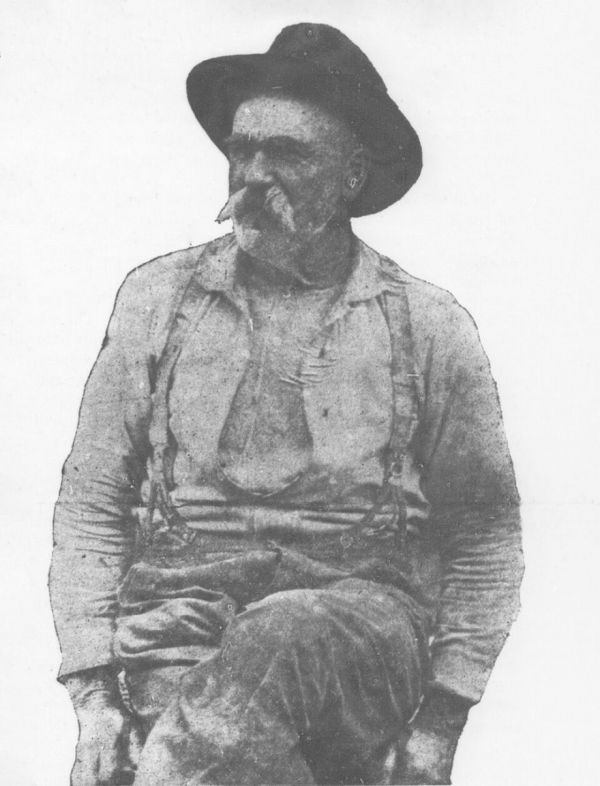
In case you didn't know it, the 1972 movie Jeremiah Johnson was based on a real person. The character was somewhat fictionalized, because no one wanted to see Robert Redford eating human livers.
John Jeremiah Garrison, who later took the name Johnston and eventually dropped the "t," was born in New Jersey in 1824 and headed out west after deserting the military. He wanted to find gold, but instead sold wood in the mountains of Montana. He married a woman from the Flathead people, but she was killed by a band of Crow hunters. That's when Johnson went nuclear, and he spent the next 25 years hunting and killing Crow tribesmen. It was said that he killed more than 300 Crow and devoured their livers afterward, earning him the name "Liver-eating Johnson." He once escaped capture by the Blackfoot people by cutting off his guard's leg and beating everyone else with it. As hard to believe as that is, even more incredible is the story that all this brought Johnson respect among the Crow, and he eventually made peace with them. 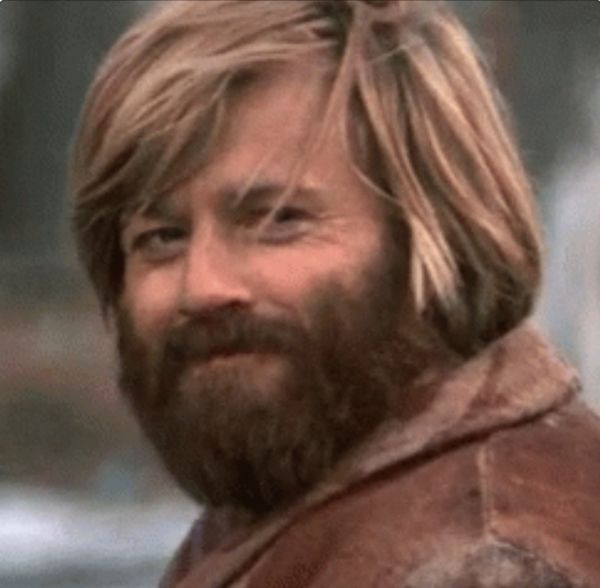 You can read a "just the facts" version of Johnson's story at Wikipedia, or a more dramatic and gruesome version at OldWest. -via Boing Boing
Your first bird feeder seems like a nice gift, but it can lead to some lifestyle changes. Suddenly, you are obsessed with the birds that actually come visit. You're taking pictures of them, identifying them, studying their favorite foods, and that leads to a serious obsession. There's nothing wrong with birdwatching, and I'm sure the birds appreciate the food. But you may start to seem a little odd to the neighbors and any friends that visit.
Comedian Matt Lyons noticed this in his own neighborhood. He knows about as much about birds as you or I do- notice that the bird feeder in this video is empty, and no serious backyard birder would let that happen except to give it a good cleaning. You can also tell by the names of the birds, like the eastern bilirobin and the benihana boobies. He's glad to share knowledge with you, because it's all about that symbiotomy in the phylum, whatever that means. -via Laughing Squid
In the mid-20th century, Cadillacs were the flashy car you bought when you wanted everyone to know you could afford a Cadillac. Elvis Presley bought an entire fleet of Cadillacs after he made it big, including a purple one and two pink Caddys. But it was a gold Eldorado that he deemed worthy of execution.
Elvis was known to shoot his TV sets if he didn't like what it was showing. This habit became a comedy trope, but it also reveals a disturbing lack of self control. Elvis didn't need self control when he saw a '68 Cadillac Eldorado convertible painted in Topaz Gold Firemist at a Memphis dealership in December of 1967. He bought it on the spot and drove it for the next year. But one day it wouldn't start, so he pulled out a handgun and shot it, right in the fender.
That single bullet hole branded the car as an authentic Elvis Cadillac to this day. Read the story of the car that was shot, and what happened to it afterward at Jalopnik. You can see pictures of the car here.
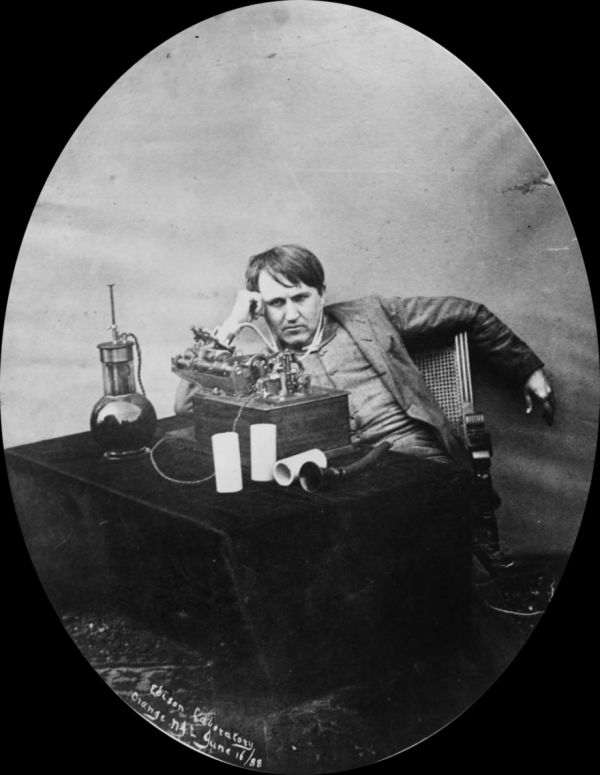
Thomas Edison didn't have much in the way of a formal education. Once he learned to read, his mother encouraged him to learn on his own. And he read a lot, about a wide variety of subjects. As a business owner, Edison hired plenty of employees, but didn't really care whether they had a college degree, as he thought higher education was overrated. Instead, he screened potential employees with a test he made up himself. Edison's tests varied over time, and he never made them public. But they usually had 140 questions or more. Not many of the questions had anything to do with engineering, salesmanship, or the science behind the position. They were trivia questions, supposedly to reveal a well-rounded education.
It wasn't easy. Out of 718 applicants, only 32 scored 90% or higher. While we don't have any copies of them, many who took the tests were happy to share questions they recalled from it when New York Times reporters asked. You wouldn't be able to pass the test, either, since 100 years have passed and many answers have changed or are hopelessly period-specific. But you might have fun trying, as you'll see at The Saturday Evening Post. -via Damn Interesting

Danny Fonfeder is a musician and craftsman in Montreal. His shop, dubbed Blueberry Guitars, offers uniquely beautiful works that are a delight to both the eyes and the ears.
Among them is this lovely instrument made of Balinese rosewood. He's carved and painted into its surface characters from the original series, Enterprise, Voyager, and Deep Space Nine. Check out Fonfeder's gallery for other masterpieces.
Can you describe a smell without referring to the possible source of that smell, or something that smells similar? There are such words, like fragrant, stinky, or musky and a few others, but compare that to the huge number of words we can use to describe something we see without referring the the exact object. Most of the time, we just rely on shared knowledge of smell sources, such as "this smells like (bananas, lilac, crap, etc)." In English, you can be on the phone, go outside, sniff, and say "someone's cooking out," and the person you're talking to will instantly know what you are smelling because of our shared experience. Imagine trying to describe that smell without referring to the probable source.
However, this only applies to Western languages. Some languages have a wide vocabulary to describe smells. What makes the difference is codability, or the tendency for all speakers of the language to agree on descriptive words. Dr. Erica Brozovsky (previously at Neatorama) explains the linguistics of smell across different languages.

When Russia invaded Ukraine in 2022, they thought it would be a short war. Ukraine fought back fiercely, refusing to surrender their homeland. The smaller country had to think outside the box to defend against a never-ending supply of soldiers from Russia and its allies. One piece of that strategy is the Ukrainians caught inside Russian-occupied territory who risk their lives to send intelligence out to the Ukraine military.
Many of these operatives are women, sometimes called vidma. The word translates to "witch," but in Ukrainian it carries the connotation of wisdom. Thousands of them have been training to defend their country since the seizure of Crimea in 2014. Those caught in occupied territory harness the Russians' view of them as harmless because of their age or gender. Russia disabled Ukrainian phones and replaced them with devices filled with surveillance apps, but they've learned to work around that. One of the schemes they use to smuggle intelligence out involves catfishing. Innocently flirt with a lonely Russian soldier just enough to solicit a picture, and the metadata from it can help a Ukrainian drone target his base for a bomb attack, even if it's deep inside Russia. Read about the modern tactics of the Ukrainian resistance in an article from The Atlantic. -via Metafilter
(Image credit: Iktsokh)
The new Supergirl movie is set to open nationwide this weekend, so it's as good a time as any for Screen Junkies to go back and do an Honest Trailer for the 1984 film Supergirl. What? You didn't see the movie? You don't even remember it? Theres a reason for that. Despite an all-star cast and a large budget for its time, Supergirl was a box office bomb, and did even worse with critics. The few who enjoyed it weren't quite sure whether the producers meant for it to turn out the way it did. The attempt to make a superhero adventure/comedy/teen movie with supernatural elements just fell flat under the weight of a plot that made no sense whatsover.
If you are looking forward to the new Supergirl this weekend, but are also apprehensive about possible disappointment, maybe you should go back and watch the 1984 version. It will only make the 2026 Supergirl seem better than it is.
Joseph McGrail-Bateup, an honorary town crier in Australia's Canberra, has been recognized as the world’s loudest person. Guinness World Records acknowledged the 58-year-old recorded the loudest ever shout by an individual. He yelled ‘now’ at 122.4 decibels. pic.twitter.com/NyQFWgDjrf
— The Associated Press (@AP) June 23, 2026
Joseph McGrail-Bateup is an HVAC professional in Canberra, the capital of Australia, as well as the town crier of that city. It's an honorary position, but he's definitely up for proclaiming the news across the entire metropolis if necessary.
McGrail-Bateup has secured a Guinness World Record for having the loudest voice. At 122.4 decibels, he's louder than a chainsaw or a rock concert.

Early in the American Revolution, General George Washington saw a problem. As the Continental Army had problems getting supplies to its troops, the British Army saw a steady stream of unescorted supply ships crossing the Atlantic. The Americans needed a navy to intercept them. Officers couldn't spare any soldiers to form a naval force, and there was no time nor funds to build ships.
However, in the lead up to the war, England had had responded to various tax protests by making it illegal for Americans to fish in the Atlantic! As soon as the war began, an estimated 4800 angry unemployed fishermen signed up to fight. Washington recognized the opportunity, and made them into an instant navy. The experienced seafarers needed no training, they just needed to be armed and paid. They even brought their own boats. Read how all this came about, and what American fishermen did to win the revolution at the Conversation. -via Smithsonian
(Image credit: John F. Leavitt)
British immigrant Laurence Brown has spent years comparing and contrasting Britain and the US in his series Lost in the Pond. Many times he's pointed out the many differences in British English and American English. But somewhere along the way, he discovered that there is also Canadian English, which is another thing altogether. This reminds me of when some French relatives visited Montreal and were shocked to find out that Quebecois is very different from French, but still understandable if you give it a few seconds.
Americans and Canadians are used to each other's word usage and pronunciation, but seeing if from the perspective of one who used to be an outsider is illuminating. We've all heard about Americans traveling to Europe and telling people they are from Canada to avoid backlash, yet we've wondered how they got away with it. The differences in language are rather subtle, and often undetectable to anyone who speaks English as a second language, or even as a first language, as Brown does.
By the way, I've never heard any American refer to a knit cap as a beanie, but I live near the South, where they are only worn a couple of months out of the year. This video has a skippable ad from 4:58 to 6:01.
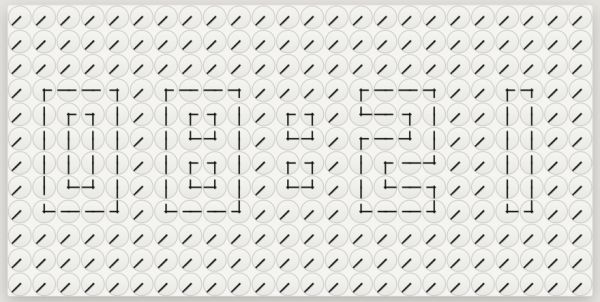
Humans since 1982 is a Swedish art studio that produces a series of works made of analog clocks that synchronize with each other to display the time digitally. This series is called A Million Times, and these masterpieces go for hundreds of thousands of dollars.
Matt Zatorski and Patryk Zatorski created a version that you and I can afford- online. A Million Times Tribute is a grid of 288 analog clock faces that will display the time in digital numbers every minute, or whenever you reload it. But when it isn't displaying the time, it is a mesmerizing geometric artwork of rotating clocks. But that's not all! Run your mouse over the clocks and see them wake up and react in different ways. Click on them and make waves happen! Then find the star at the bottom right side of the page, and you can change the background, tempo, and choreography of the screen, and even bring up a version with 504 clocks. -via Everlasting Blort