
When is a lie a lie? That may seem like a simple question on the surface, but there are many factors to consider. When you say something complimentary to avoid insulting someone with your honest opinion, we call it a "white lie," but it's still a falsehood. You could say the same thing about embellishing a story for drama, or about passing along a lie that we don't know is false. How about when you word something in an ambiguous way that gives you plausible deniability? Should we define a lie by the literal words, the intent behind those words, or the perception of the listener? It's very possible to say one thing with words while implying something completely different with body language and tone of voice. Does this make one of them technically a lie?
Linguist Dr. Erica Brozovsky (previously at Neatorama) explains how complicated lying is, from animals that use camouflage to criminal perjury. It's no wonder lie detectors don't work.
Miss Cellania's Blog Posts
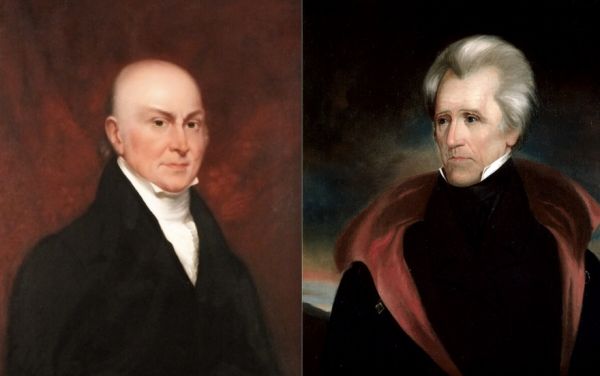
A bizarre possibility in the Electoral College voting system is that a candidate may win the popular vote and still lose the election. For one thing, the weight of electoral votes do not represent the population of all states equally. For another, the "winner take all" apportionment of electoral votes in most states means that even if a candidate wins 49% of the state's votes, none of those votes are represented in the electoral count. Five times in US history, the winner of the presidential election did not get a majority of the nation's votes.
In one case, the election of 1824, there were four leading candidates (all from the same party!), Andrew Jackson, John Quincy Adams, William H. Crawford, and Henry Clay. Jackson won more votes than the other three, but did not get enough electoral votes to secure the election. The decision was thrown into Congress, who chose John Quincy Adams. That election was enough to destroy the party, and Jackson was elected outright in 1828. Read about all five instances when the winner of the presidential election did not win the popular vote at Mental Floss.
When a ventriloquist provides a voice for his dummy, the illusion works because you are focused on the dummy delivering the lines and you're not looking at the ventriloquist. In the age of video, you can go back and focus on the ventriloquist and see his/her lips moving. That's the way you should watch this compilation- focus on Peter Tork's lips, not who is actually speaking.
Tork had a habit of mouthing lines that weren't his while shooting the sitcom The Monkees. According to comments at Metafilter, this is very common among beginning actors, because it helps with timing and catching your cue. The real trick is to learn how to keep up with memorized dialogue without moving your lips. As it is, we rarely see it because we focus on the actual speaker.
OR... was Tork actually delivering all the lines in the show, while everyone else just moved their lips? We may never know.

Although neither astronomers nor meteorologists can say for sure, the convergence of two phenomena could mean that the Aurora Borealis will be at its peak in March. First, there is the equinox. The vernal equinox is on Friday, March 20, when the angle of the earth sees the sun cross the equator, which doubles the chance of auroral activity. Second, the sun is still in its solar maximum, the peak of the sun's magnetic activity in an eleven-year cycles. The actual peak was last October, but it is a months-long maximum.
So when an equinox occurs during a solar maximum, the aurora lights up the sky more spectacularly than ever. Will the Northern Lights be visible further south than usual? We don't know, but if you were ever planning to travel to the higher latitudes to see the lights, now would be a good time to do so. LiveScience explains the phenomena that make it happen. -via kottke
(Image credit: United States Air Force/Senior Airman Joshua Strang)
Ancient anatomists knew about the pancreas. Not only did we butcher animals long before we had writing, but humans were also studied after death. Still, they didn't know what the organ was for- maybe it was just padding between other organs. German anatomist Johann Wirsung made a discovery about the inner workings of the pancreas, and he was shot and killed for his efforts!
But that was not the last of the violence involving research on the pancreas. As medical science advanced, we learned that the pancreas secreted digestive fluids that contained insulin, necessary for regulating carbohydrates in the body. Could we make insulin ourselves to help people with diabetes? Yes, but it would take a team of great minds to accomplish that, and those minds did not get along with each other. Over hundreds of years, scientists studying the pancreas fought over who would get credit for medical breakthroughs, leaving the pancreas with a soap opera of human egos surrounding it.

We are all familiar with the tendency of medical professionals to dismiss a woman's pain. There are several reasons for this, and one of them may be that women on average report pain for a longer period after an injury than men do. Research shows that this is a real physical difference, and new research may explain why.
Using studies on mice, scientists identified a molecule named interleukin-10 (IL-10), used by our immune systems, that will dampen pain on nerve receptors. Male mice produced more of the white cells that deliver IL-10, and recovered faster. The next question was why, and it turns out the answer is testosterone and other androgens. When they gave testosterone to female mice, or when they restricted it from male mice, the difference in recovery time disappeared. Read about this research, and how it may lead to new therapies for pain and healing at ZME Science.
(Image credit: MissLunaRose12)
In the 1970s, Alice Cooper burst onto the music scene with his shock rock about not liking school and not being a nice guy. He wore creepy makeup, brought snakes onstage, and worst of all, he had a woman's name! It was cool to like Cooper because it was subversive, but the songs were good, too. Some years later, it became clear that he was a serious musician who had a great hook for the time, and was a regular guy underneath the makeup. When he made enough money to move to a ritzy neighborhood, he became great friends and played golf with neighbors like Groucho Marx and Glen Campbell.
Mike Erskine-Kellie relates a golf outing with Cooper in an animation from the point of view of a cranky old man who still sees him as the unholy demon singer that first grabbed the spotlight. Contains some NSFW language. -via Nag on the Lake
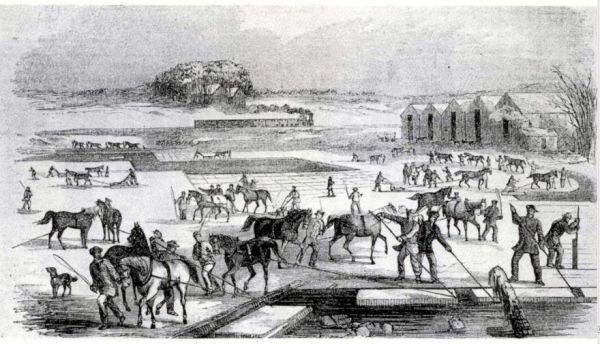
When you have a novel idea that could make you rich, you have to be ready for an expensive learning curve. Frederic Tudor came from a wealthy family, and was determined to make his idea work. Tudor grew up in New England, where the lakes and rivers froze solid in the winter. How much money could he make shipping that ice to the tropics? In 1806, the 23-year-old took advantage of empty ships going to pick up cargo from the Caribbean to send ice harveted from ponds at his father's farm. Most of it melted during the month-long trip, and he lost thousands of dollars. But Tudor persevered, experimenting with new ways to insulate the ice ...and lost more money, leading to debtor's prison.
It took a few years and quite a few disastrous trips before Tudor started making money shipping ice, but he eventually turned a huge profit sending ice shipments to India, a voyage that took four months. The secret was building an infrastructure of ice houses and vendors, and in making customers desire ice that could keep their food from spoiling. Of course, once people demanded ice, technology was developed to produce it locally. But Frederic Tudor, the Ice King of Boston, grew rich by showing them what could be.
Among the big names of the American Civil War, Wilmer McLean is pretty far down the list. You might not have ever heard of him. But his presence is found in the geography of the war. McLean was a wealthy man with a grocery store, a plantation, and a family. He was a staunch advocate for the Confederacy, and volunteered his home in Manassas, Virginia, on the banks of Bull Run Creek, as Confederate headquarters. You can guess what happened there- twice. McLean and his family bugged out two times while their home and property were ravaged in battle. Yet he grew richer still during wartime.
After the second battle, McLean moved his family to a safer spot, in a village called Appomattox Court House. There, he once again learned what having the nicest house in town will get you. Weird History tells us of McLean's somewhat coincidental role in the Civil War.

Women know that clothing sizes don't make any sense at all. Even if you are young and average, you have to try a garment on to know what size to purchase, because manufacturers set their own size standards. But it goes much further. You may have read that the average American woman is a size 14, but that doesn't tell the whole story. The median 15-year-old wears a women's size 10, while the median woman in her 20s wears a size 14, or large, and the median woman in her 30s wears a 16, or extra large. When you consider all women over age 20, the median size is 18. Yet many clothing brands only carry sizes up to 16. And that's before you figure in vanity sizing, height, or body shape. Most women are not shaped like an hourglass.
Once upon a time, stores offered alterations, or you could find a local tailor. And many women could alter or even make their own clothing. Now, women outside the target customer range order clothing online, and the returns due to sizing are crowding our landfills. Read a deep dive (including interactive graphs) into the craziness of women's clothing sizes at The Pudding. -via Metafilter
Remember the first time you bought a hair dryer and saw a warning label that said "Do not use while bathing"? You had a good laugh and wondered who would ever need such a warning. Most bathrooms don't have an electrical outlet near the bath tub -for a reason. See, there's always someone with no common sense who will use a product in the most dangerous way possible, injure themselves, and sue the manufacturer for not warning you that you aren't supposed to eat fire logs, or that you have to unfold a folding chair, or that swallowing dry ice is dangerous. Manufacturers don't want to go through that again.
Chill Dude Explains runs through ten product liability court cases that led to warning labels written by Captain Obvious. Most of them seem pretty dumb, but people did get hurt. The last one is correcting the record because the general public completely misunderstood the case.
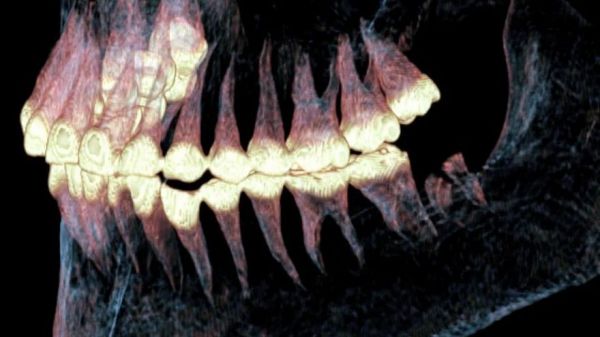
In 1994, archaeologists in Russia retrieved the partially-mummified body of a woman who died around 2,500 years ago from a grave in southern Siberia. The woman, believed to be between 25 and 30 years old at death, was of the Pazyryk people, a nomadic Iron Age culture known for their advanced sewing skills. With skin covering her head, they could not examine her skull and the remains were put in storage after examination.
Thirty years later, scientists at Novosibirsk State University revisited the body with modern technology, meaning a CT scan that non-invasively revealed the skull. What they found was remarkable. The woman had suffered a devastating injury to her jaw that was repaired surgically! Her right temporomandibular joint had been crushed, which would have left her unable to eat. The scan revealed that two canals had been drilled into the jaw, and some kind of fiber, possibly horsehair or an animal tendon, was used to stabilize the joint. In other words, they tied her jaw back together. Furthermore, there are signs of healing, and her left teeth showed much worse wear, indicating she survived the surgery and thereafter chewed on her left side. Read the evidence for the prehistoric surgery at Gizmodo. -via Strange Company
(Image credit: Elina Panfilo/Novosibirsk State University)
Where do the eggs in your refrigerator come from? The supermarket, of course! But before that, they come from chickens. Sure, you already knew that, but you've probably never thought about how a hen makes the egg, and how they manage to do it almost every day for months at a time. What goes on inside a hen in order to lay an egg every day is astonishing.
Egg production is managed differently depending on whether you want eggs for the breakfast table or chicks. If you don't gather eggs every day, a hen ends up with several eggs, and stops producing them in order to keep them warm for hatching. But for chicks, you'll need a rooster. But if you only have hens, and take their egg every day, they'll keep laying them as long as they have the proper nutrition and the proper stimulation- which is not a rooster, but sunlight!
The popular idea of a psychopath is a person with a personality disorder making them incapable of distinguishing right from wrong or feeling empathy. The idea has been around for hundreds of years, and was extensively studied in the 20th century. But the studies and experiments on psychopathy mostly produce null results, meaning that whatever factor you were measuring (empathy, emotion, or impulse control), there was no significant difference between people identified as psychopaths and those who were not. Those considered psychopaths had emotions, they could recognize emotions in others, and they were capable of empathy. It began to look like psychopathy was a label that arose because we no longer wanted to classify people as evil or demon possessed. Or maybe it was a handy diagnosis for psychological conditions we just couldn't figure out.
Despite the research, psychopathy roared back into popular culture in the 1990s with movies like Natural Born Killers, Silence of the Lambs, and American Psycho. In the real world, we want to make sense of the senselessly evil things people do. But the research doesn't make that easy. Read about the science behind psychopathy and what it tells us at Aeon. -via Damn Interesting
One thing you really did study in American history class was the California Gold Rush. John Sutter found gold and everyone on the east coast decided to move to the west coast and get rich. But that's not the entire story. Sutter was actually a settler who was building a community, and the discovery of gold upset his plans and his life.
Samuel Brannan, on the other hand, saw opportunity in gold. His plan was not to get rich mining gold, but in publicizing it. He had come to the small village of San Francisco for religious asylum, but abandoned that to become the richest man in the territory. As people came from all over the world to seek gold, he took advantage of those people instead of the gold they were looking for. And the people who came during the Gold Rush and stayed after it was over shaped the area into what it is today. Kurzgesagt After Dark looks at the darker side of the California Gold Rush. There's a one-minute skippable ad at 4:52.