Miss Cellania's Blog Posts

The Real Story Behind President Taft Getting Stuck in a Bathtub

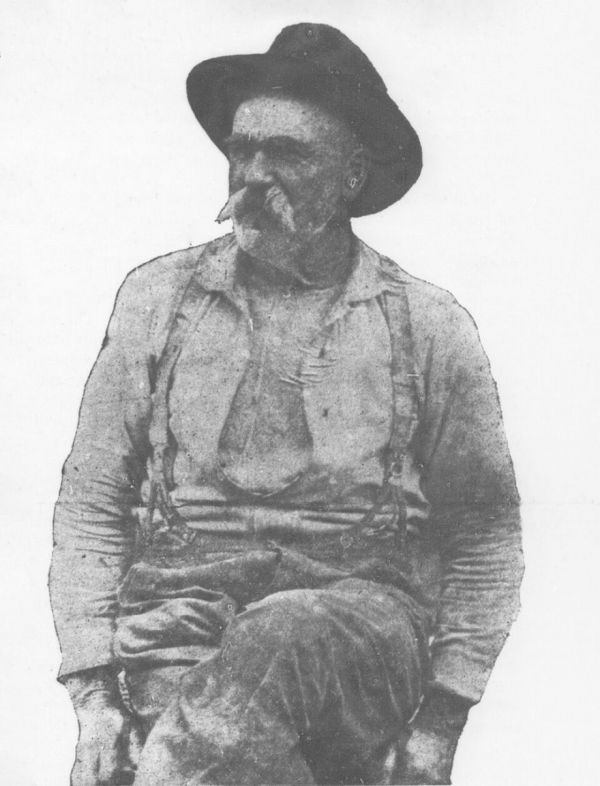
President William Howard Taft was America's largest president at 340 pounds (although he lost 70 while in the White House). It's very likely the only thing you know about him is that he got stuck in a bathtub and had to be rescued. A replacement tub big enough for four men was installed afterward. The photo above, which made the papers in 1909, proves it. Except it doesn't. The story of Taft's bathtub is usually attributed to White House staffer Irwin Hood Hoover, whose memoir was published in 1934, long after the supposed bathtub incident and a year after Hoover's death. Those who know suspect the anecdote was added by the book's editors. 

But there was a somewhat similar story about Taft's 1909 tour down the Mississippi River, and how the president's quarters aboard the steamship Oleander were outfitted with extra-large furniture- except for the bathroom, because fixtures couldn't be found in time. Read the real origins of the bathtub story that just won't go away at Smithsonian. Incidentally, the tub in the photo was never installed in the White House, but on another boat that took Taft to the Panama Canal. 


LEGO Trucks Simulate Traffic Behavior by Human and Robot Drivers

YouTuber Brick Technology (previously at Neatorama) built a LEGO traffic simulation as a miniature version of Yuki Sugiyama's full-size traffic experiment on what causes traffic jams. While this involves a round track with no intersections or turns, the results are similar to what we may encounter in real life.  

First he has to build a track using magnetic guidance, and then the trucks. They are programmed to act either like human drivers or robot drivers in the way they accelerate, slow, and stop. The results are dependent on the density of traffic, because one too many trucks will slow them all down. Then he throws in confounding factors: one drunk driver, then a real human with a controller, and finally he raises the speed limit. It's all chaos by the end. You might get the idea from this that robots drive better, but keep in mind there are no pedestrians or animals wandering onto this track. -via The Awesomer 


Twelve In-Depth Lifetime Rules for Saving Money on Grocery Shopping

We all want to save money on food, not just when prices spike above our budget, but always. We watch sale pries and clip coupons. But we should learn basic strategies for buying everything. Lauren Torres calls them "12 Cosmic Truths." They range from the basic awareness of reading labels and spotting a bargain to philosophical guides to shopping, cooking, and eating. 

One that stood out to me is #6: "Taste cheap food often." You may have hated the generic or store brands that you ate when you were a kid, and considered it a luxury to get the famous brand. However, over many years, the big brands tend to take advantage of scale and reduce the quality of their ingredients or the amount of food you get. At the same time, off-brands have been working hard to earn your purchase. Check out the cheaper brands you rejected long ago, and you may be surprised at how tasty they've become.

Some of these "cosmic truths" are things you've heard before, but this list goes deeper into explaining the mechanisms behind them. Read all about the philosophy and process of grocery shopping at Bitches Get Riches. -via Metafilter 


A Cockeyed Yet Factual Look at the Pan-American Highway

The Pan-American Highway is a road that goes from Prudhoe Bay, Alaska, in the Arctic Circle, to Ushuaia, Argentina, known as the most southern city in the world. It was going to be a railroad, but then cars were invented and that made construction easier. The United States has the most miles of the highway, but we had to cheat a bit to actually claim that. Yet a hundred years after the project was initiated, the highway is still not complete. The real problem is the Darién Gap, in southern Panama and western Colombia. So the highway gap is right where the two American continents meet.  

Jay Foreman and Mark Cooper-Jones are the Map Men (previously at Neatorama). They make jokes aplenty while explaining how the Pan-American highway was conceived and what stopped its completion. There's a sponsor message from 4:43 to 6:10, and everything after 11:06 is promotional. -via Damn Interesting 


What Aliens Are Like is Constrained by Our Imaginations

One of the funnier quirks of Star Trek is that all alien sentient life forms look just like humans, just with funny bumps on their faces or pointy ears. Better special effects gave us different aliens, but most still ended up with a head, eyes, mouths, and limbs. The new movie Project Hail Mary explores a different kind of alien life- things that don't resemble anything we've ever encountered before. And that's what we should really be looking for. 

What if life on other planets isn't dependent on liquid water? What of the building blocks of life elsewhere were based on, say, silicon instead of carbon? The search for life elsewhere has been based on detecting signals that indicate planets are like earth, but that might not be necessary. The search for signals of an advanced technology may be looking for the wrong patterns, or may be a completely useless framework. Alien life may be different in more ways than we can even imagine, and a lot of that depends on how you define "life." The Conversation poses five ways we may have been thinking about alien life all wrong, with links to further information on each idea. 


Dani the Blind Husky Love the Outdoors

What do you do with a blind husky? In Dani's case, she was sent for euthanasia when she was just a puppy, possibly by a breeder who couldn't sell her. Dani was born without eyes. She was rescued from her fate by an organization that takes in special needs dogs, and then was adopted. Her new family had plenty of pets, but still had the time and patience that Dani needed. 

Huskies are bred for the outdoors, and even a blind dog wants to run and play. Dani gets that chance with a long lead that keeps her in sight but still lets her go full speed ahead in a safe area. She also loves to play ball, and is used to losing it every now and then. She has no trouble getting around in familiar places, and not much trouble in unfamiliar places. That's a good dog. See more of Dani and her occasionally pink tail at Instagram


Crime Solved by a Newspaper Front Page Layout

In December of 2007, a newspaper photographer in Lewiston, Idaho, saw a sign painter adding a Christmas message to a storefront window. It was a nice seasonal scene, so he took a picture for the Lewiston Tribune. Other journalists that day reported on a wallet theft that was caught on a security camera. A still image showing the perpetrator ended up on front page, just below the sign painter. The two men looked alike, and they were wearing the same colorful jacket. And the sign painter's name was in the upper caption. 

Who noticed the similarities in the two front page pictures? Pretty much everyone. It didn't actually fly over the heads of the newspaper copy editors, either, but it went to print before they could update the story. See the paper and read the story of the guy who made the front page twice at Now I Know. -via kottke, where you'll see a larger, readable image. 

(Unrelated image credit: Michael Slaten


When Microplastics Take Over Your Body

When plastics were developed, they were considered life-changing. A material that is cheap, strong, lightweight, furable, and can be shaped in any way? Sure, let's go for that! But as terrifyingly long lasting as plastic is, it does degrade. That's why bottled water has an expiration date- because the plastic in the bottle wears out. As it degrades, plastic sheds microscopic pieces that get into our environment, our food, and our bodies. And out bodies haven't yet developed an efficient way to get rid of it. 

So what does accumulating plastic in our bodies do to us? We don't know much about it yet, but we're seeing evidence that it can lead to obesity and infertility, two of the major health trends in the modern world. We can't do a lot about the microplastics we already have in our bodies, but there are a few things we can do the lessen the amount we ingest. -via Geeks Are Sexy 


Beautiful Jim Key, the Celebrity Horse from Tennessee

Dr. William P. Key was a formerly-enslaved self-taught veterinarian in Tennessee who made his living by selling his patent medicine Keystone Liniment. He was particularly talented with horses and always advocated for a gentle touch and humane treatment of animals. In 1889, one of his mares gave birth to a foal that was a “miserable looking specimen.” Key took the foal into his home and named him Jim Key. As Jim grew into a magnificent adult, Key taught him a vast repertoire of tricks.

"Beautiful Jim Key" was exhibited across the country for years, where he wrote his name, properly exchanged money, and spelled out audience member's names by selecting letters from a rack. He could also solve math equations by picking numbers. Jim was one of the biggest draws at the 1904 World's Fair in St. Louis. All that time, Dr. Key used Jim to spread the message of kindness to animals and how training was most effective when using gentleness and patience. Read about the show biz career of Beautiful Jim Key. -via Strange Company 


CC is a Megachonker on a Feline Weight Loss Journey

CC is a wobbly cat, meaning she has cerebellar hypoplasia. But you don't even notice that when you see her- what you notice is that she's a heckin' chonker. CC weighed 23 pounds when she came into the care of The Big House Cats in Ontario, a rescue shelter for very overweight cats. CC was so fat she couldn't climb into her litter box, and she could barely take a few steps before she had to sit down.

Restricted food and lots of love got her started. Then they added exercise, and found that CC really wanted to play, but she was just too big to do it. As she lost weight, she became more playful. So far, she's lost six pounds! At around five minutes, you get to see before and after pictures that show how far she has come. Her goal is to lose five more pounds. See more of the Big House Cats at Instagram


Counting Sheep to Fall Asleep is an Ancient Tip

The adage that counting sheep will help you sleep has given us a lot of jokes, but not a lot of sleep. The idea is very old. In the book Disciplina Clericalis, a collection of fables from the early 12th century, a king summons his storyteller, who is sleepy and doesn't want to tell stories. He tells a tale of a shepherd with 2,000 sheep, and to get them home they must cross a river. The only available boat will only hold two sheep, so they must make 1,000 trips. The first two sheep were loaded into the boat when the storyteller fell asleep. The king woke him, but the storyteller insisted that each sheep must be taken across the river. I'm not sure where the story goes after that; the only copy of the book I could find was a 1519 translation that didn't have that particular story. 

The gist of it is that this story hints that falling asleep due to counting sheep was already an established concept understood by many before the story was written. Cervantes later made it funnier in Don Quixote. But does counting sheep in your mind actually help you fall asleep? The research is mixed, but you can see an overview of it at Purple Motes. -via Boing Boing 

(Image credit: amenclinicsphotos ac via Wikimedia Commons


When Your Wedding Budget is Unlimited, It Can Get Weird

There are people in this world who can afford to spend millions of dollars on a wedding. That's the perfect way to show the world how filthy rich you are, because there's going to be a lot of pictures testifying to how much you spent on a one-day party. And what good is money if you can't conspicuously consume it? Ryan George was obviously inspired to make this video by Jeff Bezos' and Lauren Sánchez' wedding last year, which reportedly cost $50 million. That wedding made all the papers for its outrageous flaunting of wealth, while Bezos' ex-wife MacKenzie Scott quietly spends her days writing large checks to charities. 

But that's not the only over-the-top wedding designed to flaunt a family's wealth highlighted in this video. Some are more expensive than others, and some are just weird. He also takes a special look at ridiculous wedding cakes, which probably won't even make you hungry.  


An "Alpine Divorce" is Not All That Rare

When I first heard the term "alpine divorce," I assumed it meant a case of murder or at least negligent manslaughter, like the recent case in Austria where a man abandoned his girlfriend on a mountain to die. But the term isn't limited to cases that end in death. There are plenty of stories on social media of dates that involved hiking or mountain climbing that ended the relationship. 

An outdoors enthusiast wants to take a romantic partner or spouse up to a mountain to share their passion. But the lesser-experienced person, usually but not always a woman, cannot go as fast or as far. Do you slow down to accommodate your partner, or do you abandon her and push on ahead to conquer the challenge of the hike? How mountaineers answer that question reveals whether the priority is the relationship or their ego. Everyone is new to the experience when they start out, and not accommodating a newbie will not only ruin a relationship, it can put them in serious danger. Read about the phenomenon of alpine divorce at the Guardian.  -via Metafilter 


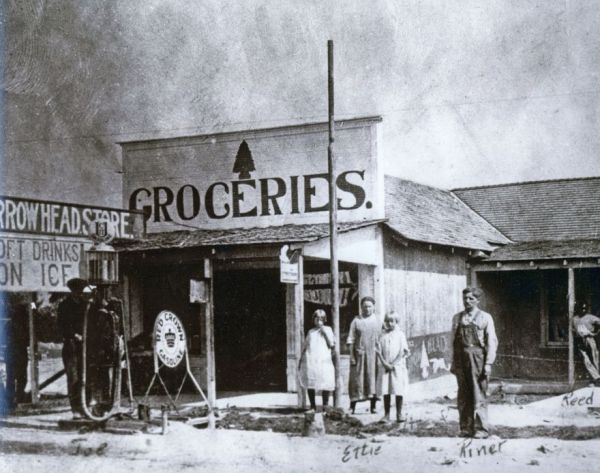
Georgia is Very Intentionally Known for Their Peaches


Georgia is proud to be called the Peach State, and that branding is everywhere, from water towers to the many streets named Peachtree in Atlanta. How did the state get that way? Peaches aren't a native fruit in America- they came from China by way of Europe. And when colonists found peach trees growing across the south, they didn't much like them. Instead, they started growing cotton, mostly for export, and made a ton of money. Even today, the cotton crop in Georgia is bigger than peaches, but "the land of cotton" as a slogan doesn't resonate the way it did 200 years ago.   

How peaches became the symbol of Georgia is a neat story, but the most useful thing you'll learn is the difference between cling peaches and freestone peaches, which is good to know when you're at the grocery store. This video has a sponsor ad from 4:12 to 4:54. 


He Volunteered as Human Bait for a Study on Mosquitos

I feel sympathy for students who have to do the scut work in scientific studies on their way to becoming a scientist, like sorting through millions of insects or timing and measuring poop. Finally, one of these sacrificial lambs is getting the recognition they deserve. Chris Zuo was an undergraduate when he volunteered to help with a study on mosquitos (he now has a masters) at the University of Georgia. He wore a mesh suit, presumably the kind of mesh used for mosquito netting, and went into a room with 100 mosquitos. In four minutes he was covered with mosquito bites.

They found the mesh suit didn't work, but that wasn't even what the study was about. Instead, they were studying the flight patterns of mosquitos on their way to detecting a human target. Zuo didn't quit the study, however. He was game to try again, using other methods of protection so that the researchers could get high-speed video of the insects' flight patterns. Read what Zuo went through, and what the team discovered about how mosquitos detect a target at the Conversation. 

(Image credit: David L. Hu, Georgia Tech) 


Email This Post to a Friend
""

Separate multiple emails with a comma. Limit 5.


Success! Your email has been sent!

close window

Page 1 of 2,629       next | last

Profile for Miss Cellania

  • Member Since 2012/08/04


Statistics

Blog Posts

  • Posts Written 39,422
  • Comments Received 109,586
  • Post Views 53,157,880
  • Unique Visitors 43,722,744
  • Likes Received 45,727

Comments

  • Threads Started 4,992
  • Replies Posted 3,733
  • Likes Received 2,687
X

This website uses cookies.

This website uses cookies to improve user experience. By using this website you consent to all cookies in accordance with our Privacy Policy.

I agree
 
Learn More