Miss Cellania's Blog Posts

Geologists in Movies Tend to be Goners

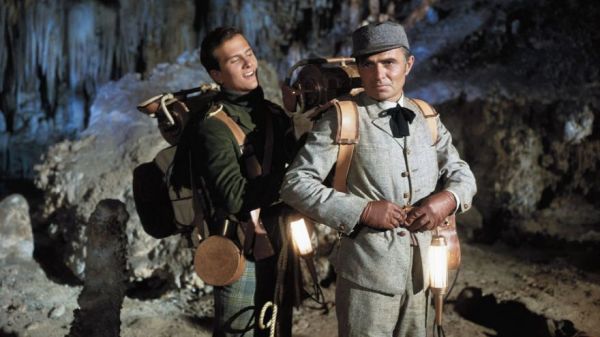
A group of Swedish geologists have been keeping track of how geologists are portrayed on the silver screen. You might think that the profession is rare, and relatively it may be, but they compiled a list of 141 movies with 202 geologists between 1919 and 2023 (available to download). They appear in all genres, but most often in adventure films. These roles are broken down by age, sex, race, era, whether they are "the good guys," and even how they dress. 

However, geologists in movies die at an alarming rate, 34.2%, and often early in the story. Murder is the most likely cause. This may be because the function of a geologist is often to deliver bad scientific news and set up the adventure, after which they are superfluous. The puns just write themselves: Stone cold dead. Exploited for sedimental value. A geologist should join a band because they rock. Gneiss. It was their own fault. The data shows that being a "bad guy" raises the risk of a cinematic geologist's death to 77%. It's still unclear how geologists' survival in movies compares with that of other professions, but this paper was written by geologists for geologists in the magazine Geology Today. As the daughter of a geologist, I was fascinated. -via Metafilter 

Watch a Newborn Tiger Cub Grow Up

In 2020, The Wildcat Sanctuary in Minnesota was called about an animal breeding facility for which the owner had died. They went to rescue four tigers, but found an additional newborn. Tiger Winona had just given birth. She was in poor health, plus she didn't know what to do with a cub since hers had always been removed after birth to socialize the cub and have Winona breed again. The cub was also in danger from his father Marcus, who was known to attack cubs. This was during COVID, so little Dash was isolated and raised by a single volunteer named Tammy. 

Dash was the first newborn big cat raised by the sanctuary, and his progress was documented thoroughly on videotape. The Dodo compiled lots of clips to show us how Dash grew up to be a big strong tiger. He'll never be released into the wild, but he can live his best life possible under their care.


Cassowaries Glow in Two Different Ways

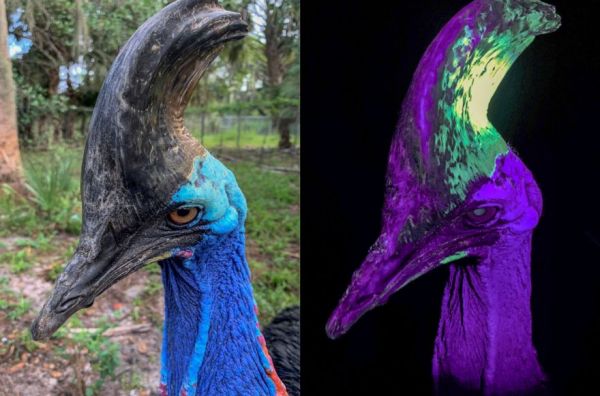
One thing we all know about cassowaries is that they are very territorial, and can be dangerous to humans, which is why it is hard for scientists to study them. They have casques made of keratin on their heads, which resemble helmets. What they are for is still a mystery. They could be for fighting, showing off for the opposite sex, or maybe even to amplify sound. And lately we've found out that these casques are fluorescent as well! In a paper published in Nature,  scientists reveal that cassowary casques will glow in different colors and patterns that vary between the three existing species. They even vary somewhat between individual birds. Not only that, but the patterns displayed by biofluorescence are different from the pattern shown by their ultraviolet reflectivity. Therefore, under the right light, every cassowary has a distinct fluorescent color pattern that could be as individual as fingerprints. 

We still don't know how well cassowaries can see each other's fluorescent patterns, and how they use them. But we may be able to use the patterns to tag the birds for study. Read an explanation of this research at Refractor. -via Damn Interesting 

(Image credit: Todd L. Green


Explaining What Happened to KFC

As a Kentucky native, I can tell you that in the 1960s and '70s, Kentucky Fried Chicken was something to behold- quick, delicious, and fairly local. It may have been "fast food," but it wasn't a burger to eat in your car. Rather, you picked up a bucket full of chicken to take home to the family, along with potatoes, gravy, and rolls. Instant Sunday dinner! Then Colonel Sanders sold his creation and spent the rest of his life complaining about what the corporate bean counters did to ruin his signature dishes. The quality of the food sunk item by item, and the name changed to KFC. The chain decided to be real fast food, and concentrated on a range of new items you could eat while driving. The prices soared and the portions shrunk. 

Of course, there was a lot more involved than that, and hardly any of my opinions in the above paragraph are addressed in this video from Weird History Food. KFC suffered from corporate trades and mergers, over-expansion, ridiculous promotional stunts, and most of all, competition from other chains that specialize in fried chicken. Yet they still make money, and this video explains how.


Halupedia, the Encyclopedia of Things Made Up On the Spot

I believe Halupedia got its name from the word hallucination. You can jump from any link in the existing articles to another, or do a search, and if it didn't exist before, the algorithm will write something for you to read. The main page has a few suggestions, like The Great Pigeon Census of 1887, The Ministry of Terribly Wrong Maps, or The Society for the Prevention of Unnecessary Tuesdays. They are all nonsense, but they are surprisingly well-written nonsense. 
  
I clicked on the words Inter Municipal Hydrology Commission in an article titled Greater Bellevue, and I had to wait a few seconds while this encyclopedia wrote an article for me. The Commission, located in several fantasy towns including Vernal Drip, has a complete history that is grammatically correct and makes plenty of sense on the surface, but may remind you of Grand Fenwick or a Monty Python sketch. Really, the Commission was de-commissioned after their 700-page report on fog. This can be a lot of fun if you just want to revel in verbiage. You can leave comments, but you can't use your own name. If you get caught in a loop of links, reddit has some suggestions for more AI generated Halupedia articles. -via Nag on the Lake 


Making a Digital Clock with Bottles of Water for Some Reason

Dutch YouTuber Strange Inventions found a real deal- 65 little bottles for just €6.50. What to do with them? How about designing a digital clock, using bottles of colored water for pixels? It sounded like a good idea at the time, but this project ended up taking 210 hours of work and €580 ($680) in parts. The finished product is pretty, and impressive because it actually works, but as a timepiece it's pretty hard to see the numbers unless you squint. The real entertainment value is in the part of these projects that you usually skip- the build. 

He had no previous project to draw from, and had to figure out each component on his own. That meant failure after failure, and buying more parts at each step. And since he was working with water, there were constant leaks that had to be fixed. Each successful step only revealed problems in the next step. But once he had invested some time and money, he couldn't stop until he got it right.   

This is YouTube, and around here, we appreciate stupidity and esthetics. 

By the end of the video, you feel so sorry for the guy that you have to applaud. Kind of like the way you applaud your child at their awful first band concert because you don't want to destroy their enthusiasm after they've worked so hard. -via Born in Space 


The Horror of Prohibition's "Jake Leg" Epidemic

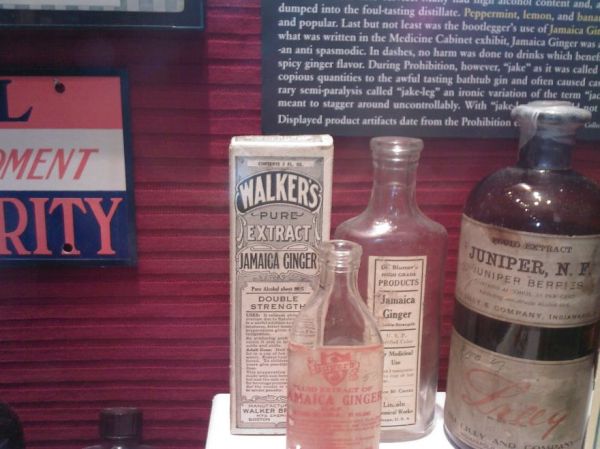
There were many ways to get around the laws against alcohol during Prohibition, but for the poor, those workarounds could come at a high price. Jamaica Ginger was a patent medicine that had been around for a hundred years already when Prohibition began. Like many medicines, it contained a high percentage of alcohol, and you were only supposed to take it a spoon at a time for whatever ailed you. But when there was no other alcohol, you could get a two-ounce bottle of Jamaica Ginger for fifty cents and have the equivalent of around three shots. The popular medicine came to be called Jake for short. Government authorities took notice, and so required Jamaica Ginger manufacturers to add enough ginger to make Jake unpalatable.  

Some manufacturers looked for a way around the regulation, which included testing. They found that tri-orthocresyl phosphate (TOCP) could make Jamaica ginger pass the test without ruining the taste of the medicine. The only problem was that TOCP is a powerful neurotoxin that caused paralysis. Beginning in 1931, doctors were confronted with cases of muscle failure and paralysis among poor men that couldn't be explained. Even when the cause was found, assistance was egregiously absent, and men who displayed symptoms of "Jake Leg" were ridiculed. Read the story of adulterated Jamaica Ginger and what it did at Deranged LA Crimes. -via Strange Company 

(Image credit: Deltabeignet


Star Wars Secrets, Revealed from the Start

I don't know about younger viewers, but those of us who watched all the Star Wars movies in order of their release have always been baffled by the implications of retconning. It was bad enough that the secrets kept in the first movie, then revealed in the second and third, made it clear that Lucas was making it up as he went along.

Every time a new prequel came out, the effort to bring familiar characters back only screwed with the timeline and ruined the logic of the first movie that captured our imaginations. "New" characters turned out to have been there all along. More implausible connections between them were revealed. Sure, Lucas explained that the droids had their memories wiped between the prequels and the original trilogy, but that doesn't work for a Wookiee. Or for Obi-Wan Kenobi, who knew everything all along, but refused to reveal anything actually useful. Matthew McCleskey gives us the spoiler version that might have been. -via Geeks Are Sexy 


Evidence that Neanderthals Practiced Dentistry, Successfully

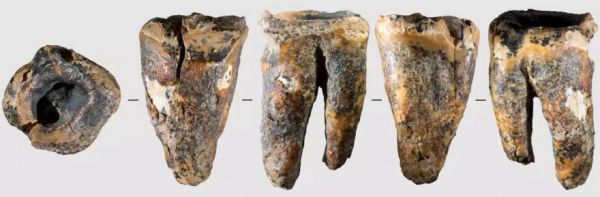
On a long drive this week, I heard three different reports on NPR about a Neanderthal tooth that has been discovered with a deliberately-drilled hole in it. The tooth also shows evidence that it was used for chewing after the hole was drilled! A bioarchaeologist described the tooth and the stone drill used to make the hole, which tells us that Neanderthals not only had the skills, but the cooperation and trust to perform such surgery. A modern dentist said that the problem was probably terrible pain from infection and swelling. He said it would have taken at least an hour to painfully drill into the tooth, but the patient must have understood the relief to come afterward. The tooth, from a cave in Siberia, was dated to 59,000 years ago. We don't know what, if any, pain relief was available to Neanderthals.

The drilled hole extends into the tooth pulp, which would have destroyed the nerve and is somewhat analogous to a root canal. In most early human dentistry, the normal cure would have been to pull the tooth. Read about the tooth and what it tells us at NPR. 

(Image credit: Zubova et al./PLOS One


Watch Denali's New Sled Dogs on the Puppy Cam!

Motor vehicles are prohibited in Denali National Park in Alaska, except for buses that shuttle visitors through a limited area. Rangers patrol on foot, on horseback, in helicopters, or with dogsleds. For more than 100 years, Denali has raised sled dog puppies in their own breeding program in conjunction with reputable Alaskan breeders. On March 30, sled dog Spark gave birth to six puppies in the park. Some of these will be swapped with other litters from breeders, and four that show the best qualities of a sled dog will grow up to be official Denali canine rangers. This year's puppies are named after national parks: Sequoia, Mammoth, Rainier, Teton, Mesa, and Acadia. They are now six weeks old, and you can peek in on them anytime with the Denali Puppy Cam! Keep in mind that Denali is four hours behind the Eastern Time Zone. If the puppies are asleep, scroll down to read about Denali's puppy program.  -via Metafilter 


When Thomas Jefferson and John Adams Looked Back at the First 50 Years of the United States

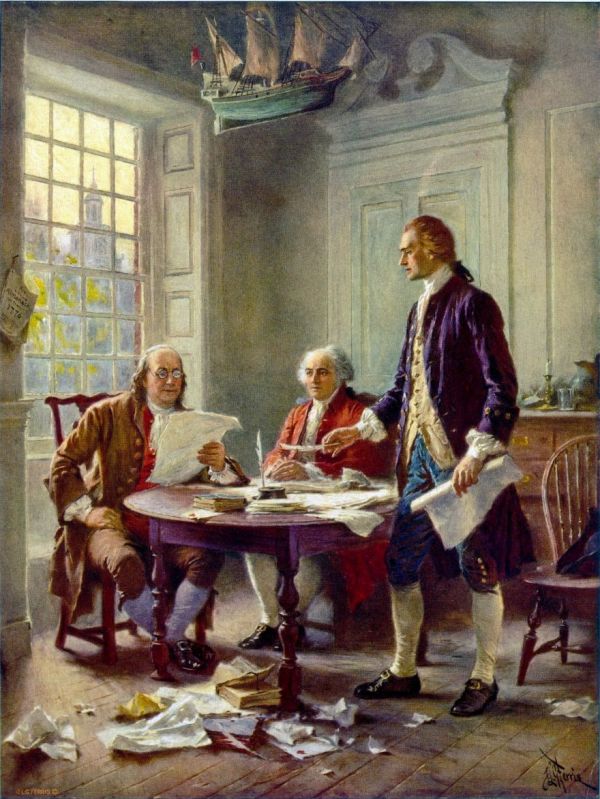
John Adams and Thomas Jefferson collaborated on the Declaration of Independence in 1776. They both served as US president, then retired, and notably died on the same day, the 50th anniversary of the country's founding, on July 4th, 1826. Those are things you already know about the two men. You might also know that the two friends had a falling out over politics after the Revolutionary War, and went years without speaking. 

However, in the 15 years before their deaths, the two Founding Fathers reconnected by correspondence. They reminisced about how the Declaration came about, and their memories didn't always agree. But they were both aware of the lack of documentation as it was happening, and that their later correspondence would become part of the nation's historical record. Those letters reveal fundamental differences in the way that Adams and Jefferson understood the nature of the general public and how they would guard the liberties they fought for.  


Seven Nations With No Ocean Access Have Navies Anyway

We tend to think of navies as a military force that deploys on the high seas. The US not only uses its navy for ocean battles, but traditionally for troop transport to faraway wars before air travel. But how would a country house and train a navy without seaports? There are seven landlocked countries in the world that maintain navies as a separate branch of their military forces. The "how" behind those forces comes down to the fact that oceans aren't the only bodies of water in the world. But the "why" is way more interesting, and each country has their own story. Some are responding to real threats, and some are legacies of a complicated history. In the case of Laos, we don't know much about it at all, but I'm sure they have their reasons in their own cultural context. This video from Half as Interesting is a minute shorter than it looks, since an ad is at the end. 


A Surviving Example of Ancient Roman Nanotechnology

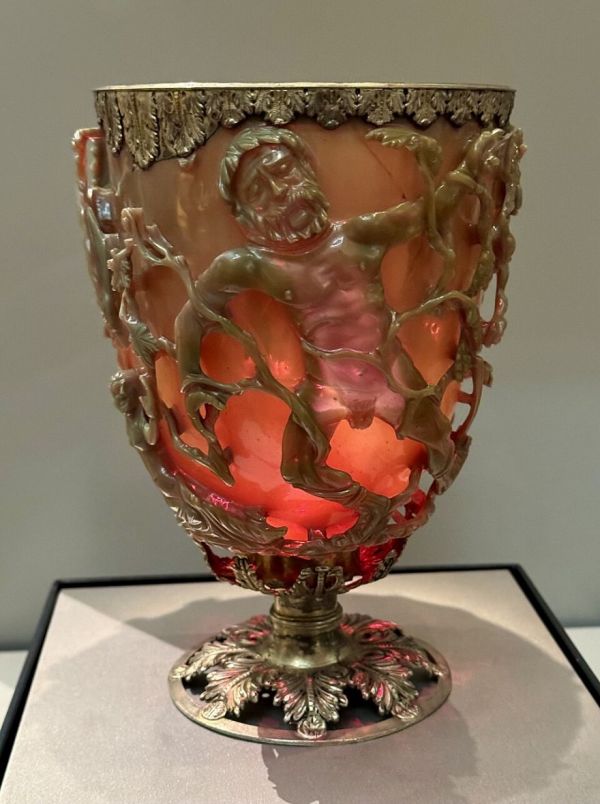
This is the Lycurgus Cup, a glass vessel dating back to Roman Empire of the fourth century. It is made of intricately-carved glass with a strange property. Under normal light, it appears to be an opaque jade green. But lit from the back, it glows a translucent red! This is dichroic glass, and displays different colors because of nanoparticles of gold and silver embedded in the glass. It is the only intact example of such glass, although a few shards of broken glass have been identified as dichroic. This property was only understood more than a thousand years later when scientists recreated it using nanotechnology. However, experts believe that the colloidal gold and silver were introduced into the molten glass by accident, since nanoparticles are too small to be seen by the naked eye. 

The real miracle, as I see it, is that a glass cup from the fourth century has survived fully intact instead of being smashed to smithereens, which is what's happened to most of the glassware I've owned. The Lycurgus Cup is indeed cracked, and held together by its metal rim around the top. The mythology depicted in its carving tells a story in itself, as detailed at the DeBrief. -via Strange Company 

(Image credit: Chappsnet


Farewell is the Bittersweet Story of Brothers Growing Up

Two brothers play guitar while they pass the time watching their flock of sheep. The sheep appreciate the music, especially the littlest lamb. The older brother, Joseph, attributes his talent to his father's guitar instead of his years of practice. The younger brother, Isaac, is appalled to learn that Joseph is planning to leave home for a career in music. Is he upset at losing his best friend, or is he worried that he won't be able to step into his brother's shoes? Joseph is simply spreading his wings as an adult, but leaving home is never easy. Isaac has never been without his brother, and it shakes his entire world.   

The sweet story called Farewell is Luke Lee's final film as a student a Calarts before he graduates. We wish him well in the animation field. You can see more of his work at YouTube or at Instagram. -via Kuriositas 


Try Out Catfishing: The Wikipedia Guessing Game

Catfishing is a term for nefarious scams involving false identities, but in this case, it's a word meaning fishing in categories. Articles on Wikipedia are categorized, and an article may appear in many different categories. Can you identify a Wikipedia article by its categories? Each category is a clue that narrows it down. The game Catfishing gives you ten chances to show your smarts, and those ten articles change every day. The game does not rely on exact spelling or punctuation, and will steer you if you are close. There's even an option to award yourself half a point for being "close enough." 

It's not easy. I'm not great with remembering people's names, and one was a subject I know absolutely nothing about. At the end, I kicked myself for missing a couple I should have known. My final result was 6/10 last night, but I learned something, and even looked up a couple of subjects. Try out today's game! -via Metafilter 


Email This Post to a Friend

Page 1 of 2,638       next | last

Profile for Miss Cellania

  • Member Since 2012/08/04


Statistics

Blog Posts

  • Posts Written 39,563
  • Comments Received 109,637
  • Post Views 53,252,271
  • Unique Visitors 43,806,793
  • Likes Received 46,475

Comments

  • Threads Started 5,000
  • Replies Posted 3,738
  • Likes Received 2,793
X

This website uses cookies.

This website uses cookies to improve user experience. By using this website you consent to all cookies in accordance with our Privacy Policy.

I agree
 
Learn More