
Forensic linguistics deals with the study of language used in legal cases. Not lawyer talk, but things like figuring out who wrote something when they aren't identified. I've been delving into that type of puzzle just today, in reading about Trota of Salerno and which medical texts she did and didn't write, and Luke, who wrote two books of the Bible. So I was surprised to see a video about the science of these investigations.
FBI forensic linguists learned an awful lot about the Unibomber by the manifesto he released. It didn't contain any identifying information, but it was so long that his writing style was a treasure trove of clues. Most communications from unknown perpetrators are much shorter, but there are techniques that police can use to trace them back to a suspect. Half as Interesting shows us some of those techniques that have cracked cases before just from some anonymous writing. This video has one minute of advertising at the end.
Miss Cellania's Blog Posts
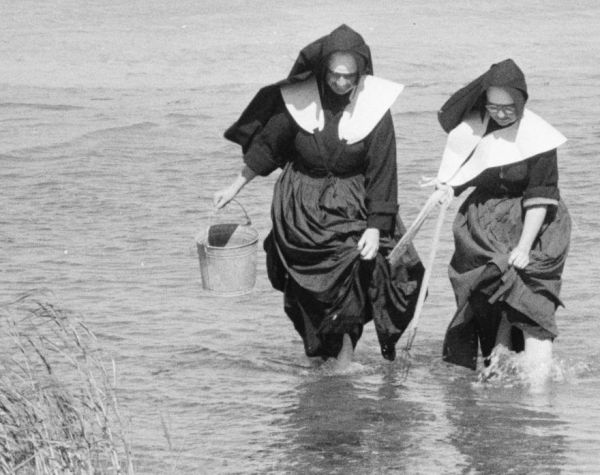
One of the earlier breakthroughs in fertility treatment was the development of the drug Pergonal in the 1940s, which contained hormones that stimulate ovulation. Most women produce their own follicle-stimulating hormone (FSH) and luteinizing hormone (LH) all their lives, but during pregnancy and after menopause, the hormones are no longer utilized and are excreted in urine. The amount of FSH and LH in the urine is an indicator of pregnancy, and led to the development of at-home pregnancy tests.
The Italian pharmaceutical company Istituto Farmacologico Serono that developed Pergonal had trouble getting enough of these hormones to test the drug, much less run clinical trials for fertility treatment. But the Vatican owned the majority of the company, so the pope okayed a plan to collect urine from post-menopausal nuns at retirement convents. When 30,000 liters were collected, they had just enough hormones for Pergonal to go to clinical trials. The drug was used for several decades until synthetic hormones were developed. Ironically, the use of Pergonal was crucial in developing IVF treatments, which the Vatican opposes. Read about the nuns' urine and the hormones it contained at Amusing Planet.
(Image credit: Toni Frissell)
Master mixer Bill McClintock (previously at Neatorama) is back with his latest project, which he calls "Psycho-Push-it" by Salt-Knot. It basically uses the instrumental track of Slipknot's 2008 song "Psychosocial" with the vocals from Salt-N-Pepa's 1987 hip hop hit "Push It." To be honest, this mashup actually includes music and lyrics from both songs, to mix things up a bit.
It works well, because this is what McClintock does. He finds the most disparate songs you can think of and makes them sound good together. Also consider that both songs, as different as they are and 20 years apart, can be found on the same playlists for an awful lot of people, and can even be heard on the same radio stations. Just because you like metal doesn't mean you can't like hip hop. You'll like this version.
When Shigeru Miyamoto designed a new game for Nintendo in 1981, he was hoping to use Popeye and his friends as characters, but couldn't get permission. So he concocted a cast of new characters, one of which was a plumber with a mustache who wore red overalls. He was dubbed Jumpman, because that's what he did in the game. Bluto became an ape called Donkey Kong. The game did well, and Miyamoto used the characters in other games. The eight-bit Jumpman was easily recognized with his red clothes and mustache, and became a fan favorite. In 1982, he was named after the landlord of Nintendo's American office, Mario Segale. With the name Mario, he grew a backstory as an Italian American living in Brooklyn. He got a brother named Luigi when a game required two protagonists.
In 45 years, Mario has gone from an improvised eight-bit character to the face of Nintendo, with three movies, three theme parks, three TV series, and appearances in many games. His appeal is that he is Everyman, a regular Joe with a regular job who takes on brave quests but doesn't use violence unless he absolutely has to. Read how Mario began, and how he changed and grew with the video game industry to his global fame today at Rolling Stone. -via Everlasting Blort
I've never felt good calling myself a language nerd, since I only speak one language. But I can't call myself an English nerd because I'm not English. And I've been making a serious effort to not be a pedant because language changes over time and you can't stop it. For example, it grinds my gears when people say "less" when they mean "fewer," but I don't correct people, and I vow right now that I'm going to let that go forever. I'm fine with ending a sentence with a preposition, because the lengths you must go to in order to avoid it are never worth the effort. If someone corrects you on that, tell them to "shut up."
There are other grammar rules that are just not worth policing because popular usage is changing. I could not get my kids to say "different from" instead of "different than," and I would correct "on accident" in favor of "by accident." But why, then, is that different from saying "on purpose"? Yeah, some grammar rules should just go away- especially ones about the confusing use of English prepositions. If you can make yourself understood by the person you are addressing, that should be enough.
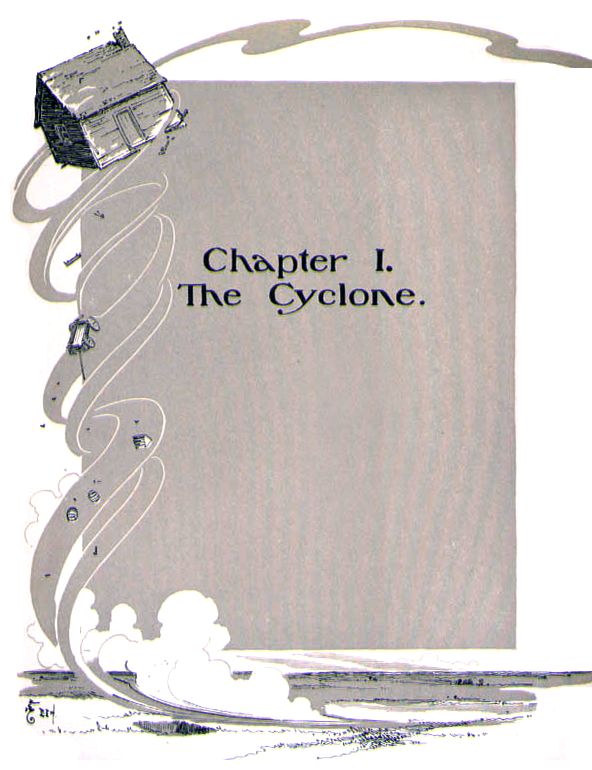
Plenty of modern-day meteorologists cite The Wizard of Oz as the childhood inspiration for their careers, as they were transfixed by the cyclone that blew away Dorothy's house in the 1939 movie. They learned sooner or later that it wasn't a cyclone, but a tornado. A tropical cyclone is called a hurricane or a tropical storm (depending on the severity) in the US, or a typhoon or cyclone elsewhere. But Frank Baum called it a cyclone in his 1900 book, despite the fact that it happened in Kansas, where hurricanes do not occur. Shortly after the book was published, the chief of the US Weather Bureau wrote to the publishers about the term, and was assured it would be corrected in the next edition. But it never was.
When the movie was produced, the storm was still called a cyclone because that's the way many people knew the story. Never mind that they changed the ending. The movie did have Bert Lahr yell "It's a twister!" at one point, but Dorothy called it a cyclone. John Fricke wrote extensively about the cyclone/tornado confusion, with the various depictions of what is obviously a tornado in the different versions of the story for the Oz Museum. -via TYWKIWDBI
Most slang words are coined to represent an age group or some kind of community for which outsiders don't know the slang word. As soon as those words go mainstream, they are out of fashion. It happens so fast that you can date a movie by the slang words it contains, or at least identify the period it's set in. But one slang word just refuses to go away- the word "cool," used for anything good in pretty much any way.
While the word itself goes back hundreds of years, it was first published as a slang word in 1884. That means it was being used as vocal slang for a long time before that. And it's still used today by all age groups. Besides that, it doesn't go out and in and out of fashion, but rather spreads further and becomes more common all the time. "Cool" can be mean many things besides temperature, but it's always a positive word. Linguist Dr. Erica Brozovsky goes through the history of "cool" and the many ways it's been used.
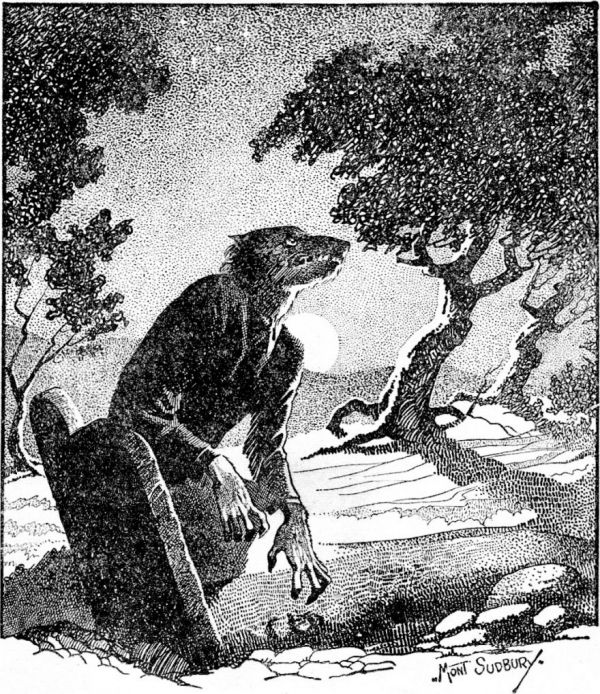
The classic werewolf of the Middles Ages was either a vicious, murderous person or a real beast that killed people, and in the popular mind became a shapeshifter who was both. They had to be in league with the devil! But the case of Thiess of Kaltenbrun turned that notion on its head.
Thiess was living in Livonia (modern day Latvia) in the late 17th century. He was a local character, known for healing and giving blessings, and he readily admitted he was a werewolf. Our knowledge of him comes from court records, as he was hauled in more than once over suspicions of crime. Thiess explained to the court that werewolves work in the service of God and are opposed the devil, and they worked to eliminate witches, who were evil. Thiess would steal crops from the devil to support his neighbors. The judges were baffled. On one hand, they didn't care since werewolf activities had nothing to do with the case at hand, but was Thiess guilty of blasphemy, or demonic activities, or was he just nuts? Read about the werewolf known as Thiess of Kaltenbrun at Amusing Planet. -via Strange Company
(Image credit: Mont Sudbury)

Research into Alzheimer's disease has focused on toxic proteins like amyloid-beta and tau, because that's what scientists have found when examining brains of patients after death. It's much more difficult to study patient's brains as the disease progresses. But research in mice has opened up a tantalizing new possibility.
We think of dopamine as the "pleasure chemical" that makes us feel good. Sure, but it also helps us to record memories in the brain. Dopamine is essential in the entorhinal cortex, where it serves as a gateway for encoding experiences into memory. In mice with an induced condition similar to Alzheimer's, scientists have found a deficit of dopamine in the entorhinal cortex. We don't yet know why this deficit occurs, but the introduction of dopamine helps to restore normal activity. This best part is that we have a drug already, Levodopa, that performs this task, and it's being used for Parkinson's disease. Read about this research and what it could mean at Neuroscience News. -via Damn Interesting
(Cropped image credit: Park SW, Jang HJ, Kim M, Kwag J)
Everything you encounter in your daily life has a history, but there are some kinds of history that they just skip over in school history classes. For example, what did people do before modern toilets were invented? In my neck of the woods, they used outhouses. That was the case in most places, but it became a problem when people started living close to each other in cities. Various systems for sewage disposal were installed by the Greeks, the Romans, and then the Europeans, but it was slow and only came about when a city's waste disposal problems became intolerable.
It was the same in the history of toilet design. There were great leaps that didn't spread and were even sometimes forgotten, possibly because no one really wanted to talk about the problem. Besides, having a flush toilet is kind of useless when you don't have a water delivery system or a sewage system, and that kind of infrastructure was a major undertaking, whether in cities or in rural areas. Rural folks developed cisterns, water towers, and septic tanks while they waited for real utilities. And once we had running water, not only could we use real flush toilets, but also sinks, bathtubs, and showers! This brief history will make you thankful you have those things. -via Laughing Squid
Ten years ago, we linked a story about Shakespeare's grave. A TV production used ground-penetrating radar to get an image of the Bard's remains, and concluded that the skull was missing. Since then, historians have looked back to a 1879 account of what may have happened in the literary magazine Argosy. The story, which included names and dates of real people, told how Dr. Frank Chambers dug up the grave and stole Shakespeare's skull in 1794.
Chambers was a young surgeon who had, like other medical men of his day, hired grave robbers to supply cadavers for anatomical study. He had also heard that Horace Walpole had offered to pay dearly for Shakespeare's skull. However, once the deed was done, Walpole only wanted to borrow it. Chambers, unable to find another buyer, paid one of his grave robbers to return the skull, but later found that he never carried out the task. The Argosy story was dismissed as a hoax by historical and literary experts of the time, yet it was far from the end of the story. Read that account and what happened afterward at Narratively. -via Strange Company
Squid was born with a deformity in his back legs. He lucked out when he came into the care of Drs. Lauren and Daniel Anthony, married veterinarians in Frisco, Texas. They took the kitten in and made splints of different kinds to keep his legs straight while he learned to walk properly. But he needed more, specifically a moveable brace to keep his hips aligned. There are such things, but none small enough for a kitten, so the docs had to make their own- out of LEGO pieces! They explained at Instagram that "he has a flexural tendon deformity of his hocks. The Lego exoskeleton is helping to prevent abduction of the hips!" You might or might not understand that, but we are happy that they do. Squid is an active kitten, and his legs are getting stronger and beginning to move correctly with this kind of therapy (he also uses an underwater treadmill). I guess it's true that you can make anything if you have enough LEGO pieces.

One way for airlines to reduce costs and maximize profits is to reconfigure seating to pack the largest number of passengers possible into a plane. That's how they got so small and uncomfortable. Alejandro Núñez Vicente has been working on this idea for years, and came up with the Chaise Longue, a configuration that stacks every other row of seats higher so that rows can be closer together while allowing for some legroom and reclining seat backs. His first design met with internet backlash. Vicente went back to the drawing board and took the feedback into consideration.
Several versions later, Vincente has unveiled the “ultimate, final statement” of the Chaise Longue, shown above. It addresses the earlier criticisms, such as no room for carry-on bags, but still has a few problems.
1. The seats aren't totally accessible, so a wheelchair row had to be added to the front of the cabin.
2. While they address comfort, the seats no longer save room in existing economy classes, so a new, more expensive class of economy seating will have to be launched.
3. The design has yet to be approved by the FAA, which requires that passengers be able to exit a plane in 90 seconds.
Read about Vincente's double-stack seat designs and how they've changed, at the Autopian.
(Image credit: Chaise Longue)
Rivers are the water paths that rain and snow follow from higher elevations to lower elevations until they reach the ocean. Sometimes they end in a lake or another river, but gravity ensures that water flows to a lower level, like sea level. The Colorado River, on the other hand, flows from the Rocky Mountains in Colorado through several states and then just disappears. Oh, it used to flow into the Pacific Ocean, but that was before people moved to the western US and wanted to live there a grow crops despite the fact that it's a desert.
Half as Interesting takes us on a tour of the Colorado River and what happens to all that pristine snow melt along the way. As of now, the river almost reaches the west coast before it's completely used up, but as more and more people and industry settle along its route, it may grow shorter and shorter. The video is eight minutes long; the rest is an ad.

Canadians take maple syrup seriously. To be legally labeled as maple syrup, the product has to be 100% maple syrup. Otherwise, it is called table syrup. And no one in Canada takes maple syrup more seriously than Quebec. So it was a major scandal when maple syrup from producer Steve Bourdeau was found to contain 50% cane sugar! This is the first case of widespread maple fraud in Quebec, which has a serious inspection system. Bourdeau claims that any adulteration was done outside of his business, as he has bought syrup from Ontario. But cans of Érablière Steve Bourdeau are still being sold in stores, with their labels covered with different names. Bourdeau dismisses this as unimportant, because they will be sold out soon. It's also alleged that he is repackaging adulterated syrup that has been returned.
The Québec Maple Syrup Producers federation has been looking into Bordeau's business for some time. The adulteration was uncovered when a journalist thought his maple syrup didn't taste right and had it analyzed. This may seem weird to Americans, who use maple-flavored corn syrup on pancakes and just assume that any product that is suspiciously affordable has been adulterated, but now we know that we can trust maple syrup from Quebec to be stringently pure -unless it has Bordeau's name on it. You'll find more links about this ongoing scandal at Metafilter.
(Image credit: Dvortygirl)