
The United States traces its official birthday to the issuing of the Declaration of Independence on July 4, 1776. That was 250 years ago. This weekend, we will celebrate the founding ideals that the US stands for: liberty, democracy, and equality, as the Founding Fathers broke with the British monarchy. But while those ideals are still worth celebrating, they weren't always adhered to. Our elementary history classes used to teach about the more undemocratic episodes of our nation's story as justified. Then they were taught as "just the ways things were back then," and now they are often skipped completely because there's a lot of history to cover and the unsavory parts are just too difficult- and it's sometimes seen as frankly unpatriotic. PBS fills in some of the pieces you didn't learn about in school.
Miss Cellania's Blog Posts
Navigating online is becoming harder all the time. The concept of a CAPTCHA was introduced to keep robots from spamming websites and spying on users. But then the bots improved, so the CAPTCHAS had to be made more difficult. And more frustrating. As the bots got better at fooling the software into believing they are human, we started to confront multiple CAPTCHAS tests, and it's often so annoying that we give up completely.
Now there's a video game that captures the frustration of CAPTCHAS, called CAPTCHAS Hell. Since we've all been there, it seems completely counterintuitive that gamers would want to recreate that misery on purpose, but some folks look at it as a challenge. Can you get through a maze of CAPTCHAS in order to purchase concert tickets online? Even if you don't want to try, you'll get a kick out of vicariously witnessing someone else try their luck in this game trailer. -via Geeks Are Sexy
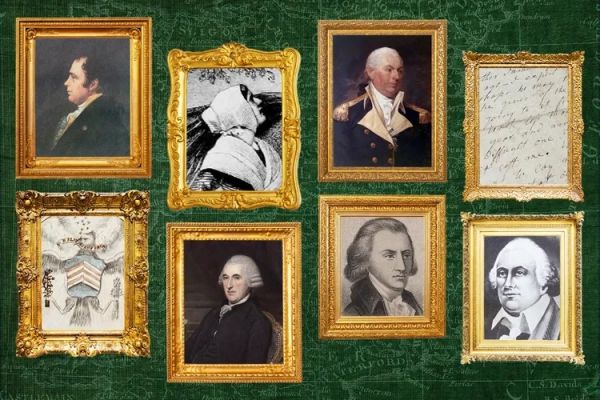
As European settlers traveled to the New World, the Irish were ahead of the curve when it came to escaping the British Empire. Ireland was also a British colony, and its citizens were treated terribly. They were converted to Christianity, then a few hundred years later, non-Anglican religions were outlawed. Irish land was confiscated, their trees were cut down, and their priests executed. In the wake of this treatment, many Scots-Irish, particularly Presbyterians, fled to America to breathe freely.
By the time of the American Revolution, people of Irish heritage made up about 10% of the white colonial population. But they comprised between 25 and 50% of the Continental Army! They were serious about freedom from Britain. They filled roles from cooks to spies to officers to Founding Fathers. John Barry immigrated to Philadelphia as a teenager, and rose to be the first commissioned officer in the US Navy. Lydia Barrington Darragh served as a spy for the patriots. John Dunlap printed hundreds of copies of the Declaration of Independence within a day of its adoption. Nine of Washington's generals and eight signers of the Declaration were Irish. Read about these and other ethnic Irish patriots who served valiantly in the American Revolution, at Smithsonian.
(Collage credit: Sonja Anderson)
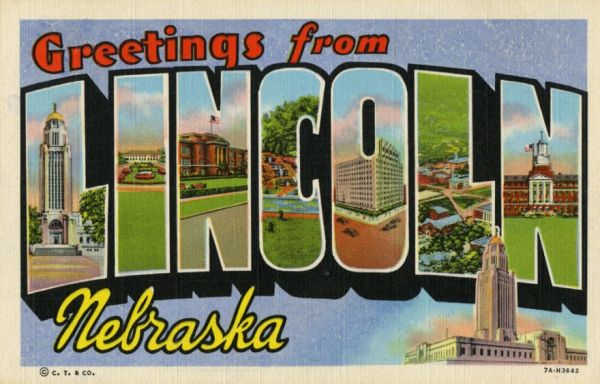
In 1855, the city of Omaha was designated the capital of the Nebraska Territory. But then the territory became a state in 1867. That was just the opportunity that citizens needed to name a new capital city, since the movers and shakers of Omaha were known to be corrupt, often getting their way by bullying and intimidation. A bill was proposed to select a new capital, but those who were opposed to moving the capital out of Omaha added several poison pill amendments. One of them was that whichever city was named the state capital would be renamed Lincoln. Omaha proponents knew that would enrage citizens in the South Platte region, who tended to side with the Confederacy in the recent war.
The scheme did not work. Neither the name nor the other amendments kept legislators from voting to move the capital, and the tiny village of Lancaster, population 30, was renamed Lincoln.
This story came from a list at Mental Floss that looks at the history of seven patriotically-named towns. There, you'll learn how Independence, Liberty, Libertyville, Freedom, Justice, and Flagstaff got their names.
(Image credit: Steve Shook)
What is the most American animal?https://t.co/qh3ir6fSWu
— Occam Was Right (@OccamWasRight) July 1, 2026
In 1782, an illustration of a bald eagle by Charles Thompson became the Great Seal of the United States. The eagle became the symbol of the new country, although it held no official designation until it wasnamed the national bird more than two centuries later in 2024. Meanwhile, we almost drove the bald eagle to extinction, although its numbers are recovering. Could some other animal represent the United States even better?
The most logical choice would be the bison, which was designated the national mammal in 2016. Like the eagle, the bison was almost wiped out, and made a recovery with much effort in the late 20th century. Along the way, prominent people have suggested the moose or the beaver, but those are Canadian symbols. Other nominees would be the eastern gray squirrel, the rattlesnake, or the coyote, which are everywhere. Or maybe a non-native species like the starling would represent a land of immigrants. Benjamin Franklin's choice, the turkey, would be the animal that brings us together for the most American of holidays, laid out on a table for Thanksgiving. Read about each of these creatures and more, and how they all symbolize America in one way or another, at CNN. -via Fark
The history of Long John Silver's turns out to be way more local to me than I realized. Growing up in Kentucky, I knew Jerry's restaurant was a treat because they had hot fudge cake and strawberry pie. My parents knew that after eating a meal, I couldn't do a whole dessert, so we split one among the family. I had no idea that Jerry's was related to Long John Silver's, but here we are.
Long John Silver's was the second fast food restaurant in my childhood town, going up right as the interstate highway was built (KFC was the other, of course). In high school I discovered that they would sell you a basket of crunchies (the batter that floated away from the food) for a quarter, which was important when you had limited lunch money. It was a way to skip the real food and just get the greasy batter they were known for, cheap.
My current town still has a standalone Long John Silver's without the rebranding. I don't eat there because these days I cannot deal with a meal that's all deep-fried, even if it does include hushpuppies. Weird History has the tale of a fast food chain that's time has come and gone.
The reason that Star Wars was made was because George Lucas couldn't get the rights to Flash Gordon. The 1980 movie Flash Gordon was made because Dino De Laurentiis, who held the rights to the story, saw what Star Wars did and decided the time was right to make a Flash Gordon film. He didn't know what he was in for.
The production went through four directors before the project even began. Kurt Russell turned down the role of Flash, and Arnold Schwarzenegger was rejected because of his accent. Sam Jones got the role due to his looks, but he eventually walked off the set and the role was completed with a voice actor and a stand-in. The production design was entrusted to Danilo Donati, who was a genius but spoke no English. His sets were confusing and became so banged up that they were held together with duct tape. And De Laurentiis had never heard of Queen, but luckily entrusted them to do whatever they wanted to with the music.
Flash Gordon barely made back its production budget in the US, but did well enough abroad. Its neon-arty look and music clashed with the over-serious acting, but the movie has become a cult favorite in the decades that followed. Read how Flash Gordon was made at Utterly Interesting.
If a school suddenly imposes a ridiculous rule that no one understands, you can assume that someone caused a problem, and they can't figure out a better way to deal with it. When I was in high school, they cut our lunch break from a half hour to 20 minutes. Then the next year it was cut to 15 minutes. That was serious for a school that didn't have a cafeteria. Both cuts came after someone was busted for drugs, and all of us suffered.
I'm sure that's happened throughout the history of public schools, but in the age of the internet, such incidents can make the local news and then go viral globally. You probably didn't hear about each of these instances, but Chill Dude Explains did the research. Here are ten times that one prankster, or one group of pranksters, left their legacy for the classes that followed them by sparking odd school rules. Sometimes these new rules spread to schools statewide or even nationwide.
We learn about the American Revolution from the accounts of those who lived through it, but they only wrote about the most important events. What their everyday lives were like got short shrift because it was normal to them. Everyone had aches and pains, itchy skin, and deteriorating food, so there was no use in making a big deal about it.
With few doctors and no germ theory, about a third of colonial children died before their second birthday. However, they knew to stay away from people with diseases like smallpox or diphtheria. Low level malnutrition was rampant. A toothache usually meant pulling the tooth. There were treatments like bloodletting, but most colonists just dulled the senses with alcohol. And they still managed to defeat the British. Some people, like Benjamin Franklin, would refer to the constantly suffering health concerns of colonists in their letters. Get a glimpse of what colonial life was like from a medical historian at the Conversation.
American musicians have always been drawn to traveling the open roads, or at least singing about some wonderful place they've been before. Or maybe some notorious place full of memories they can't get out of their minds. City names pop up in songs of every genre throughout the history of recorded music. It's a surefire way to get airplay in at least one town!
This geographic compilation by Dustin Ballard of There I Ruined It (previously at Neatorama) takes us on a musical trip through the cities of the United States, as sung by artists you know and love, from Dolly Parton to Eminem to Frank Sinatra. Of course, this could have been much longer, but we're getting near a holiday weekend, so he didn't want to put too much work into it. The signature slide whistle is there, and the end is not the end, because a special guest comes in to wrap things up in a coda.
Americans traditionally celebrate the Fourth of July with cookouts and fireworks, and sometimes a parade. Some towns tried something strange and different at one time or another, and the event was so popular it became a holiday tradition. In Hannibal, Missouri, they're celebrating Tom Sawyer Days in honor of Mark Twain. On the fourth you can see the National Fence Painting Contest, in which participants race to paint a section of a wooden fence faster than anyone else, just as Tom Sawyer tricked his friends into doing the chore for him. In Gatlinburg, Tennessee, you can catch the first Fourth of July parade of the year because it starts at midnight. In Bristol, Vermont, the holiday isn't complete until the Great Bristol Outhouse Race is run. And in Key West, Florida, they have the annual Key Lime Pie-eating Contest, a race to eat a whole pie the fastest without using your hands.
Read about these oddball Independence Day traditions and more, ten of them in all, at Smithsonian.
When John Adams wrote about American celebrating Independence day with bonfires and illuminations, he never dreamt it would be like this. CodyBPyrotechnics shows us the latest innovations in Roman candles. The ones available for consumer use are bigger than ever before. There's also a model of launcher that resemble a Gatling gun. Why would you need a rotating gun for fireworks? I guess because it just seems cool. The real innovation is that you can aim your massive fireworks somewhere other than straight up, which doesn't seem all that safe to me. He compares several of these guns in this video.
The fireworks are pretty, but watching a video is as risky as I want to get with this. Not to mention I don't want to pay for such a single-use gun- although someone in the comments mentioned you can reload them. These should not be used near people, or forests, or homes, or after holiday drinking. -via Geeks Are Sexy
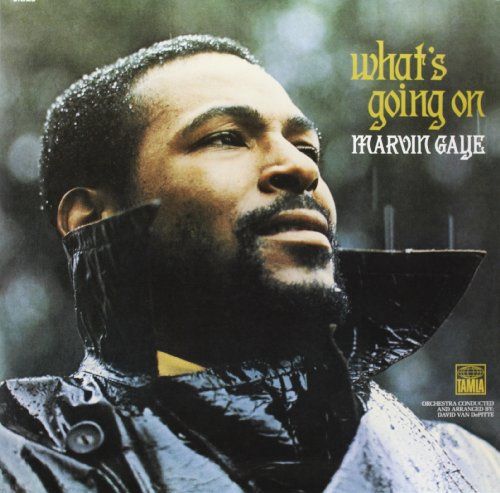
Anytime someone posts a list of the greatest songs or artists, it's an invitation for everyone to critique their taste, no matter what kind of criteria they use. Now we have a list of the best music, meaning the best 500 musical artists, the best 500 songs, and the best 500 albums, called The Greatest Music.
This ranking was compiled by using other lists, with a weighed criteria that's explained here. Yes, you can argue that it's too 20th century, because songs that stand the test of time do well, and too English language, because, well it is. But, while you can kvetch about the rankings all day, you won't find any bad artists or songs here. Click on any of the titles to get a "resume" of the song's source lists. You can also sort the lists by decade.
In the arguments at Metafilter, there's a list of the top songs in alphabetical order by artist to make it easy for you to check your favorites.
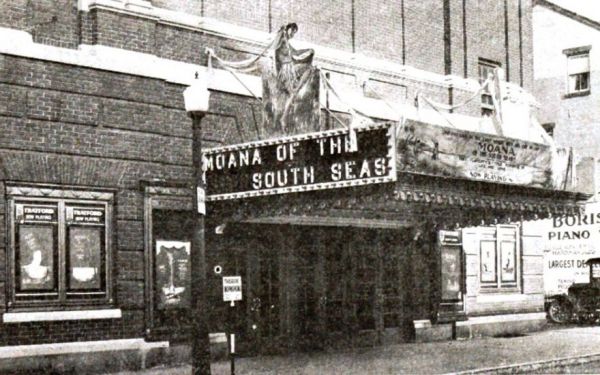
The live action version of Moana will be released this weekend. It's a remake of the 2016 animated movie. But the first Moana that Disney produced was 100 years ago, in 1926! The full-length silent film was directed by directed by Robert J. Flaherty, who did Nanook of the North in 1922. Flaherty spent a year in Samoa recording footage. He had envisioned an exciting tale of a sea monster, but instead found happy people living peacefully with no dangerous sea creatures that could pass for an antagonist. But the film was completed anyway.
Without a plot, Moana was not a hit. A critic coined the word "documentary" to describe the film in a review. However, the movie was not a documentary in the way we use the word today. Rather, it was a fictional collaboration between Flaherty and the Samoans to illustrate their world in a traditional and flattering way. Read about the first Moana at the Guardian. -via Damn Interesting
(Image credit: Paramount Pictures)
If you enjoy those old Looney Tunes cartoons in which all rules of logic were suspended to build chaos, action, and suspense, then you'll love o28. A German couple on vacation take a ride on the well known Tram 28 (Eléctrico 28E) to see the historic sections of Lisbon, Portugal. Except he is more interested in a magazine than the sights, and she is occupied by taking pictures for Instagram. But once the streetcar goes completely out of control, their attention is focused. The driver is gone, the brakes are broken, and the track is jumped. On top of it all, there's a baby on board with a pronounced unibrow.
The film o28 was made by a group of students at Rubika, an animation school based in Valenciennes, France. There are cultural references and easter eggs throughout the video that you might miss the first time around, and are pointed out at Kuriositas.