
Mathematics is a beautifully complex subject with numerous applications. But as you delve deeper into the rabbit hole, math becomes a whole new dimension of abstract concepts and puzzles that seem impossible to solve, let alone understand for us lay people.
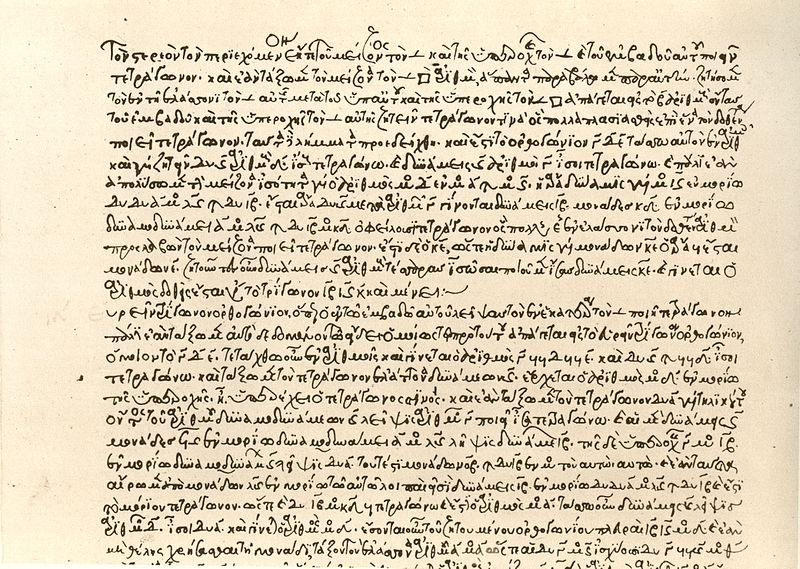
A bunch of number theorists gathered together to solve one of math's centuries-old problems, the Diophantine equations. The Diophantine equations are a collection of problems in Diophantus' "Arithmetica" that requires solutions to be whole numbers.
Each equation has a different way of being solved and so mathematicians develop specializations for each one. If a mathematician wants to tackle one of the equations in the Diophantine family, they would need to get references about the methods for solving it and make their computer program which would calculate the results.
This could be time-consuming. So the number theorists developed a computer package to make things a bit easier for everyone.
Recently, I joined several mathematicians on a project to make one such technique easier to use. We produced a computer package to solve a problem called the "S-unit equation," with the hope that number theorists of all stripes can more easily attack a wide variety of unsolved problems in mathematics.
The S-unit equation can be used to solve many of these bigger questions. The S refers to a list of primes, like {2, 3, 7}, related to the particular question. An S-unit is a fraction whose numerator and denominator are formed by multiplying only numbers from the list. So in this case, 3/7 and 14/9 are S-units, but 6/5 is not.
What the S-unit equation solver does is to parse out various S-units, whittling them down in order to come to a particular solution to a problem.
The primary difficulty of the S-unit equation is that while only a handful of solutions will exist, there are infinitely many S-units that could be part of a solution.
By combining a celebrated theorem of Alan Baker and a delicate algorithmic technique of Benne de Weger, the solver eliminates most S-units from consideration. Even at this point, there may be billions of S-units — or more — left to check; the program now tries to make the final search as efficient as possible.
(Image credit: Diophantus/Wikimedia Commons)






Commenting on Neatorama will earn you NeatoPoints!