Kirbie writes that her experimental dessert tastes "like a fried dough ball of goodness with chocolate and a melted creme center." So it would be an awesome treat for Easter. She made them by wrapping them in canned pizza dough and then deep frying them in a pan of oil. It's important to time the frying just right so that the chocolate is melted but not disintegrated.
From the sticker on your banana to the future of farming, we’re breaking down the definition of “organic” into bite-size pieces.
According to the Organic Trade Association, organic foods have become a $20 billion industry. And a quick scan of the grocery store aisles seems to confirm that. But the more people buy into it, the bigger the question becomes: What exactly does “organic” mean?
What’s in a Name?
You’ve probably noticed by now that organic products tend to be pricey. That’s partially because federal certification costs money, and partially because the right to use the word “organic” requires meeting the USDA standards that were set in 2002. Even imported foods have to be up to government snuff before they can be called organic.
The USDA rules are pretty stringent. To be certified as organic, farmers can’t use synthetic fertilizers, pesticides, or hormones for three full years before applying. Further, any animals they have must be raised on organic foods. Genetically modified crops are a no-no, as are farming practices that cause high levels of pollution. Even the shipping and processing procedures are monitored. Organic foods have to be kept separate from non-organics until they arrive in the grocery store.
It’s up to the non-governmental agencies that are certified by the USDA to determine whether or not a product gets to use the organic label. They monitor every step of the system, and in the end, they’re the ones who slap that big “O” on the finished product.
The boyfriend of Instructables member Rachel bought an ostrich egg. What should you do with such an unusual food? Make something fancy, of course! They boiled and deviled it. You can view more photos here.
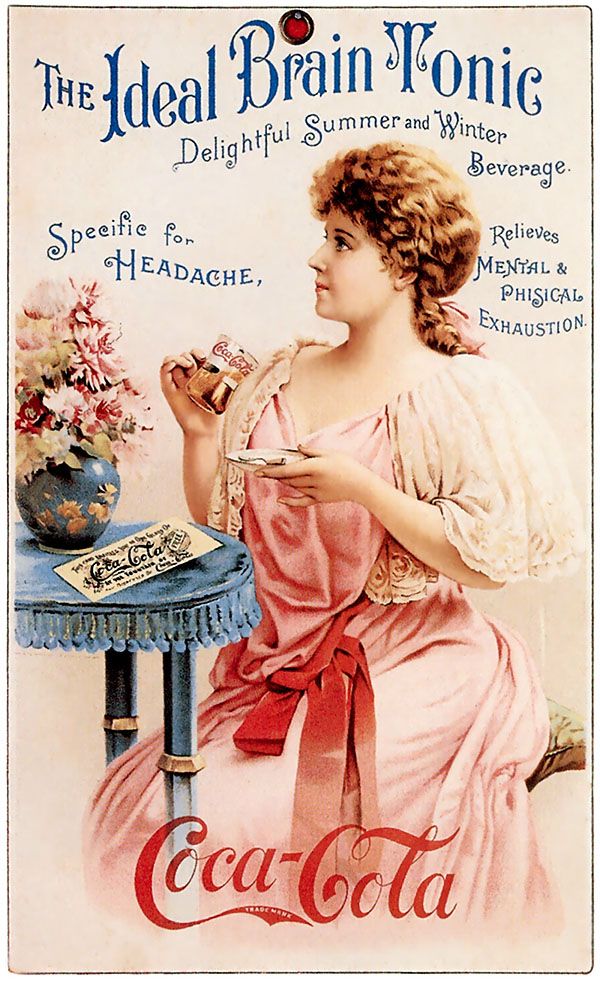
You probably know people who drink soda pop all day long, and they may even tell you they’re “addicted” to it. You might be one of those people yourself. In the modern age, we can find out all the ingredients in what we drink, and make our decisions accordingly. We all know those ingredients are not necessarily good for us. But once upon a time, soda pop was billed as a health tonic and there were often things in there that were far worse than sugar and carbonated water. Tristan Donovan, the author of Fizz: How Soda Shook Up the World, tells us about early soda drinks.
Besides booze, sodas of the 19th century also incorporated drugs with much stronger side effects, including ingredients now known as narcotics. Prior to the Pure Food & Drug Act of 1906, there were few legal restrictions on what could be put into soda-fountain beverages. Many customers came to soda fountains early in the morning to get a refreshing and “healthy” beverage to start their day off right: Terms like “bracer” and “pick-me-up” referred to the physical and mental stimulation sodas could provide, whether from caffeine or other addictive substances.
Pharmacists were soon making soda mixtures with stronger drugs known as “nervines,” a category that included strychnine, cannabis, morphine, opium, heroin, and a new miracle compound called cocaine, which was first isolated in 1855. “Cocaine was a wonder drug at the time when it was first discovered,” Donovan explains. “It was seen as this marvelous medicine that could do you no harm. Ingredients like cocaine or kola nuts or phosphoric acid were all viewed as something that really gave you an edge.
“Recipes I’ve seen suggest it was about 0.01 grams of cocaine used in fountain sodas. That’s about a tenth of a line of coke,” he says. “It’s hard to be sure, but I don’t think it would’ve given people a massive high. It would definitely be enough to have some kind of effect, probably stronger than coffee.” While the dosages were small, they were certainly habit-forming, and soda fountains stood to profit from such consistent customers.
That’s just part of the history of soda. How did they develop fizzy water in the first place? How did we eventually lose the drugs? And why did some sodas stick around while others faded? Learn the history of soda at Collectors Weekly.
In the last decade Sriracha has gone from that sauce you see on the table at Asian restaurants to a spicy staple in many homes, rivaling the fame enjoyed by spicy celebrities Tapatio and Cholula. People like Sriracha so much that Lay's even made Sriracha flavored chips, although their recipe could have used a little more Sriracha.
Recently, a Sriracha factory in Irwindale, California was declared a public nuisance by the South Coast Air Quality Management District after nearby residents complained of burning eyes and throats due to the odor emanating from the factory.
So, is the spice going to disappear from our lives? Huy Fong Foods, makers of Sriracha, have until June 1st to install carbon filters in their factory or it's bye-bye red rooster sauce.
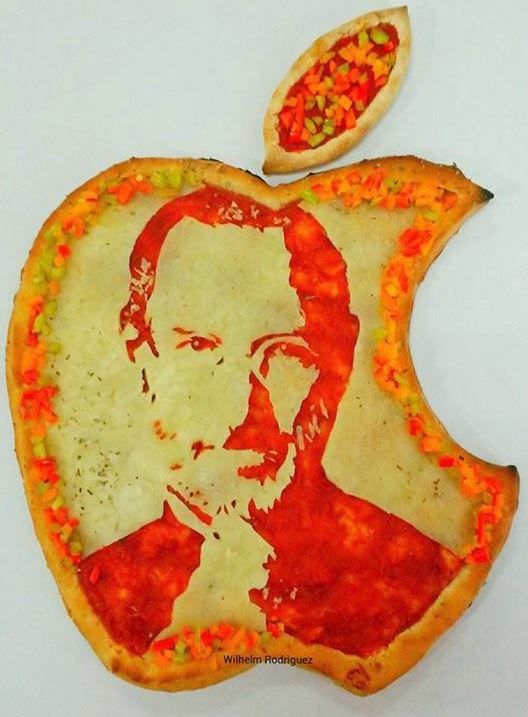
Wilhelm Rodriguez is an artist who can fill your belly with awesome art. He's a chef at Papa's Pizza in Cabo Rojo, Puerto Rico. He can create highly realistic portraits of people both real and imaginary. I love this one of Steve Jobs inside the Apple logo! You can view more of Rodriguez's work here.
A few months ago, gastronomical explorer Nick Chipman of Dude Foods created the McEverything: a combination of all 43 sandwiches available at his local McDonald's. More recently, he created a sandwich that has 26 fillings, one for each letter of the English alphabet. Here's what he placed between 2 slices of bread:
There are few English words that begin with the letter X. What were his options? Xena and xylophone come to mind, but neither are traditional food items.
No, Nick went with xylocarp, which is another word for coconut. That was a clever solution!
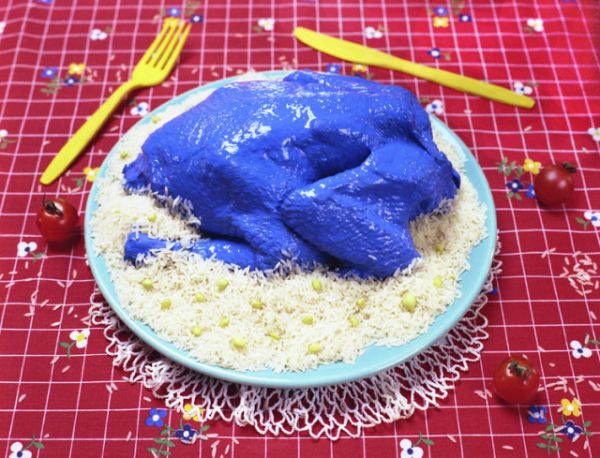
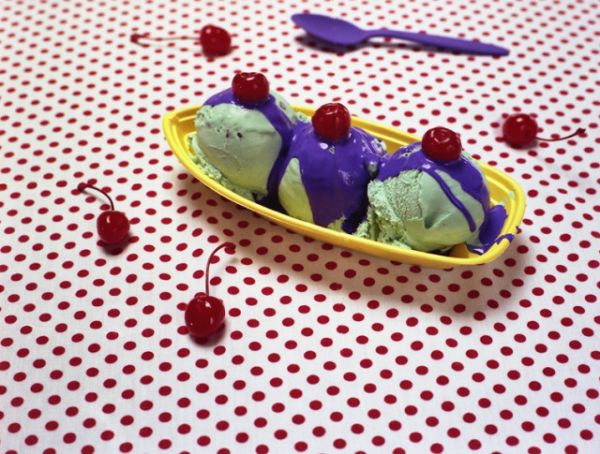
Photographer Lawrie Brown presents delicious and wholesome foods with a difference: They are an odd color. In the series Colored Food, you get chicken, ice cream, corn, crackers, cereal, and other dishes. The actual food looks good, and you know how hard it is to make food look good in a photograph. Yet you can’t imagine eating them, just because of the unsesttling and unnatural color.
The Kool-Ade looks pretty good, because we are used to Kool-Ade in weird colors. The pasta looks unappetizing because you can tell it has paint on it instead of sauce. But the rest are just strange. You might get me to eat the sundae, but I’d be expecting that syrup to taste like artificial grape flavor, and that just ruins the experience, no matter what the actual flavor. See the entire series at Brown's website. -via Laughing Squid
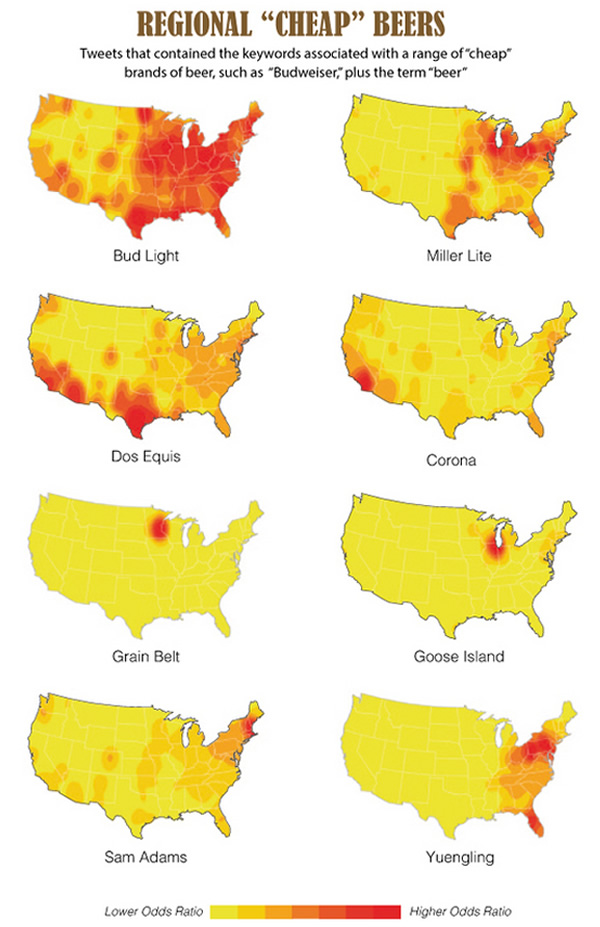
LiveScience posted an analysis of Twitter data of tweets sent between June 2012 and May 2013 to find out the beer preference of various states. This one above shows what cheap beer is popular in different regions of the United States. Surprisingly, hipster favorite PBR wasn't listed.
These days, you expect to find both butter and margarine on grocery shelves… but did you know that margarine companies had to fight to get there? This article was written by Jack Mingo.
MARGINAL USE
“Oleomargarine” was a word coined in the late 1860s by a French chemist, Hippolyte Mège-Mouriès. The price of butter had soared, so Napoleon II, expecting shortages because of an anticipated war with Prussia, offered a prize at the Paris World Exhibition in 1866 to anyone who could come up with a cheap, plentiful butter substitute.
Mège-Mouriès did some research and discovered that even starving cows give milk containing milk fat. Since this fat isn’t coming from their food, he reasoned that it must be coming from the cows themselves. Deciding that it must be possible to do the same thing mechanically, he invented a process to render oil from beef fat and combine the oil with milk to form a butter-like spread. He won Napoleon’s prize, but lost the first marketplace skirmish- his margarine factory opened in 1873 near Paris, then had to close when peace unexpectedly broke out and ruined the expected butter shortages.
ACROSS THE OCEAN
Mège-Mouriès’ process, however, found a home in the United States. The U.S. Dairy Company bought the rights to it in 1874 and licensed the process to 15 factories around the country. By 1882, it was making 50,000 pounds of the imitation spread every day. Soon, Armour and other meat-packing houses began producing margarine of their own, using fatty by-products left over from meat processing.
Farmers and butter manufacturers were beginning to get worried by this new product, especially those who made cheaper, lower-grade butter. Margarine was roughly comparable in price, but it was often of better quality.
In 1877 the dairy industry engineered the passage of laws in New York and Maryland requiring that oleomargarine “be marketed, branded, and stamped as such, under penalty of $100 and imprisonment for 30 days.” Even the margarine manufacturers agreed that that these laws were reasonable, and didn’t object when other states followed suit. In the words of a spokesman in 1880, “Of course, this had for a time its effect upon the sale of the product; but as oleomargarine is a pure and wholesome article of food, possessing all the qualities of good dairy butter, the people have overlooked the name and have decided to eat it.”
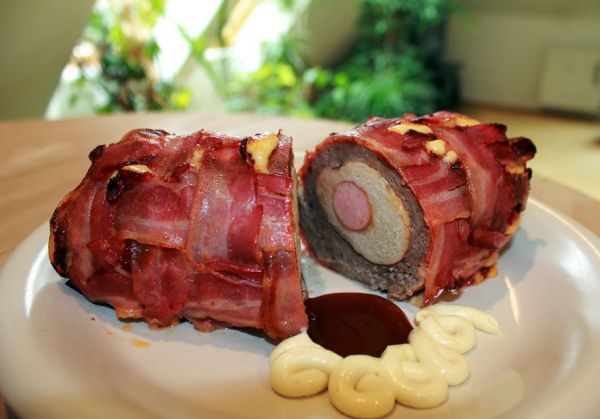
How do you like your hot dog? Just mustard, relish and sauerkraut isn't enough. Mirko of the German-language food blog Fat and Tasty built this delicious meal (translation) that almost looks too..., uh, good to eat. He began with a hot dog in a bun, which he then wrapped with sausage. Then he encased it a lattice of bacon, tomato paste, and Gouda cheese. Then Mirko popped it into the oven to produce this almost indescribable dish.
Here we have a history lesson that may make you hungry. That’s okay, just hit the pause button and go get some leftover pizza out of the refrigerator. We’ll wait. Bring me a slice while you’re at it! -via Viral Viral Videos
Samual Adams Beer is proud to introduce a new brew with an innovative feature: it’s infused with helium! The helium gives it amazing effervescence and a light flavor. It may leave you a little light-headed, too! Sounds like a party to me. -via reddit
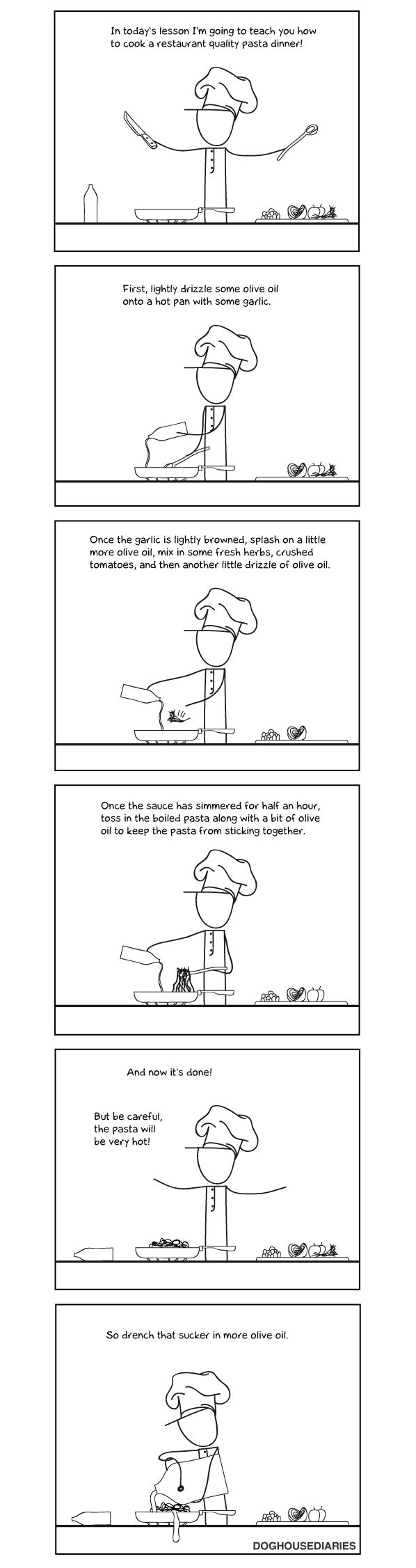
Want a noodle with your olive oil? Doghouse Dairies advises that if your pasta gets too cool, you can always warm it up with some boiled olive oil. This may remind you of a particular chain restaurant or two. Better to set some time aside to cook at home. Comic by the food critics at Doghouse Diaries.
We’ve shown you many of the fantastically artful pancakes created by Nathan Shields. Now we get to see him at work! Watch how Shields make pancakes with his kids Gryphon and Alice, explaining how to get the shades right as they go. The dragon creation clues us in on a crucial step- getting rid of any attempt that’s not up to his standards. That’s my gardening philosophy, but I personally don’t do that with cooking as much as I should.
This is part three of Shields’ video series on pancakes. Continue reading for parts one and two.




 (Image credit:
  (Image credit: