Once again, Nick Chipman of DudeFoods invents a food product that becomes instantly indispensible. Now that you know that these things exist, you feel an overwhelming urge to eat them, right? Of course, you do!
They're simple to make at home. First, bake unbreaded chicken wings. Then dip them in melted marshmallows, sprinkle with graham cracker crumbles, and pour on chocolate sauce. Yummy!
I’ve cut up two watermelons in the past week to pack in my kids’ lunches for band camp. I was using the “cut the rind away first” method, but since seedless watermelons became common, there are plenty of watermelon-chopping techniques that work well. I may have to try this one, but with a slight change. I would do his horizontal cutting (almost but not all the way through) before slicing the melon in half. That would eliminate having to cut towards your hand with a wobbly end down, and instead cut down toward the board with the wobbly (whole) melon down. Oh, and make sure you have a really sharp knife. -via Viral Viral Videos
Small farmers in Ivory Coast find out what their cocoa beans are used for when they taste a chocolate bar for the first time. Chocolate is out of their reach economically, and cocoa beans aren’t much without the sugar, milk, and other ingredients. But how could it be possible that these farmers don’t even know about chocolate? A commenter explained that chocolate is not part of the tradition of West Africa.
I know its weird, but in West Africa a bunch of the stuff we produce is for export only. It wasn't part of the traditional food, thus people never cared to eat it, or even knew how to finish production of it. The raw materials are just sent off.
It's not just cocoa. We produce coffee but don't roast it or drink it. We produce mangos, but not mango shakes. Chicken, but the variety for export is considered 'too soft' for the local palette.
It’s touching that the first thing the farmer does is to gather his friends and show them what chocolate tastes like. However, the kids will only get to see the wrapper. The video is a clip from the Dutch show Metropolis. You can see the whole chocolate episode here. Oh, and if you begin listening to the video because you know French, be aware that most of it is in Dutch. You may still need subtitles. -via reddit
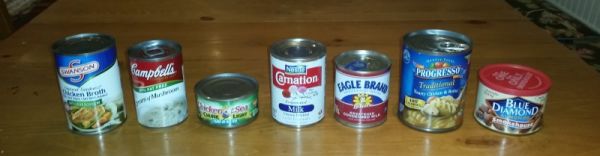
The metal can is an amazing work of food packaging. They are tough, long-lasting, and convenient. But how did we come to agree on the cylindrical shape of food cans? Nick Berry at Datagenetics (previously at Neatorama) takes a look at the many aspects of a simple design.
* The ratio of packaging materials to the volume of food. * Structural integrity and strength. * The ease of packing, stacking, shipping, and storing quantities of containers. * Minimizing wasted space. * The ease of manufacture. * Usability for the consumer. * Aesthetics.
Each of these aspects is studied, and since it is Datagenetics, there is some math involved. Who knew so much thought went into a can of soup? Still, everyone has something to complain about. My pet peeve is using my 1972 cook book that calls for 16-ounce cans of some ingredient and finding they are sold in 13- and 14-ounce sizes now. You’ll learn more than you ever thought you needed to know about food cans in this article. -Thanks, Nick!
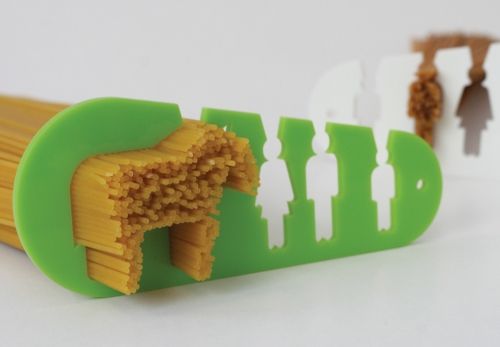
Could you really eat a horse? If you could actually eat a horse portion of spaghetti, here's a tool that will measure it for you. Stefán Pétur Sólveigarson, a designer in Iceland, made it for a variety of appetites, ranging from horse to child. The horse is the equivalent of 4 adult portions.
Behold, the next great burger design! This is a high-end hamburger with bacon, brown sugar, arugula, taleggio cheese, and a strawberry/rhubarb ketchup. These ingredients are unusual, but not unknown (though the ketchup is a unique recipe).
P.S. Josh does more than just cook awesome food. Among his services are emotional validation, haiku writing ($35), punching him in the face, and spoken word performances on post-colonial feminism.
Get that roach out of your mouth! It hasn't been properly cooked yet. For that, you need to go to The Bug Chef. That's David George Gordon, a professional chef who specializes in preparing insects.
Gordon thinks that humanity's culinary future lies with the insect world. If your goal is to produce a large quantity of meat, then livestock insects, such as crickets, are much cheaper than pigs or cattle. They require less food, water, and land. They're also nutritious. KPLU explains:
Crickets are high in calcium, said Gordon. Termites? Rich in iron. Grasshoppers? About as much protein (by weight, dried) as beef. Bugs are really pretty good for you. The U.N. report notes that bugs have high proportions of omega-3 fatty acids, comparable to those in fish (and much better than beef or pork).
And most bugs are good protein sources. Scorpions, for instance, have lots of edible muscle tissue. “I like their tails and claws,” said Gordon. “There’s the equivalent of crabmeat in there.” Just take out the stinger first, folks.
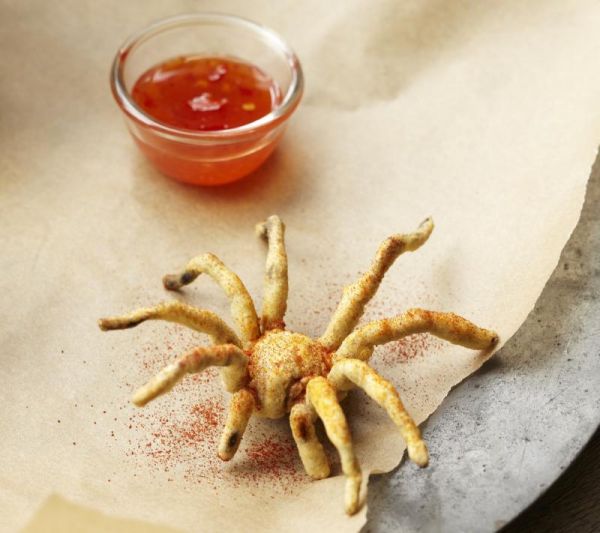
Best of all, Gordon argues, bugs are delicious. He's published a cookbook of 40 recipes that you can use to make your insect preparation tasty. For example, you can deep fry tarantulas. Here's Gordon's recipe. It's coated in a tempura batter and accented with smoked paprika. Yummy!
An old New York state orchard was about to be left for dead in 2008, an orchard that grows varieties of stone fruit over 200 years old, when artist Sam Van Aiken stepped in and took over the lease, saving many fruit varieties no longer commercially available.
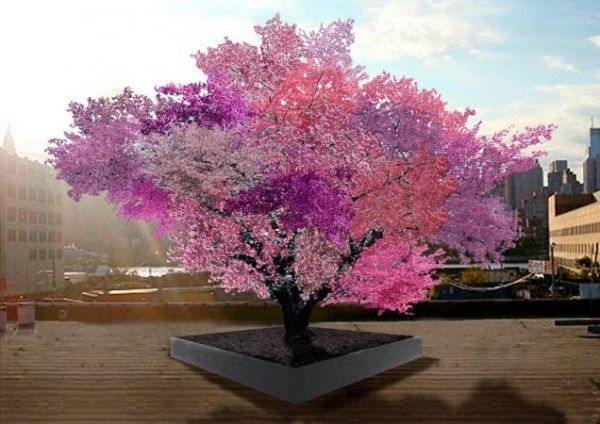
Sam now grows totally magical trees that he calls the Trees of 40 Fruit, applying artistic ideas and some serious grafting skills to create a tree that "grows over forty different types of stone fruit including peaches, plums, apricots, nectarines, cherries, and almonds."
His fascinating take on tree hybridization as living sculpture has produced multiple hybrid trees, and Sam even gave a TED talk about his project, so why are we seeing a photoshopped image of the Tree of 40 Fruits?
Because it could take them decades to grow to that size, so at the moment his magic trees look more like this:
People have been using common substances like citrus juices, oils and vinegars for cooking, as household cleaners and personal grooming products, for centuries, and many of the store bought products we buy everyday use these items as their core ingredients.
However, these store bought products also contain chemicals and toxins we’re better off leaving on the store shelves, and using core ingredients also means saving money.
This simple yet informative chart takes household products back to the old school, showing dozens of great uses for everyday products like baking soda, white vinegar and coconut oil.
The chart is missing amount recommendations for each use, but they're pretty easy to figure out with a little help from the all-knowing Google.
It's summertime, which means a lot of people will be grillin’ and chillin’, and whether you’re a grill master or you’re still too scared to light your own coals you’re bound to find something useful on this Lifehacker list Top 10 Ways To Hack Your Grill.
The mostly simple yet always informative articles that make up this top ten list will help you step up your barbecuing game, and may inspire you to host a BBQ of your own so you can share some great grilled grub!
Scotland is a land of refined tastes and thoughtfully-developed food traditions. (My ancestors were Scottish, so I know of what I speak.) Among their inventions are those now famous pillars of haute cuisine: haggis and Scotch eggs.
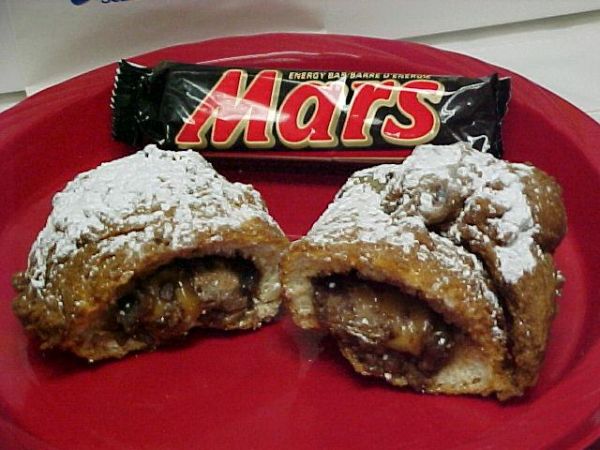
Yet the Scottish people are not the type to rest on their laurels. Among their more recent inventions is the deep fried Mars Bar. A 2012 article in BBC News describes how this culinary marvel has emerged from the fish and chip shops of Scotland:
Ahmed at Neptune's on Duke Street refuses to fry chocolate bars because "it turns the oil black and oil is very expensive."
But Mustapha from Denis's takeaway on the High Street is happy to oblige. He says he will deep-fry anything.
"That's my job", he says.
That's the spirit!
Mustapha says he sells one or two deep-fried Mars bars a day - more when the students are back at the nearby Strathclyde University residences.
He takes a Mars bar from the shelf, unwraps it, dips it in the same batter he uses for the fish and throws it in the fryer. A couple of minutes later he presents a soggy chocolate bar covered in batter.
The caramel squirts out when it is bitten. It is soft warm and sweet. Sickly sweet and fatty.
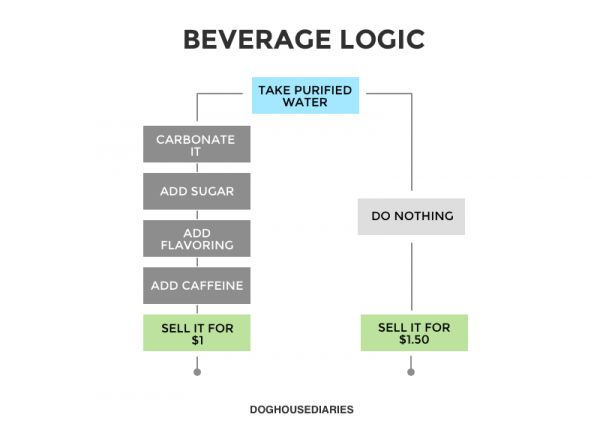
It’s a sure-fire formula! This comic at Doghouse Diaries is accompanied by the observation that McDonalds Coke has an apple pie taste that bottled Coke does not. I don’t drink Coke, so I don’t know. The discussion is here.
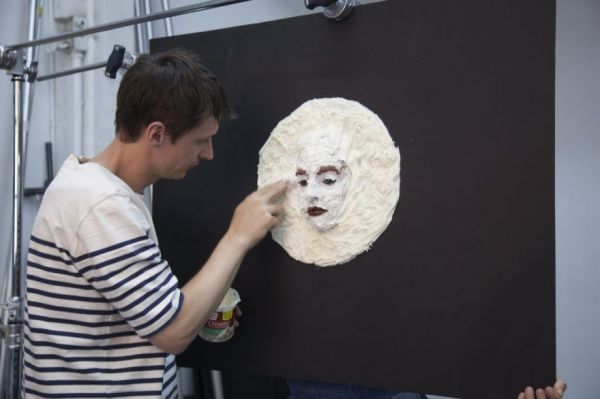
Artist and photographer Henry Hargreaves made a “moving portrait” of cake maker Amirah Kassem from Flour Shop. He wanted to incorporate cake frosting into the scene in a big way. Hargreaves (previously at Neatorama) had the idea to recreate the iconic moon landing scene from the 1902 special-effects film Le Voyage Dans la Lune (A Trip to the Moon) by Georges Méliès. Continue reading to see how he did it.
A new Krispy Kreme outlet in Adelaide, Australia, has proven to be a hit. Customers queued up days before the doors opened, and still wait in line for hours to get doughnuts a few days later. One doughnut fan apparently decided to skip the wait. Two teenage boys bought six boxes of doughnuts after waiting in line for two hours. Minutes later, they were confronted by a man with a knife, who demanded the Krispy Kremes.
“He was pretty much saying ‘if you don’t give me the doughnuts now I’m going to stab you’,” one of the boys told 7News.
The thief took the doughnuts but did not demand anything else.
The other victim said: “It’s pretty bad, like you think he’d like take the money or something, but he took the doughnuts.”
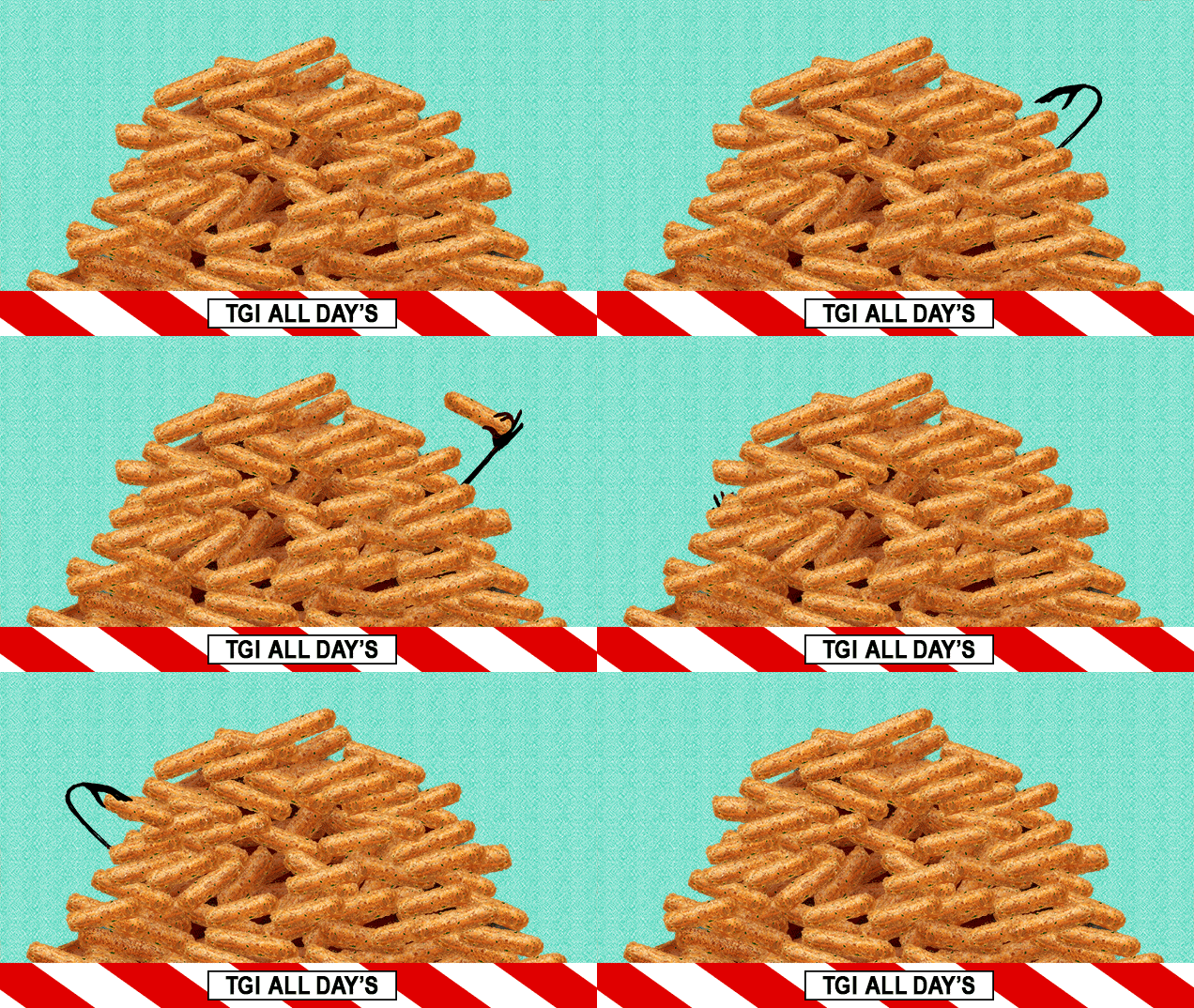
The restaurant chain TGI Friday’s unveiled a promotion called “Endless Appestizers,” in which you pay $10 and eat as many appetizers as you want (at participating locations only). Caity Weaver at Gawker decided to push the envelope and see if the restaurant could live up to that claim. She had incentives: her boss promised a week off if she could keep it up until 1AM, and a colleague offered cash for the mozzarella sticks she ate over 30. It was not easy. You can only select one kind of appetizer for the promotion, so she selected mozzarella sticks, and quickly regretted that decision.
1:40 p.m. Even if I ate 1000 sticks, TGI Friday's Endless Apps would be a bad deal, because they taste worse than eating nothing at all. TGI Friday's should pay me $10 to clear out as many of these mozzarella sticks for them as I can. TGI Friday's End This App(s).
1:42 p.m. Gabby catches me guzzling water like Joey Chestnut to get my hastily chewed mozzarella sticks down. "Haha!" she laughs from a couple tables away. "I'm coming to check on you!" While the water trick makes me feel like I'm about to throw up every time I swallow a bite of mozzarella stick, it does help to mask the taste. For this reason, I consider it superior to eating the mozzarella sticks normally.
1:45 p.m. I ask Gabby if she's had the mozzarella sticks, and what does she think of them? She tells me "They're good." Gabby and I are not yet good enough friends that we can be honest with one another.
And that’s with 11 hours to go! Weaver tries to adjust by eating the dreaded mozzarella sticks as slowly as possible, but boredom becomes problem. Her notes become weird.
9:23 p.m. I keep thinking I hear people say "Caity." I write down in my notebook that I am "definitely hallucinating."
I put my head near the table to write more and the scent of old marinara and burnt rubber fills my nostrils. I sit back up.