 Food has always been a part of our funeral rituals, no matter where you are from. The act of consuming food is a shared community experience, a show of support for the grieving, and an act that can be described as symbolically but defiantly kicking Death in the face.
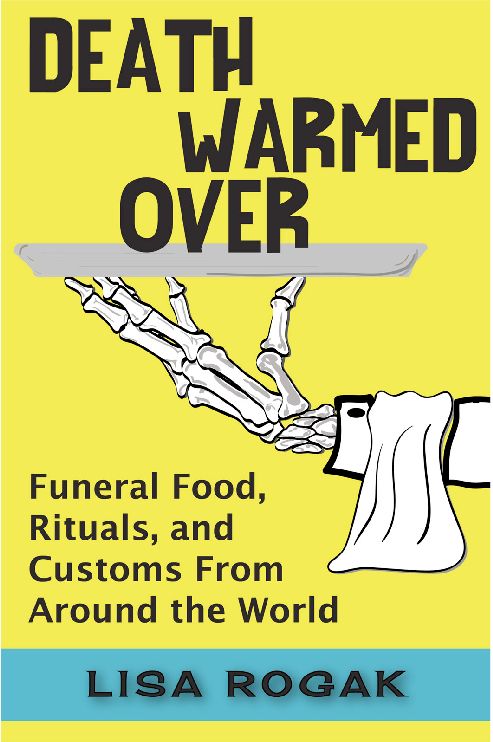
Half sociology book and half cookbook, Death Warmed Over: Funeral Food, Rituals, and Customs From Around the World by Lisa Rogak examines funeral rituals from 75 different cultures and the food associated with them.
The book also offers recipes for those who wish to contribute to the funerary feast. Neatorama presents some excerpts from Death Warmed Over.
For most cultures today, sharing a meal after the funeral has become pretty standard; indeed, it’s considered rude to refuse. In any case, there’s no better way to prove you’re alive, as compared with the body in the box you’ve just said farewell to, than by eating. Actually, most people would include sex in their response, and indeed, food combined with carnal hunger can sometimes provide a double dose of post-funeral vitality, not to mention a jump in the birth rate exactly nine months later.
The simple truth is that food goes a long way in helping survivors cope with their loss.
Some people may believe it’s distasteful to spend time thinking about how death and food are so interconnected – after all, both are an essential part of life – but I’d like to think that many more are intrigued by discovering the differences, as well as the similarities.
When you’re sharing a meal after a funeral you’re really poking a thumb in the eye of death. After all, with the simple act of eating, you’re assuming that you’re going to need the fuel for the future you expect you’re going to have, unlike the poor body in the box whose death is the purpose for the get-together. You can ask any caterer: most people eat a lot more food at funerals than at weddings. And that cuts across all cultures.
New Orleans Jazz Funerals
 (Image credit: Derek Bridges)
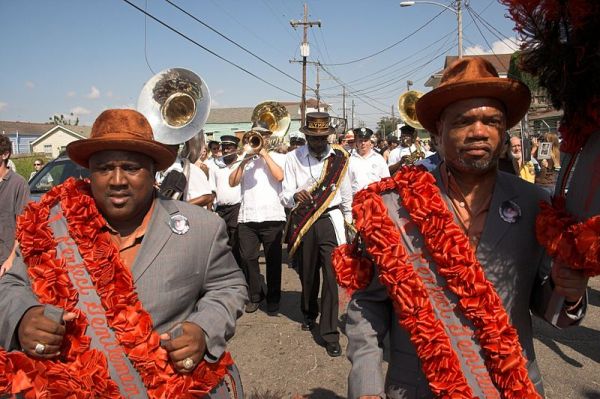
You may have to check your calendar if you happen to stumble upon a New Orleans jazz funeral, because it’s easy to mistake it for Mardi Gras in the French Quarter, although there’s a casket with a real body inside. Jazz funerals in New Orleans are legendary events. Though a funeral is traditionally melancholy and a private family event in nature, jazz funerals in the Big Easy are intended to be public events, at the very least so that onlookers can contemplate their own mortality while enjoying the music and the spectacle.
Mourners who participate in the slow, plodding parade from the church to the cemetery will occasionally intersperse their strides with slightly jerky motions, a holdover from their African heritage in which these movements were designed to keep the malevolent spirits at bay. Actually, it’s more of a dance than a walk, with colorful costumes and clothing instead of dour, dark outfits. Food, booze, and jazz bands accompany the procession, which is often led by a horse-drawn hearse and escorted by a coterie of New Orleans’ finest, which may include drag queens, strippers, and musicians who just happen to be passing by and decide to join the party for an improvisational free-for-all.
The nice thing about this recipe for Jambalaya is that you can start it in the morning before the funeral and it will be ready by the time you return home.
Funeral Jambalaya
 (Image credit: Flickr user Lori L. Stalteri)
2 cups boiled ham, diced
2 medium onions, coarsely chopped
2 stalks celery, diced
1 green pepper, seeded and diced
1 28-ounce can whole tomatoes
1/4 cup tomato paste
3 cloves garlic, minced
1 tablespoon minced parsley
1/2 teaspoon thyme
2 whole cloves
2 tablespoons olive oil
1 cup long-grain converted rice, uncooked
1 pound fresh or frozen shrimp, uncooked, shelled and deveined
Place all ingredients except the shrimp in a large slow cooker. Mix well. Cover and cook on Low for 8 to 10 hours.
One hour before serving, turn slow cooker to High. Add the shrimp and stir. Cover and cook until shrimp are pink and tender.
Hindu
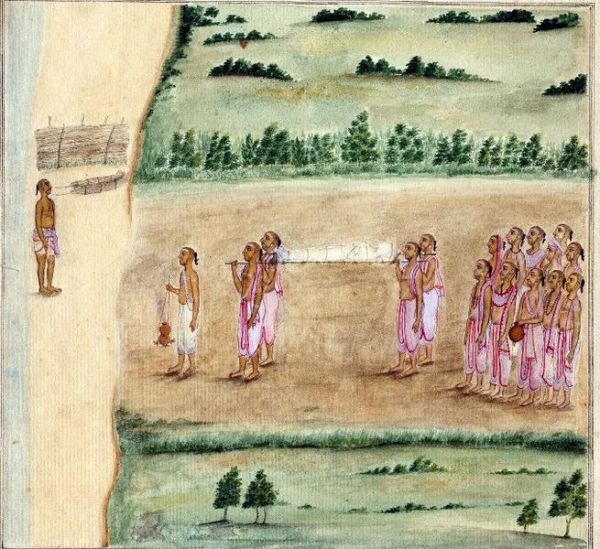
Hindus regard death as a twelve-day period during which the family of the recently deceased is considered to be unclean. This obviously influences the culinary practices of the household. Even though some Hindus are not vegetarians, relatives must follow a strict vegetarian diet during this period, and any meat or eggs must be removed from the house as soon as possible after death. During the first 24 hours after death, cooking is prohibited, and though relatives and friends can bring food to the house, close family members usually fast the first day. Upper-caste Hindus usually hire cooks to prepare meals for the family and guests – which can number into the hundreds – for the entire twelve-day period.
Cremation is the normal mode of disposing of bodies for Hindus, and is customarily done a day or two after death. However, to ensure the secure passage of the soul to the next world, a ceremony known as a Shraddha must be performed. Shraddha is an elaborate feast and gift-giving event; Hindus believe that everything that is given away – food or gifts, often metal vessels and cash – will eventually end up in the hands and stomach of the deceased. Some Shraddhas last one day, while others can go on for weeks. Feasts can be elaborate or they may merely consist of rice and vegetables, along with the chapati bread that’s served at most Hindu meals.