
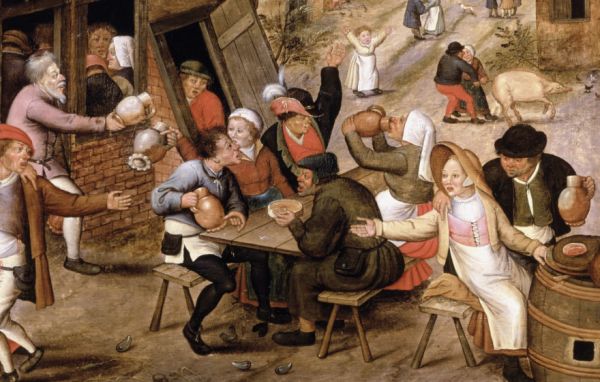
It's true that medieval peasants ate whatever was available, or whatever mama served. But physicians and thinkers of the time had their own theories of what foods were healthy. These ideas were published, and became known to professional chefs for the aristocracy, and spread to everyone else if they were responsible for a family's diet. Foods were categorized as cold or hot and wet or dry. Too much of any of these properties was not healthy, but you could change them with cooking methods. For example, fish was cold and wet, so it should be fried instead of boiled, and spiced to make it warmer. Beef was dry, so it should be boiled. Most vegetables were dry, except onions, which should be fried to make them dryer. Eggs were considered wet, but the yolks were warm and nutritious, while the whites were cold.
Beyond those categorizations, each food had its own reputation for helping or harming different body organs. And some were considered either good or bad for you depending on what sequence you placed them in a meal. Read up on which foods were best and how a cook could improve on what was available for dinner at Literary Hub. -via Strange Company





Commenting on Neatorama will earn you NeatoPoints!