
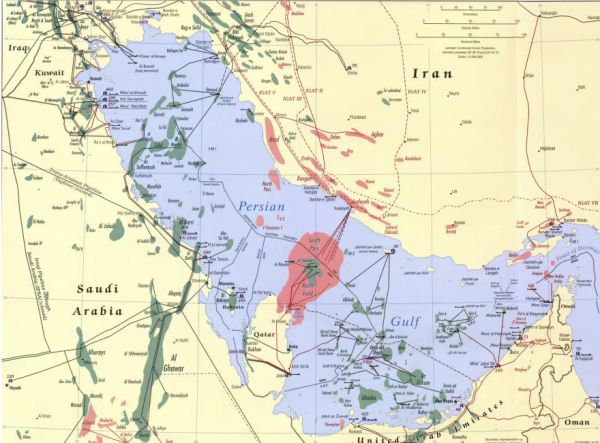
The US produces more oil than any other country, but our oil reserves are tiny compared to the Persian Gulf region, which is split into many countries. The gulf itself wasn't there before major flooding at the end of the last ice age, but people of the region were already using found bitumen for adhesion and waterproofing. Oil as a modern fuel was discovered there in 1908, and drilling for it has fueled our machines ever since. But those massive oil reserves have a history going back 35 million years.
The abundance of hydrocarbons in the Middle East has to do with the collision of two major tectonic plates. We know that the Himalayas were formed when the Indian Plate crashed into Asia, forcing the mountains to rise. In the Middle East, however, the collision of the Arabian Plate and the Eurasian Plate is (yes, it's still happening) caused mayhem underground instead, bending and breaking rock plates. How this creates oil and gas and room for it to collect is explained in geologic terms at the Conversation.
(Image credit: CIA/Library of Congress)





Commenting on Neatorama will earn you NeatoPoints!