You know the story of the Trojan Horse, of course, because you've read Homer's Iliad, the epic poem about the Trojan War, right? No, because you haven't read it, and also because the Trojan Horse isn't in the Iliad. But you know the story of how the Greeks won the war against the city of Troy after ten years by leaving a gift of a massive wooden horse behind, which the Trojans accepted and brought into the city gates, not realizing it was full of Greek soldiers. It only makes sense the Trojans would do that, despite the horse's odd weight, without looking to see what was inside.
Is there any truth at all to the story? We once thought that the city of Troy was itself fictional, until Heinrich Schliemann found it in Turkey (and dug right through the layer that would have existed at the relevant time). But that doesn't mean there actually was a ten-year war. And while the tale of the Trojan Horse was layered with supernatural deeds by Greek gods, that was normal for both historical and fictional accounts in ancient Greece. Weird History looks at the story of the Trojan Horse, and reveals some theories about how it could have happened, whether it did or not.

A couple days ago, I mentioned some of the exotic and eccentric foods that will be available at the upcoming Iowa State Fair. Inventive dishes at state fairs is very much a Midwestern thing and Minnesota consistently offers competition, such as soft serve beer.
This year, the Minnesota State Fair takes place August 27 to September 7 in St. Paul. The organization has already announced new foods that will be available, including a variety of dishes of Hmong and Vietnamese influence. I'm looking forward to the Butter Brew Mustache Pretzel, which is a traditional pretzel in the shape of a mustache--something that children would enjoy playing with. It's served with vanilla soft serve ice cream as a dip.
-via Nag on the Lake
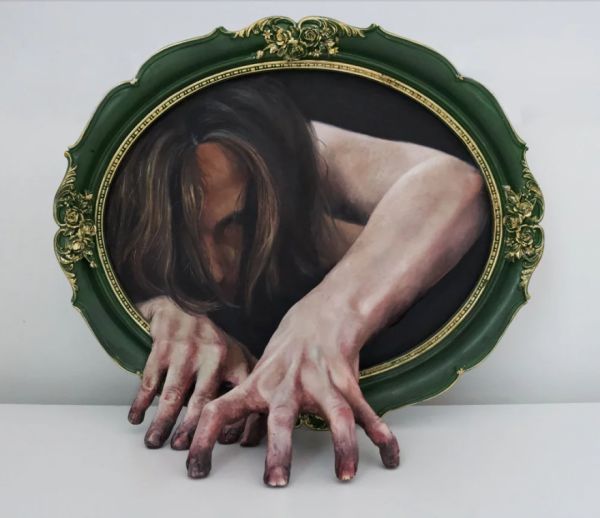
One Instargam commenter quips, "The Ring but make it Renaissance." That's about right. Tanya Gomelskaya composes photorealistic paintings and sculptures that emerge from the canvas. It's not that the subject looks at the observer, but the subject pursues the observer beyond the frame of the canvas.
Most kisses in 30 seconds by a pair 😘 195 by Renato Bayma Gaia and Naiara Roberta Ribeiro de Marins 🇧🇷 pic.twitter.com/CnGeN0G8E8
— Guinness World Records (@GWR) July 10, 2026
I saw this tweet and immediately turned to my wife and proposed that we try to top this record. She rolled her eyes and went back to her book.
So I guess you could say things are getting pretty serious.
Mind you, we'll have serious competition. Renato Bayma Gaia kissed his girlfriend, Naiara Roberta Ribeiro de Marins, 195 times during a 30 second period. These Brazilians now carry a prestigious and decidedly romantic title.
YouTube has been around for 21 years now, longer than many of its users have been alive. It exploded quickly, because it was free and easy to use, and it offered a platform for all kinds of creativity. That includes horror, and YouTube horror shorts soon proved that you don't need 90 minutes of film and a substantial budget to scare the pants off everyone. It also helped that you didn't have to telegraph your intentions ahead of time, proven by the 20-second film Relaxing Car Drive from 20 years ago that was anything but.
YouTube horror shorts rely more on innovative ideas than cast or budget. They simply place you in a scenario that produces dread or horror that often isn't explained at all, but can still leave nightmares. Anna Dupre has compiled a history of YouTube horror shorts with plenty of embedded examples and links to quite a few more, in case you haven't been scared enough today. -via Nag on the Lake
In 1973, Mexican anthropologist Santiago Genovés put 11 young adults, including himself, on a raft sailing from the Canary Islands across the Atlantic for more than three months to Cozumel island, Mexico. He expected to document the power struggles, sexual jealousy, and violence that would inevitably overwhelm the group. Kind of like a reality TV show. But you know what they say about assumptions.
I had heard about the Acali raft experiment, which was the subject of a full-length documentary, but didn't know a lot about it until I watched a video today. It was interesting, but with an AI-generated narration and images, I didn't want to post it. Then I spotted a video from three years ago with the exact same title, and it has most of the same narration and actual footage of the event. The newer AI video has an update about a reunion of the surviving participants, who had a wonderful time meeting up with each other 45 years later to make the documentary.
Trendy young people make a big point of staying hydrated, and honestly, they are on to something. Giving your body plenty of water makes you look and feel younger, improves your mood, and can help you tolerate a heat wave. But you don't have to follow a strict regimen to improve your own health with water. The most important thing to know is that if you wait until you are thirsty to take a drink, you are probably already dehydrated. I was hospitalized for dehydration once, and it's no picnic.
However, some of the scarier "rules" you've heard about hydration are things you don't need to worry about. Should you add electrolytes to your drinks? Does caffeine cause dehydration? How about alcohol? Is there anything better than water for hydration? And how much do you really need to drink in a day? For some questions, it just depends on whether you are a hard-working athlete or a regular Joe. Older people, those who take certain medications, and people who work outside in summer also need to pay attention to their water intake. As for how much to drink, the answer is usually just "more." Learn the basics of proper hydration without the hype at Science Focus. -via Real Clear Science
Killer turtles with poison spears! Invaders of the slime glass fortress! The ballistic torpedo shark! These creatures sound like they came from a 1950s B-movie, but they are real, and they are dangerous. We humans simply ignore them, because we can't see them and barely know about them. These are protists, mostly single-celled organisms that are neither animal, plant, bacteria, or virus, but are the ancestors of them all. Now they feed on their descendants, with an amazing variety of weapons that are hard to believe possible from a single cell. The prey they feed on are also quite small, and some protists are even beneficial to humans by controlling the species they eat. Kurzgesagt introduces us to three of the weirdest predatory protists, to show what an amazing world lies underneath us while we don't pay attention. This video contains a sponsor message from 3:47 to 5:04, and the last minute is promotional. -via the Awesomer
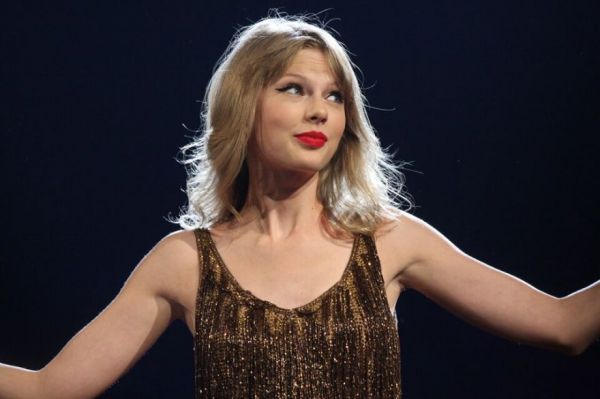
Were you able to attend the wedding of Taylor Swift and Travis Kelce? No, well, were you able to acquire garbage from it?
No?
Well, I'm sorry, but you're now otu of luck. Yahoo! Finance tells us that Justin Cignac, an artist from Queens, collected garbage from the spectacle and then sold it to interested collectors for $25 per container.
Collecting and selling garbage is one of Cignac's core markets. He's been doing so with New York City garbage since 2001. People from all over the world are apparently interested in buying NYC trash, so he makes a good living from it.
-via Wesley Todd | Photo: Eva Rinaldi

One problem with history that goes way back is lack of documentation. We didn't always have writing, and even when we did, records could be destroyed by war, natural disasters, and even neglect. Oral histories become distorted or embellished over time. That applies to many historical figures that are now considered fiction, even if they were inspired by someone at some time who really existed. The biggest example is King Arthur, who may or may not have been a real person, but historians believe he wasn't a king and most likely wasn't named Arthur. He is just one in a long line of folklore tales that were told as factual or fictional depending on when the story was told or who told it.
An example from the list is William Tell. The story of Tell successfully shooting an apple off the top of his son's head, under pressure of course, is important in the story of the founding of Switzerland in the 14th century. But Tell didn't appear in the literature until more than a century after the events supposedly took place, and some points of the story are contradictory. Maybe someone greatly distorted the story, or maybe it was completely made up after the fact. Read about Tell and four other historical figures that never existed at all at Mental Floss.
(Image source: Library of Congress)
Somewhere between Veggie Tales and Sausage Party, there is The Fridge, a short film by Coby Palivathukal. Food comes alive in a weird animation style that soon becomes unimportant as we get to know the residents of the refrigerator. They realize that their time is limited, but meanwhile they deal with romance, betrayal, nihilism, and the hope of better days to come. Ted the carrot loves Rachel the tomato, but he's also a player. Beefster wants to escape, and Tot the potato is there to help him. So what does he think is going to happen to him if he gets out? Jake the cucumber falls for newcomer Sophie the avocado. Meanwhile, they get advice from Master Mayo, who knows things because he's been there forever.
They all learn life's lessons in a hurry, because refrigerated food is nothing if not ephemeral. The story requires a lot of suspension of disbelief, because what is a potato, a tomato, and an apple doing in a refrigerator in the first place? -via Nag on the Lake
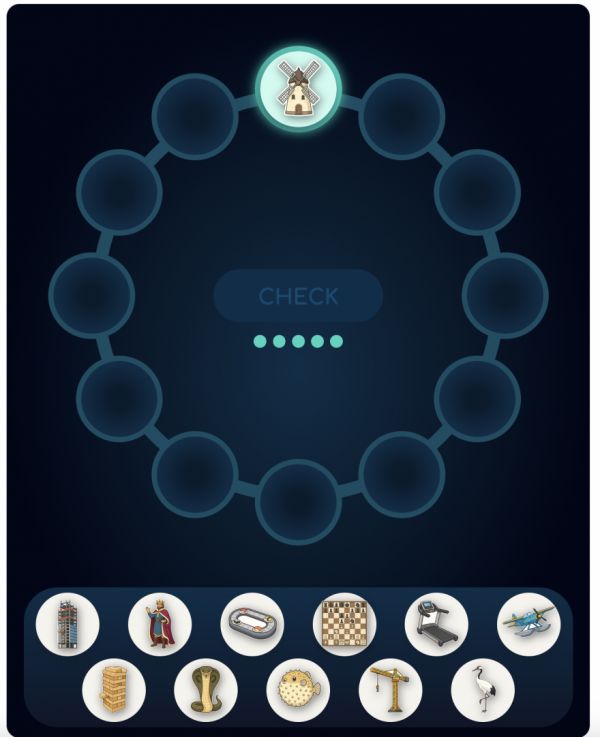
Britannica gives us a game that has nothing to do with words. Instead, in The Loop, you get a circle of twelve spots, and twelve icon images. The goal is to arrange the images in order so that each image is logically connected to the next, even when the circle reconnects at the top. The first image is placed for you, and you can go in either direction. Click on an image to get a larger version if you have trouble figuring them out. The images can be linked in many different ways, like a common idiom, the shape, if they are often seen together, etc. With some, you really have to think.
You have five chances to check your progress as you go, green meaning correct and red meaning wrong. A yellow circle means that two images are linked, but they may be in the wrong order or the wrong place. You will start with today's game, and afterward you will be directed to previous daily games. I didn't have much trouble with today's game, and this screenshot is the beginning of yesterday's game. -via Metafilter
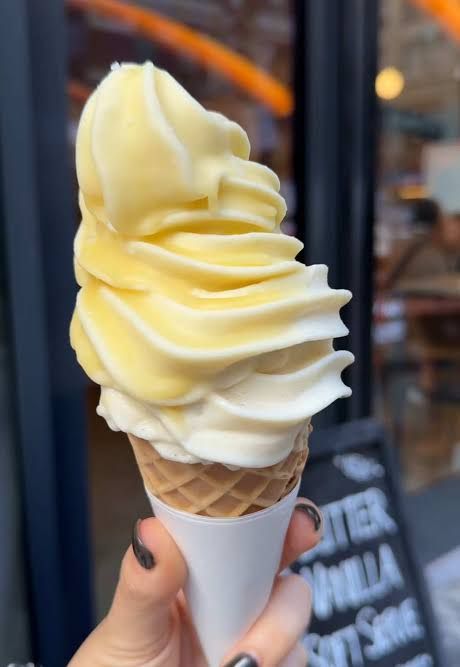
The Iowa State Fair is taking place from August 13 to 23 in Des Moines. It is traditionally a venue for consuming deliciously unhealthy foods and engaging in unique contests.
Among the treats available will be butter-dipped soft serve ice cream. That is, as you might expect, soft serve ice cream that is briefly dipped in molten butter instead of chocolate. This is not a new invention (the above image is from last year), but the Iowa State Fair may be your first opportunity to enjoy it in addition to other exotic dishes.
The Des Moines Register has a list of 83 other foods that will be available, including Parmesan ice cream, banana cream fries, and peanut butter and jelly corn dogs.

Well, maybe not all of them are your favorite songs, but an awful lot of straightforward songs that profess love or tell stories have origins and inspirations that might surprise you. In an obvious reaction to the Doc Pomus story from a couple of weeks ago, we get a trivia list about where those song ideas came from. It may have been a simple cultural or language difference that gave the song an entirely different meaning, like "...Baby One More Time," the song that put Britney Spears on the map. Or it may have been inspired by a person, and good luck figuring out who.
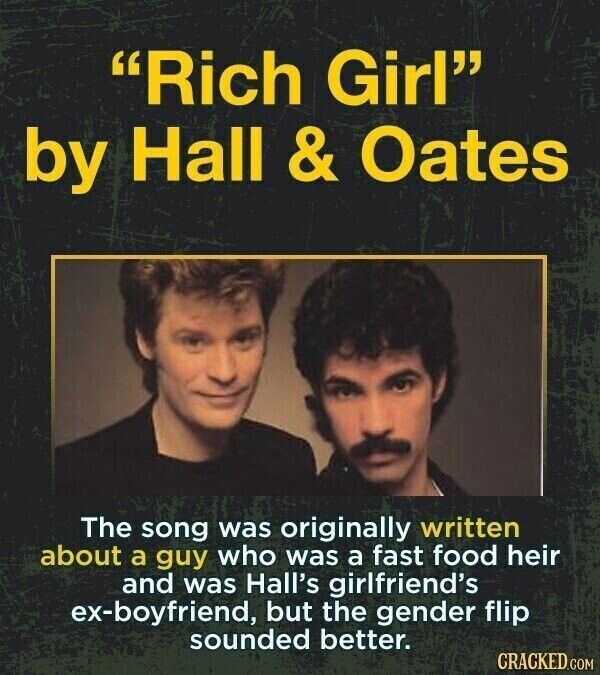
And there are some that were honestly pretty easy to figure out, llike "Sweet Caroline." But only if you were around at the time. Or if you were like me and made a living off of music trivia.
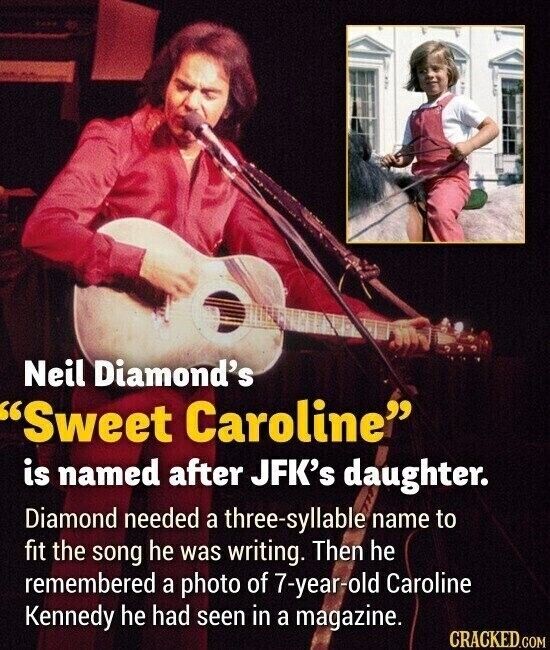
Read about 28 songs and where the ideas for them came from in a pictofacts list at Cracked.
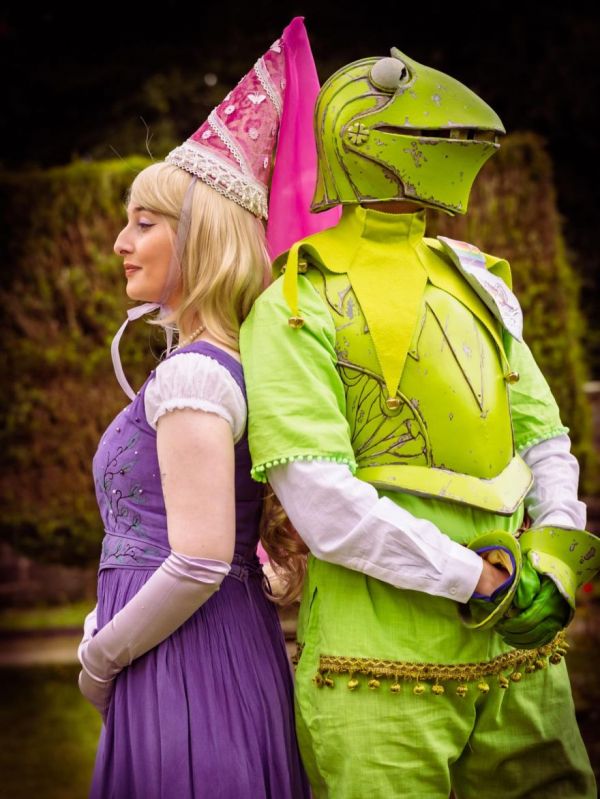
Chloë of Odd Socks Cosplay and Frank Cleary of Frankie Doodles made this cosplay imagining fairy tale versions of Kermit the Frog and Miss Piggy.
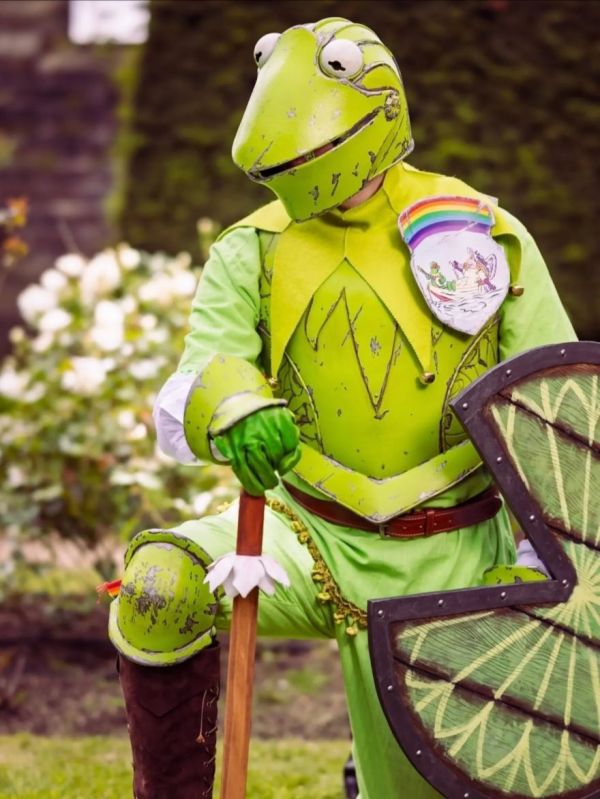
The Kermit is especially well-done, as his accessories include a lily pad shield and a blooming sword.
Photos: Event Horizon Cosplay