11 Most Important Philosophical Quotations.

Posted by Alex in Everything Else, Mentalfloss on February 6, 2007 at 2:43 am


1. “The unexamined life is not worth living” – Socrates (470-399 BCE)
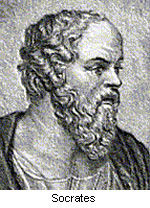
Socrates’ [wiki] belief that we must reflect upon the life we live was partly inspired by the famous phrase inscribed at the shrine of the oracle at Delphi, “Know thyself.” The key to finding value in the prophecies of the oracle was self-knowledge, not a decoder ring.

Socrates felt so passionately about the value of self-examination that he closely examined not only his own beliefs and values but those of others as well. More precisely, through his relentless questioning, he forced people to examine their own beliefs. He saw the citizens of his beloved Athens sleepwalking through life, living only for money, power, and fame, so he became famous trying to help them.

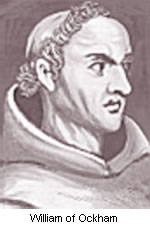
2. “Entities should not be multiplied unnecessarily” – William of Ockham (1285 – 1349?)

Commonly known as Ockham’s razor, the idea here is that in judging among competing philosophical or scientific theories, all other things being equal, we should prefer the simplest theory. Scientists currently speak of four forces in the universe: gravity, the electromagnetic force, the strong nuclear force, and the weak nuclear force. Ockham [wiki] would certainly nod approvingly at the ongoing attempt to formulate a grand unified theory, a single force that encompasses all four.

The ultimate irony of Ockham’s razor may be that some have used it to prove God is unnecessary to the explanation of the universe, an idea Ockham the Franciscan priest would reject.

3. “The life of man [is] solitary, poor, nasty, brutish, and short.” – Thomas Hobbes (1588 – 1679)
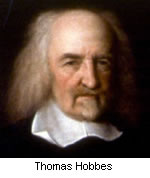
Referring to the original state of nature, a hypothetical past before civilization, Hobbes [wiki] saw no reason to be nostalgic.

Whereas Rousseau said, “Man is born free, and he is everywhere in chains,” Hobbes believed we find ourselves living a savage, impossible life without education and the protection of the state. Human nature is bad: we’ll prey on one another in the most vicious ways. No doubt the state imposes on our liberty in an overwhelming way. Yet Hobbes’ claim was that these very chains were absolutely crucial in protecting us from one another.

4. “I think therefore I am” – René Descartes (1596 – 1650)
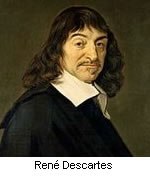
Descartes [wiki] began his philosophy by doubting everything in order to figure out what he could know with absolute certainty. Although he could be wrong about what he was thinking, that he was thinking was undeniable. Upon the recognition that “I think,” Descartes concluded that “I am.”

On the heels of believing in himself, Descartes asked, What am I? His answer: a thinking thing (res cogitans) as opposed to a physical thing extended in three-dimensional space (res extensa). So, based on this line, Descartes knew he existed, though he wasn’t sure if he had a body. It’s a philosophical cliff-hanger; you’ll have to read Meditations to find out how it ends.

5. “To be is to be perceived (Esse est percipi).” Or, “If a tree falls in the forest and no one is there to hear it, does it make a sound?” – Bishop George Berkeley (1685 – 1753)
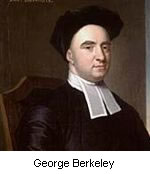
As an idealist, Berkeley [wiki] believed that nothing is real but minds and their ideas. Ideas do not exist independently of minds. Through a complicated and flawed line of reasoning he concluded that “to be is to be perceived.” Something exists only if someone has the idea of it.

Though he never put the question in the exact words of the famous quotation, Berkeley would say that if a tree fell in the forest and there was no one (not even a squirrel) there to hear it, not only would it not make a sound, but there would be no tree.

The good news is, according to Berkeley, that the mind of God always perceives everything. So the tree will always make a sound, and there’s no need to worry about blipping out of existence if you fall asleep in a room by yourself.

6. “We live in the best of all possible worlds.” – Gottfried Wilhelm Leibniz (1646 – 1716)
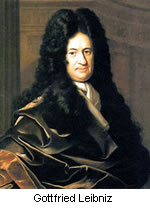
Voltaire’s famous novel Candide satirizes this optimistic view. And looking around you right now you may wonder how anyone could actually believe it. But Leibniz [wiki] believed that before creation God contemplated every possible way the universe could be and chose to create the one in which we live because it’s the best.

The principle of sufficient reason holds that for everything, there must be sufficient reason why it exists. And according to Leibniz the only sufficient reason for the world we live in is that God created it as the best possible universe. God could have created a universe in which no one ever did wrong, in which there was no human evil, but that would require humans to be deprived of the gift of free wills and thus would not be the best possible world.

7. “The owl of Minerva spreads its wings only with the falling of the dusk.” G.W.F. Hegel (1770 – 1831)
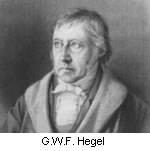
Similar to “vision is 20/20 in hindsight,” Hegel’s [wiki] poetic insight says that philosophers are impotent. Only after the end of an age can philosophers realize what it was about. And by then it’s too late to change things. It wasn’t until the time of Immanuel Kant (1724 – 1804) that the true nature of the Enlightenment was understood, and Kant did nothing to change the Enlightenment; he just consciously perpetuated it.

Marx (1818 – 1883) found Hegel’s apt description to be indicative of the problem with philosophy and responded, “the philosophers have only interpreted the world differently, what matters is to change it.”

8. “Who is also aware of the tremendous risk involved in faith – when he nevertheless makes the leap of faith – this [is] subjectivity … at its height.” – Søren Kierkegaard (1813 – 1855)
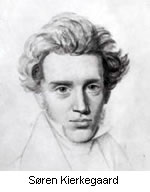
In a memorable scene from Indiana Jones and the Last Crusade, Indy deduced that the final step across his treacherous path was a leap of faith. And so it is in Kierkegaard’s [wiki] theory of stages of life.

The final stage, the religious stage, requires passionate, subjective belief rather than objective proof, in the paradoxical and the absurd. So, what’s the absurd? That which Christianity asks us to accept as true, that God became man born of a virgin, suffered, died and was resurrected.

Abraham was the ultimate “knight of faith” according to Kierkegaard. Without doubt there is no faith, and so in a state of “fear and trembling” Abraham was willing to break the universal moral law against murder by agreeing to kill his own son, Isaac. God rewarded Abraham’s faith by providing a ram in place of Isaac for the sacrifice. Faith has its rewards, but it isn’t rational. It’s beyond reason. As Blaise Pascal said, “The heart has its reason which reason does not know.”

9. “God is dead.” – Friedrich Nietzsche (1844 – 1900)
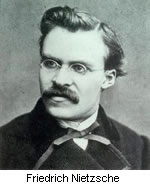
Well, you might not hear this one in a graduation speech, but you’ll probably hear it in college. Actually, Nietzsche [wiki] never issued this famous proclamation in his own voice but rather put the words in the mouth of a character he called the madman and later in the mouth of another character, Zarathustra.

Nevertheless, Nietzsche endorsed the words. “God is dead” is often mistaken as a statement of atheism. It is not, though Nietzsche himself was an atheist. “Dead” is metaphorical in this context, meaning belief in the God of Christianity is worn out, past its prime, and on the decline. God is lost as the center of life and the source of values. Nietzsche’s madman noted that himself came too soon. No doubt Nietzsche, too, thought he was ahead of his time in heralding this news.

10. “There is but one truly serious philosophical problem, and that is suicide.” – Albert Camus (1913 – 1960)
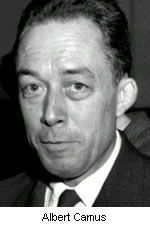
Camus’ [wiki] solution to the philosophical problem was to recognize and embrace life’s absurdity. Suicide, though, remains an option if the absurdity becomes too much. Indeed Camus’ own death in a car crash was ambiguous. Was it an accident or suicide?

For Camus, the absurd hero is Sisyphus, a man from Greek mythology who is condemned by the gods for eternity to roll up a stone up a hill only to have it fall back again as it reaches the top. For Camus, Sisyphus typified all human beings: we must find a meaning in a world that is unresponsive or even hostile to us. Sisyphus, Camus believed, affirms life, choosing to go back down the hill and push the rock again each time. Camus wrote: “The struggle itself toward the heights is enough to fill a man’s
heart. One must imagine Sisyphus happy.”

11. “One cannot step twice in the same river.” – Heraclitus (ca. 540 – ca. 480 BCE)
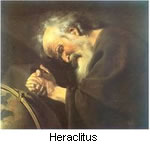
Heraclitus definitely isn’t alone here. His message was that reality is constantly changing it’s an ongoing process rather than a fixed and stable product. Buddhism shares a similar metaphysical view with the idea of annica, the claim that all reality is fleeting and impermanent.

In modern times Henri Bergson (1859 – 1941) described time as a process that is experienced. An hour waiting in line is different from an hour at play. Today contemporary physics lends credence to process philosophy with the realization that even apparently stable objects, like marble statues, are actually buzzing bunches of electrons and other subatomic particles deep down.

Bonus: Fake Your Way Through a Conversation (with Correct Pronunciation!)

If you fumble with a philosopher’s name, nothing you say afterward will sound credible. So, learn to pronounce these names correctly, then start worrying about their ideas.

(George) Berkeley is properly pronounced like Charles Barkley (bark-lee). This name is commonly mispronounced “burk-lee” like Berkeley, California, which, ironically, is named after George Berkeley.

(Friedrich) Nietzsche is commonly mispronounced as “nee-chee.” The correct pronunciation is “nee-ch-ya” and rhymes with “pleased ta meetchya.” “Pleased ta meetchya, Neechya.” Say it!

Lao-tzu (born ca. 604 BCE) is spelled several different ways in English transliteration from the Chinese. But no matter how you spell it, the proper way to pronounce it is “lau” (sounds like “ouch”)-“dsuh”. The stress goes on the first syllable.

(Charles Sanders) Pierce Peirce (1839 – 1914) is commonly mispronounced as “peer-s.” The correct pronunciation is “purse,” which is somewhat funny because Pierce Peirce rarely had a penny in his purse. Oddly, Pierce Peirce took his middle name, Sanders, as an anglicized form of Santiago, or “St. James,” in honor of a fellow pragmatist, William James (1842 – 1910), who helped him out financially.

(Ludwig) Wittgenstein (1889 – 1951) is a name that demands authentic German pronunciation, and there are plenty of ways to slaughter it. Here’s one that embodies all of them, “wit-jen-steen.” The correct pronunciation is “vit” (rhymes with bit)-“ghen” (rhymes with ken)-“shtine.” The first name is pronounced “lude-vig.” If you think it’s hard to pronounce his name, try reading his Tractatus.

___________

From mental_floss’ book Condensed Knowledge: A deliciously Irreverent Guide to Feeling Smart Again, published in Neatorama with permission.

[Update 3/15/07: Original article written by William Irwin, associate professor of philosophy at King's College in Wilkes-Barre, PA.]

Be sure to visit mental_floss‘ extremely entertaining website and blog!


Previous post
this post? Please Email this               
Next post


FUN PRODUCTS FROM THE NEATORAMA SHOP:


COMMENT

136 comments to "11 Most Important Philosophical Quotations."

  1. .....
    February 6th, 2007 at 3:04 am

    No John Locke?

  2. Chris
    February 6th, 2007 at 3:14 am

    I've always been fond of Wittgenstein's "Whereof one cannot speak, thereof one must be silent." Loosely interpreted, it's good advice even in non-philosophical contexts.

  3. terry
    February 6th, 2007 at 4:17 am

    Doesn't Wittgenstein's Tractatus propose that language shapes thought? I cannot think what I cannot say?

    Pronunciation Schmunciation!

    Understanding is the point!

  4. Louis
    February 6th, 2007 at 7:39 am

    Kierkegaard is pronounced Keer-keh-gore, (silent -d) or there abouts.

  5. anonymous idiot
    February 6th, 2007 at 10:18 am

    I’ve always been fond of Wittgenstein’s “Whereof one cannot speak, thereof one must be silent.”

    Or, in plain English "STFU & GBTW"

  6. Peter
    February 6th, 2007 at 10:43 am

    Hmmm. All white males. What a suprise.

    Nagarjuna takes a crap over all of these guys.

  7. jeem
    February 6th, 2007 at 10:47 am

    How could you leave out the correct way to pronounce Albert Camus? al-bair kay-moo Say "albirt kamis" and you're sure to be dismissed as a rube.

  8. rolandog
    February 6th, 2007 at 10:59 am

    These are some of my favorites.

    *Art Blakey:
    --"Opinions are like assholes... everyone's got one."

    *Voltaire:
    --"A witty saying proves nothing."

  9. Mike
    February 6th, 2007 at 11:16 am

    "If a tree falls in the forest and no one is there to hear it, does it make a sound?”

    I don't think it does. It generates waves which have the potential to become a sound but only if they hit a tympanic membrane.

    Without an ear, the tree simply pushes around some air.

  10. Monster
    February 6th, 2007 at 11:21 am

    "The ultimate irony of Ockham’s razor may be that some have used it to prove God is unnecessary to the explanation of the universe, an idea Ockham the Franciscan priest would reject."

    Let's see, the universe came into being billions of years ago from a single atom, which slowly but surely expanded into the universe as we know it. Somewhere along the way, space dust formed into what we now call Earth. At one point microbes simpler in function than even the simplest single-celled organism we can observe today somehow formed, and over millions of years accidentally formed into fish, which eventually grew appendages (and rudimentary lungs) that allowed them to flop onto land. Add a few more millions of years and eventually that organism grew into all the biological life forms we know today.

    Or, God made it all.

    Somehow I doubt anyone can honestly say Ockham's Razor proves the first belief over the second.

  11. Seamus
    February 6th, 2007 at 11:31 am

    Nietsche is not pronounced "Nee-ch-ya"
    but rather " NeeTchUh"
    ...thought you might want to know that.
    Of course, opinions and regional accents vary and apply.

    Great article - thanks.

  12. Jorge
    February 6th, 2007 at 11:35 am

    Douglas Adams: Zaphod: 'I could really -be- in this cave. Ford Prefect: 'Zaphod, you -are- in this cave!'

  13. raincoaster
    February 6th, 2007 at 11:42 am

    I've always liked Camus', "It is the obligation of the intelligent to oppress the stupid, otherwise they will take over the world."

  14. J Bone
    February 6th, 2007 at 11:49 am

    It's important to remember, when putting any filosophikal weight onto Camus's death, that he was the passenger and not the driver of the little red sports car.

  15. Lea
    February 6th, 2007 at 11:52 am

    Pronunciation isn't the important part at all. They're all dead old white men; who cares if we get their names right? So long as we try to understand their ideas, they would be more than pleased.

  16. Bill
    February 6th, 2007 at 12:17 pm

    "Yeah mom.. this is Socrates Johnson... Dennis Frood... and uh... uh...Abe Lincoln..."

    - Bill from "Bill and Ted's Excellent Adventure"

    Socrates above was pronounced "So Crates" :-)

  17. Seamus
    February 6th, 2007 at 12:23 pm

    Lea,
    Opinions and regional accents vary and apply.

    But you're right - its only ideas that count.

  18. Bryan
    February 6th, 2007 at 12:56 pm

    The explanation of "God is dead" is wrong. With Heidegger, Nietzsche brought phenomenology to philosophy, the notion that things can only be understood as processes not merely existing, but 'becoming'. The religious metaphor was to imply that belief in static objects and absolute ideals had had its day.

  19. JohnD
    February 6th, 2007 at 1:02 pm

    "God is Dead." - Freidriche Nietzche

    Nietzche is dead (d. Aug. 25, 1900, according to wiki)

    Seems to me God may have had the last word here.

  20. Denita TwoDragons
    February 6th, 2007 at 1:13 pm

    *bursts out into song* IIIIIIIIIIIImmanuel Kan was a real p*ssant, who was very rarely stable. Heidegger, Heidegger was a boozy beggar who could think you under the table...

    *runs away singing at the top of her lungs...*

    --TwoDragons

  21. Mister Electricity
    February 6th, 2007 at 1:58 pm

    "Man is a self-centered brute that will seek his own gain regardless of the cost to others"

    ---Thomas Hobbes....sometime long ago

  22. johnnygoner
    February 6th, 2007 at 2:25 pm

    Yes, most important WESTERN philosophical quotations -- interesting how easily we ignore the profound contributions to philosophy of Arabs, Persians, Indians, Chinese, Japanese and every other culture. Dogen, Nagarjuna, Confucius, Mencius, Ibn Arabi, Avicenna, and on and on. The West would not have had the Renaissance or the Age of Reason without Africans, Arabs and Turks -- many of these quotations would never had been made.
    Wake up to the world!

  23. Chris
    February 6th, 2007 at 2:31 pm

    Doesn’t Wittgenstein’s Tractatus propose that language shapes thought? I cannot think what I cannot say?

    His point was that the physical world has a logical structure that our thought and language should reflect. That we should recognize the limits of logic, and not overstep those bounds.

  24. Amused Philosopher
    February 6th, 2007 at 2:56 pm

    Blah. I've said more important things whilst drunk.

  25. Tim
    February 6th, 2007 at 3:53 pm

    I'm too drunk to taste this chicken. -- Col. Sanders.

  26. D2theMcV
    February 6th, 2007 at 4:01 pm

    I'm surprised they left out "When the going gets weird, the weird turn pro."

    Hunter S. Thompson
    (pronounced hun-ter ess tomp-sun)

  27. Nevele
    February 6th, 2007 at 4:30 pm

    I have always enjoyed MArk Twain quotations.

    To name a few:

    - Truth is more of a stranger than fiction. Fiction is obliged to stick to possibilities. Truth isn't.

    - Always do right. This will gratify some people and astonish the rest.

    - If you pick up a starving dog and make him prosperous, he will not bite you. This is the principal difference between a dog and a man.

    - Whenever you find that you are on the side of the majority, it is time to pause and reflect.

    And my all time favourite:

    - I thoroughly disapprove of duels. If a man should challenge me, I would take him kindly and forgivingly by the hand and lead him to a quiet place and kill him.

  28. Albert R. Wechsler
    February 6th, 2007 at 5:22 pm

    My version: "The truth shall meke you free, but not necessarily happy."
    Keep up the good work

  29. Spencer
    February 6th, 2007 at 5:58 pm

    Thanks for that comment, johnnygoner.

  30. Chris
    February 6th, 2007 at 7:14 pm

    Another pronunciation is Immanuel Kant (kahnt) not (cant).

  31. Fake
    February 6th, 2007 at 7:25 pm

    Number 6 is the most arrogant thing I've ever heard and should not be on there. Plus the guy looks like he paid someone to write it for him.

  32. michael
    February 6th, 2007 at 7:26 pm

    I completely agree with monster.

    I've always thought of Ockham's razor as a supporting argument for the existence of God, not an atheistic worldview. The theory of evolution clearly breaks the law of thermodynamics and could not be considered the simplest theory by any means- any credible scientist will tell you that if evolution in fact did happen, the odds against it are one in a billion and is certainly *not* the simplest answer to how our universe began.

  33. Bartedous
    February 6th, 2007 at 7:39 pm

    Who said: "If God did not exist we would find it necessary to invent Him."?

  34. Mike Jones
    February 6th, 2007 at 7:40 pm

    I think Heraclitus' quote is elegant, but it could be more so; Heraclitus is also noted for saying 'Panta Rhei', it's greek and means "Everything changes." It has the same poetic denotation as his previously mentioned quote, but this version is quicker and catchier!

  35. Mike Jones
    February 6th, 2007 at 7:52 pm

    @Michael And Monster
    Evolution has far too much evidence to completely discount the idea. I say this a trained biologist. You say that the odds against evolution are too staggering to believe? but I'd argue that the nature of any nucleotide molecule is self-preservation. If you could make our world over and over again, any RNA molecule you put on the planet will evolve in to life. We are just the inherent outcome of one of the simplest chemicals around - who could design such a beautifully simple system? G_d?

  36. Joseph Hutchison
    February 6th, 2007 at 7:54 pm

    Curious. All these quotations spring from within (roughly) a 1,000 mile radius of Prague. Can "The 11 Most Important Philosophical Quotations" really be traced to such a small area? Or is this an indication of some sort of, well...bias?

  37. Jordan Dimov
    February 6th, 2007 at 7:58 pm

    These guys clearly had nothing better to do with their life.

    1. "The unexamined life is not worth living". Totally useless statement. No life can ever be lived without being examined. Every moment of existance adds upon All That Is and enhances it.

    2. "Entities should not be multiplied unnecessarily " And who are you to say, exactly? Entities get multiplied. That's what entities do, like it or not. Screw you.

    3. "The life of man is solitary, poor, nasty, brutish, and short." Uhmmm.... ok?? Loser?? Why did u even live???

    4. "I think therefore I am" This might have something to it. I dunno. It's a self-confusing statement. I'd much rather just say "I am and I love it".

    5. "To be is to be perceived" Yea. No need to worry about that.

    6. "We live in the best of all possible worlds." Abso-fuckin-lutely, my man! But not because of all that "sufficient reason" bullshit. Just because we all live on the cutting edge of existnece, and it always just gets better and better, and everything is better now than it has EVER been. Anyone who's not seeing this is clearly not seeing clearly. Sure, the media would have you believe we live in hell right now, with wars and poverty and everything, but that is just not true. We live in paradies, and life in the universe has NEVER been better than right now, right here.

    7. "The owl of Minerva spreads its wings only with the falling of the dusk." Why would you ever want to change anything anyway? I mean... We LIVE in change.

    8. "Who is also aware of the tremendous risk involved in faith -- when he nevertheless makes the leap of faith -- this is subjectivity... at its height". There is never a risk. Because nothing really bad can ever happen. Nothing really bad HAS ever happened.

    9. "God is dead". No one ever really dies.

    10. "There is but one truly serious philosophical problem, and that is suicide." Yea, that's a bit of a bummer. But it's not all that bad, really. It's just a system reboot. Annoying, to be sure, but every once in a while some dim wit does it.

    11. "One cannot step twice in the same river". Now we're talking. A-man, brother.

  38. tim
    February 6th, 2007 at 8:05 pm

    never noticed how many philosophers had big noses...

  39. James
    February 6th, 2007 at 8:23 pm

    Michael, I have some news for you about these things that you state as being unequivocally true. Actually, there are two things I want you to know.

    First, you do not understand entropy (which you are undoubtedly referring to when you say 'the law of thermodynamics'). It's the second law of thermo, by the way. Yes, there is more than one.

    The second thing you must know is that when you make arguments based on things that you haven't studied (thermodynamics) but others (me, others) have, you cannot begin to convince your opponent or the greater audience. Take awhile and learn about evolution and thermodynamics. If you do so and still maintain your viewpoint, then try again and you will at least make a coherent argument.

  40. Scott Delaney
    February 6th, 2007 at 8:42 pm

    @Bartedous

    That'd be Voltaire.

  41. Trat For
    February 6th, 2007 at 9:05 pm

    This is all true to the word

  42. Bjørn Magnus Mathisen
    February 6th, 2007 at 9:15 pm

    My #1, Immanuel Kant...from his tomb:
    "Two things fill the mind with ever new and increasing admiration and awe, the more often and steadily we reflect upon them: the starry heavens above me and the moral law within me."

  43. Intellectual Soup
    February 6th, 2007 at 9:27 pm

    Voltaire was one of my favourite, I believe he was house imprisoned by the Vatican for defying 'Godly Rules' and for debating the existence of God. The Pope even went to his house and had lunch with Voltaire on mutiple occasions, and at one point a high ranking bishop for the Vatican even told him "The people are not ready for the inexistance of god"

  44. Josh H
    February 6th, 2007 at 9:27 pm

    Commenter #37 is, if not a fucking retard, then a pretty passable satirist. If any of you guys actually read his shit all the way through and thought "hey, he's right," well, let me explain a few things.

    1) Examine your own life. Think about what you are doing, where you are going. That's the point. RTFA.

    3) This is the "natural state," without all the things that keep people in check, like governments. Although I can't say I agree. RTFA.

    4) If this confuses you, then by Descartes' logic, you clearly are not.

    6) Do you ever get a nosebleed? On your high horse? You over-privileged snot. Go read something, anything, by or about Siddhartha Gautama, and *then* tell me how you feel about existence. After you come down. From the MDMA.

    7) There's a big difference between transition between one state of being and another, and simple change. Hint: one is important.

    8) The risk in question is the risk of losing all objectivity.

    You've got a brain, don't be afraid to use it.

  45. Ignat Drozdov
    February 6th, 2007 at 9:48 pm

    L. Wittgenstein also said: "I don't know why we are here, but I am fairly certain it is not to enjoy ourselves." I thought that would have made the list...

  46. Jon
    February 6th, 2007 at 11:11 pm

    Just wanted to agree with a comment above. Nietzsche is pronounced Neat-chuh. No y sound. So it would be more like.. Nice to meetcha, Nietzsche.

  47. Nick
    February 6th, 2007 at 11:13 pm

    I have a homemade poster of Wittgenstein which shows his portrait and under it is the "whereof/thereof" quote.

  48. michael g
    February 6th, 2007 at 11:40 pm

    to Ignat (and L. Wittgenstein) and anyone else asking that question:
    Love, liberty, and the pursuit of God.

  49. anonymous
    February 7th, 2007 at 12:00 am

    What, no Aristotle?

    Excellence is a habit.
    Virtue is a mean.

    Dear is Plato, Dearer still is truth.

  50. Caboose Moose
    February 7th, 2007 at 12:17 am

    @10 and 32

    Ockham's razor is a suggestion about explanatory redundancy which seems to have passed you both by. It tells us to postulate entities only in so far as they are required for explanation. The postulation of the supernatural endowed with limitless power is both an extra entity and an empty one, since it does not in fact present a mechanism for explanation, it merely dismisses explanation, for omnipotence has no bounds and an infinity of mechanisms could be employed, rendering any one particular mechanism meaningless. Physics, chemistry and the modern synthesis are mechanisms by which the entities we seek to explain, namely the organisms of the biosphere, in fact explain themselves, without the postulation of the extra divine entity.

    And no, evolution doesn't violate entropy. You want a list of how many self-organized local examples of order the universe holds while continually either maintaining or gaining entropy? Think about it, there are a great many.

  51. Jake
    February 7th, 2007 at 12:52 am

    Heh, mention Nietzsche but not one of his greatest influences. For he states, "Dostoevsky was the only psychologist from whom I had anything to learn: he belongs to the happiest windfalls of my life, happier even than the discovery of Stendhal."

    "Verily, Verily, I say unto you, Except a corn of wheat fall into the ground and die, it abideth alone: but if it die, it bringeth forth much fruit."

  52. Am I cheating when I say...
    February 7th, 2007 at 1:19 am

    that there are just so many opinions? I am astonished that science has been unable to figure this all out in a suitable manner, have you ever seen them smart kids with numbers?

    And no matter, them just working. That, if someone should figure out some answer? That, the chances? That, we are all going to come to some agreement. On That. Is t before we off each other or we die? Seems very unlikely. And did I mention that guy is earning a living? And his feet stink?

    What we may do and do. What is happening is hard to describe.

    Kierkegaard was not real either.

  53. Atash
    February 7th, 2007 at 1:41 am

    The author does not seem to be very familiar with philosophy. Worse, (s)he seems to have an agenda. Friedrich Neitzsche was not a Christian, but I can't imagine what the evidence was that he was in fact atheistic--particularly since his writing is rather rich in seemingly reverend references to God (his concept of God). The whole point of Also Sprach Zarathustra was to write down his ideas in a cryptic form so that only those who were "worthy" would understand them.

    "It is hard to be understood, especially when one thinks and lives gangasrotogati among men who think and live kurmagati, or at best "the way frogs walk," mandeikagati - I do try to make myself hard to understand!"

    "Didn't people have to sacrifice God himself and, out of cruelty against themselves, worship stone, stupidity, gravity, fate, nothingness?" (the context is not one of approval)

    "The possibility of an apparent existence of the subject, hence "the soul," might not have always been alien to him—that thought which, as Vedanta philosophy, was once present with enormous power on earth."

    (quotes taken from "Beyond Good and Evil").

    (The good news is that God exists; the bad news is that YOU don't--there's no "self").

    Nietzsche also pretty thoroughly demolished Descartes. Nietzsche read Indian philosophy. The correct inferrence is "thinking is going on, therefor, thinking is going on", and you can stop right there. As Nietzsche and others have pointed out, the "I" just pops into existence according to the rules of grammer!

  54. 化工网
    February 7th, 2007 at 2:27 am

    to Ignat (and L. Wittgenstein) and anyone else asking that question:
    Love, liberty, and the pursuit of God.

  55. Unimpressed
    February 7th, 2007 at 2:31 am

    You've got Nietzsche but nothing from Aquinas, I gotta say it's a pretty pathetic list. It might be better titled "11 philosophical quotes which I fancy".

  56. Michael
    February 7th, 2007 at 3:07 am

    I only agree with the quotes of Socrates, Kierkegaard and Nietzsche. Bull that we live in the best possible world or that to be is to be perceived.

  57. Passenger
    February 7th, 2007 at 3:26 am

    "God is dead but his corpse is stinking"
    Michel Onfray, french philosopher in "traité d'athéologie"

  58. Trey Philips
    February 7th, 2007 at 3:30 am

    Yeah, this is a mediocre list, and certainly out of order. There are much better ways to put these in context, but I'm glad you at least thought of making such a list. Also, I'm amazed you didn't put the most commonly mispronounced name in there - Descartes.

  59. Passenger
    February 7th, 2007 at 3:41 am

    René Descartes, pronounced :day-cart.
    I'm french.
    "“Nothing is more fairly distributed than common sense: no one thinks he needs more of it than he already has”
    the more used quote. In french : "le bon sens est la chose du monde la mieux partagée"

  60. Robert Nozick
    February 7th, 2007 at 4:21 am

    [[[ FOR TEH WIN! ]]]

    Treating us with respect by respecting our rights, it [the minimal state] allows us, individually or with whom we choose, to choose our life and to realize our ends and our conception of ourselves, insofar as we can, aided by the voluntary cooperation of other individuals possessing the same dignity. How dare any state or group of individuals do more.

  61. Robert Nozick
    February 7th, 2007 at 4:21 am

    ...

    OR LESS.

  62. MisterTrilby
    February 7th, 2007 at 6:02 am

    Re: Ockham's razor. God is *not* a simpler explanation for the origin of life and the universe than the big bang. The big bang was a simple event, perhaps caused by the random quantum leap of a single particle. The precise cause is unknown, of course, but that doesn't automatically mean that the god hypothesis is correct simply because it's an alternative theory! What followed the big bang is a *series* of events - expansion, gravitational accretion, evolution, etc, which are all incremental, simple events, dictated by the blind actions of extremely small particles behaving in simple ways that have a larger, more profound effect. To say that Ockham's razor proves God is a ridiculous misreading: because a God would require a more complex explanation for its origins than the universe itself.

  63. Email a Psychic
    February 7th, 2007 at 6:04 am

    cooooooool

  64. Peter
    February 7th, 2007 at 8:53 am

    Spinoza.

    God did not create the universe - God *is* the universe.

  65. NeverMind
    February 7th, 2007 at 9:05 am

    "Better a foolish wit than a witty fool."

    Will Shakespeare

  66. Crazydiamond
    February 7th, 2007 at 9:31 am

    " my time has not come,
    some men are born posthumously"

    Nietzsche.

  67. gosh
    February 7th, 2007 at 10:42 am

    I want to echo those who mentioned that this list is limited to dead white men of European descent. As such, they represent a sort of inbred intellectualism that scarely rises to the level of "most important".

    If it wasn't for the so called "Arabic numbers" being brought to Europe from theisticIndia, along with the concept of Zero, modern science wouldn't even have entered into European life. Suppose you want to have another list, try multiplying XI by II.

    Of course, it was nice to see that, inevitably. some Eastern philosophy creep in.

    How about:

    12."Om" - Krishna

  68. Andrew
    February 7th, 2007 at 10:49 am

    What no Bill Hicks, the greatest philoshoper of all time

  69. nullifidian
    February 7th, 2007 at 11:00 am

    I was suprised not to see "sapere aude" in there.

  70. Kristin
    February 7th, 2007 at 11:34 am

    I'm surprised that Bertrand Russell, one of the greatest mathematicians and philosophers of modern time was not mentioned at all. For shame! If one has studied philosophy at all, they should be aware of his existence and theories.

  71. Brian
    February 7th, 2007 at 11:42 am

    Missing Sartre: Man is condemned to be free.

  72. Wang Tan
    February 7th, 2007 at 11:45 am

    “I think therefore I am”

    If I'm pink am I spam ?

    No Matter where I go "There I am"

    Was there realy the "Big Bang"?

    Hard to tell truth from slang.

    Got to go the phone just rang.

  73. Bithead
    February 7th, 2007 at 11:45 am

    The list will be different for every one.

    As for "the unexamined life is not worth living", well, logically, for all people to live together in peace, all life must have equal value. Otherwise, all harm against humanity is justifiable.

    If people learn to think logically, the need for philosophers to help them determine what to do in any given situation fades considerably. They learn to think logically for them selves.

  74. LA
    February 7th, 2007 at 1:58 pm

    Bertrand Russell? While a talented mathematician, his philosophical work is pointless. More importatnt would be Martin Heidegger who has had a tremendous impact on how we view the world in which we live. (And I say this as a PhD philosophy student.)

  75. Harbinger
    February 7th, 2007 at 2:08 pm

    # Peter Says:
    February 6th, 2007 at 10:43 am

    Hmmm. All white males. What a suprise.

    Does this criticism make their ideas any less valid?
    Lets censure the white philosophers?

    I'll take Surak of Vulcan over your *Nagarjuna* any day.

  76. Samuel
    February 7th, 2007 at 2:24 pm

    I'm afraid it's hard to imagine any list of important philosophical quotes from our current perspective without,

    "Existence precedes essence." - Jean Paul Sartre

  77. Dale
    February 7th, 2007 at 3:20 pm

    Correction: "The heart has its reasons, which reason does not know."

  78. Raristotle
    February 7th, 2007 at 3:32 pm

    My favorite philosopher's quote (from the very quotable) Aristotle, "All men, by nature, desire to know." It's the first line his Metaphysics.

    Also, from the Nicomachean Ethics, "We are what we repeatedly do. Excellence, then, is not an act but a habit."

  79. Michiel
    February 7th, 2007 at 3:48 pm

    Hey webmasters, where's David Hume?!

    “Generally speaking, the errors in religion are dangerous; those in philosophy only ridiculous”
    =================================================
    Seamus said: (comment #11)
    Nietsche is not pronounced “Nee-ch-ya”
    but rather ” NeeTchUh”

    Seamus is right.

    And Rene Descartes
    was a drunken fart
    I drink
    therefore I am

  80. Nasorenga
    February 7th, 2007 at 4:00 pm

    You got the pronunciation of Ludwig (Wittgenstein) wrong.
    The final 'g' is pronounced as a voiceless palatal fricative, represented as [ç] in IPA (http://en.wikipedia.org/wiki/International_Phonetic_Alphabet).
    It's the same final sound as in the German word "ich", similar to initial sound in the way some speakers pronounce the English word "huge"

  81. S.A.H.
    February 7th, 2007 at 4:05 pm

    FYI: You spelled Peirce incorrectly. It's PEIRCE, not Pierce, which is ironic, given you try to correct peoples' pronunciation of his name.

  82. Alex
    February 7th, 2007 at 4:28 pm

    Thanks S.A.H.! That's my typo, it was spelled correctly in the original mental_floss article.

    I had fun reading everyone's take on this. There are plenty of great quotations from the digg , reddit and fark link to this article.

  83. KT
    February 7th, 2007 at 5:35 pm

    'A slow sort of country!' said the Queen. 'Now, HERE, you see, it takes all the running YOU can do, to keep in the same place. If you want to get somewhere else, you must run at least twice as fast as that!'

    Lewis Carroll.

  84. ChrisMMM
    February 7th, 2007 at 6:54 pm

    No Twain!!! No Ambrose Bierce?!!!

    "May God overlook you" - AB

  85. Golfer
    February 7th, 2007 at 7:23 pm

    The Pronounciation of Nietzsche is wrong. A german "sche" is NOT (and never!) pronounced like ch-ya. It's pronounce like shed without the d.

  86. CW
    February 7th, 2007 at 9:24 pm

    I think,
    therefore I am. => I act,
    therefore I am. => I will,
    therefore I AM.

    Rene DesCartes walks into a bar and the bartender says, "Having the usual today, Mr. DesCartes?"

    "Mmm, I think not," says DesCartes, and disappears.

  87. briggs
    February 7th, 2007 at 9:40 pm

    Hey, LA--Being a phd student in philosophy if anything makes one less qualified to comment on the validity and relevance of ideas. And as proof: only some dink getting a phd in philosophy would try to argue that nazi scum Heidegger had any important impact on "the way we view the world in which we live." Maybe an important impact on how dweebs who can't get laid see the world, but that is hardly "we" now.

  88. JC/panther house
    February 8th, 2007 at 2:19 am

    Add Spinoza right away, please

  89. Zaki
    February 8th, 2007 at 3:05 am

    “We live in the best of all possible worlds.” – Gottfried Wilhelm Leibniz (1646 – 1716)
    “We live in the worst of all possible worlds,and if it gets a little bit worse,it could not exist.”-Voltaire (1694 - 1778)
    “If God did not exist, it would be necessary to invent him.”- Voltaire (1694 - 1778)
    Voltaire was a "deist"--he was not an atheist, but he believed that God was an organizer, or a clockmaker, and that, after organizing the world and creating certain natural laws, he allowed it to run by itself.

  90. Zaki
    February 8th, 2007 at 3:20 am

    "He who loves God cannot endeavor that God should love him in return." Baruch Spinoza (1632 - 1677), The Ethics
    "Blessed are the weak who think that they are good because they have no claws."
    Baruch Spinoza (1632 - 1677)

    Spinoza was born in Amsterdam of Portuguese-Jewish parents. His character and circumstances were equally important to his philosophy, but he was almost the direct opposite of Leibniz. He was the heretic. When he was twenty-four, he was expelled from the Jewish community of his birth on account of his "abominable heresies." Later, the Christian authorities got in on the action and called him the vilest thing hell ever vomited on earth. On top of which, they pointed out, he was Jew.

    There was something very rebellious in Spinoza, a fiery rejection of authority. At the same time, like some other heretics and infidels, he had the character of a true believer. He sacrificed everything in the pursuit of his philosophical vision. He was the perfect revolutionary, just as Leibniz was in a sense the consummate conservative.

    Leibniz was heavily invested in the idea of a transcendent God—one who stands outside and before the world and creates it.
    Spinoza's idea was of an immanent God—that is, a God who is identical with the world or nature itself.

    Leibniz himself was a Spinozist of sorts, but he couldn't bring himself to believe that Spinoza's God was divine. An immanent or Nature God, he thought, wasn't a God at all. All of which left Leibniz—and God—in something of a pickle. He spent the rest of his life rehearsing the argument with Spinoza in his head, trying to squash his own inner Spinozist.

    Because in Leibniz's view Spinoza's God was the worst of all possible Gods. Spinoza's God, as Leibniz saw it, is just a giant machine, utterly indifferent to the wants and needs of we little people. It doesn't think, eat, smell, or want anything; it isn't good or bad; it just is. Spinoza thought nature was divine; Leibniz didn't; and that was the real difference between them.

    There is an element of tragedy in the stories of both thinkers. Leibniz was almost comically vain, greedy, and ambitious. He was the kind of man who is always angling for a better job, a fancier title, and more pay. At one point, he was holding down five jobs—and didn't bother to tell his various employers that he was moonlighting for the others. At the end of his life, his superiors finally got fed up with him, and his career took a nosedive. Not tragedy exactly, but more like farce. At the same time, there was something deeply honorable and sincere in everything Leibniz did. He really did want to make the world a better place. Unfortunately he believed that the way to do this was to re-create the unified religious and political order of the Middle Ages. Leibniz's life was a Don Quixote-style tragicomedy. He dedicated himself entirely to a project that, however virtuous in its conception, in the end amounted to nothing but vapors.

    Spinoza lived and died in relatively tragic circumstances. He lived under constant threat of persecution, and he died young of lung disease that was arguably exacerbated by the lens-grinding work he was forced to take on. His "flaw" was his arrogance, his almost clinical level of self-sufficiency. Or maybe it was his complete inability to understand how other people just couldn't or wouldn't see things his way. He ended up a "tragic hero" of sorts—he sacrificed himself for the sake of helping establishing the modern, liberal, secular world order in which, by and large, we live today.

  91. T
    February 8th, 2007 at 7:59 am

    Immanual Kant was a real pissant
    Who was very rarely stable

    Heidegger, Heidegger was a boozy beggar
    Who could think you under the table

    David Hume could out consume
    Schopenhauer and Hegel

    And Wittgenstein was a beery swine
    Who was just as schloshed as Schlegel

    There's nothing Nietzche couldn't teach ya
    'Bout the raising of the wrist
    Socrates, himself, was permanently pissed

    John Stuart Mill, of his own free will
    On half a pint of shandy was particularly ill

    Plato they say, could stick it away
    Half a crate of whiskey every day

    Aristotle, Aristotle was a bugger for the bottle
    Hobbes was fond of his dram

    And Rene' Descartes was a drunken fart
    "I drink, therefore I am"

    Yes, Socrates, himself, is particularly missed
    A lovely little thinker
    But a bugger when he's pissed

  92. matware
    February 8th, 2007 at 8:09 am

    I like Einstein's version better than Occam.
    "Things should be as simple as possible, but no simpler"

  93. D
    February 8th, 2007 at 10:13 am

    "None are so hopelessly enslaved as those who falsely believe they are free." - Goethe

  94. B Quinn
    February 8th, 2007 at 10:20 am

    (Illustrating the distaff point of view): If a man is alone in the forest speaking, is he still wrong?

  95. Valmir
    February 8th, 2007 at 6:14 pm

    Friedrich Nietzsche (1844 – 1900)
    is very good writer,i love him but i have to say one thing god is not dad....but we live in fucking world

  96. Ghreti Ghoti
    February 8th, 2007 at 8:34 pm

    I thought Bertrand Russell nailed it when he said, "The trouble with the world is that the stupid people are cocksure while the intelligent ones are full of doubt."

  97. Mr T
    February 9th, 2007 at 4:06 am

    Who the **** is Nagarjuna?
    Here is one for all of you "Life sucks, and then you die!
    but in the meanwhile you gotta pay your taxes", first phrase author unknown, second part Me.
    You are not going to find self actualization by quoting filosophers, discover something, write a book, find the GUT, then well talk.

  98. steve
    February 9th, 2007 at 5:46 pm

    So what is it exactly that makes these quotes the 11 most important? I certainly get that they're important, at least as far as a history of philosophy is concerned, but what makes Leibniz's best of all possible worlds particularly "important"? It's important to his philosophy, and to Voltaire, but how does it really merit its inclusion here? This whole list seems peculiarly unargued for one concerning philosophy.

  99. Picuris
    February 10th, 2007 at 10:08 pm

    Life and death make no difference; only the transition resounds.

  100. Keith
    February 12th, 2007 at 11:18 am

    Good discussion!
    I simplify:

    If you don't use your head, you might as well have two as*es. -My Father-

  101. Kayleigh
    February 12th, 2007 at 5:47 pm

    'Fascism is not defined by the number of its victims, but by the way it kills them'. - Satre

    'Hell is other people' - Satre

    ' One is still what one is going to cease to be and already what one is going to become. One lives one's death, one dies one's life'. - Satre

    'Society cares for the individual only so far as he is profitable'. - Beauvoir

  102. Aaron
    February 12th, 2007 at 11:57 pm

    Language is not transparent

  103. Jordan
    February 13th, 2007 at 11:35 pm

    A man said to the universe:
    "Sir I exist!"
    "However," replied the universe,
    "The fact has not created in me
    A sense of obligation."

    -- Stephen Crane

    Also, I so enjoyed reading your discussions!

  104. The third Ennis
    February 15th, 2007 at 2:05 am

    This one came when my friends and I where talking about the X-files

    The truth is there is a truth
    if it wasn't the truth would be there is no truth

    it's a paradox see

  105. Gern Blansten
    February 16th, 2007 at 12:35 pm

    To #31-
    #6 isn't full of anything but indignation that this is primarily a list of western philosophers. Consider the Hindu chaps that sussed the true nature of matter dozens of centuries ago, better than any Grecian attempts, without the benefit of particle accelerators. The full impact of that brought some nuclear physicists to convert to Hinduism. Also, while our philosophical systems have been concerned largely with splitting and defining the static, many in the East have devoted themselves to defining systems in flux. No less valid. Defining volleyballness is valuable, but so is understanding where the ball is headed. Feel free to flame, just my 2 cents.

  106. Gern Blansten
    February 16th, 2007 at 12:38 pm

    And for those that still don't know how to use a search engine, Nagarjuna:
    http://en.wikipedia.org/wiki/Nagarjuna

  107. Mason Jahre
    February 16th, 2007 at 4:26 pm

    Predictable and sad. No Lesbian philosophers.

  108. Mason Jahre
    February 16th, 2007 at 4:27 pm

    Oops! I guess I should have typed lysbian. Apparently even the word can't be mentioned.

  109. Jackie
    February 17th, 2007 at 9:48 am

    Last word from a native speaker of German: Vit-ken-stine. Emphasis on the first syllable.

  110. Anonymous
    February 18th, 2007 at 1:24 am

    Hey, James (comment #39), why don't you drop the ad homonim. If you want to interact with someone's arguments, then interact with his arguments, don't just sit there and say, "I've studied this and you haven't, so there". That proves nothing except that you're a stuck up jerk. Why don't we try to respect each other and interact with our arguments instead of blasting each other all the time (and I'm talking about any time Christians and Atheists debate). There's plenty of blame to go on both sides. Being a biologist or some other form of scientist does not necessarily make what you say true.

    Where's our respect for people?

  111. OGRastamon
    February 20th, 2007 at 4:33 am

    Mike said:
    Without an ear, the tree simply pushes around some air.

    Your argument relies on a flawed, or rather limited, definition of sound. The air to which you refer is also known as sound waves. These waves maintain all properties regardless of whether an ear is present to perceive them. This holds for all things. An apple reflects red light without an eye to see. Ice feels cold without fingers to touch. Some will argue that some eyes cannot perceive the red of an apple or that should a being exist whose body temperature was below 0 degrees celsius it would not perceive the ice as cold. Nevertheless, whatever properties which can be perceived by a being exist whether or not the being is present to perceive.
    The true meaning of the tree problem, and possibly Berkeley's quote as well, is that humanity is subjective. We only believe in that which we can perceive.

  112. jj
    February 21st, 2007 at 1:09 pm

    "Hell is other people". - Sartre

    How did this not make the list?

  113. bored
    February 24th, 2007 at 11:19 am

    #111:

    A sound wave is not a sound; at least as I perceive it, that is in accordance with the definition of the word "sound" that Mike was using (and quite probably the one which was being used in the quote in question). In other words a sound *is* a perception--which I would agree is a "limited" definition of sound (not a flawed one however), which is, after all, the whole point. Mike was correct: without an ear, there would be sound waves but no sound.

  114. bored
    February 24th, 2007 at 5:56 pm

    Oh, and by the way, since it seems to be fashionable to whine about the fact that some particular marginalized group or another is not recognized by this list, I would like to say...*WHAT?* No heavily tattooed, weed-smoking, Hell's Angels philosophers? How typical! Not surprising in the least. And while we're on the subject, you also failed to include any bald philosophers or quadraplegic philosophers--and what about my favorite under-represented minority, the philosopher who eats pasta at every meal? They always get the short stick! So it's not shocking to me that you should overlook them as well...but it is sad, quite sad.

  115. bored
    February 24th, 2007 at 6:08 pm

    #95:

    Valmir, God does, at least in the Bible, call Himself "Father," and Jesus once addressed Him as "Abba," which means "Daddy" in Aramaic. So I'm left wondering how you can be so certain as to make a statement like "God is not dad." I could understand if you said, "Dad is not God." That would make sense, but to say "God is not dad" seems a little presumptious on your part.

  116. Terry Ortiz
    February 26th, 2007 at 7:45 am

    Where's Edmund Husserl? You seriously need Husserl's question of consciousness. Consciousness is intentional or every consciousness is consciousness *of* something. He formalized an alternative to Descartes cogito and the objectivistic thinking of the empiricists.

    If you'd like to throw some more of the explicitly phenomenological thinkers like Heidegger and the existentialists like Camus, don't forget the questions that lead up to them. Then of course, we'd have to add the other Pre-Socratics, the Stoics, St. Augustine, Aquinas, John Locke, and so on...

    At least Immanuel Kant would've been there. That naughty Prussian created more problems than anyone would care to name. :D (Well maybe with the exception of Mr. Plato.)

    The worst thing you can do is come up with a list of most important philosophers because the other philosophers can't agree with whom to add!

    And I second Michiel's request to add Hume.

  117. Terry Ortiz
    February 26th, 2007 at 7:56 am

    Umm...and now for something not completely different: A Kierkegaard on a pogo stick.*

    *Pictured not leaping.

  118. bored
    February 28th, 2007 at 5:56 pm

    Kierkegaard: "The crowd is untruth." You're all a bunch of liars...but I'm not. And neither are you. That was fun!

  119. biotails
    March 7th, 2007 at 2:49 pm

    here are a few recent ones:
    "Whenever there are two groups of people that really hate each other, chances are that they're wearing different types of hats. Keep an eye on that, it might be important."
    "It's time to start slapping people."
    "THE CHRISTIANS ARE COMING FOR YOU. AND THEY ARE NOT PLEASANT PEOPLE."
    "I have never made a mistake in my life. I thought I did once, but I was mistaken."
    "Slap a dead person"
    "Once I was sad because I had no shoes, until I met a man who had no feet. I took his shoes. Now I feel better." George Carlin

  120. MZ
    April 15th, 2007 at 1:54 am

    I have one question.
    What type of questions (WH- question)will people normally ask in order to get to know the Truth of this universe?

  121. Fuzzy Moe
    April 15th, 2007 at 12:07 pm

    You left out my favorite by Mark Twain. "A good shit is highly under rated!"

  122. naga
    May 27th, 2007 at 10:08 am

    Isn't interesting how some of the most famous western philosophers had mental breakdowns. Like Nietzsche for example. I think the main problem is too much intellect and not enough wisdom. Too much thinking and not enough practice performing good deeds.

  123. dorje shugden
    July 8th, 2007 at 8:12 pm

    George Orwell:
    "In a time of universal deceit, telling the truth becomes a revolutionary act."

  124. antyki
    September 16th, 2007 at 6:37 am

    life is life

  125. D4ve
    October 1st, 2007 at 2:44 pm

    Aristotle is definitely missing here...

  126. Nietzsche himself
    October 11th, 2007 at 10:44 am

    God is dead and bloated!

  127. Porcelana
    October 18th, 2007 at 9:47 am

    Great article - thanks...

  128. Thomas
    October 28th, 2007 at 9:03 am

    We are condemned to meaning! - Merleau-Ponty

    Man is a useless passion! - John-Paul Sartre

  129. zak?ad pogrzebowy
    November 6th, 2007 at 4:12 am

    is the most arrogant thing I’ve ever heard and should not be on there. Plus the guy looks like he paid someone to write it for him.

  130. Elijah
    November 10th, 2007 at 6:26 pm

    Berkeley pronounced as 'bark-'? Pronounce and A when there is obviously an E in an English-speaking name? Sorry, obviously not.

  131. Katalog Bydzia24
    December 20th, 2007 at 7:15 am

    Thanks for that comment, johnnygoner

  132. Irma
    January 14th, 2008 at 11:19 am

    "He saw the citizens of his beloved Athens sleepwalking through life, living only for money, power, and fame, so he became famous trying to help them."

    Hahaha XD

  133. ratsky hamo
    January 26th, 2008 at 6:26 am

    hmmmmm.. but i like most oten...

  134. Nietsche
    April 20th, 2008 at 11:42 am

    It is "neech-uh", as in "uh...I don't know how to pronounce Nietsche".

  135. justinbiurch
    February 23rd, 2009 at 2:24 pm

    I think therefore I am should be higher on the list.

    Also, props to the guy who pointed out Nagarjuna. Dharmakirti and the rest of the Mdhyamaka folks have some dicta that certainly deserve to be up there.

  136. santhip
    April 22nd, 2009 at 11:58 pm

    You missed a couple of good eastern philosophical Quotations:

    Neti Neti .... or NOT THiS .. NOT THIS

    TATTVAMASI .... THOU ART THAT... you are that

    AHAM BRAHMASMI... I AM THAT I AM...

    These are more profound truths, and much superior to "I think , therefore I am"


PLEASE LEAVE A COMMENT

Neatorama Comment Policy
You don't have to register or login to comment, but it's easier if you do so. Comments aren't censored, but those that are abusive or off-topic may be edited or deleted.


Stay updated on the comments with Comment RSS