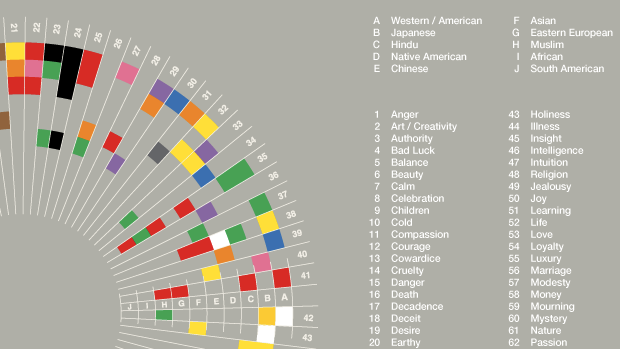
Graphic designer David McCandless made an infographic that describes connotations associated with different colors in different cultures. It serves as the cover illustration for Information is Beautiful, a book of infographics that McCandless and other designers have composed. Pictured above is one small part of the much larger whole.
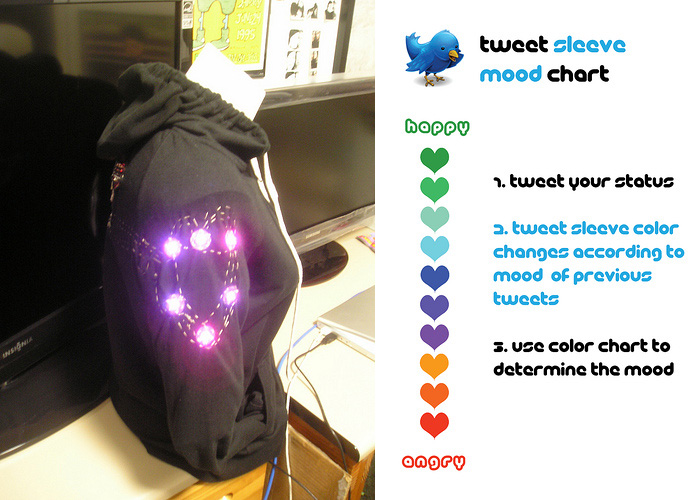
Do you wear your emotions on your sleeve? Well, with Vanessa Sorenson's Tweet Sleeve, you can do that a bit more literally. This gadget searches for keywords in your most recent tweets to gauge your mood and then displays that mood on the sleeve of a hoodie.
New Scientist has a list of attempts to discern the limits of human endurance and survival. It answers (or tries to) these questions:
1. What's the human speed limit? 2. How long can we concentrate for? 3. How long could you survive in a vacuum? 4. How much can we remember? 5. How cold can you get and live? 6. How long could you survive without food and drink? 7. How long could you go without sleep? 8. How many gs can you pull? 9. How high can you go? 10. How much can a human lift? 11. How much radiation can we take? 12. How long could you hold your breath?
In response to the third question "How long could you survive in a vacuum, Valerie Jamieson writes:
It is possible to recover from shorter spells in a vacuum, however. In 1966 a NASA technician was testing a spacesuit in a vacuum chamber when the pressure dropped to the level you would experience at an altitude of 36,500 metres. He passed out after 12 to 15 seconds. The last thing he recalled was the saliva boiling off his tongue; that's because water vaporises at low pressure. He regained consciousness within 27 seconds when the chamber was repressurised to the equivalent of an altitude of 4200 metres. Although he was pale, he suffered no adverse health effects.
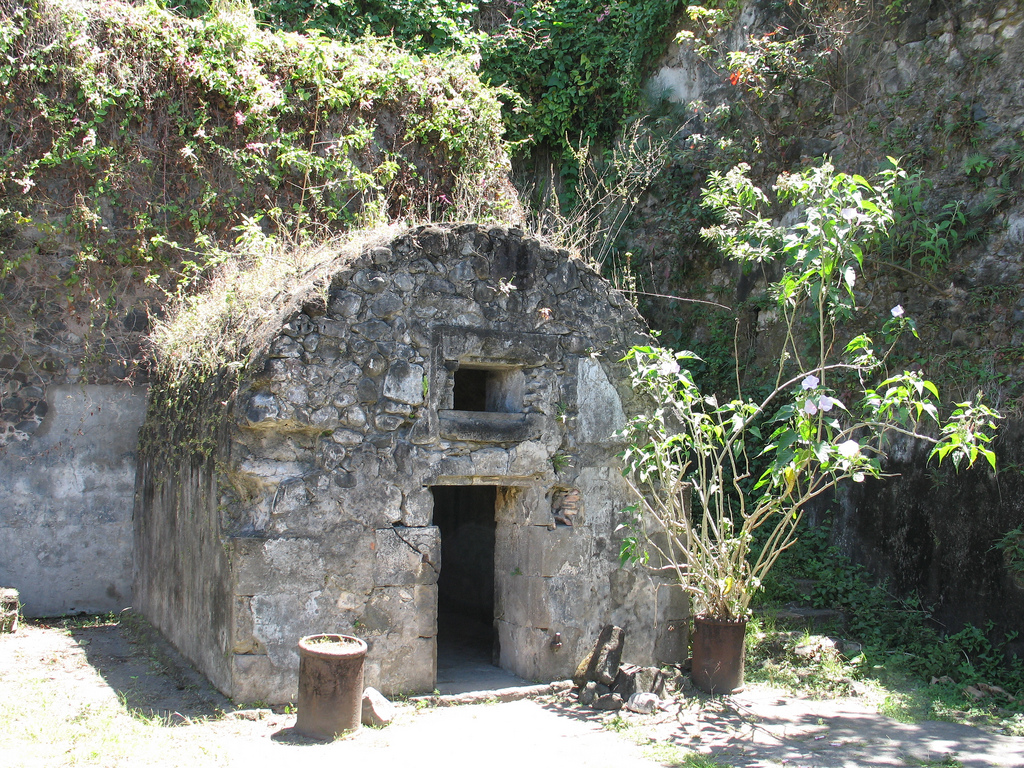
Ludger Sylbaris of St. Pierre, Martinique was lucky enough to be arrested for getting into a drunken brawl. The prison cell that he was placed into saved his life when a volcanic eruption destroyed the city on May 8, 1902:
Mt. Pelee exploded and a cloud of smoke darkened the sky for fifty miles around. A cloud of superheated volcanic gas and dust rolled out of the volcano at hundreds of miles per hour destroying everything in an eight mile radius. Within a single minute the 1,075 degree pressure wave had flattened every building in the city of St. Pierre and anyone unlucky enough to be in its way instantly caught fire and burned to death. Even those in shelter were suffocated as the wave of gas, hotter than fire, burned up the oxygen and replaced it was deadly gases. People lungs were burnt to a crisp form taking a single breath, and after the eruption the city burned for day. The explosion instantly killed the over 30,000 residents of the island.
A few people made it out to sea in time to survive, but Sylbaris was the only person confirmed to be in the city at the time of the eruption and live through the experience.
Link via io9 | Photo: image by flickr user Gaël Chardon used under Creative Commons license
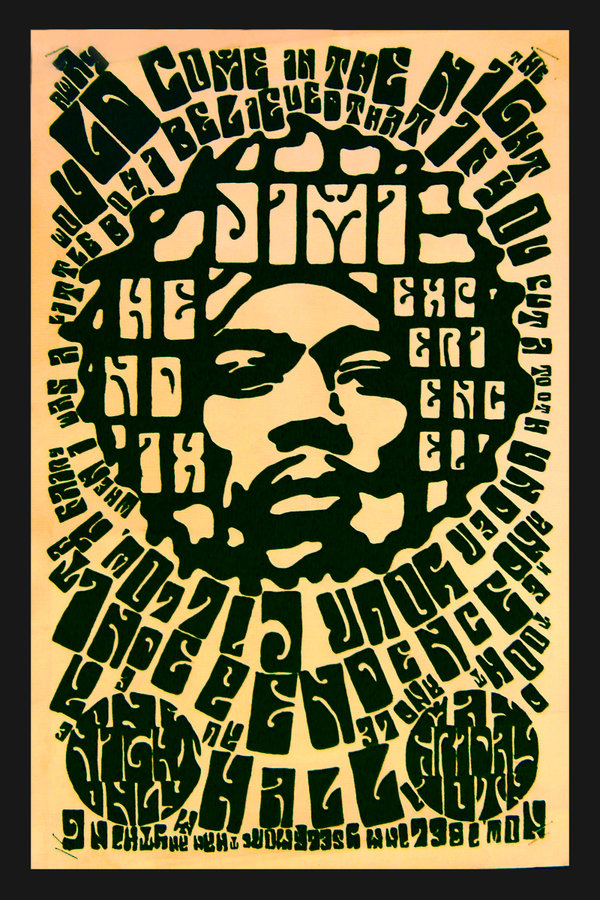
Artist Kuba Czerniak created this typographical portrait of Jimi Hendrix that is composed of a quotation by Hendrix:
When I was a little boy, I believed that if you put a tooth under your pillow, a fairy would come in the night and take away the tooth and leave a dime. Now, I believed in myself more than anything.
Genius physicist Stephen Hawking thinks that it's likely that there's intelligent life in the universe beyond our solar system. And he advises that we should avoid contact with aliens:
Such scenes are speculative, but Hawking uses them to lead on to a serious point: that a few life forms could be intelligent and pose a threat. Hawking believes that contact with such a species could be devastating for humanity.
He suggests that aliens might simply raid Earth for its resources and then move on: “We only have to look at ourselves to see how intelligent life might develop into something we wouldn’t want to meet. I imagine they might exist in massive ships, having used up all the resources from their home planet. Such advanced aliens would perhaps become nomads, looking to conquer and colonise whatever planets they can reach.”
He concludes that trying to make contact with alien races is “a little too risky”. He said: “If aliens ever visit us, I think the outcome would be much as when Christopher Columbus first landed in America, which didn’t turn out very well for the Native Americans.”
Do you agree with his advice?
Link via Glenn Reynolds | Image: US Department of Health and Human Services
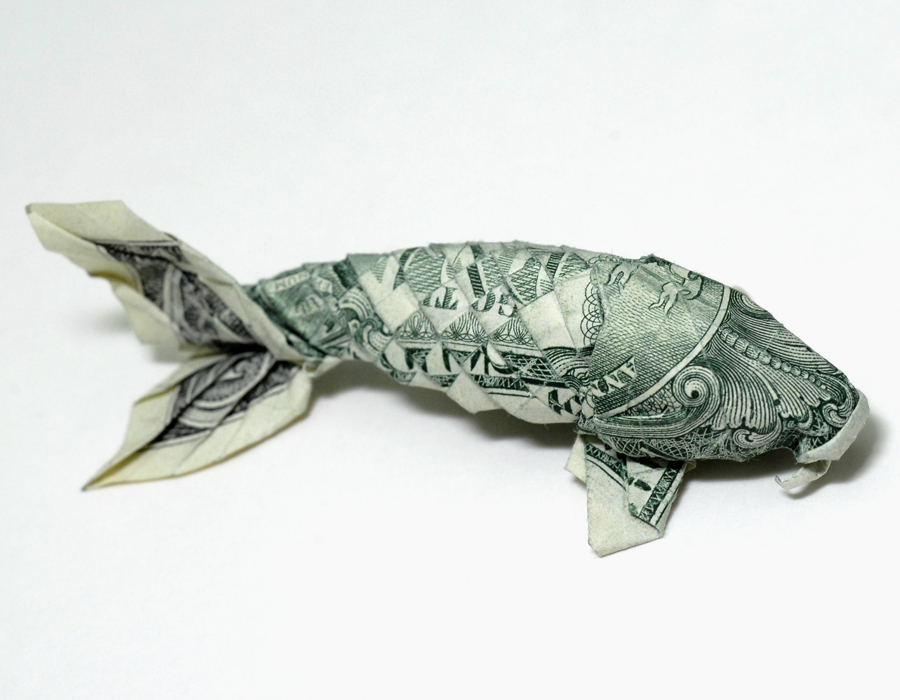
Artist Won Park makes origami figures with paper currency. He made this koi fish with a one dollar bill, with no cuts, glue, or tape. The way that he arranged for a curl to serve as an eye is particularly impressive.
Watch this elderly (but very sharp) woman interact with a computer for the first time in her life:
We, Virginia's family, wish to say this video was made within minutes of her receiving her iPad. ? She quickly caught on to how to read and write on it, activities which were impossible before. She cannot read large print books any longer as her glaucoma prevents this. Glasses are useless. She loves to read and is a avid poet, now writing many many limericks for fun. She does not bend over the iPad, as you see in this video, but now puts it on several pillows.
SensoMotoric and the Free University of Berlin have developed a technology that allows a person to steer a car by moving his eyes. A camera tracks the eyes' movements and a computer uses this data to direct the car's steering column. The above video shows a car and driver set up with the gadgetry maneuvering around Tempelhof Airport.
Doctors in Spain have carried out the world's first full-face transplant. Although there have already been partial transplants, this was the most complex so far:
It appears to include more bone and much more of the lower part of the face.
A spokesperson for the UK's Facial Transplantation Research Team, which has ethical permission to carry out a full face transplant, said it was "a tremendous achievement".
"This appears to be the most complex facial transplant operation carried out so far worldwide," he said.
"It once again shows how facial transplantation can help a small number of people who are the most severely facially injured and for whom reconstructive surgery cannot and has not worked."
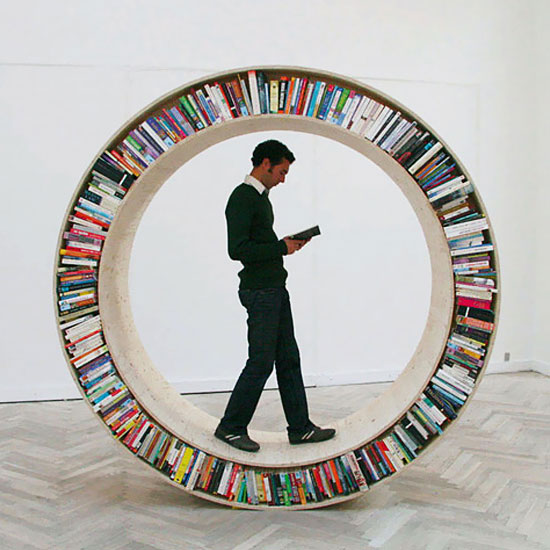
Designer David Garcia made this circular bookcase that the reader can use for both storage and transportation:
ARCHIVE II, a round wheel book archive, functions as a nomadic library, where the user can travel with his own books. Once still, it creates a room for meeting and inspiration, generating a special acoustic echo for the reader inside the wheel.
Well they would have the element of surprise. It's like those kids who tried to hold up a police station. Who would expect that criminals would try to break into a prison?
It would make a good gag for a comedy if it weren't actually true - thieves have broken into a Dutch prison to steal the inmates' televisions.
Twice in the last six weeks, burglars broke into a minimum-security prison and stole TVs from cells while prisoners were away for the weekend, a spokesman for the justice ministry said on Wednesday.
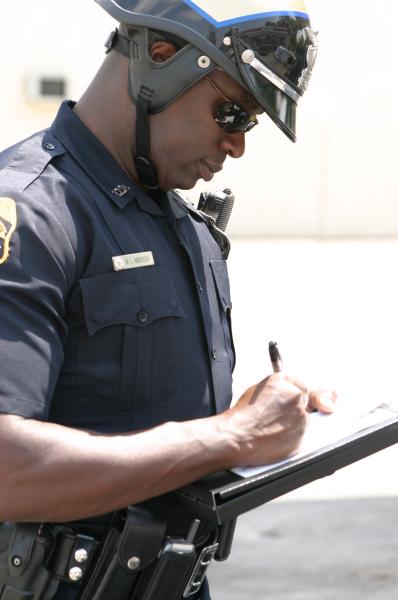
A man who received a parking ticket in Bartlett now faces criminal charges after authorities said he stained the citation with human excrement before mailing it back to the village.
Officials said Alexander J. Bailey, 22, of the 6N600 block of Medinah Road in Medinah, was arrested last week charged with disorderly conduct after a village hall employee found brown stains and a foul odor on the ticket and alerted police, authorities said. The original ticket was for $15, Bartlett police said.
Bailey also scrawled a note on the ticket indicating he'd used it to wipe himself, court documents said.
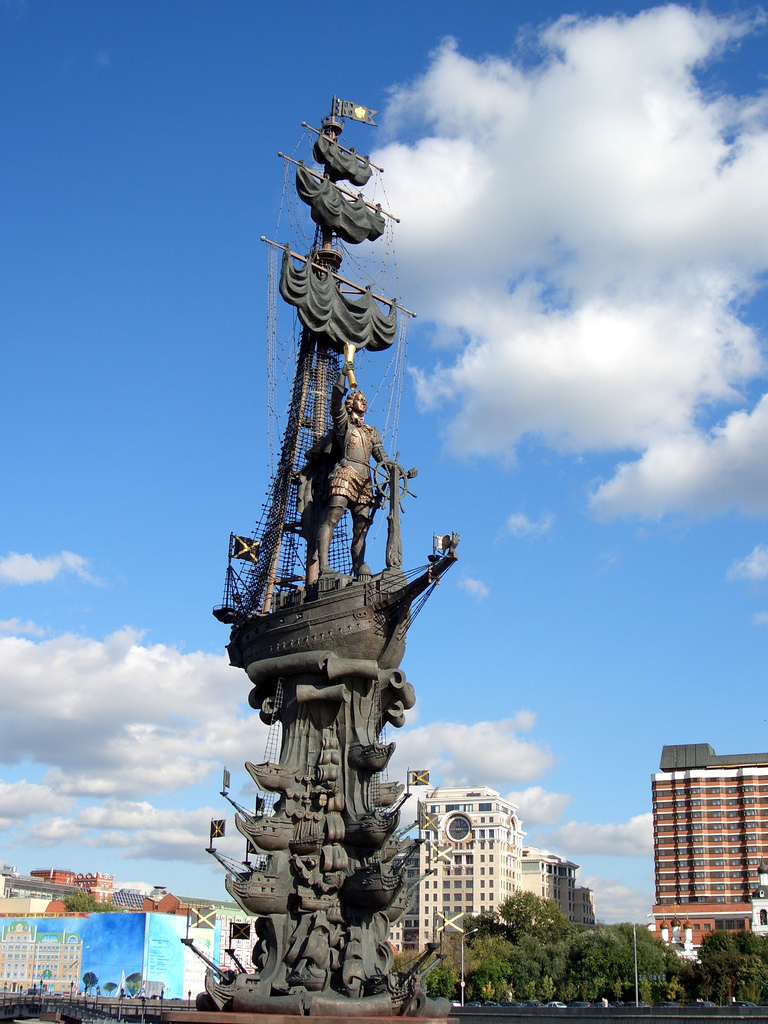
Joshua Keating of Foreign Policy magazine has a slideshow of what he considers to be the ugliest monumental statues in public display in the world. Pictured above is one of Tsar Peter I (the Great) of Russia, known for building that country's first navy:
Just because communism ended doesn't mean that Russia has stopped building grotesque, propagandistic statues. The master of the form is Georgian-born artist Zurab Tsereteli, best known for the garish 315-foot maritime statue of Peter the Great looming over the Moskva River. The statue was commissioned by Tsereteli's frequent booster, Moscow Mayor Yuri Luzhkov, and has fast become a popular tourist attraction, if not exactly for the reasons its planners hoped.
Link via Hell in a Handbasket | Photo: flickr user Effervescing Elephant, used under Creative Commons license
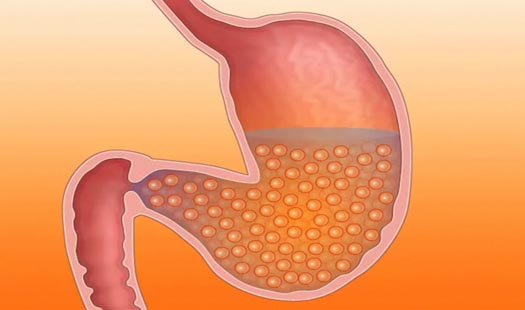
Pharmaceutical start-up Gelesis has developed a pill that is filled with tiny polymer beads. Swallow the pill, and the beads absorb water in your stomach, swelling over one hundred times in size. The idea is to partially fill up the stomach so that the patient is less hungry:
So when you down a pill with a glass of water, the capsule dissolves in your stomach and the hydrogel beads begin to grow. In a few minutes you’re feeling pretty full, and that second Double Down from KFC is decidedly less attractive.
Of course, now you have a belly full of hydrogel, and this is where the engineers at Gelesis had to be clever. The food is now mixed in with the gel, but you still need to digest that food (the object here is weight loss, not starvation). The hydrogel keeps food in the stomach longer, giving stomach acid more time to break down both the food and the hydrogel, which begins to release its water. Everything then moves to the small intestine where the gel can re-expand to some extent, slowing the absorption of fatty materials and sugars. Finally everything ends up in the lower bowels, and the rest is history.