Students from Yangzhou University and Shanghai Jiaotong University developed a robot that can prepare more than six hundred different kinds of Chinese dishes. All that's necessary is to insert the necessary ingredients and push a few buttons. More pictures at the link.
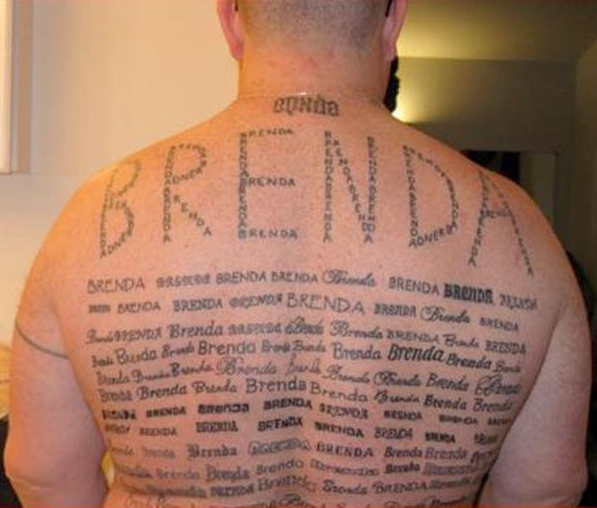
You know how it's a bad idea to get a girl's name tattooed on you? Multiply that by about a hundred. This photo of a name tattoo in many, many different typefaces has been circulating the Internet. I hope that the relationship lasts.
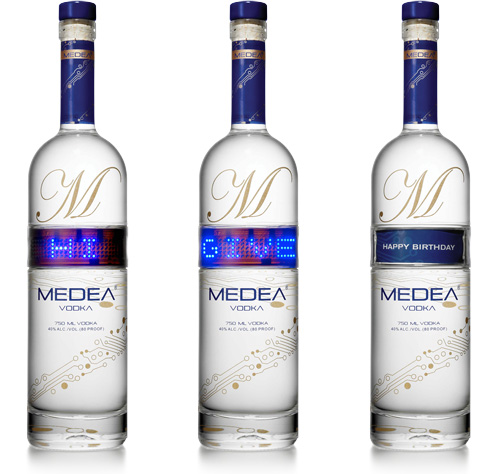
Dutch distiller Medea Spirits came up with a clever advertising gimmick for their vodka: scrolling LED labels. You can even program them to express 6 of your own messages, each of which is up to 225 characters long. Video in the links.
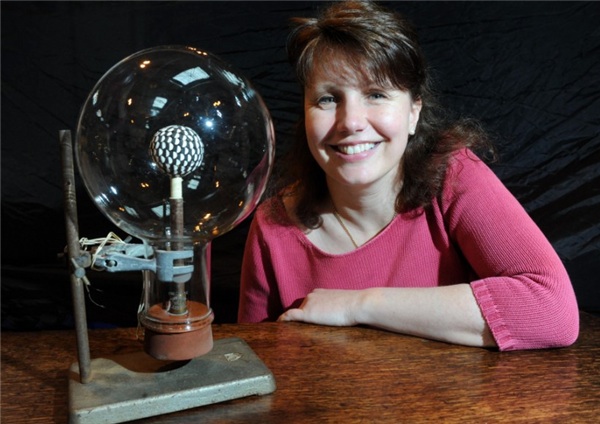
This is a picture of what might be the world's first solar panel. It was built by a British science teacher in 1950 based on the 1946 patent by Russell Ohl. It was discovered after many years in storage, and it still functions:
The oddity, which looks like a crystal ball, had been put in a box and forgotten but is finally on show at yesterday's Antiques for Everyone show at Birmingham's NEC.
In direct sunlight the contraption can create 1.5 volts of electricity, which is enough power to run a modern day digital watch. [...]
The first basic solar technology was built in 1883 by Charles Fritts but was found to be far too inefficient and nothing like today's models.
Russian physicist Aleksandr Stoletov developed the concept further by developing the first solar cell based on the outer photoelectric effect, a more stable and reliable cell.
But it was not until Russell Ohm patented the idea of the junction semiconductor solar cell, that the modern day solar panel was born.
A NASA spacecraft called the Solar and Heliospheric Observatory (SOHO) took a picture of a previously unknown comet crashing into our sun:
This is the third comet to swing by the sun this year. Known as sun-grazing comets, the icy objects most likely come from the outer solar system, though it is unlikely that any survive their encounters with the sun. [...]
Astronomers estimate that there may be more than 1,600 comets in our solar system that swing through its heart to pass by the sun during their travels. As of 2000, the definitive count for sun-grazing comets passed the 1,000 mark.
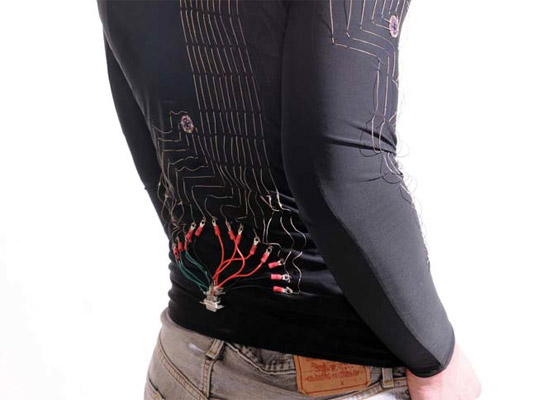
Injuries to baseball players cost that industry millions of dollars every year. Northeastern University engineering students Marcus Moche, Alexandra Morgan and David Schmidt designed a shirt that measures the physical performance of pitchers. They think that their project could be used by coaches in the dugout to monitor the players' fatigue and strain, informing them when pitchers are close to injuring themselves:
"No single device for measuring the quality of pitching mechanics currently exists, so we have proposed a shirt that is lightweight and can be worn during bullpen sessions or exhibition games,” said Moche. “The shirt can be used to show when a player becomes fatigued and his mechanics worsen, through a display of real-time information on a monitor in the dugout."
Pitchers become more susceptible to injury when they lose consistency in their mechanics—the physics of how they throw the baseball, pitch after pitch.
Video at the link.
Link via Make | Photo: Northeastern University, Lauren McFalls
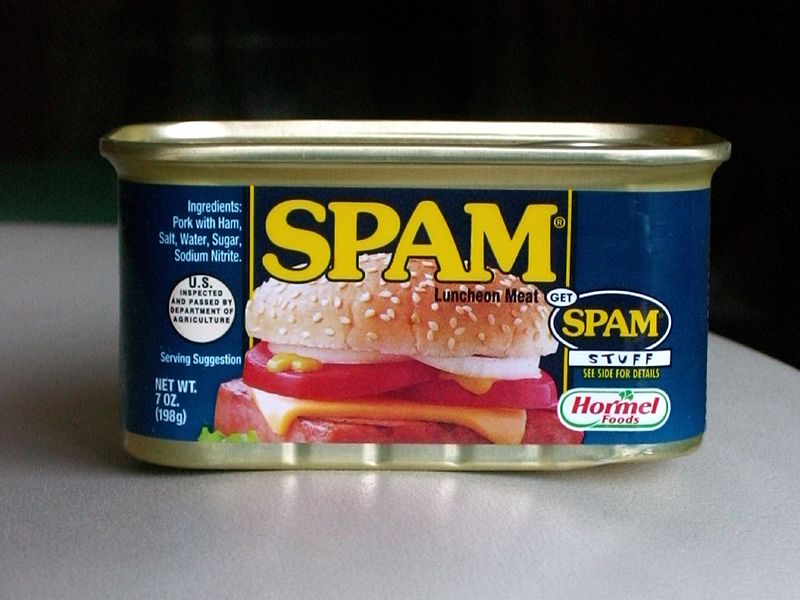
Sixteen years ago today, the first spam email message was sent out to 100,000 Usenet accounts by immigration lawyers Laurence Canter and Martha Siegel, offering their services:
Canter and Siegel went on to notoriety, claiming they’d made $100,000 from their Perl-script spamming. The two remained unrepentant, despite the backlash which led them to lose their hosting and even get Canter disbarred. [...]
Depending on who is counting, spam now accounts for nearly 90 percent of e-mail traffic — much of it sent through botnets or unscrupulous hosting companies and e-mail firms.
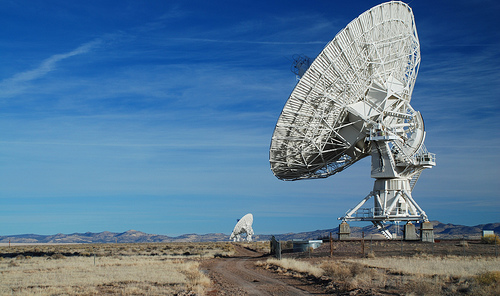
The systematic program for the Search for Extraterrestrial Intelligence (SETI) can be dated to fifty years ago this past week. It began with astronomer Frank Drake, who turned a 85-foot radio telescope to the sky in search for a signal:
The astronomer's solitary vigil lasted for a few weeks; he ran out of telescope time with little to report. Nevertheless, his pioneering effort sparked the genesis of a 50-year project known as the Search for Extraterrestrial Intelligence, now an international research program with a multimillion-dollar budget. It has included renting time on some of the biggest radio telescopes in the world—such as the 1,000-foot dish at Arecibo in Puerto Rico, featured in the James Bond movie "GoldenEye." [...]
The search for extraterrestrial intelligence, once considered a quixotic enterprise at best, has now become part of mainstream science. In the past decade or so, over 400 planets have been found orbiting nearby stars, and astronomers estimate there could be billions of Earth-like planets in the Milky Way alone. Biologists have discovered microbes living in extreme environments on Earth not unlike conditions on Mars, and have detected the molecular building blocks of life in deep space as well as in meteorites. Many scientists now maintain that the universe is teeming with life, and that some planets could harbor intelligent organisms.
Paul van Bree has been hired by prisons in the Netherlands to help prisoners contact and make peace with dead relatives:
He has claimed that by talking to both the prisoner and the prisoner's dead parents he can discover key psychological insights to help the prison authorities rehabilitate criminals.
"With my antennae I sometimes reveal more than a psychologist or a prison welfare officer," he said. "My work can be compared to mental health care in widest sense of the words." [...]
The Dutch employment service has also looked beyond the normal to use "regression therapy" and tarot cards to help the jobless.
Uncooperative welfare claimants have been told they will lose benefits unless they accept the guidance of a regression therapist to help them get in touch with their past lives.
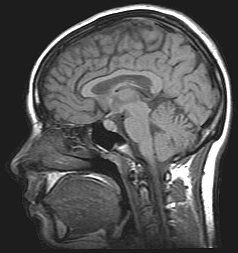
Medical researchers were able to disrupt the moral judgments of test subjects by subjecting the part of the brain responsible for such decisions to magnetic forces:
For their experiment, the scientists had 20 subjects read several dozen different stories about people with good or bad intentions that resulted in a variety of outcomes.
One typical story was about a boyfriend who leads his girlfriend across a bridge. In some versions, the boyfriend harmlessly walked his girlfriend across the bridge with no ill effect. In other cases, the boyfriend intentionally led the girlfriend along so she would break her ankle. The subjects used a seven point scale -- one being forbidden and seven completely permissible -- to record whether they through the situation was morally acceptable or not.
While the subjects read the story, the scientists applied a magnetic field using a method known as transcranial magnetic stimulation. The magnetic fields created confusion in the neurons that make up the RTPJ, said Young, causing them to fire off electrical pulses chaotically.
This stop-motion animated video is a commercial for Nissan's efforts to build a zero emissions car. It shows people driving chairs around town, running errands and racing each other.
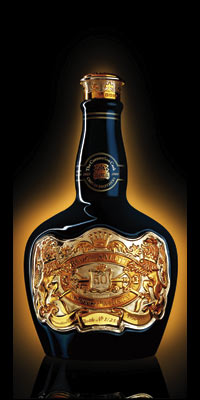
Forbes magazine has a slideshow of the 15 most expensive whiskeys in the world. Coming in at #3 is a batch of 50 year old Chivas Royal Salute, which costs about $10,000 a bottle.
Released in 2003 to commemorate the 50th anniversary of Queen Elizabeth II's coronation, its lead malt is the superb Strathisla, which accounts for the exceptionally rich and creamy character. Only 255 bottles of the Scottish whisky were released worldwide, which helps account for the high price.
It didn't occur to Tasha Lee Cantrell of Florida that she shouldn't drink a beer while a police officer drove her home from her friend's DUI arrest:
The 19-year-old Floridian was riding in a car early Monday morning when the vehicle's driver was pulled over and arrested for DUI. As a tow truck arrived to remove her friend's car, a stranded Cantrell asked Okaloosa County Sheriff's Office Deputy Mitchell Landis for a ride home to her Fort Walton Beach residence. Landis agreed, but only after checking Cantrell's purse for any contraband, according to an offense report. While chauffeuring Cantrell, Landis heard the teenager "open a can of some sort" in the back of the cruiser. "As I looked at my in car video I observed Cantrell drinking out of an unknown can." Landis stopped his car and, upon further investigation, determined that Cantrell had popped open a can of Steel Reserve, a malt liquor known for its high alcohol content.
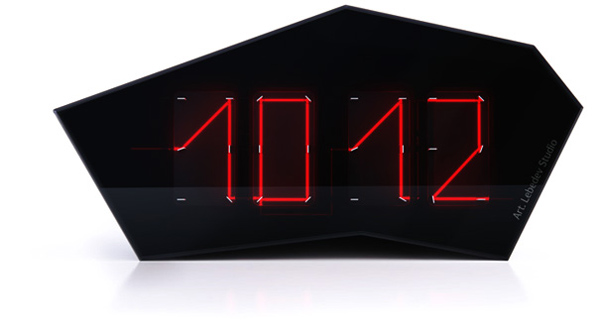
This clock concept by Russian art collective Art Lebedev shoots a laser at sixty rotating mirrors to tell the time. Other clocks by this group that we've featured at Neatorama include the Verbarius Clock and the TaskWatch.