John Farrier's Blog Posts

The 11 Ugliest Statues in the World


Joshua Keating of Foreign Policy magazine has a slideshow of what he considers to be the ugliest monumental statues in public display in the world. Pictured above is one of Tsar Peter I (the Great) of Russia, known for building that country's first navy:

Just because communism ended doesn't mean that Russia has stopped building grotesque, propagandistic statues. The master of the form is Georgian-born artist Zurab Tsereteli, best known for the garish 315-foot maritime statue of Peter the Great looming over the Moskva River. The statue was commissioned by Tsereteli's frequent booster, Moscow Mayor Yuri Luzhkov, and has fast become a popular tourist attraction, if not exactly for the reasons its planners hoped.


Link via Hell in a Handbasket | Photo: flickr user Effervescing Elephant, used under Creative Commons license


Anti-Obesity Pill Fills Up Your Stomach


Pharmaceutical start-up Gelesis has developed a pill that is filled with tiny polymer beads. Swallow the pill, and the beads absorb water in your stomach, swelling over one hundred times in size. The idea is to partially fill up the stomach so that the patient is less hungry:

So when you down a pill with a glass of water, the capsule dissolves in your stomach and the hydrogel beads begin to grow. In a few minutes you’re feeling pretty full, and that second Double Down from KFC is decidedly less attractive.

Of course, now you have a belly full of hydrogel, and this is where the engineers at Gelesis had to be clever. The food is now mixed in with the gel, but you still need to digest that food (the object here is weight loss, not starvation). The hydrogel keeps food in the stomach longer, giving stomach acid more time to break down both the food and the hydrogel, which begins to release its water. Everything then moves to the small intestine where the gel can re-expand to some extent, slowing the absorption of fatty materials and sugars. Finally everything ends up in the lower bowels, and the rest is history.


http://www.popsci.com/science/article/2010-04/obesity-pill-swells-your-stomach-making-you-full-you-even-start-eating | Image: Gelesis

A History of the Sky


(YouTube Link)


A History of the Sky is Ken Murphy's ongoing project to record time-lapse images of the sky. Each square in the video represents a day, and each day is in order:

This is a work in progress. Currently, an image of the sky is being captured every 10 seconds from a camera installed on the roof of the Exploratorium, on the edge of San Francisco Bay. The images collected over each 24-hour period are assembled into a 6 minute movie (at 24 frames/second).

The final piece will consist of a large projected grid of 365 movies, each representing one day of the year, and cycling in parallel through consecutive 24-hour periods. The viewer can stand back and observe the atmospheric phenomena of an entire year in just a few minutes, or approach the piece to focus on a particular day.

This will also be an active piece. The camera will continue to collect images and integrate them with the montage daily. The visualization will therefore vary from day to day, and will always display the most recent 365 days.


Link via Urlesque

The Book Art of Philip Smith


British artist Philip Smith is an accomplished bookbinder. Pictured above is his vision of Tolkein's The Lord of the Rings:

Book-box made from binders board, balsawood and with brass-reinforced epoxy-putty modelling. Covered with goatskin. Various parts of goatskin are used; strips, emulsified or individual flesh side and grain side parings, and maril. The box has two compartments for the book and a map folder. The leather clasp is designed to match the of images on both sides. The skull (supposedly of a Ringwrailh King; the contorted upper spires now represent the crown) is designed to work with a raking light to give deep relief to the modeling. The nine dead ringwraiths' headstones line the lower edge of the box.


You can view more examples of his work at the link.

Link via io9 | Photo: Philip Smith

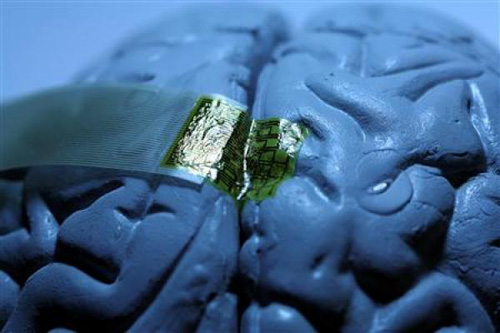
New Tiny Silk Brain Implants

Medical researchers have developed tiny electrodes from silk and thin sheets of metal that can be surgically implanted on the brain. They can gather data and send out electrical signals without causing damage to the patient:

"These implants have the potential to maximize the contact between electrodes and brain tissue, while minimizing damage to the brain," said Dr. Walter Koroshetz of the National Institute of Neurological Disorders and Stroke, part of the National Institutes of Health, which helped pay for the study.

"They could provide a platform for a range of devices with applications in epilepsy, spinal cord injuries and other neurological disorders."

For instance, such a sensitive electrode could detect a seizure as it starts and deliver pulses to counter it. Brain signals might be routed to prosthetics for people with spinal cord and other injuries.


Link via Nerdesque | Image: Reuters

Bolivia Puts Coca Back into "Coca-Colla"

Coca-Cola used to contain coca, a plant that can be refined into cocaine. Bolivians are now putting it back into cola and calling it "Coca-Colla":
The drink, made from the coca leaf and named after the indigenous Colla people from Bolivia's highlands, went on sale this week across the South American country.

It is black, sweet and comes in a bottle with a red label – but similarities to Coca-Cola end there. One is a symbol of US-led globalisation and corporate might; the other could be considered a socialist-tinged affront to western imperialism. [...]

It is made from the coca leaf, a mild stimulant that wards off fatigue and hunger, and has been used in the Andes for thousands of years in cooking, medicine and religious rites. [...]

Bolivia tried to wipe out the leaf at Washington's behest. But that was before Evo Morales, an Aymara Indian and coca grower, was elected president, championing coca as a crop with legitimate uses.


Link via Fast Company | Photo: Dado Galdieri/AP

World's Largest Yacht Sports Lasers, Missile Defense System


(YouTube Link)


Russian billionaire Roman Abramovich new yacht Eclipse is the largest in the world. It features lasers that disrupt cameras pointed at it and missile defense system to ward off attack:

Even the precise length of the vessel has been kept secret, though it is thought to be about 16ft longer than the previous record holder, the 532ft yacht Dubai, owned by Sheikh Mohammed bin Rashid al-Maktoum. It has been built by Blohm & Voss — the shipyard in Hamburg that constructed the German battleship Bismarck.

The Eclipse is said to have two helipads, two swimming pools — the larger of which converts into a dance floor when drained — bullet-proof glass, 6ft home cinema screens in every guest cabin and a master cabin where the roof opens to allow Abramovich and his girlfriend Daria Zhukova to sleep under the stars. An anti-paparazzi electronic “shield” will take care of their privacy while on board.


Link via DVICE

Previously on Neatorama:
$47K Food Bill, $7K Tip: Just a Friday Night Out for Russian Billionaire Roman Abramovich

Baby Kangaroos Playing on the Beach


(YouTube Link)


This video by YouTube user Lisapud shows baby kangaroos playing and swimming with humans on a beach.

via Urlesque

Papercraft Stop Motion Hands


(Video Link)


Dutch filmmaker Christian Borstlap made this papercraft stop-motion animated music video for a Clutchy Hopkins song "Verbal Headlock". It shows paper-formed hands playing instruments.

A quick Google search suggests that the previously unknown-to-me Clutchy Hopkins is either a folk musician or an Internet hoax, and I'm leaning toward the latter hypothesis.

via Urlesque | Christian Borstlap's Website

The Cardboard Box That Will Fit Anything


Patrick Sung has developed a cardboard box that he claims fit over just about any object. It's called the Universal Packaging System and folds along triangular sections. More pictures at the link.

Link via Fast Company | Photo: Yanko Design

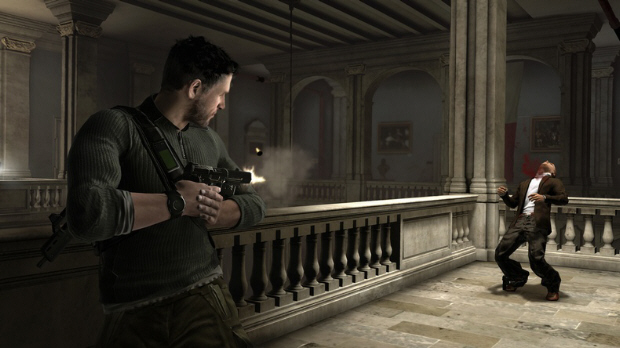
Marketing Stunt: Have Bloody Man Stumble Around in Public, Waving Fake Gun

It was indeed a cunning plan. To promote the action-heavy video game Splinter Cell Conviction, an actor dressed in bloody bandages ran around the streets of Auckland, New Zealand, pointing a fake gun at people. Then police with real guns showed up:

About 20 revellers drinking outside Degree bar dived for cover after the promotions worker threatened them with a black imitation pistol about 8pm on Friday.

Witnesses said they heard someone shout "he's got a gun" and outdoor drinkers dived behind their tables.

Degree manager Steph Kurtovich said: "This guy with bandages on his hands pointed a gun at customers sitting outside. They were pretty terrified."

The stunt, to promote the release of Xbox title Splinter Cell Evolution, was condemned by police.

Senior Sergeant Ben Offner said officers could not tell the gun was made of plastic until they had taken it from the actor.


Link via Say Uncle | Image: Ubisoft

Robot Mouth Simulates the Human Voice


(YouTube Link)


Engineers at Kagawa University in Japan are developing a talking robotic version of the human mouth:

To enable the robot's speaking abilities, engineers at Japan's Kagawa University used an air pump, artificial vocal chords, a resonance tube, a nasal cavity, and a microphone attached to a sound analyzer as substitutes for human vocal organs. The robot not only talks, but it uses a learning algorithm to mimic the sounds of human speech. By inputting the voices of both hearing-impaired and non-hearing-impaired people into the microphone, researchers were able to plot the differences in sound on a map. During speech training, the robot "listens" to the subjects talk while comparing their pronunciation to that of subjects who are not hearing-impaired. The robot then generates a personalized visualization that allows subjects to adjust their pronunciation according to the target points on the speech map.


This video has already been used to create mashups currently circulating YouTube. In the links, you'll find one that presents the robot mouth as Eduard Khil, the Trolololo guy.

http://www.popsci.com/gadgets/article/2010-04/freaky-robot-mouth-simulates-human-voices | Robot Mouth as Trolololo Guy

The Great Mosque of Djenné -- the Largest Mud Brick Building in the World


(YouTube Link)


The Great Mosque of Djenné in the West African country of Mali was originally constructed in the 13th Century. It gradually grew to be an enormous structure before it fell into ruins by the 19th Century. From 1906-7, it was rebuilt using adobe -- the original building material. It is today the largest adobe structure in the world:

The Great Mosque is built on a raised plinth platform of rectangular sun-dried mud bricks that are held together by mud mortar and plastered over with mud. The walls vary in thickness between sixteen and twenty-four inches, depending upon their height. These massive walls are necessary in order to bear the weight of the tall structure and also provide insulation from the sun's heat. During the day, the walls gradually warm up from the outside; at night, they cool down again. The mosque’s prayer hall, with ninety wooden pillars supporting its ceiling, can contain as many as 3000 people. This helps the interior of the mosque to stay cool all day long. The Great Mosque also has roof vents with ceramic caps. These caps, made by the town's women, can be removed at night to ventilate the interior spaces. [...]

Although the Great Mosque incorporates architectural elements found in mosques throughout the Islamic world, it reflects the aesthetics and materials used for centuries by the people of Djenné. Its use of local materials, such as mud and palm wood, its incorporation of traditional architectural styles, and its adaptation to the hot climate of West Africa are expressions of its elegant connection to the local environment. Such earthen architecture, which is found throughout Mali, can last for centuries if regularly maintained.


Link via Choice

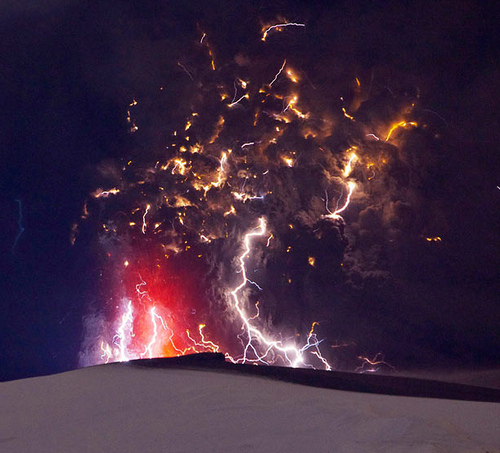
Amazing Pictures of the Icelandic Volcano Eruption


The Daily Telegraph has compiled a 31-image slideshow of amazing photographs of the volcano currently erupting in Iceland. Scientists aren't sure why electrical discharges are visible during some volcanic eruptions, but:

One theory is that that the spewing magma bubbles or particles of volcanic ash are themselves electrically charged, and by their motion create separately charged areas.


Link via Geekologie | Photo: US Environmental Protection Agency

Typeface Flow Chart


Which typeface should you use for a particular presentation? Graphic designer Julian Hansen created a flow chart to help you make a decision. Pictured above is one small piece of it. You can view larger images at the link.

Link via Fast Company | Designer's Website

Email This Post to a Friend
""

Separate multiple emails with a comma. Limit 5.


Success! Your email has been sent!

close window

Page 1,176 of 1,326     first | prev | next | last

Profile for John Farrier

  • Member Since 2012/08/04


Statistics

Blog Posts

  • Posts Written 19,883
  • Comments Received 52,427
  • Post Views 31,857,192
  • Unique Visitors 26,140,424
  • Likes Received 29,425

Comments

  • Threads Started 3,797
  • Replies Posted 2,295
  • Likes Received 1,730
X

This website uses cookies.

This website uses cookies to improve user experience. By using this website you consent to all cookies in accordance with our Privacy Policy.

I agree
 
Learn More