(YouTube Link)
The Japanese toy company Tenyo made this robotic butterfly that looks and acts like the real thing. It was on display at the Tokyo Toy Show this year.
http://www.japantrends.com/chouchou-robotic-butterfly-in-a-jar/ via Gizmodo
They tasted the one bottle they've brought up so far before they even got back to shore.
Diving instructor Christian Ekstrom said the bottles are believed to be from the 1780s and likely were part of a cargo destined for Russia. The nationality of the sunken ship has not yet been determined.
"We brought up the bottle to be able to establish how old the wreck was," he said. "We didn't know it would be champagne. We thought it was wine or something."
Ekstrom said the divers were overjoyed when they popped the cork on their boat after hauling the bubbly from a depth of 60 metres.
"It tasted fantastic. It was a very sweet champagne, with a tobacco taste and oak," Ekstrom said.
Hello scholars. Look at your grades. Now look at mine. Now back at your grades. Now back to mine. Sadly, they're not like mine. But if you stopped studying in a cave and started studying like me, they could be like mine.
The idea was to excite the upper atmosphere with high-frequency radio waves, and it would then emit the ELF bands required for one-way communicate with submerged submarines.
The new system is the first two-way communication method for submarines at depth. The actual depth is classified, but according to Reints the cables attached to the tethered buoys are “measured in miles” and would allow them to be launched from “a significant depth.” The submarine could continue normal operations at its normal speed while communicating.
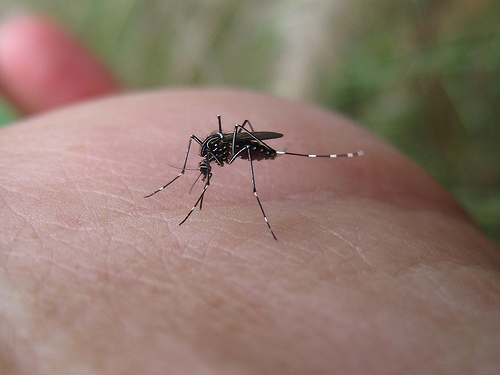
According to Riehle, completely eradicating the malaria parasite carried by mosquitoes requires three things: the ability to engineer the mosquito, finding genes or molecules that can kill the malaria parasite, and giving the modified mosquitoes a competitive advantage so they can replace the wild population. The first two components have been accomplished, but Riehle says the third represents a bigger hurdle. "A lot of research is being done now to give the mosquitoes fitness advantages so that they can replace the wild populations," he said. "But it's probably at least a decade away, and if this is ever used for malaria control it will take several years for population replacement to actually occur."
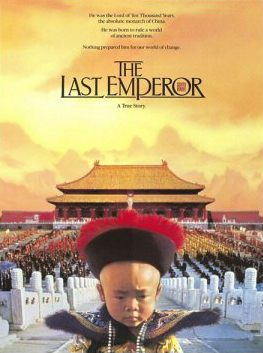
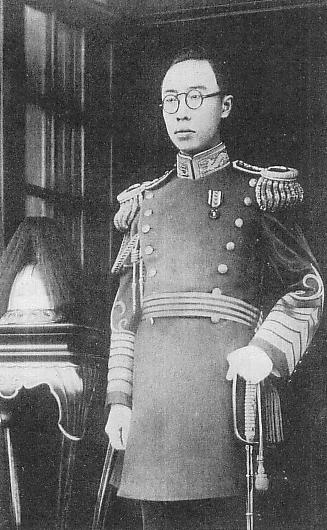
The 1987 film The Last Emperor was a critical and box office smash. It won 9 Oscars and profits far exceeding its $24 million budget. It’s based on a true story – the life of Pu Yi, the final emperor of China. But he wasn’t the only last emperor in world history. So let’s take a moment to look at Pu Yi and some of the other men who represented the ends of their empires, dynasties, and eras.
Xuantong Emperor (1906-1967), also known as Pu Yi, held the imperial title, but never any power. From the ages of 3 to 6, he was the last of the Qing dynasty emperors. But effectively, he was just the tool of various warlords in the chaos of early 20th Century China. Later, he was the titular ruler of Manchukuo, the Japanese puppet state in Manchuria from 1934-1945. Upon the collapse of his Japanese masters, Pu Yi was arrested by the Soviets, who imprisoned him until 1950. Then Stalin presented him as a gift to Mao Zedong, who had just completed the Communist conquest of China. Pu Yi spent the next nine years in a labor camp before his release to take up the simple life of a gardener.
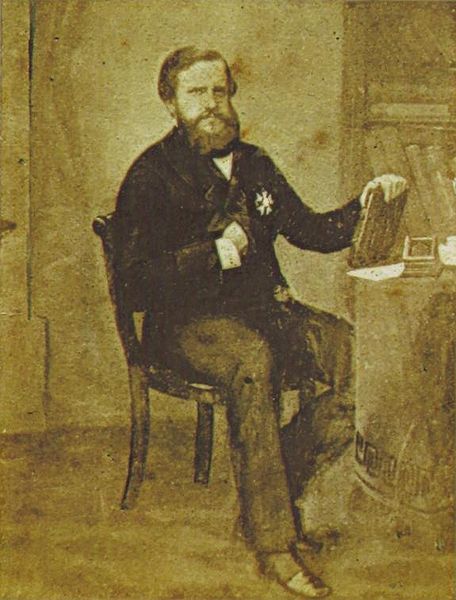
Pedro II (1825-1891) was the second and last emperor of Brazil, which gained its independence in 1822. Pedro became emperor at just 5 years old, and was declared of age at 14, but real power eluded him until about 1850. Then he set to work ending slavery, expanding Brazilian territory at the expense of Paraguay, and establishing an effective bureaucracy. An absolutist monarch in the old European mold, he resisted sharing power with a younger generation of Brazilians that was increasingly republican in their political outlook. An army coup in 1889 overthrew him, and Pedro II died in exile in Paris.
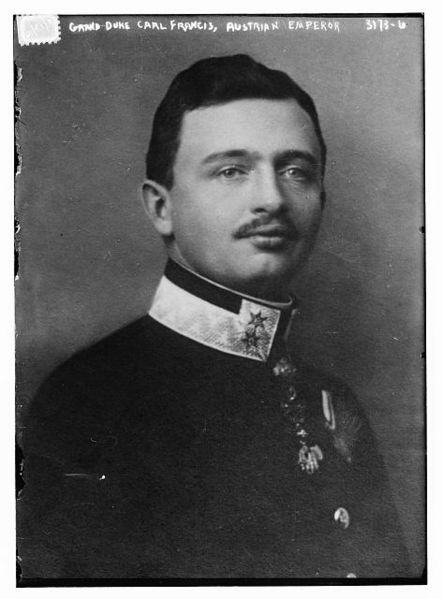
Charles I (1887-1922) took power in 1916, in the middle of World War I. He tried and failed to remove Austria-Hungary from the war, and upon the collapse of the Austrian army on the Italian front, he renounced political power. That proved to be an insufficient concession for the people of the rapidly collapsing multiethnic empire, and Charles was forced into exile in Switzerland in March of 1919. Austria deposed him the following year, and his efforts to take the Hungarian throne were stymied. He died in 1922 in relative poverty on the Portuguese coast. Due to his devout faith and desire for peace, he is a candidate for sainthood in the Catholic Church. He was beatified (a step in the sainthood process) in 2004 after a Brazilian nun claimed to be healed of her varicose veins after praying that Charles intercede for her.
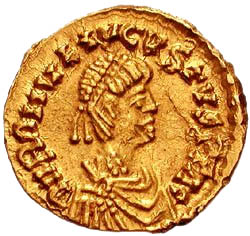
Romulus Augustulus (r. 475-476), the last emperor of the western Roman Empire, had a legally weak claim to the throne in this own right. This was because his father, the general Orestes, had overthrown the emperor Julius Nepos and given the imperial throne to his young son. This was Romulus, known to history as Augustulus, which which is the Latin diminutive form of "little Augustus". The boy was clad in the imperial purple, but he had no power at all beyond the walls of Ravenna, the northern Italian city that had been the seat of Roman governance over Italy for decades. The Germanic king Odoacer, in possession of no imperial title but a formidable army, deposed him the following year. Romulus was well-treated, but forcibly retired to a country estate in Campagnia with an annual pension.
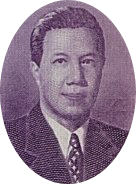
Bao Dai (1913-1997) was last emperor of Vietnam and the last reigning member of the Nguyen Dynasty. He succeeded to the throne in 1926, but promptly moved to France -- Vietnam’s colonial ruler -- at the request of that nation’s government. He was allowed to return in 1932, and he carried out a number of reforms designed to build a 20th Century government that France would consider worthy of limited sovereignty. France refused, and so Bao Dai retreated into the lifestyle of a playboy until the Japanese conquest. When the Communist Viet Minh took control of the country after the Japanese surrender, Bao Dai abdicated the throne, and the next year, moved to France. The French installed him as head of state in 1949, and then pushed him out of power in 1955. He died in exile in Paris in 1997.
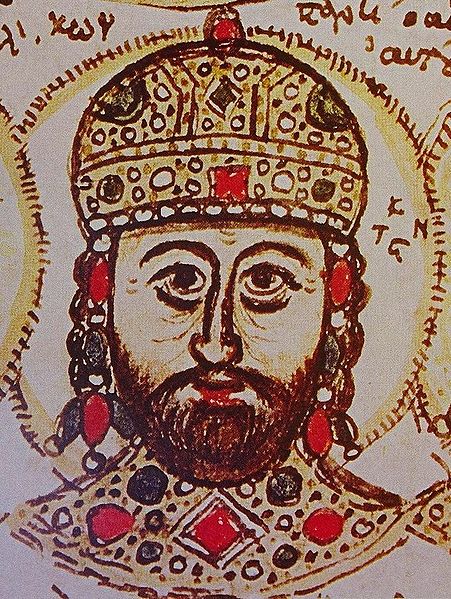
Constantine XI Palaiologos (1404-1453) was the last ruler of the Byzantine Empire, beginning in 1449, amidst furious infighting with his political rivals. Under assault by Muslim invaders for eight hundred years, the once-mighty empire had been reduced to Constantinople, a few Aegean islands, and the Peloponnese. Fully aware of the desperate circumstances, Constantine spent all of his energies on securing help from the Catholic west. He even held a Latin Mass in Hagia Sophia, to the outrage of the population of Constantinople. But no aid came, save the Genoese mercenaries that he could not afford to pay. After a seven week siege by Sultan Mehmet II, the Turks breached the walls of Constantinople. The emperor flung off his royal insignia and rallied his remaining troops to a final charge in which he died.
Atahualpa (ca.1498-1533) was the last emperor of the Inca. His father did not clearly denote a successor, so Atahualpa had to seize power through a bloody civil war. While enjoying the thermal baths at Cajamarca, he was surprised by 168 European soldiers led by the Spanish adventurer Francisco Pizarro. Atahualpa offered an enormous ransom to the Spanish, who were paid 13,420 pounds of gold and 26,000 pounds of silver. Diego de Almagro, the commander of the Spanish garrison at the time that the ransom arrived, responded by executing the Inca emperor. But indigenous peoples of the region were inspired to compose messianic prophecies about Atahualpa. Two centuries later, a Native Peruvian named Juan Santos, claiming to be a descendant of Atahualpa, led a prolonged rebellion against Spanish colonial rule in the Andean highlands.
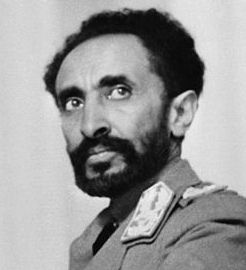
Haile Selassie I (1892-1975) was the last emperor of Ethiopia. As a political entity, the Ethiopian Empire emerged gradually over a millennium of change. It was firmly in place by the time of Adma Siyon (r.1313-44), but had essentially collapsed by 1769. Tewodros II (r.1855-1889) restablished the monarchy and claimed, like all previous Ethiopian emperors, to be the successor of King Solomon. He was eventually followed by Haile Selassie I. The emperor overcame a conquest by Mussolini’s Italy during World War II and, with British and US help, modernized the Ethiopian government and economy. Haile Selassie defeated a coup in 1960, but dissent to his rule only increased. In 1974, in the midst of a serious famine, the army revolted and imprisoned the emperor. Haile Selassie died the following year in confinement, and his captors declared an end to the Solomonic Dynasty. Nonetheless, he remains today the central focus of worship in the Rastafarian religion, which sees him a divine messenger and savior. Images: Columbia Pictures, Wikimedia Commons
QR codes are increasingly appearing in advertisements as a way to increase engagement with consumers. Although already common in Japan (where they were originally invented), they do not appear in many advertisements — much less take up an entire billboard. Most U.S. citizens still do not own smartphones, and even those that do don’t necessarily know what a QR code is or have the necessary scanning software to read it.
The billboards are clearly a test run for Calvin Klein Jeans, given that they will be up for only a little more than a week. If the videos get enough views, however, we can expect similar billboards in the future — both from Calvin Klein Jeans and from other brands. It’s often difficult to measure engagement with billboards, and QR codes help advertisers better measure their impact.
Called REX, short for "robotic exoskeleton", the legs weigh 38 kg (84lb) and are individually made for each user.
The first pair is expected to sell for $150,000 (£97,600) the equivalent cost of 20 standard wheelchairs.
The inventors claim that due to the upright and mobile nature of their creation, users will not suffer the burns, scrapes and bladder infections that can come with wheelchair use.
Next week, FarmVille will, for the first time, offer its pretend farmers a specific food brand. Players will be able to plant an organic blueberry crop from Cascadian Farm, a subsidiary of General Mills. The objective is for FarmVille users to learn about organic farming and green living, and at the same time, earn additional points to grow fruits and vegetables or raise animals on their virtual farms. Cascadian Farm executives say they hope that the company can expand its food niche and make itself better known by increasing awareness among FarmVille’s audience.
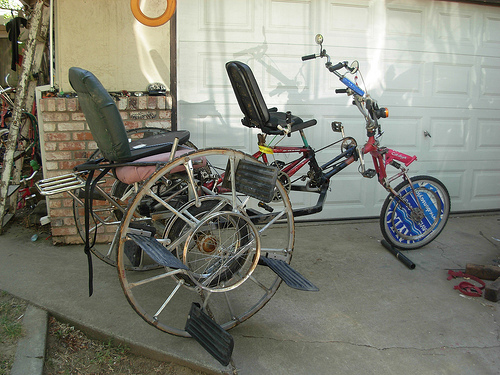
Stock fork surpassed by adding rear 2/3's of a full suspension mountain bike as the springer front end. Double rimmed drum brake 16" laced to 26" alloy, get us height, braking and with plastic lawn sign in between the spokes, a dandy rudder!! Also tripled up on Torrington freewheeling axel bearings for the rear drive component. 3 of them with 6 all-thread bolts thru their sprocket teeth, making them act as one, ideally reducing by 2/3's the strain on each one..also bolted by the 6 all-threads, a 65 tooth Schwinn Exerciser cog..dune/mud/hillclimb to test them this weekend @ the da Vinci Days Kinetic Sculpture Race in Corvallis. OR.
That fork innovation's going onto my full suspension tallie Real soon....
Rear wheel 'overwheels' are 40" trampolines for mud/sand/water paddle wheels....shall see if they survive the test weekend also....
FDR was from New York state and often returned to New York City. Because his physical condition was not understood by a public that likely would have been unsympathetic to seeing the commander-in-chief in a wheelchair, the president would arrive in New York on a special private train.
But instead of pulling into a normal platform and having a normal train car, FDR arrived on a custom car that contained his 1932 armor-plated Pierce-Arrow limousine. By the time the train would get into the secret tunnels, the president would be inside the limo, and when it hit the platform, the car would be driven out through special, wide doors and then into a special wide elevator. He would then alight into the ballroom at the Waldorf-Astoria hotel above.
The secret train car was armor-clad, and had bullet-proof glass, which in those days meant little more than many, many layers of glass, Brucker said. In addition, a series of vents along the top of the train car were actually gun ports, and it featured unique wheel assemblies that allowed no lateral movement. That was because any such movement would have shaken FDR out of his wheelchair.
The combined heat and power (CHP) plant--the first biogas cogeneration plant in the Ukraine--has successfully been powering the Ukraine Milk Company's factory for 9 months with 625 kW of electricity and 686 kW of thermal output. That's enough to fully power the factory and sell energy back to the grid. The advantages of using poop power are threefold: UMC improves its factory efficiency, cuts down on greenhouse gas emissions, and keeps excess manure out of the waste stream. After UMC's manure goes through its biogas plant, leftovers can be used as agricultural fertilizer.
For the test run, a thin layer of the material was painted on dummy missiles, and radar waves aimed at them had a difficult time registering them.
The paint particles don't make the missile's detection on the radar disappear completely, but make it exceedingly difficult to positively identify the object as a missile. In the future, this development will allow any missile or jet significantly decreased radar detection.
Even though they may not entirely disappear from radar screens, this technology is a considerably more cost-effective method to evade radar detection than purchasing an American stealth plane for $5 billion.