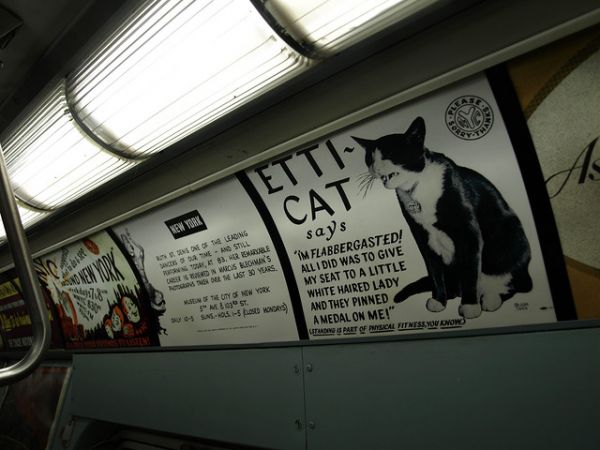
Of the many jobs that cats have held, I’ve never seen one that was an etiquette advisor. But in 1962, a tuxedo cat launched a career telling New York City subway passengers how to use the trains, treat other passengers, and follow the rules. A series of posters featuring Etti-Cat were posted in almost 3,000 subway cars. Etti-Cat became so popular that she “authored” a book on manners. Now Etti-Cat is featured in an exhibition called Transit Etiquette Or: How I Learned To Stop Spitting And Step Aside In 25 Languages on display at the New York Transit Museum. Read about Etti-Cat and see some of the posters from the exhibit at Hyperallergic. -via Michael Leavitt
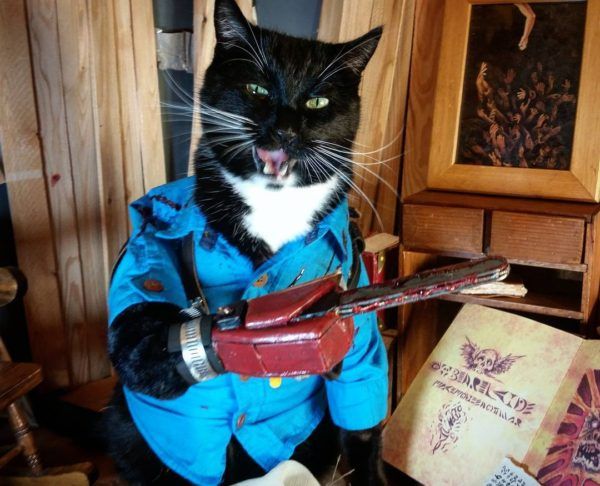
Well, at least this guy has an excuse when he messes up the "Klaatu Verata Necto" neccessary to pick up the Necronomicon -after all, he doesn't even speak English. This amazing Ash Vs. Evil Dead catplay was brought to you by the skilled cat costume creators over at Cat Cosplay.
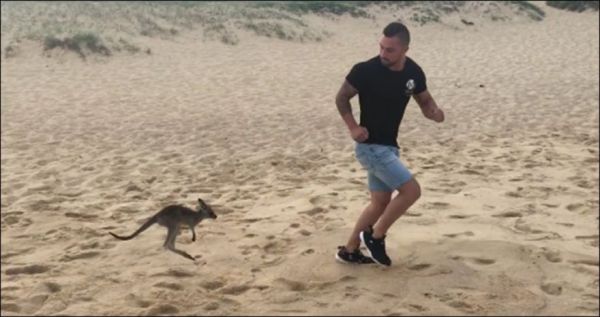
Australians don't generally think of the kangaroo as a good pet, and many consider them to be pests and/or delicious when barbecued, depending on who you ask.
But hunky Australian and social media entertainer Jackson O'Doherty has a great rapport with kangaroos, and his pet roo Damien follows him around everywhere like a bouncy little shadow.
It's hard to imagine hating kangaroos after watching this video, but their jerk side apparently doesn't come out until they're full grown and ready to fight.
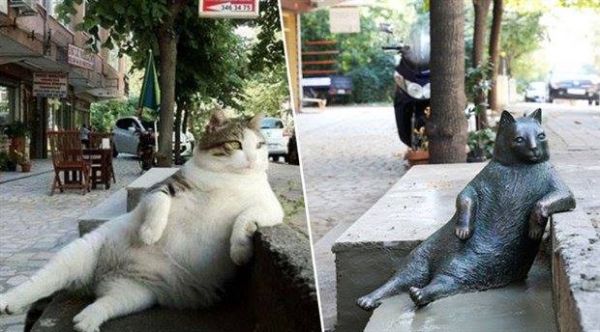
Even if you never visited Istanbul, you probably have seen tons of pictures of him relaxing on benches and sidewalks throughout the town. No one knows if this lazy cat had a home of his own, but everyone in the neighborhood loved him and kept him well fed (obviously).
Sadly, Tombili (meaning "Chubbel" according to Google translate) became famous late in his life and passed away from an unknown illness in August. In his memory though, a petition started spreading online asking the city to errect a statue in Tombili's honor. The statue will be officially unveiled on October 4, but as you can see, it's already looking lazy and chill -just the way Tombili would have wanted it.
A video posted by BiggyPop (@biggypop) on Sep 30, 2016 at 3:53am PDT
Iggy Pop has a cockatoo he adores named Biggy Pop. Biggy has his own Instagram account, because he is a natural performer. The video above was posted there just this morning, showing Iggy playing with Biggy in the guise of a hand puppet. Biggy shows off his rhythm as the puppet sings to him. -via Metafilter
In this cute video from Mark Hughes, five Jack Russell terriers are getting their pool filled. One decides to show the garden hose who’s the boss, and shakes the poor hose by the neck. The hose continues to spew water, and the other four dogs chase after the water stream. By the time the hose is completely subdued, the whole backyard is wet! -via Tastefully Offensive
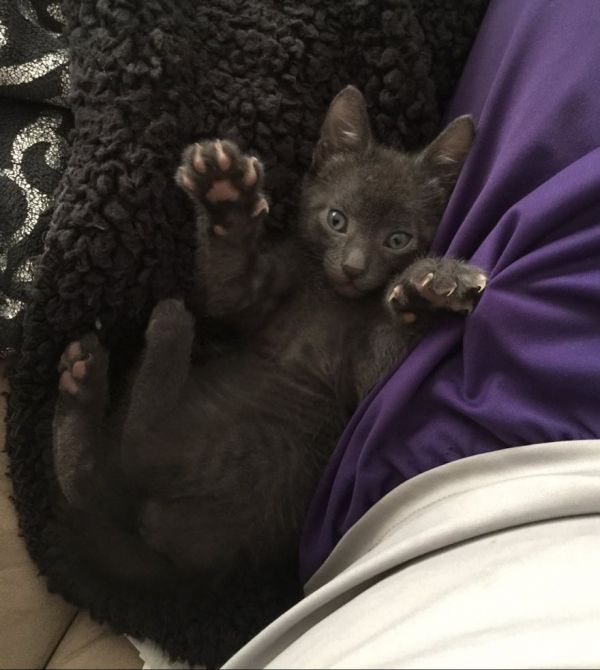
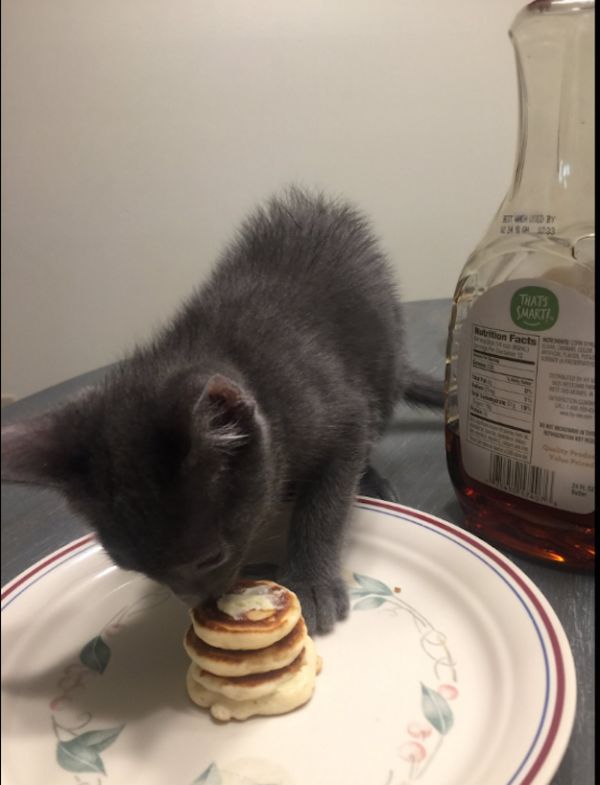
Chase Stout and Kenzie Jones recently adopted a new kitten, which they named Mr. Wilson. When Jones went out of town, she left Stout with instructions: “Don’t forget to feed the kitten.”
One morning, he sent her a text that said, “Do you know if Wilson likes chocolate chips in his pancakes?” Yes, he had made pancakes, a regular-sized stack for himself, and a tiny stack of three pancakes for Mr. Wilson. No, he did not put chocolate chips in them. As you can see, the kitten appreciated his efforts.
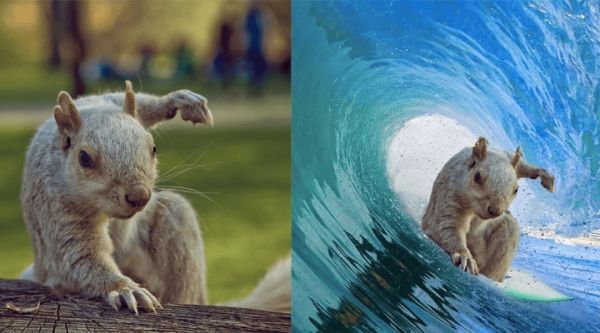
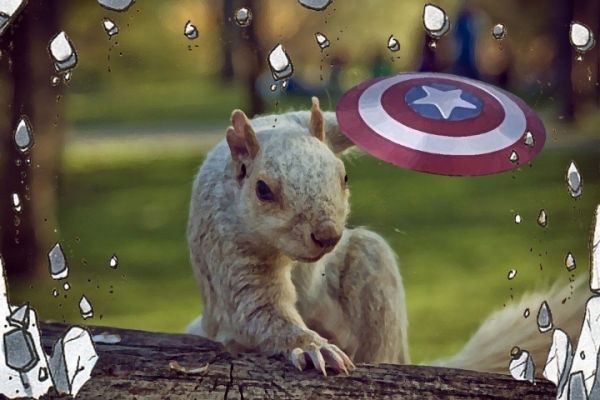
That squirrel probably never thought twice about his intense pose in front of a camera, but he sure provided us with a great gift when he did it -a gift only a Reddit PhotoShop battle could perfect.
3D printing is revolutionizing a lot of industries, but perhaps no other use of the technology is quite as fascinating as its use in medicine. While its applications in human medicine are amazing, we can't help but be enthralled when we see animals getting a new lease on life thanks to a little 3D printing. Here are a few stories of animals who were saved thanks to the new technology.
1. Fred the Tortoise
Fred is a female red-footed tortoise from Sao Paulo who was injured in a forest fire that destroyed most of her shell. Rescuers thought the poor tortoise looked like Freddy Krueger, hence the not-traditionally-feminine name. By taking pictures of her shell from all angles and comparing them to a healthy tortoise, veterinarians were able to create a 3D model of a shell, which they then printed in four individual pieces from a corn-based plastic. It took 3 months all together for the shell to be made into a reality and, unfortunately, Fred came down with pneumonia just after her surgery. Fortunately, she survived the ordeal and artists began to come forward offering to help paint the rescued animal's shell so she looked like a traditional, healthy red-footed tortoise. The team took their time to ensure they could find the right paint that wouldn't damage the shell or present a health risk to poor Fred.
Eventually, Fred will need a new shell, but for now, she's cruising in style and couldn't be happier with her new mobile home.
2. AKUT-3 the Sea Turtle
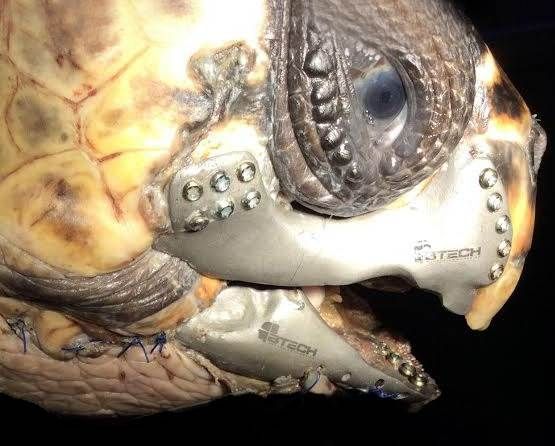
In 2015, a loggerhead sea turtle, scientifically named AKUT-3, was found in Turkey with a damaged jaw that left it unable to eat on its own in the wild. He was quickly taken in by the Sea Turtle Research, Rescue and Rehabilitation Center at Pamukkale University and the director of the center immediately recognized that 3D printing might be the turtle's best hope. The center then partnered with BTech Innovation and used CT scans to create a 3D model of the turtle's damaged jaws, which allowed for a custom-fitted implant made from 3D printed titanium.
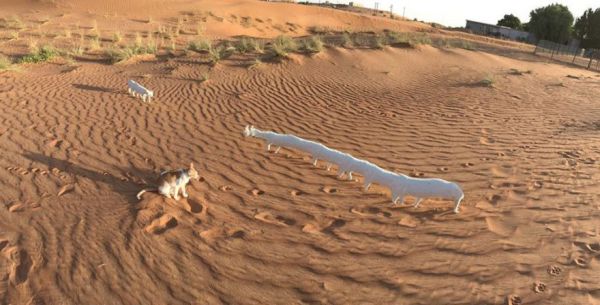
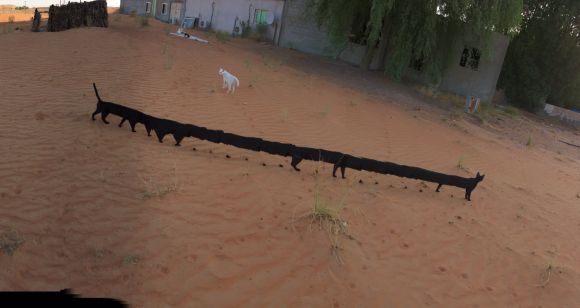
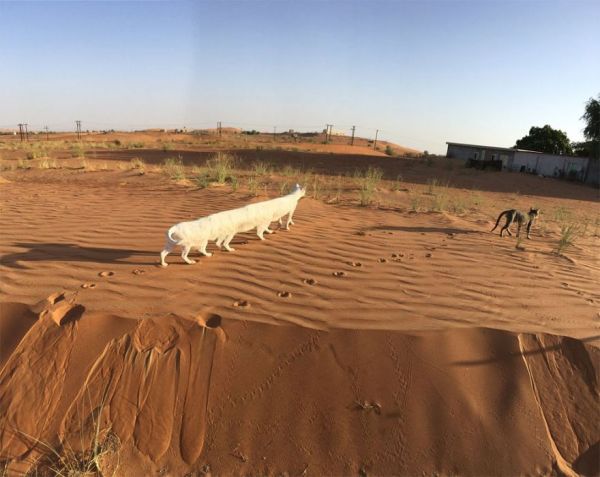
The Catbus in My Neighbor Totoro captured the imagination of cat lovers, who wondered what real cats would look like if they were extra long with a bunch more legs, like a cat-ipede.
Now, thanks to these panoramic photography fails by Japanese Twitter user @hanamomoact we needn't wonder what a real life catbus would look like any longer!
Hanamomoact shot these funny catbus photos in the Middle East using an iPhone in panorama mode, the elongation a result of the cat moving in the same direction as the lens.
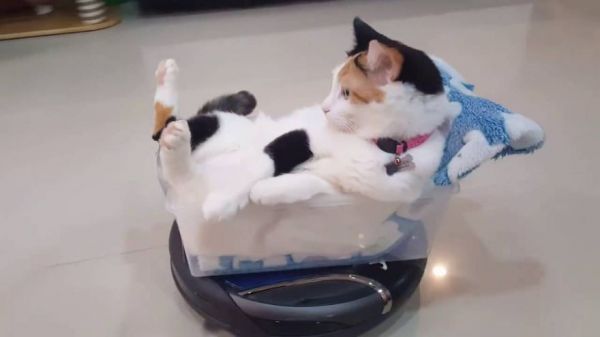
Videos of cats and dogs riding around the house atop a Roomba became an internet "thing" because people love to watch animals do strange, silly and downright ridiculous things.
But the pets in the videos generally look either unimpressed or terrified by the ride, most likely because their humans have them riding on a regular old Roomba.
So if you want your cat to look like a total boss while they ride on a Roomba you've gotta put a shoebox on top, so they can roll around supine style.
When an insect earns the nickname "cow killer" it's a sure bet that little sucker packs a mean sting, and it's also a sure bet some guy will let one sting him on video just to "see how it feels".
The "cow killer" velvet ant is actually a type of solitary wasp, and the wingless female delivers a sting so painful it's said to be "strong enough to kill a cow".
So who's willing to test this myth? Wildman Coyote Peterson of Brave Wilderness, a guy who is happy to play with bugs, and get stung by them, so we don't have to.
There’s so much we don’t know about the history of cats, but one study is giving us some clues. Are domestic cats really all that different from their wild counterparts? Are they the same the world over? And how did domesticated cats spread around the world? Evolutionary geneticist Eva-Maria Geigl and her colleagues from the Institut Jacques Monod in Paris studied the mitochondrial DNA of 209 cats found at archaeological sites in Europe, Africa, and the Middle East. They ranged from a couple hundred to 15,000 years old. The DNA samples confirmed that cats were domesticated along with the rise in agriculture, as they were quite useful in rodent control.
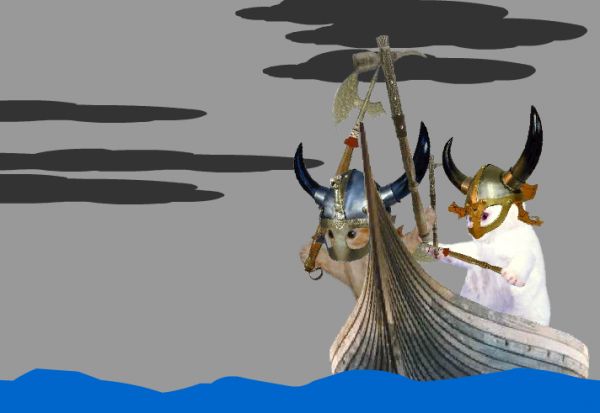
Thousands of years later, cats descended from those in Egypt spread rapidly around Eurasia and Africa. A mitochondrial lineage common in Egyptian cat mummies from the end of the fourth century bc to the fourth century ad was also carried by cats in Bulgaria, Turkey and sub-Saharan Africa from around the same time. Sea-faring people probably kept cats to keep rodents in check, says Geigl, whose team also found cat remains with this maternal DNA lineage at a Viking site dating to between the eighth and eleventh century ad in northern Germany.
“There are so many interesting observations” in the study, says Pontus Skoglund, a population geneticist at Harvard Medical School in Boston, Massachusetts. “I didn’t even know there were Viking cats.” He was also impressed by the fact that Geigl’s team was able to discern real population shifts from mitochondrial DNA, which traces only a single maternal lineage. Nonetheless, Skoglund thinks that nuclear DNA — which provides information about more of an individual's ancestors — could address lingering questions about cat domestication and spread, such as their relationship to wild cats, with which they still interbreed.
Of course there were Viking cats! Ships’ cats appear to be the key to spreading the love of felines and their pest control superpowers around the world. The study also determined that calico cats didn’t exist until the Middle Ages. Learn more about the study at Nature. -via Digg