This educational game has several parts, one in which a rabbit eats your garden up, another where farm animals dance, and one in which pumpkins come in all colors ...possibly because they're in a mushroom field. The company that produces the game only promises to teach your child English words. Teaching them how to be polite about their choices and not eat glass is up to you. You can play the game online. Link -via Geeks Are Sexy
Photographer Dave Engledow is proud of his title as the World's Best Father. So he's documented his successes with his daughter Alice Bee. The results are hysterical. He's planning to publish a calendar with these images. You can view them at the link.
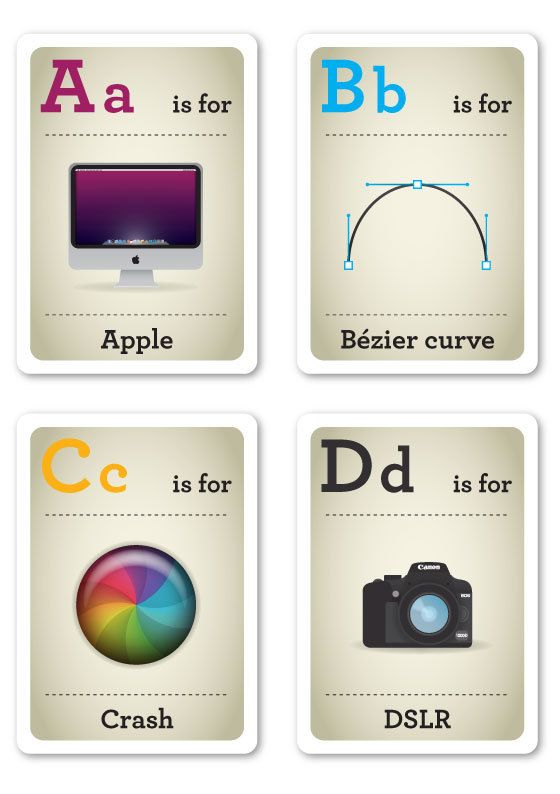
Are your kids too genuine? Are they not yet pretentious enough? Then perhaps these hipster flashcards will help teach your youngsters how to be annoying and judgemental from an early age.
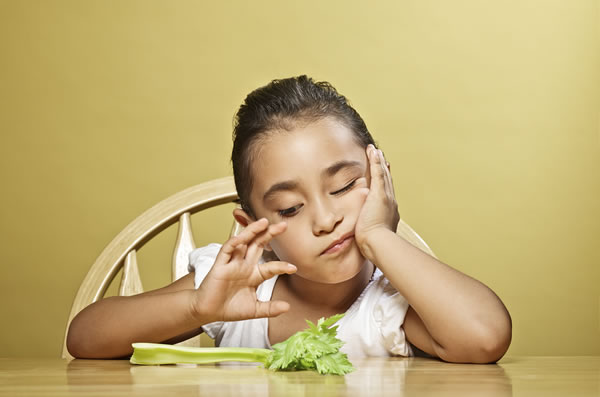
Your kids not eating their fruits and veggies? Here's a simple trick
that's been shown to increase consumption:
Well, one way seems to be to simply jazz up what they’re called.
For example, instead of carrots how about offering "X-ray vision
carrots"? When researchers tried that in five New York elementary
schools, kids ate twice as many of Bug Bunny’s favorite food.
A second experiment at two more schools dealt with broccoli and green
beans—two deeply unpopular items. But when renamed to "Tiny
Tasty Tree Tops" and "Silly Dilly Green Beans," veggie
consumption again doubled.
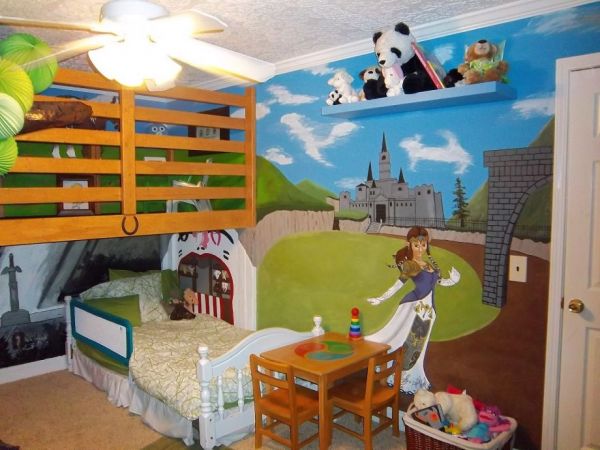
It's dangerous to grow up alone -take this great Zelda bedroom. This couple had a Mario nursery, but once their little one got a little too big, they upgraded to this design instead.
Your children have plenty of opportunities to learn about gambling that are dressed up as something else. The problem is that they may be learning about it backwards, if those who profit from virtual worlds, claw machines, and collectible fads have their way. So many "games" seem innocuous, as they are aimed at children, but end up costing something for just a chance at winning. And sometimes you must look deep to see how it works.
Well here’s a thing. Panini Sticker books are gambling for kids. There’s no doubt that’s a fair representation of them. Collect stickers! Oh god collect them now! But do so by giving us money for random stickers you may or may not need or want! Swap them with your friends by all means, but lets be honest, some stickers will just be rare. So you have to be lucky. And you are not lucky. So buy more!
You could substitute baseball cards, Beanie Babies, or Pokemons in that last paragraph. Collecting is fine when you love the things you collect and know your limits. But collecting things that are manufactured to be collected in hopes of reaping a profit is troubling. Do your kids engage in the activities in the linked article? You may want to have a discussion with them about chance, odds, and long-term cost. Link -via Metafilter
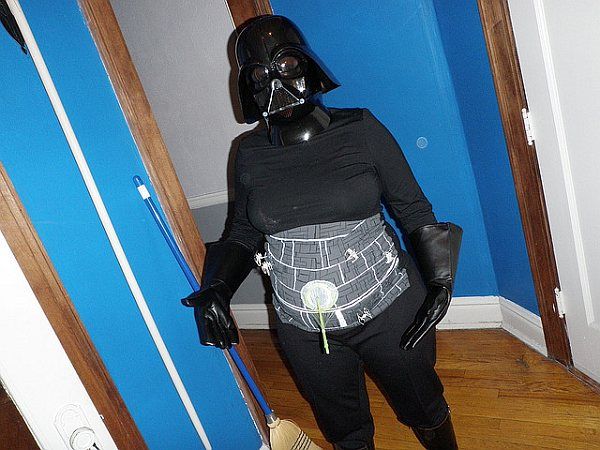
Just because you're sportin' a baby bump doesn't mean you can't dress up for Halloween, in fact it may even help make your costume even cooler!
Take this crafty costumer/mom-to-be - she's incorporated her baby bump into her costume so it can tell a story of wars that take place in the stars, and one particular star that is all about death and gets blown up.
Like looking at pics of geeky moms and their future geek children sportin' some sweet costumes? Hit the Halloween blog link and get your spooky geek on!
Little Maddie will never forget that time her dad added special effects to a home video and made her into Avatar Korra with earthbending powers. -via The Daily What Geek
Children may inherit some traits that add up to a sense of humor, but recent research shows they learn what's funny by watching their parents. We already knew they looked to parents for cues about what they should be afraid of. A new experiment by Gina Mireault of Johnson State College and John Sparrow at the University of New Hampshire shows they also learn what they should laugh at.
In the latest study, babies watched their parent react naturally to two ordinary events, looking at a picture book and being shown a small red foam ball.
The events were then changed so that they became absurd: The open picture book was bounced on the researcher’s head while she said, “Zoop, Zoop” and the foam ball was placed on the researcher’s nose while she poked it and said, “Beep, Beep”Parents were instructed to either stare at the researcher with an expressionless face or to point and laugh at her.
The study found that, although 6-month-old babies stared longer at the absurd events, showing that these were unfamiliar to them, their reactions to the events did not depend on their parents’ reactions.
However, babies watched their parents closely when they laughed. The combination of paying close attention to absurd events and to others laughing at those events might explain how babies develop the sophisticated sense of humour they possess at 12 months, the researchers said.
So keep up the absurdity, because there's nothing more delightful than a laughing baby! Link -via the Presurfer
I said to my wife, "I like Svetlana. That's a pretty name for a girl." "No," my wife said, "We're not Slavic and it's too unusual."
So we named our second daughter Sophia, which, unbeknownst to my wife, was to become the most popular baby name in America that year. And the next. There are Sophias my daughter's age everywhere.
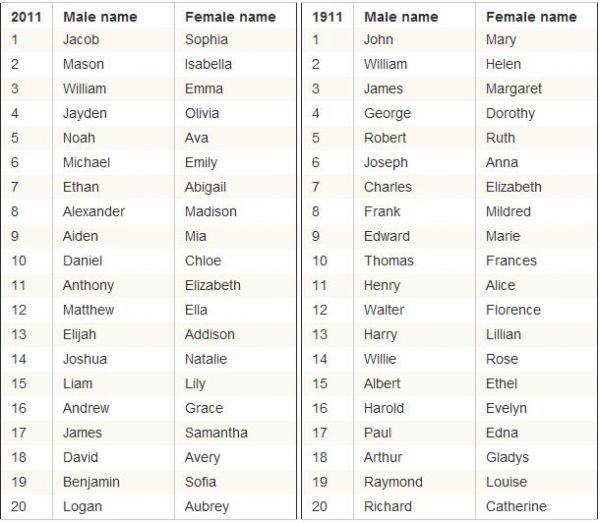
The popularity of baby names changes over time. The above lists show the most popular baby names in the United States in 1911 and 2011. Over time, only the names William, James and Elizabeth have remained popular.
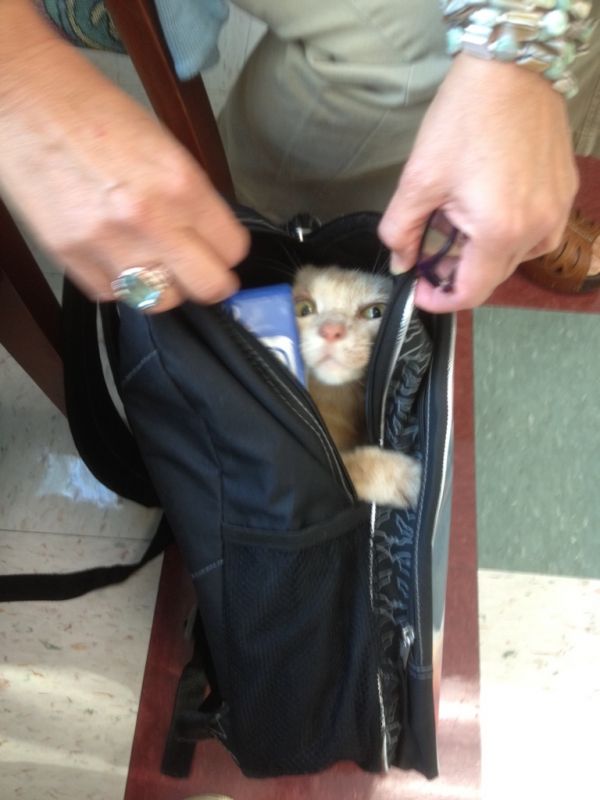
Redditor mrfahrenheit94 tells the story of an elementary teacher. She didn't believe her young student when he said he'd brought his cat to school -until he opened his backpack! The child's parents were called to come pick up the cat, who was undoubtedly happy to go home in a car instead of a backpack. Did you ever take a pet to school, thinking it was a great idea? Link
Norland College in the United Kingdom is renowned for training the best nannies for the wealthiest homes in the world. And now, thanks to Michael Kenny, Norland has its first male student:
"I wanted to work with children because I can understand young people a lot better. I find them a lot easier to get on with," he told The Telegraph. "I think I would like to be a nanny for a few years, because it is the whole reason you go through the training. But then after that I would like to do a PGCE and become a nursery teacher or work in a prep school."
More than 7,000 nannies have graduated from the school, which was founded in 1892 by Emily Ward and originally called The Training School for Ladies as Children's Nurses. These days, a degree from Norland involves more than simply learning how to read a book upside down -- though students at Norland are taught how to do that, too. There are classes on nutritional theory, cooking, sewing, sign language, social sciences, health, history, and early childhood education.
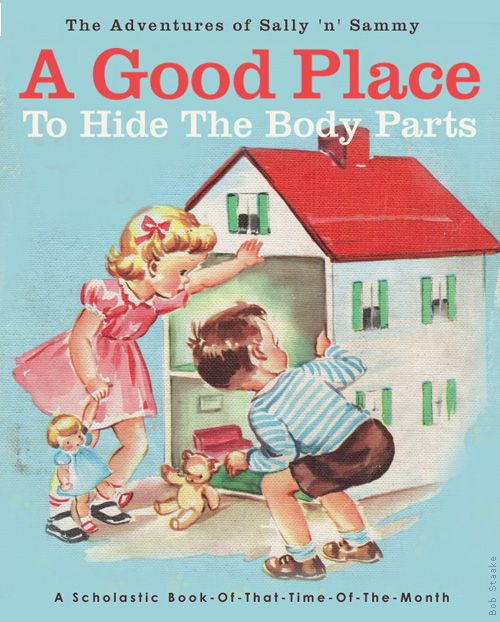
Bob Staake illustrates children's books. No, really! You can read our interview of him here. Staake has also altered the covers of 26 classic children's books to make them delightfully disturbing. You can view the rest at the link. Content warning: dark humor.
But what is the secret to creating happy children that grow up into successful
adults? According to Nobel laureate and economist James Heckman, the secret
to good parenting is actually less of it:
So what can parents do to help their children develop skills like motivation
and perseverance? The reality is that when it comes to noncognitive
skills, the traditional calculus of the cognitive hypothesis—start
earlier and work harder—falls apart. Children can't get better
at overcoming disappointment just by working at it for more hours. And
they don't lag behind in curiosity simply because they didn't start
doing curiosity work sheets at an early enough age.
Instead, it seems, the most valuable thing that parents can do to help
their children develop noncognitive skills—which is to say, to
develop their character—may be to do nothing. To back off a bit.
To let our children face some adversity on their own, to fall down and
not be helped back up. When you talk today to teachers and administrators
at high-achieving high schools, this is their greatest concern: that
their students are so overly protected from adversity, in their homes
and at school, that they never develop the crucial ability to overcome
real setbacks and in the process to develop strength of character.
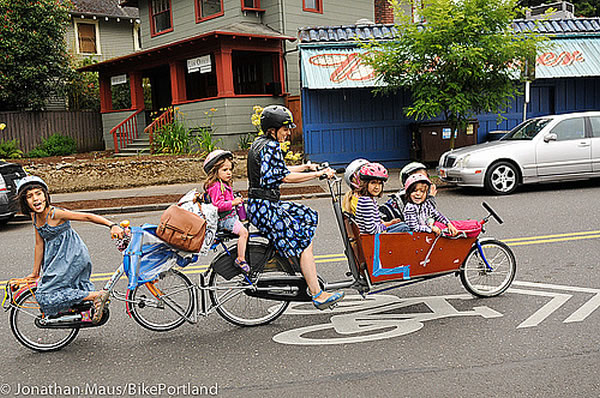
Like many people, Emily
Finch gave up her big SUV for a bicycle. But what makes this story
unusual is that she's a mother of six and yes, she bikes them around town
in what can only be called a human-powered minivan.
Jonathan Maus of Bike Portland interviewed super-mom Emily:
Biking with kids is all the rage in Portland these days, but biking
with six kids between the ages of 2 and 11? That's something I never
would have thought possible before I met southeast Portland resident
Emily Finch.
Finch, 34, is a powerhouse. Watching her pedal her bakfiets cargo bike
with four kids in the front, another one in a child seat behind her,
and another one on a bike attached to hers via the rear rack, is a sight
that not only inspires — it forces you to re-think what's possible.