
Inside a Toddler's Brain
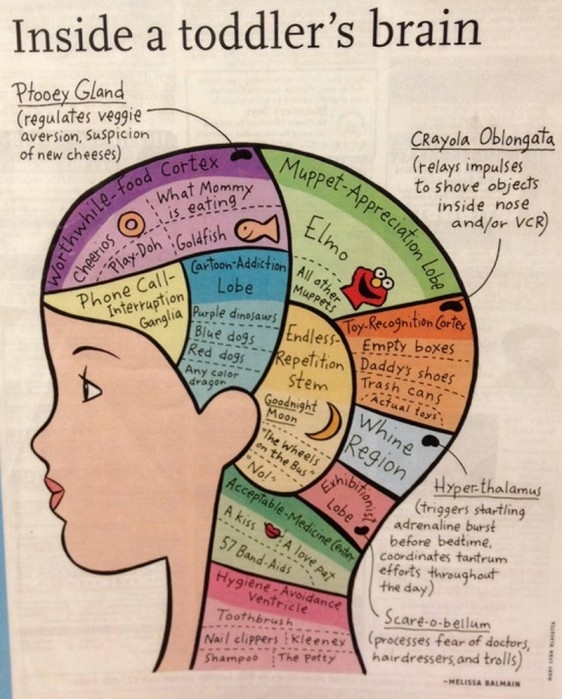
This tells the story pretty well, as I can see. A little digging revealed that this was drawn by freelance artist Melissa Balmain and was published in Parenting Magazine in September 2003. -via Buzzfeed


 Every year in the U.S., more than half a million women go back to their jobs within a month of giving birth. The reason is usually economic, as paid maternity leave is not required by law. Short leaves may have harmful effects on both mother and baby, but the research in America is inconclusive, because the length of time off is complicated by other factors, such as poverty and education.
By looking to Europe, which has meticulous data collection practices and a history of paid leave stretching back to the 19th century, researchers have been getting a better and better handle on the extent to which varying amounts of paid leave can save kids’ lives. Two studies, one published in the Economic Journal in 2005 and another five years earlier, examined the results of the steady climb in paid leave in 16 European countries, starting in 1969. By charting death rates against those historical changes, while controlling for health care spending, health insurance, and wealth, the authors were able to attribute a 20 percent dip in infant deaths to a 10-week extension in paid leave. The biggest drop was in deaths of babies between 2 and 12 months, but deaths between 1 and 5 years also went down as paid leave went up. So what was the optimal amount of time off, according to all this research? According to Christopher Ruhm, the author of the first European study, paid leave of about 40 weeks saved the most lives. (After that point, according to Ruhm, “there may even be some partial reversal of those gains.”)
(YouTube link)
Lua, who appears to be about three years old, takes us through a typical workday of the modern independent woman. -via Stuff I Stole from the Internet
(YouTube link)
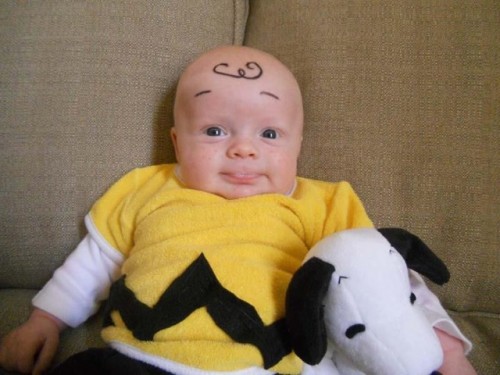
Stewie the cat helps put baby Connar to sleep. Isn't that sweet? It reminds me of one night my one-year-old would not go to sleep, until, in desperation, I put the cat in the crib with her. She's tried to get the cats to sleep with her every night since, and she's almost 15 now. -via The Daily What

(YouTube link)
This poor corgi wants to play fetch, but for some reason the weird bald human just will not throw his toy for him. Nevertheless, he just keeps trying.
Via BuzzFeed
 Have you decided what to buy for the kids in your life this Christmas? GeekDad reviews a lot of toys and other products for children. So when you want to know what's fun, it's a great resource. Now they've distilled the best of the best down to one short list.
Here at GeekDad we review a lot of products — books, toys, gadgets, software — and I know it’s impossible for most parents to actually afford all of the cool stuff that gets written up. Heck, most of us can’t afford it either, and we’re envious of the person who scored a review copy of a cool board game or awesome gizmo. (Disclosure: that person is probably me.) So while we love telling you about all the cool stuff that’s out there, I understand that as parents we all have limited budgets and we sometimes need help narrowing down our wishlists.
So to help you out, I’ve worked really hard to narrow down this list to five items that no kid should be without. All five should fit easily within any budget, and are appropriate for a wide age range so you get the most play out of each one. These are time-tested and kid-approved! And as a bonus, these five can be combined for extra-super-happy-fun-time.
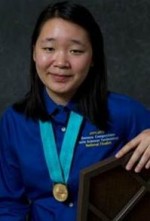 Angela Zhang is only seventeen, but she's already engaged in groundbreaking nanotech research. Specifically, she's developed a thingamabobber* that fights cancer:
Zhang's work reflects the growing use of nanotechnology to treat diseases of the human body on the smallest scales. She used gold and iron oxide-based nanoparticles that could act as markers for MRI and photoacoustic imaging, even as it delivered the drug salinomycin to attack cancer tumors.
"Angela created a nanoparticle that is like a Swiss army knife of cancer treatment," said Tejal Desai, a bioengineer at the University of California, San Francisco, and a competition judge. "She showed great creativity and initiative in designing a nanoparticle system that can be triggered to release drugs at the site of the tumor while also allowing for noninvasive imaging."