
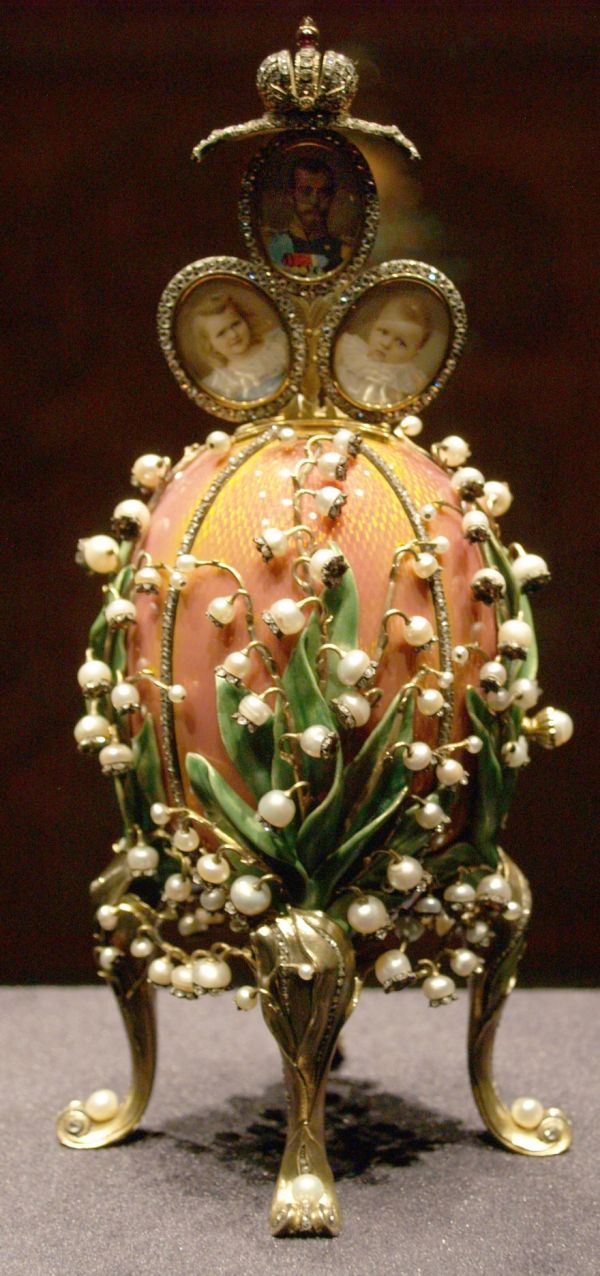
The House of Fabergé was a high-end jewelry company in St. Petersburg during the 19th and early 20th centuries. Tsar Alexandar III developed a habit of giving ornate eggs to his wife as an Easter gifts, and in 1885 began commissioning Fabergé to make them. Tsar Nicholas II continued the tradition, giving Fabergé eggs to his mother and his wife. Fabergé made 50 Easter eggs for the imperial family and 19 more for other clients. Of those 69 Fabergé eggs, only 44 are known to exist today, and not all of them are complete. There are a few that are thought to be held in secret.
The grandest of the eggs are made with gold and encrusted with diamonds and other precious gems, and feature clever and whimsical sculptures inside. The value of these eggs is a combination of their materials, craftsmanship, historical significance, and rarity, so they can sell for many millions of dollars. In 2025, a Fabergé egg was sold at auction and brought more than $30 million! Each egg has its own history, including a few that were lost for decades and then recovered. See and read about six of the most valuable Fabergé eggs at Mental Floss.
(Image credit: Miguel Hermoso Cuesta)





Commenting on Neatorama will earn you NeatoPoints!