
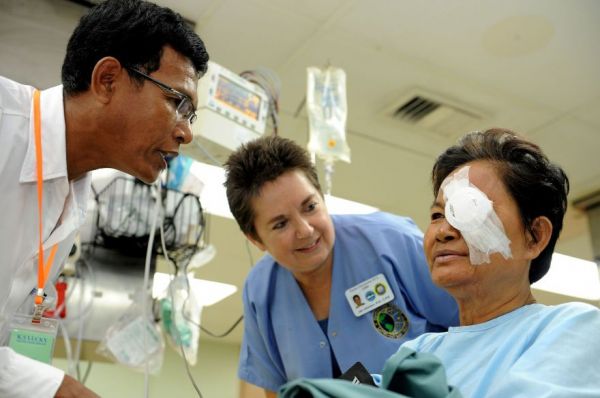
People who are born blind and have their sight restored at a later age tend to not look at people's faces when they speak to them- they instead look at their hands. That's because they have built their sensory world around touch, hearing, and other senses and have more experience with someone else's hands than with faces. But that's only one way newly-sighted people have to learn how to deal with a world they can suddenly see.
Children born with cataracts can be treated surgically, but in developing countries this treatment may be out of reach. This gives us a population of people to study who have their sight restored after they have learned to live as a blind person. Their brains have to adjust to perceive the signals that an infant learns naturally over time, like separating shapes from colors, depth perception, distinguishing outlines, and facial recognition. During blindness, the visual cortex is often rerouted to process non-visual signals. Still, the brain is very adaptable. Read about the way people see for the first time at Big Think.
(Imagecredit: MC3 Michael Feddersen)





Commenting on Neatorama will earn you NeatoPoints!