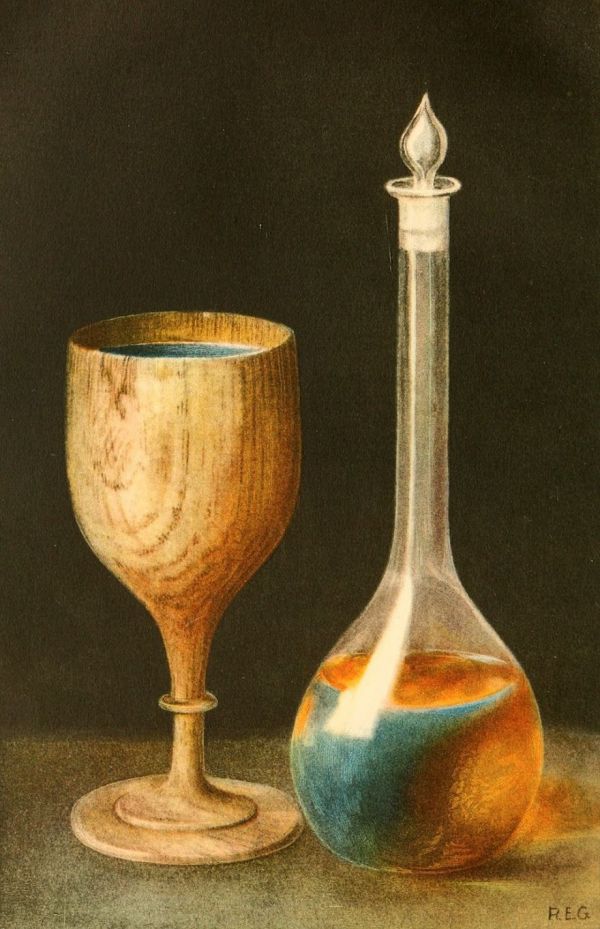
When Spain conquered Mexico, it opened up trade in all sorts of previously unknown products from the New World. One was Lignum nephriticum, a type of wood that, when soaked in water, would produce a tincture useful for treating kidney and urinary ailments. Lignum nephriticum literally means kidney wood. Physician Nicolás Monardes first described the wood in 1569. He couldn't describe the plant it came from, though, because he'd never been to Mexico. Monardes wrote about soaking wood chips in water, and seeing the water turn blue. But then other Europeans described a different result. When the wood chips were soaked with water in a cup made of Lignum nephriticum, the water turned blue, yellow, orange, and red depending on the light! The liquid could even display more than one color at once.
Scientists of the time were more interested in the colors than they were with the wood's medicinal value. But why were the descriptions so different? Could Mexico have more than one type of kidney wood? For one reason or another, no one put too much energy into solving the mystery until the 20th century. Read about the real origins of Lignum nephriticum at Jstor Daily. -via Strange Company
(Image credit: Safford, William Edwin)