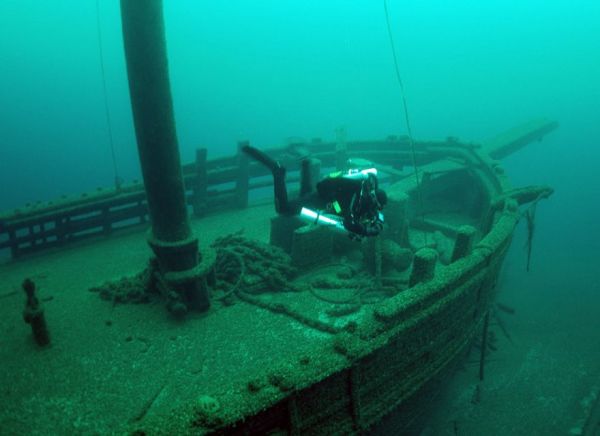
In a post last week, we learned that were 6,000 shipwrecks on the Great lakes, and that was just in one century. The first documented shipwreck was in 1679 when the Griffon went down. But the lakes have revealed dugout canoes that go back as far as 5,000 years. How do we know this? The Wisconsin Historical Society’s Maritime Preservation and Archaeology program has been identifying, studying, and mapping the remains of ships found in the Great Lakes. This work is carried out by people like underwater archaeologist Tamara Thomsen.
Shipwrecks are better preserved in the lakes than they would be in an ocean, due to the fresh cold water. New technology like GPS and personal aircraft make finding the wrecks easier. So Thomsen no longer looks for shipwrecks, but she dives down to those that have been reported to study and document them. The ship remains, and any artifacts, are left in place to become memorials. Some are added to the National Register of Historical Places. It's a really cool job for someone who's passionate about diving. Read what that job involves at Smithsonian.
(Image credit: Tamara Thomsen)