
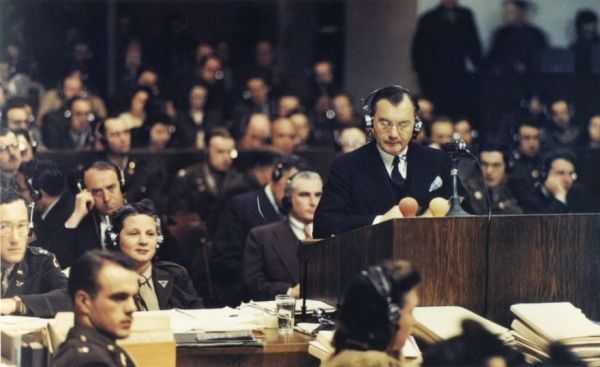
As World War II wound down in 1945, the Allies had to decide what to do with the Nazi leaders. Winston Churchill wanted to simply execute them, but the Russians, French, and Americans held out for putting them on trial. The resulting Nuremberg Trials lasted a year and a half, but paid off by exposing the details of Nazi crimes to the global public while giving those leaders the opportunity to defend themselves, thereby offering a sense of justice and closure to a war-weary world.
The British prosecuted the charges of crimes against peace, while the Russians and the French tackled war crimes and crimes against humanity. United States prosecuted the conspiracy charges, which tied the crimes -and the defendants- together. The Americans appointed Robert H. Jackson, "arguably the most accomplished forgotten man of the 20th century," as the lead prosecutor for the US. Jackson had skipped college altogether to apprentice under a lawyer, and only attended one year of law school before passing the bar. His practice and his writings were so impressive that President Roosevelt appointed Jackson as a Supreme Court Justice in 1941. Jackson, a staunch advocate for due process, volunteered to leave the Supreme Court to serve the war effort in any way he could. Roosevelt kept that in mind, and his successor Harry Truman sent Jackson to Nuremberg to serve justice. Read his story at Smithsonian.
An addendum to the linked article recommends four movies about the Nuremberg Trials.
(Image credit: Raymond D'Addario)





Is this correct? Roosevelt died before the war ended. Did you mean Truman appointed Jackson?