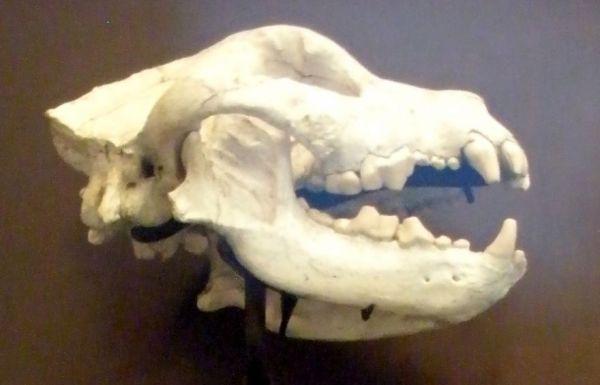
Millions of years ago, the grassland of North America was a brutal place. There were huge animals like rhinos, camels, horses, and elephants. And there were predators that evolved to take them down. These were canid borophagines, bone-crushing dogs. Borophagine species ranged from the size of a large coyote to larger than the biggest wolves, up to more than 300 pounds! They had short muzzles and massive teeth, and may have resembled hyenas. The borophagines consumed plenty of bone, but evidence from fossil feces show they weren't great at digesting them. Tearing through bones, however, was an efficient way for a pack to get its fill of a mastodon.
The last of the borophagine species died out 1.8 million years ago, and were replaced by true canines that didn't crush bones, like coyotes. Wolves came even later. Saber-toothed cats hung around until about 10,000 years ago. So what happened to the borophagines? Read what we know about these ancient dogs at Smithsonian.
(Image credit: Ghedoghedo)