10 Most Fascinating Savants in the World

Posted by Alex in Medicine, Neatorama Only on September 5, 2008 at 2:50 am


Sometimes the most amazing abilities of the human brain are revealed exactly when things go wrong with it. Take, for example, savants - people who have mental abilities that could only be characterized as superhuman (like having photographic memory, playing music perfectly after hearing it just once, or doing complex mathematical calculations in one's head) but otherwise severely disabled in every day cognitive functions and social interaction.

Does the human brain have latent savant-like abilities? Does our higher cognitive functions somehow block these abilities, and why? And can we have savant-like abilities without the accompanying autism and/or developmental disabilities? One intriguing study by Dr. Allan Snyder of the Centre for the Mind suggested that temporarily impairing the left fronto-temporal lobe in healthy subjects by low-frequency magnetic pulses could result in savant-like mental abilities (see, for example: article in New York Times "Savant for a Day")

Most savants are born with their abilities (and unfortunately, their developmental disorders), but not all: severe brain injuries can, in very rare instances, cause savant-like abilities to surface (see, for example: The Case of the "Sudden" Savant). One noted savant (Daniel Tammet, see below) is a highly functioning autistic savant who can perform amazing mental feats but does not have significant developmental disabilities.

There are a few savants in the world (called "prodigious savants") whose abilities are so exceptional that they would've been classified as phenomenal with or without cognitive disabilities. Let's take a look at 10 savants with superhuman mental skills:

1. Kim Peek, the Real Rain Man
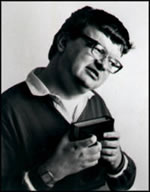
Even though you've never heard of Kim Peek, chances are you've heard the movie Rain Man. Kim was the inspiration for the character played by Dustin Hoffman in the movie.

Kim Peek was born with severe brain damage. His childhood doctor told Kim's father to put him in an institution and forget about the boy. Kim's severe developmental disabilities, according to the doctor, would not let him walk let alone learn. Kim's father disregarded the doctor's advice.

Till this day, Kim struggles with ordinary motor skills and has difficulty walking. He is severely disabled, cannot button his shirt and tests well below average on a general IQ test.

But what Kim can do is astounding: he has read some 12,000 books and remembers everything about them. "Kimputer," as he is lovingly known to many, reads two pages at once - his left eye reads the left page, and his right eye reads the right page. It takes him about 3 seconds to read through two pages - and he remember everything on 'em. Kim can recall facts and trivia from 15 subject areas from history to geography to sports. Tell him a date, and Kim can tell you what day of the week it is. He also remembers every music he has ever heard.

Since the movie Rain Man came out, Kim and his father have been traveling across the country for appearances. The interaction turns out to be beneficial for him, as he becomes less shy and more confident.

Further reading about Kim Peek:

(Photo: Kim Peek courtesy of Darold A. Treffert / Wisconsin Medical Society)

2. Leslie Lemke


[YouTube clip]

Leslie Lemke didn't have a great start in life. He was born with severe birth defects that required doctors to remove his eyes. His own mother gave him up for adoption, and a nurse named May Lemke (who at the time was 52 and was raising 5 children of her own) adopted him when he was six months old.

As a young child, Leslie had to be force-fed to teach him how to swallow. He could not stand until he was 12. At 15, Leslie finally learned how to walk (May had to strap his fragile body to hers to teach him, step by step, how to walk).

At 16 years of age, Leslie Lemke bloomed. In the middle of one night, May woke up to find Leslie playing Tchaikovsky's Piano Concerto No. 1. Leslie, who has no classical music training, was playing the piece flawlessly after hearing it just once earlier on the television.

From then on, Leslie began playing all styles of music from ragtime to classical. Like the Tchaikovsky piece, he only has to hear the music once in order to play it again perfectly. He became famous after being portrayed in national television shows. Before his health started to deteriorate, Leslie gave many concerts around the world.

More info about Leslie Lemke:

3. Alonzo Clemons

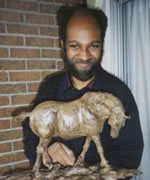
As a toddler, Alonzo suffered a head injury in an accident that changed his life. He can't feed himself or tie his shoelaces, but he can sculpt.

And boy, can he sculpt: after seeing only a fleeting image of an animal on a TV screen, Alonzo could sculpt a perfect 3D figure of it, correct in each and every detail right down to the muscle fibers.

Check out Alonzo's official website, where you can purchase his sculptures: Link

4. Gottfried Mind: Cat's Raphael


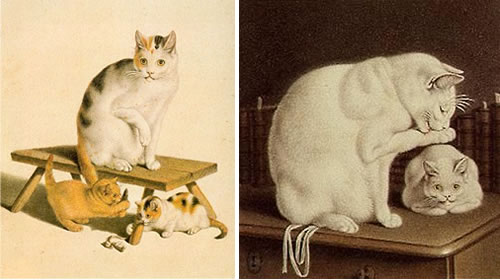
Gottfried Mind's cats (For more, check out Art Prints on Demand)

Gottfried Mind was one of the earliest savants in history. In 1776, the eight-year-old Gottfried was placed in an art academy, where his teachers noted that he was "very weak, incapable of hard work, full of talent for drawing, a strange creature, full of artist-caprices, along with a certain roguishness."

One day, Gottfried's mentor, a painter named Sigmund Hendenberger, was drawing a cat when Gottfried exclaimed "That is no cat!" The teacher asked whether he could do better and sent the child to a corner to draw. The cat that Gottfried drew was so lifelike that since then he became known as the Cat's Raphael:

In the course of his narrow, indoors life, he had worked himself into an almost paternal relation with domestic animals, especially with cats. While he sat painting, a cat might generally be seen sitting on his back or on his shoulder; many times he kept, for hours, the most awkward postures, that he might not disturb it. Frequently there was a second cat sitting by him on the table, watching how the work went on; sometimes a kitten or two lay in his lap under the table. Frogs (in bottle) floated beside his easel; and with all these creatures he kept up a most playful, loving style of conversation; though, often enough, any human beings about him, or such even as came to see him, were growled or grunted at in no social fashion. (Source)

5. Gilles Tréhin


[YouTube Link: Art Savant: The City Inside My Head]

Gilles Tréhin lives part-time in the city of Urville, in an island off the Côte d'Azur, between Cannes and St. Tropez. Never heard of it? That's because Urville exists only in his mind.

Since he was 5, Gilles taught himself to draw three dimensional objects. By 12, he started building a city he called "Urville" (after Dumont d'Urville, a French scientific base in the Antarctic). At first he used LEGO, but shortly thereafter, he realized that he could expand his imaginary city much easier with drawings.


Abbaye Sainte Marguerite des Tégartines, in Urville

Urville isn't just an idle idea - Gilles has 250 detailed drawings, complete "history" of the founding the the city, and has even published a book detailing it (Sneak peak at Google Books)

Visit Urville at Gilles' official website here: Link

6. Jedediah Buxton

Jedediah Buxton, born in Derbyshire, England, in 1707, couldn't write. By all accounts, he has no knowledge of science or history or anything else for that matter except for numbers. Jedediah, as it turned out, was one of the world's earliest mental calculators and savants.

Everything was numbers to Jedediah - in fact, he associated everything he saw or experienced with numbers. He measured the area of the village he was born in simply by walking around it. When he saw a dance, his whole attention was to count the number of steps of the dancers. At a play, Jedediah was consumed with counting the number of words uttered by the actors.

The mental feat of Jedediah Buxton was tested by the Royal Society in 1754 - his mathematical brain was able to calculate numbers up to 39 figures.

7. Orlando Serrell
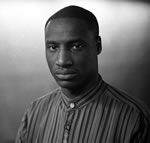
Orlando Serrell wasn't born autistic - indeed, his savant skills only came about after a brain injury. In 1979, then ten-year-old Orlando was playing baseball when the ball struck him hard on the left side of his head. He fell to the ground but eventually got up to continue playing.

For a while, Orlando had headaches. When they went away, he realized he had new abilities: he could perform complex calendar calculations and remember the weather every day from the day of the accident.

From Orlando's official website:

What makes Orlando Serrell so unique is that he may indeed hold the key that unlocks the genius in us all. Orlando Serrell did not possess any special skills until he was struck in the head by a baseball when he was 10. And his extraordinary gifts seem to be his only side effect. Could this mean once a key hemisphere in the brain is stimulated, we can all attain the level of genius Orlando posses and beyond? Only time and research will tell. Until then we will do well to keep our eyes on Orlando and learn what we can from his experience.

8. Stephen Wiltshire, the Human Camera

As a young child, Stephen Wiltshire was a mute - he was diagnosed as autistic and was sent to a school for special needs children. There, he discovered a passion for drawing - first of animals, then London buses, then buildings and the city's landmarks. Throughout his childhood, Stephen communicated through his drawings. Slowly, aided by his teachers, he learned to speak by the age of nine (his first word was "paper.")

Stephen has a particularly striking talent: he can draw an accurate and detailed landscape of a city after seeing it just once! He drew a 10 meter (~33 ft) long panorama of Tokyo following a short helicopter ride.


[YouTube Link: Stephen Wiltshire Draws Tokyo from Memory, fun starts at 3:20]

More info about Stephen Wiltshire:

9. Ellen Boudreaux

Like Leslie Lemke, Ellen Boudreaux is a blind autistic savant with exceptional musical abilities. She can play music perfectly after hearing it just once, and has a such a huge repertoire of songs in her head that a newspaper reporter once tried to "stump Ellen" by requesting that she played some obscure songs - and failed. Ellen knew them all.

Ellen has two other savant skills that are unusual. First, despite her blindness, she is able to walk around without ever running into things. As she walks, Ellen makes little chirping sounds that seems to act like a human sonar (See also our post on Ben Underwood, a blind teen who uses echolocation to "see").

Second, Ellen has an extremely precise digital clock ticking in her mind. To help overcome her fear of the telephone, Ellen's mom coaxed her to listen to the automatic time recording (the "time lady") when she was 8. From then on, Ellen knows the exact hour and minute, any time of the day without ever having seen a clock nor have the concept of the passing of time explained to her.

For more info on Ellen, see:

10. Daniel Tammet: Brainman


YouTube Clip: Daniel Tammet - The Boy With the Incredible Brain [1/5]

At first glance, you won't be able to tell that Daniel Tammet is anything but normal. Daniel, 29, is a highly functioning autistic savant with exceptional mathematical and language abilities.

Daniel first became famous when he recited from memory Pi to 22,514 decimal places (on 3/14, the International Pi Day, of course) to raise funds for the National Society for Epilepsy.

Numbers, according to Daniel, are special to him. He has a rare form of synesthesia and sees each integers up to 10,000 as having their own unique shapes, color, texture and feel. He can "see" the result of a math calculation, and he can "sense" whether a number is prime. Daniel has since drawn what pi looks like: a rolling landscape full of different shapes and colors.

Daniel speaks 11 languages, one of which is Icelandic. In 2007, Channel Five documentary challenged him to learn the language in a week. Seven days later, Daniel was successfully interviewed on Icelandic television (in Icelandic, of course!).

When he was four years old, Daniel had bouts of epilepsy that, along with his autism, seemed to have brought about his savant abilities. Though he appears normal, Daniel contends that he actually had to will himself to learn how to talk to and behave around people:

As he describes in his newly published memoir, “Born on a Blue Day: Inside the Extraordinary Mind of an Autistic Savant” (Free Press), he has willed himself to learn what to do. Offer a visitor a drink; look her in the eye; don’t stand in someone else’s space. These are all conscious decisions.

Recently, some friends warned him that in his eagerness to make eye contact, he tended to stare too intently. “It’s like being on a tightrope,” he said. “If you try too hard, you’ll come off. But you have to try.” (Source)

There is a big difference between Daniel Tammet and all the other prodigious savants in the world: Daniel can tell you how he does it and that makes him invaluable to scientists trying to understand the savant syndrome:

Professor Allan Snyder, from the Centre for the Mind at the Australian National University in Canberra, explains why Tammet is of particular, and international, scientific interest. "Savants can't usually tell us how they do what they do," says Snyder. "It just comes to them. Daniel can. He describes what he sees in his head. That's why he's exciting. He could be the Rosetta Stone." (Source)

More info about Daniel Tammet:


I'll be the first to admit that we have only scratched the surface of the fascinating topic of savant syndrome. If you are interested, here are some suggested websites by Darold A. Treffert, the world's foremost expert on savant syndrome, for further reading:

  • Savant Syndrome, Darold Treffert's website at the Wisconsin Medical Society
  • Islands of Genius [PDF], a Scientific American article by Darold Treffert and Gregory Wallace



Previous post
this post? Please email this            
Next post

FROM THE NEATORAMA ONLINE STORE » more


COMMENT

38 comments to "10 Most Fascinating Savants in the World"

  1. Sweet Violet
    September 5th, 2008 at 4:01 am

    Absolutely fascinating!

  2. Algonkin
    September 5th, 2008 at 8:17 am

    That was some really good reading Alex…thanks!

  3. MoniA
    September 5th, 2008 at 9:00 am

    When I was a teenager I spent some time with Leslie Lemke. I sang a song into his good ear and then he played it back perfectly. The one note I sang a little flat he played that way. I wonder if he is still alive.

  4. Jon C
    September 5th, 2008 at 9:35 am

    Very interesting. Thanks for posting!

  5. Dandy
    September 5th, 2008 at 9:39 am

    What is amazing is the idea that these investigators and scientists have - that these things happen in the brain. Absolutely amazing.

  6. just a guy
    September 5th, 2008 at 9:45 am

    Tammet is one of my heroes. And he’s quite cute. (So is is boyfriend. :P)

  7. Becky
    September 5th, 2008 at 9:53 am

    Rain Man was so largely based on a guy named Joe Sullivan from Huntinton, WV. When the movie originally premiered, they also held a premier there, and there are still posters signed by the cast hanging in the Autism Services offices, an organization founded by his mother, Ruth Sullivan. Joe’s savant skills are more with numbers ~ he can tell you what day of the week any date in history fell on, he can do large number mathematics in his head, in seconds, and he can also count things amazingly fast ~ i remember one day (i worked with joe) when some cheerios were spilled in the kitchen, and in two seconds he told me that there were 281 cheerios on the floor . . . we counted just to be sure (took us about 5 minutes!) and he was dead on. Savant skills are amazing . . . great article!

  8. Jamie
    September 5th, 2008 at 12:06 pm

    Excellent post. Furthermore, here is a story about a Canadian girl with autism. What makes her case unique is that she’s able to communicate via a pictographic keyboard what it _feels_ like to be autistic. Read here: http://www.ctv.ca/servlet/ArticleNews/story/CTVNews/20080217/favaro_ca rly_080217/20080217/

  9. Christophe
    September 5th, 2008 at 12:56 pm

    that’s a Neatorama top 10 post Alex!

    I just wish I could be hit by a baseball.
    (did I say that?)

  10. Neatoramawontsendmeapassword
    September 5th, 2008 at 1:10 pm

    Wow!

  11. Nonchalant Savant
    September 5th, 2008 at 2:25 pm

    I am shocked - shocked, I say - that I was not included within this list.

  12. Peeves
    September 5th, 2008 at 5:13 pm

    I hit #2 and was already astounded. Leslie Lemke..how in the world?? He’s blind but knew how to play the keys and pedals on a piano to mimic an incredibly complicated piece he just heard. There’s smart and then there’s just things like this that make no sense in the world of learning humans have studied. His mother also..we need more parents like her.

  13. MoniA
    September 5th, 2008 at 5:48 pm

    According to what his sister told me, Leslie lemke actually started playing music on the bed springs that held his mattress up underneath his bed. That’s when they decided to get him a musical instrument. When I saw him he was thinner and older looking than in the video shown. I think I remember him having a beard too. His sister also said he would play at the piano until he dropped over from exaustion if they let him. They had to make him rest and eat.

  14. Polx
    September 5th, 2008 at 7:51 pm

    These people are all fascinating, their abilities are amazing.

    But not a one of themm is a genius.

    The contention that seemingly spectacular feats like these are the work of genius is neither accurate or fair to the people who do them.

    They are all damaged or disabled from birth or very close to, and display curious abilities which capture the publics attention, but are also so broken that the publics eye skids away from their actuality and dwells on the rain man stunts.

    Kim Peek is 57 years old and has to be bathed by his 80 plus year old dad every day.

    As remarkable as his capacity to retain information is , it is as effectively useless as if he was shouting obscenities on street corners involuntarily.

    My heart goes out to these people and their families and cares, and it goes out to the families andcares of the peoplke who are just as brain damaged or autistic but manifest nothing that tittilates the publics interest.

    Buit the point is, these savants are useless, and in no way genuiuses.

    Genius is a very different matter.

  15. Polx
    September 5th, 2008 at 7:53 pm

    hee hee my typing is bloody awful.

  16. violet
    September 5th, 2008 at 10:40 pm

    @Polx: I think it’s clear throughout that these savants are not “useless.” They seem to be making contributions on many different levels. And to make a meaningful point about how these people are not geniuses, you would need to explain how you conceive of genius, or what the official, complete definition of that word is. If the definition of genius is at all fluid, I’m sure these people belong somewhere in the constellation. If the definition is narrow and rigid, then maybe you’re right.

    They’re certainly extraordinary, and full of potential both within their own lives and for the greater community as we seek to expand our understanding of cognition and the brain.

  17. Torley
    September 5th, 2008 at 11:37 pm

    What a great article — I haven’t seen a 10-list of savants before. They say Daniel Tammet is like the “Rosetta Stone” because of how well he can comparatively articulate his thought processes.

    Another great autist, altho not necessarily a savant, is Temple Grandin, who’s noted for her compassion about humane treatment of animals.

    @violet: Totally agree.

  18. Shelby
    September 5th, 2008 at 11:39 pm

    Regarding your comments on Leslie Lemke: no child is ever “given up” for adoption. It’s not an easy decision for any birthmother in any circumstance. You “give up” a worn coat to the Salvation Army. You “give up” when you can’t guess an answer. A child is “placed” for adoption or his birthparents made an “adoption plan”. Please fast forward yourself into the 21st century and use more accurate and appropriate and sensitive language if you address human adoption in the future. Thank you.

  19. ted
    September 6th, 2008 at 7:30 am

    Useless? They certainly have a limited entertainment value.

    Shelby, don’t be a douche, you thought police person you.

  20. Alex
    September 6th, 2008 at 11:41 am

    @polx: “genius” is a term often bandied about when talking about savants. I didn’t use the term in my description (though it appeared in the quotes) because I think you’re right.

    Darold Teffert, an expert in the field, described savants’s memory and abilities as “exceedingly deep but very, very narrow”

  21. ted
    September 6th, 2008 at 1:29 pm

    Speaking of geniuses and baths…

    Isn’t Archimedes the dude famous for shouting Eureka! in the bathtub?

    And Stephen Hawkings (people call him a genius) can’t bathe himself, although that’s due to physical limitations rather than mental.

    I’ve been told I’m an idiot savant, just without the savant part.

  22. Polx
    September 6th, 2008 at 8:38 pm

    @Alex, no tyou are totally correct mate. I attributed Genius in quotation marks and it was in no way what you said.

    You have my total and unstinting apology.

    Normally I try to be more thorough about such things.

    You have my sincere apology. Shall endeavour to be be better in future.

    @Violet,

    as much as I can see your intent, it actually says nothing.

    These people are nowhere in the “constellation” of genius.

    They are quite extraordinary, and they cause quite nice feelings in people, hell even in me.

    But that does not mean genius.

    No more than Google is a genius.

    It is an apparatus to retrieve or access information, it in no way interprets information.

    Kim Peek can retrieve any item of info he’s read in his life.

    But he can in no way understand the information beyond it’s set level of information.

    JFK was assasinated in….

    The exact location time and weather bureau information is nothing to him beyond stats and repetition..

    It is regurgitation, it is not digestion.

    He could no more interpret this than he could being told that a squirel jumped onto a power transformer, or that Pringles have a new flavour.

    It is all just information.

    Genius is the facility to take information and interpret it in absolutely new ways.

    To see that which can exist between information.

    Information processing at it’s basics is the capacity to take thesis antithesis and make a synthesis.

    That is waht any of us do in any day.

    You want Mexican, Polx wants Indian but Violet is ok with either.

    So waht do we eat?

    Ok that is overly simlified, but this would Stymie these people.

    Alright enough from me.

    Suffice to say, genius is a very different thing.

    It may please you or salve your feelings to attributee this to them but that has so much more to do with your world view than anything to do with these people.

    Also, I don’t care beyond what I say, as my indifference to these savants is immaterial, they don’t care that they are not genuiuses or functional people, omnly you have made an emotional investment in their place in the constellation of genius.

    quite quite pointlessly.

    Yours Sincerely from the ninty-ninth percentile.

    (which means as little as savantism incidentally.)

  23. JB
    September 7th, 2008 at 5:47 am

    @ Polx:

    “Bla bla bla.

    I like to dominate the comments section of Neatorama.

    Bla bla bla.

    Double spacing takes up more room and allows me to more successfully dominate the comments section of Neatorama.”

    You know not all autistic people are “useless” as you put it. Daniel Tammet for example has asperger’s (occasionally refered to as functional autism). He can certainly bathe himself, and do everything else “normal” people can for that matter. He is also capable of abstract thought and interpreting this “information” in creative ways. He is just different from you and I in that he is socially akward, set in his ways, has an extremely high IQ (a measure that takes into account a broad range of skills related with intelligence), and persues his areas of interest with an all consuming passion.

  24. JB
    September 7th, 2008 at 6:25 am

    @ Polx:

    You know not all autistic people are “useless” as you put it. Daniel Tammet for example has Aspergers (occasionally referred to as functional autism). He can certainly bathe himself, and do everything else “normal” people can for that matter. He is also capable of abstract thought and interpreting this “information” in creative ways. He is just different from you and I in that he is socially awkward, has difficulty expressing and interpreting emotions, is set in his ways, has an extremely high IQ (a measure that takes into account a broad range of skills related with intelligence), and pursue his areas of interest with an all consuming passion. If a person with Aspergers is able to choose a career where they can use the excessive knowledge they have gathered over the years in pursuing their special areas of interest, they frequently contribute a great deal to society.

    Immanuel Kant talked about phenomenon: the world as we see it, and noumenon: the world as it is, or the thing in itself. As humans, we have many limitations and biases. We are restricted to perceiving the world only in the way our biology allows us to. For example, we can only see a very small part of the electromagnetic spectrum, but some fish can see a much larger portion of that spectrum. In other words, some animals can perceive colours that we will never know or comprehend.

    These savants obviously see the world in very different ways that we do. Sure, they are still restricted by their own personal phenomenon, but to say that they are useless is a fallacy. They have much to teach us if we’re willing to open our eyes.

  25. JB
    September 7th, 2008 at 6:34 am

    Woops. Didn’t mean to post that sarcastic bit of criticism about you Polx. However I meant every word.

  26. Polx
    September 7th, 2008 at 7:17 am

    JB

    Well, fine, you are welcome to critisice me for double spacing, but I do it for legibility. My own not yours so much.

    I have always typed in a double space manner, and it’s not like by doing so I use all the paper.

    I don’t think i like to dominate the comments section, and if you feel that double spacing succesfully does so then that speaks volumes about how you fell about your own arguments.

    Man defeated in debate by double spacing.

    BUt i digress.

    I didn’t say all autistic people were useless, I said that a lot of them are. They can not apply themselves to anything, they are without use.

    It is not meant as a pejorative, but a simple statement.

    And Asperger’s is some times called functional autism, but it’s not really autism, on a sliding scale it is to autism what losing a hand is to quadraplegic paralysis.

    Yes, i take your point about the fish and Kant and all.

    The thing of it is that the fish and the savants that are seeing in umnkown colours even if they are, means nothing.

    Information is not information unless it is shared, or can be shared.

    And as even in a best case scenario that all these savants live lives filled with wonderful information that only they can perceive….so what?

    It is useless.

    Genius pivots on processign and using information.

    There is no use, ipso facto pepto bismol it is use-less.

    not genius.

    Again , sorry for double spacing, I do it because my eye sight isn’t that great and single spacing looks like noise.

  27. JB
    September 7th, 2008 at 10:38 am

    @ Polx
    “they are without use.”

    Can’t you look at this from a neuropsychological perspective? It’s particularly interesting how a person can develop these amazing abilities after an aquired brain injury. Perhaps we all have the potential to develop these sorts of abilities if only we were able to strengthen certain connections in the brain.

    There is so much we can learn from these people about the different types of memory, perception, and the connections in our brains. They can help us to better understand how the most mysterious (and important) organ in our body works.

    I’m not arguing the genious point, but to say they are useless is really ignoring the whole picture. One of the best ways that has enabled us to learn about the brain and pioneer important brain surgery techniques is by studying people with cognitive defecits and aquired brain injuries. Who’s to say that we can’t learn from people who have heightened abilities?

    Take patient Phineas Gage, a famous case of a man who, after an aquired brain injury developed severe behavioural problems and changes in personality. His case gave rise to the idea (and eventual confirmation) that the frontal lobe plays a large role in behaviour and personality.

  28. Polx
    September 8th, 2008 at 11:02 am

    JB

    My only point here is that these people are not geniuses.

    That is all.

    I did state that they have remarkable abilities and facilities.

    And you are quite right they do have a place in finding out how the mind works.

    But that work will be done ON people like this, not BY people like this.

    As they are …NOT geniuses.

    To engage in an argument where the only stated point is that these people are in no way geniuses, and then to try and switch that topic for one that you like better after the event is not an argument.

    Some fine sentiments about how they can help us understand the wonders of the mind or some such is to atempt to derail an argument.

    You might as well hold up a puppy and invite people to go Awww and pat it’s head.

    As it has nothing to do with the matter in hand but serves to make you look like a NICE GUY.

    see he’s a good guy!…he’s gotta be right, he has a Puppy.

    Nobody with a puppy could be a bad guy.

    Yes my point is not nice, these people are broken to a point where they neeed an enormous amount of care, and my saying that in no way changes their situations or ameliorates the predicaments of their families or care workers. And I am all infavour for these people to be cared for an indeed trwasured, but the matter of them being Whizz bang super geniuses is facile wrong headed and self serving. It makes lazy thinkers happy to think that they all have their 90 min after school sub rainman special and have basicallyy happy lives thinking their big thoughts.

    Things are just not that nice in the real world. And telling these poor souls what totally special snow flakes they are really does nothing beyond salve a little twinge of discomfort in the veiwer not the veiwed.

    they don’t care.

  29. Ali S.
    September 8th, 2008 at 11:19 am

    Wow. Alex, top notch article! Savants have always amazed me with their ability to do things impossible to people with “fully” developed brains. It’s also quite interesting to see that scientists are also trying to find ways to create savants not through physical trauma…but through pills and stimulants directly to the brain. Who knows…perhaps in a decade or so we’ll be able to pop a pill that stimulates a certain part of our brain and allows to temporarily do amazing things like these folks.

  30. Tracy
    September 10th, 2008 at 2:41 pm

    It seems there are a lot more men than women.

  31. JonCFox
    September 18th, 2008 at 12:09 pm

    The most interesting savant I’ve ever heard of is Daniel Pomerleau. Here is a link where you can learn about him:

    http://peswiki.com/index.php/Directory:Daniel_Pomerleau_Free_Energy_Co ils

    One of the many people who have seen him in action has a unique perspective on how he does this. It parallels some of the other savant experiences in some ways. It is as if they are able to “see” something ordinary people do not. After learning about Daniel’s unique abilities, go to:

    http://www.overunity.com/index.php/topic,5285.msg123645.html#msg123645

    (To read Reply #290), abou this perspective on savant abilities.

    From the savants, the implications for human learning and intelligence are important. But with Pomerleau, the implications for all of humanity are truly significant. Using available non-polluting energy sources directly would be a tremendous boon to mankind, and understanding how Pomerleau does this could be the greatest contibution that studying savant psychology could make to us all.

  32. evette
    November 16th, 2008 at 8:27 pm

    ROAR>>>> i watched a movie about these guys

  33. evette
    November 16th, 2008 at 8:29 pm

    chris.v smells ….
    SAVANTS ARE COOL KIDS!!!

  34. chris
    November 16th, 2008 at 8:29 pm

    i am cooler than evette

  35. evette
    November 16th, 2008 at 8:30 pm

    I dont think so loser…
    im cooler than a maxibon!!!!

  36. babalicios32
    November 21st, 2008 at 2:29 pm

    all of you guys seem like savants without the of the slightest itelligence.

  37. babalicios32
    November 21st, 2008 at 2:31 pm

    oops!the gift of the slightest intelligence. i too am a victim at times.

  38. savantmom
    November 30th, 2008 at 12:01 am

    Polx - I’m thinking your full of hot air! How did you get to be such a pro on who and who isn’t a genius or a savant? As a mother of a 3 year old savant who may one day be president or find a cure for cancers I take offense. Actually there aren’t that many geniuses or savants around so I guess I’m the pro on this.


PLEASE LEAVE A COMMENT

Neatorama Comment Policy
You don't have to register or login to comment, but it's easier if you do so. Comments aren't censored, but those that are abusive or off-topic may be edited or deleted.


Stay updated on the comments with Comment RSS