
The modern way to grab a TV audience is to launch a reality game show in which we get to know the contestants and a winner is only crowned at the end of the season. A modern way to gamble is to place bets on Kalshi or Polymarket on what will happen. But those bets affect the odds, and the odds are made public. The 50th season of the reality game show Survivor (titled Survivor 50: In the Hands of the Fans) ended on May 20th with Aubry Bracco as the winner. But the show was filmed months earlier. Six weeks before the February premier, prediction markets had Bracco's odds of winning at 61%. Just before the winner was announced, her odds stood at 97%.
Both betting platforms ban insider knowledge, but there are plenty of ways around that. Survivor isn't the only reality show the markets have spoiled, either. Betting on the outcome had produced spoilers for Next Level Chef, The Bachelorette, and The Masked Singer. You may care little about reality TV game shows, but you also have to consider the affect of insider knowledge on betting markets as they pertain to business ventures, politics, and national security as well. Read about what betting markets are doing to TV at Variety. -via Metafilter
Miss Cellania's Blog Posts
Almost all animal babies emerge from their mother or from an egg able to do the things that its species is expected to do. Mammals feed their young for a time, but even kittens and puppies can walk around on their own at about two weeks of age. Then there are humans, who are spectacularly helpless for a very long time. They can't walk, talk, eat, or control elimination for a couple of years, and even then they need guidance and protection. Why do we have such an extended infancy?
In one version of the story, Eve ate the fruit of the tree of the knowledge of good and evil, and was cursed to bear big-brained babies in pain. That's not far from the science version, because humans have enormous brains for their body size, and we had to offload a lot of that brain growing to after birth. Not all of it, of course, as anyone who has given birth will tell you. Human mothers wouldn't survive much more baby brain size. That equates to humans being born relatively premature compared to other animals. Getting a child to maturity is quite a chore, but it also has its upsides, as this video from The Thought Vortex explains.

Amusing Planet looks at two very different counterfeiters this month, with unusual stories that earned them notoriety and represent two ends of the spectrum. Both were unassuming immigrants from the former Austro-Hungarian empire. Over in this corner, we have Emerich Juettner, an elderly man who lived alone in a basement in New York City. He spent ten years passing fake bills and led the US Secret Service on the longest and most expensive counterfeit investigation in their history. He was no criminal mastermind. Juettner's bills were poorly manufactured, with inferior paper, hand-painted details, and sometimes even contained spelling errors. The reason he was able to evade the law for so long was because he only printed one dollar bills! People aren't in the habit of examining ones, so the fake money passed through many hands before they were noticed. After Juettner served his time, he made more money from a movie about his crimes than he ever did by counterfeiting.
On the other end of the spectrum we have Czesław Bojarski, who was not only a counterfeiter, but an artist. Bojarski fled to France during World War II and fought for the underground Polish army. He stayed in Paris after the war, and turned to counterfeiting to support his family. His work was exquisite, and very hard to detect. Bojarski specialized in the 100-franc Bonaparte note, shown above, and traveled far and wide to cover his tracks when passing them. Like Juettner, it took authorities more than a decade of investigation to find Bojarski, who was by then known as "the Cézanne of counterfeiters." Today, his counterfeit Bonaparte notes go for thousands of euros to collectors.
(Image credit: Banque de France)
Meet Flaco, Blasco Paterno Castello, Mael Bovey, Jordy, Andrea de Angelis, and Keti Vasadze. These guys are members of the Buldoz Project Crew, Swiss skiers who do "snowless skiing." Oh yeah, they ski on snow, but also down snowless hills, streams, stairs, and any other incline they can find. You may have heard of dry slope skiing, which is done on prepared slopes with artificial surfaces that mimic snow, great for off-season practice, but this is a whole different level. Buldoz goes to places where skates, skateboards, and bicycles are prohibited, but the signs don't say anything about skis because who in their right mind would try it? Yes, they injure themselves. This is a hardcore sport.
Oh, and before you complain about too much music and not enough information, you should be aware that this is a music video from The Foo Fighters. The song is "Of All People," from their new album Your Favorite Toy. -via the Awesomer
With recent outbreaks of hantavirus and Ebola virus, and the continuing trauma of COVID, the last thing we need is a another disease to worry about. You need not worry about encephalitis lethargica, because it appears to have come and gone already. In fact, the last known person to have survived the disease died in 2002. However, between 1917 and 1930, it was terrifying.
People started suffering from a mysterious constellation of symptoms, ranging from tremors to fatigue to drooling. Many slept for days at a time or became paralyzed with locked-in syndrome, in which there's complete awareness, but the body cannot respond. Doctors figured out encephalitis lethargica was based in the brain, hence the name. But they never figured out what caused it. The disease infected around a million people across Europe and Northern America. Half of those who suffered from it died, and many of the survivors had lingering effects, or declined mentally or physically from a resurgence many years later. Read about the mysterious epidemic of encephalitis lethargica at Mental Floss. -via Strange Company
What do kids say when you ask them what they want to be when they grow up? When I saw the premise of this video, I immediately thought "Astronaut! President!" This reflects the historical era I grew up in, and I well remember being set straight that girls cannot be either. But this graphic video covers children ages 8-12 from 1920 through 2026, and things change. It begins with "cowboy" being the most popular answer, and reflects what children are exposed to over time. Watch how fast "pilot" ascends to the top early on. World War II promotes "soldier." "Astronaut" debuts in 1958 and quickly becomes the go-to profession, although "spy" is pretty popular during the Cold War. "Pro Athlete" takes the top as the Apollo program ends. "Programmer" debuts in 1985. "Dinosaur Expert" hits the list in 1992, a year before Jurassic Park, but the same year that PBS's miniseries The Dinosaurs! aired. "YouTuber" joined in 2007, only two years after the platform launched, and became the real aspiration for children going forward.
Pay attention to what's simmering under the top. "Nurse" and "teacher" were consistently on the list until the 1970s, because little girls assumed those were the only professions open to them. I'm surprised "movie star" stayed so low throughout the period. Also keep in mind that the very question assumes that a grownup will be defined by their job, which is a very American thing. -via Born in Space

Warner Bros. animation and Tubi have announced a new project, in which Scooby-Doo goes anime. The series will be called Yokoso Scooby-Doo!, which means Welcome, Scooby-Doo. The premise is that Shaggy and Scooby go to Japan for some kind of food event, and accidentally unleash a pantheon of Japanese ghosts and folklore monsters. Fred, Daphne, and Velma will not be a part of the story, but Shaggy and Scooby find new friends like gadget whiz Takumi, magical pixie dream girl Yume, and Scooby's uncle Daisuke-Doo. And they have the Mystery Machine, too!
Lending credence to the legitimacy of the project, actors Frank Welker (the longtime voice of Scooby-Doo) and Matthew Lillard (who played Shaggy in the films) are signed to voice the main characters. The one available image gives hope that the anime will reproduce the joyful nonsense of the original series. The series is slated to become available in 2027. Read more about Yokoso Scooby-Doo! at Cracked.
Miska is a snow leopard living at the Melbourne Zoo. In January, she gave birth to a litter of four cubs, two males and two females. When she decided the cubs were old enough to leave the nursery and go outside, zoo videographers were there to record the cuteness. The chubby, fluffy cubs tried running, jumping, and playing in the big new world as best as their little legs could, while Miska kept an eye on them just in case they needed help. This milestone was also the right time for the cubs to get their first veterinary check, in which they were weighed, vaccinated, and thoroughly examined. They all seem quite healthy, if a bit confused. One stood out as being extra spicy over the indignity.
If you want to see them being born, you'll find that video at Laughing Squid. The cubs have since grown more agile and willing to pounce on each other -and their mom- as you can see at Facebook.
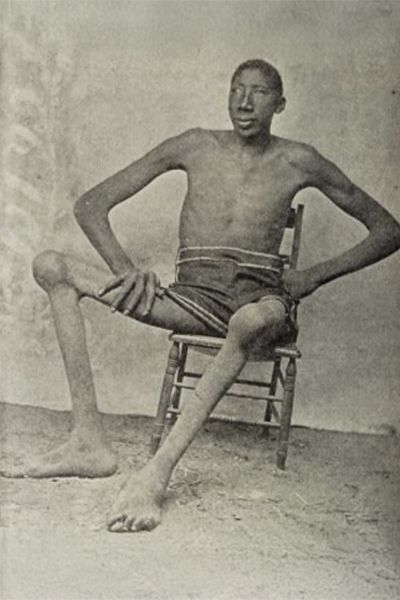
Everyone knows the tallest man ever recorded was Robert Wadlow, who grew to 8' 11". But you should also learn the story of the man who held the record previously, at an estimated 8' 9". His name was John Rogan, and his height was estimated because the weight of his bones left him unable to stand or walk before he reached his full height.
Rogan was born in Tennessee in 1867 to formerly-enslaved parents. His height was unremarkable until he was twelve, when his bones began to lengthen rapidly, keeping him painfully bedridden for a couple of years. The most likely cause was a benign tumor on the adrenal glands, exacerbated by ankylosis that fused Rogan's joints and left him unable to walk by adulthood.
Rogan had plenty of opportunities to join a sideshow, but he refused to be put on display, and was wary of those who wanted to study him. He wanted to live a normal life with his family and support himself with honest work. Since Rogan couldn't work on the family farm, he built a cart pulled by goats, and worked as a porter hauling luggage for railroad passengers. After his death, the family took extraordinary measures to ensure his grave couldn't be robbed for his remains to be put on display. Read the story of John Rogan at Utterly Interesting.
Rabies is an awful virus that doesn't work the way most viruses do. Once the symptoms start, it's fatal, and it's a particularly unpleasant death. You lose the ability to swallow, which is why the phrases "foaming at the mouth" and "hydrophobia" are associated with rabies. That's because the virus spreads through saliva, and successful viruses cause symptoms that enable them to spread to new hosts. The good news is that you can be vaccinated for rabies after exposure, and MinuteEarth will explain why that's so.
You might think, well, why don't we just vaccinate everyone against rabies? My daughter is a veterinarian, and had to be vaccinated. It cost her $900. That's cheap compared to the cost of treatment after exposure. But for some reason, we can get our dogs and cats vaccinated for $30 or so. And that's turned out to be the best way to keep rabies under control in the modern world.

The Aboriginal people of Australia love their dogs as much as anyone, and a dingo's grave in Kinchega National Park in New South Wales shows that one dog was particularly revered more than 900 years ago. The grave was accidentally unearthed around the turn of the 21st century during road construction. This dingo was buried by the ancestors of the Barkindji people with the same care they would bury a human. But that's not all- they came back generation after generation to leave river mussels at the grave, as if they were providing food to an ancestor, for 500 years after the burial!
An examination of the skeleton shows that the dog had been injured a few times and healed. It suffered broken bones and only survived due to the care of its human family. After thorough examination, the remains were returned to Barkindji elders for re-internment. You have to wonder if this dingo was a hero dog of some sort, or whether it was just so loved that its story was told to later generations with an admonition to tend to the grave. Read more about the honored dog's burial at Smithsonian.
(Image credit: Amy Way/Australian Museum)
I've never seriously studied Greek mythology, so I was completely unfamiliar with Typhon. This mythological monster was made of snakes and lava and had no father, so of course he was bad news. He was so powerful that he was a serious rival for Zeus, who had to put Typhon in his place. That doesn't mean Zeus killed him, but it does explain volcanos, thunderstorms, and tsunamis. However, the stories of Typhon vary depending on who wrote them.
Dr. Emily Zarka (previously at Neatorama) explains who Typhon was supposed to be. He's not described as a god, but was powerful enough to challenge Zeus for the title of supreme being. He and his wife Echidna spawned plenty of other mythological monsters that somewhat resemble real and usually scary animals. His later obscurity among laypeople like me may have to do with how he was dispatched relatively early in the Greek mythology saga.
When Mount Vesuvius erupted in 79 AD, some citizens were vaporized, some escaped, and many were killed and then buried under rock, ash, and lava. Over the years, the soft tissues rotted away, leaving human-shaped voids in the rock. In the 19th century, Giuseppe Fiorelli developed a method of preserving those voids by filling them with plaster, giving us at least the shape of the victims. But what's inside the plaster? A recent discovery revealed that one man may have been a doctor, because he was killed carrying a bag. CT scans and X-rays found a locking device inside the plaster, coins, and metal instruments of the kind that Roman doctors used.
But even more interesting is the discovery of how the plaster casts have been messed with over the more than hundred years since they were made. Scientists used the same type of scans to check whether there are bones present in the plaster. They discovered that some of the plaster casts had been reinforced with steel rods for stability, and bones have been removed! Some even had artistic work done to make them more interesting. Read about these discoveries at Ars Technica. -via Boing Boing
Project Hail Mary hit theaters about six weeks ago and did really well with both critics and ticket sales. It's a science fiction movie in which untrained astronaut Ryan Gosling (who also produced the film) has to save the world. How could it not be a hit? The movie was lauded for its unique view of what extraterrestrial life could can be. However, I had no idea Project Hail Mary was as funny as Screen Junkies reveals in this Honest Trailer. The pre-release hype gave no clue. Gosling is an intelligent everyman who has to learn how to do everything alone and on the fly, and stays adorably goofy throughout. The special effects and the alien life forms are impressive, too. Honest Trailers rarely rates a film this highly, but they still find the repeated idioms that you would have never noticed otherwise. Altogether this is a much more effective movie trailer than the real ones. Now I want to see Project Hail Mary.
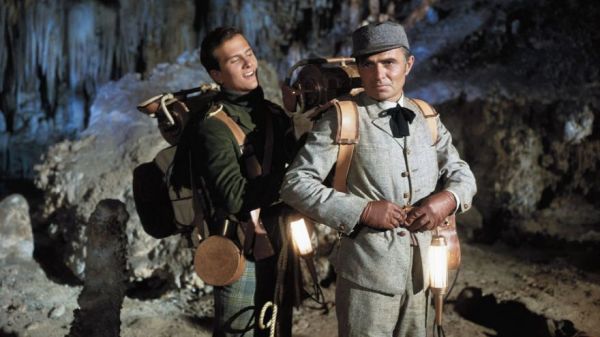
A group of Swedish geologists have been keeping track of how geologists are portrayed on the silver screen. You might think that the profession is rare, and relatively it may be, but they compiled a list of 141 movies with 202 geologists between 1919 and 2023 (available to download). They appear in all genres, but most often in adventure films. These roles are broken down by age, sex, race, era, whether they are "the good guys," and even how they dress.
However, geologists in movies die at an alarming rate, 34.2%, and often early in the story. Murder is the most likely cause. This may be because the function of a geologist is often to deliver bad scientific news and set up the adventure, after which they are superfluous. The puns just write themselves: Stone cold dead. Exploited for sedimental value. A geologist should join a band because they rock. Gneiss. It was their own fault. The data shows that being a "bad guy" raises the risk of a cinematic geologist's death to 77%. It's still unclear how geologists' survival in movies compares with that of other professions, but this paper was written by geologists for geologists in the magazine Geology Today. As the daughter of a geologist, I was fascinated. -via Metafilter