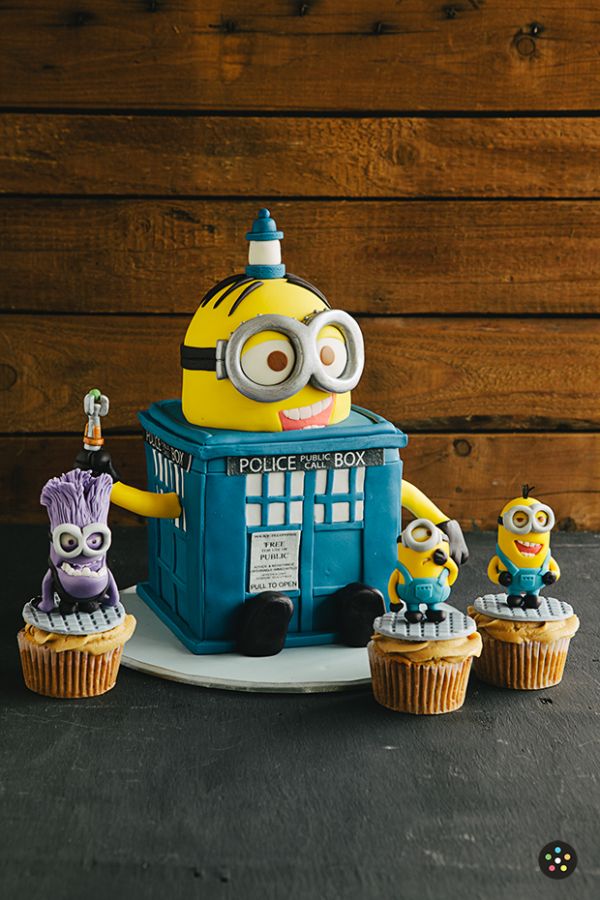
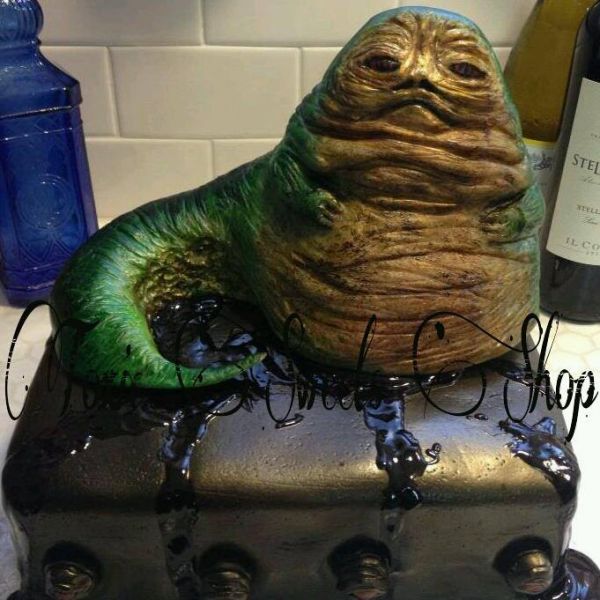
Strike that, the minions ARE the phone box, or at least one of them is. The others seem to just be sitting around watching. This delightfully geektastic mash up cake was brought to you by the Bunny Baker, aka Aila Sim-Yonzon, who also designed this wonderful Game of Thrones cake.
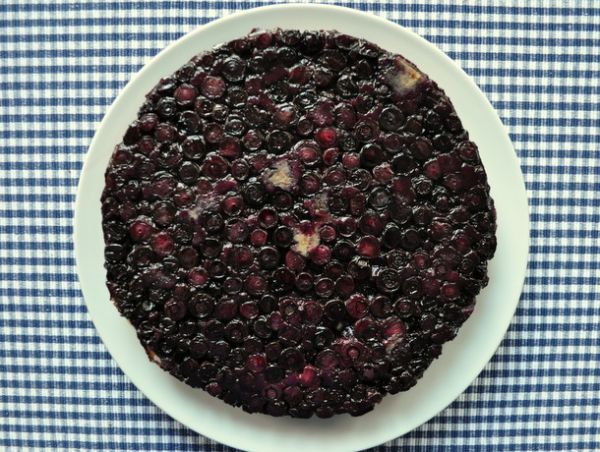
Having a hard time deciding between the fresh, summery delights of a blueberry pie and the classic, brown-sugary goodness of a pineapple upside down cake? Well, why settle for one or the other when you can have a blueberry upside down cake instead?
Of course, if you really want to get crazy, you could always add a few pineapple slices on top of the blueberries.
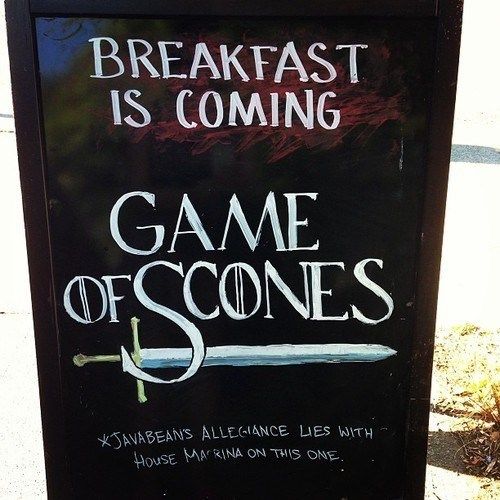
A Lannister always pays his coffee tab, House Grayjoy does not sip and House Tyrell is brewing strong, but only the Starks know that pastries are coming.
More than a century ago, Christian fundamentalists invented cereal to promote a healthy lifestyle free of sin. Little did they know, their creation would eventually be used to promote everything from radio and cartoons to Mr. T and tooth decay.
Meat Is Murder (on the Colon)
During the early 19th century, most Americans subsisted on a diet of pork, whiskey, and coffee. It was hell on the bowels, and to many Christian fundamentalists, hell on the soul, too. They believed that constipation was God's punishment for eating meat. The diet was also blamed for fueling lust and laziness. To rid America of these vices, religious zealots spearheaded the country's first vegetarian movement. In 1863, one member of this group, Dr. James Jackson, invented Granula, America's first ready-to-eat, grain-based breakfast product. Better known as cereal, Jackson's rock-hard breakfast bricks offered consumers a sin-free meat alternative that aimed to clear both conscience and bowels.
While Jackson's innovation didn't appeal to the masses, it did catch the attention of Dr. John Kellogg. A renowned surgeon and health guru, Kellogg had famously transformed the Battle Creek Sanitarium in Michigan into one of America's hottest retreats. Socialites from the Rockefellers to the Roosevelts flocked to "The San" to receive Kellogg's unorthodox treatments. But shock-therapy sessions and machine-powered enemas weren't the only items on the agenda. Kellogg also stressed such newfangled ideas as exercise and proper nutrition. It wasn't long before he started serving bran biscuits similar to those of Dr. Jackson—only now with the Kellogg name on them. To avoid a lawsuit, he changed the name of the cereal by one letter, dubbing it "Granola."
By 1889, The San was selling 2 tons of granola a week, despite the fact that it was barely edible. The success inspired Dr. Kellogg and his brother, W.K., to produce more-palatable fare. After six years of experimentation, a kitchen mishap by W.K. yielded the breakfast staple known as cereal flakes.
Making Red Blood Redder
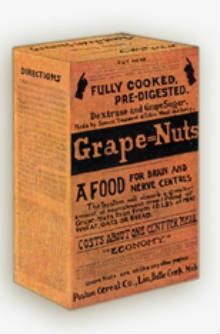
In many ways, the cereal flake is the perfect consumer product. It's easy to produce, easy to sell, and surprisingly lucrative. To this day, cereal comes with an eye-popping profit margin of 50 percent. These merits became clear to Charles Post, a failed suspender salesman who moved to Battle Creek in 1895. Post began selling knock-off versions of Kellogg's products with a twist of his own—advertising. At the time, advertising was associated with snake-oil salesmen and con artists. But Post, who had a background in sales, didn't mind drizzling a little snake oil on his product. He published pamphlets with titles such as "The Road To Wellville" and claimed his cereal, Grape-Nuts, could cure appendicitis, improve one's IQ, and even "make red blood redder." By 1903, he was clearing $1 million a year.
Across town, Dr. Kellogg refused to sully The San's reputation with heathen advertising, and his profits suffered as a result. W.K., however, had no such qualms and set out to emulate Post. In his first national campaign, he told women to "Wink at your grocer, and see what you get." (Answer: a free box of Kellogg's Corn Flakes.) Within a year, he'd sold 1 million cases of cereal. With the leading cereal makers embracing such unabashed hucksterism, it was clear that cereal's connection to its fundamentalist roots had come to an end.
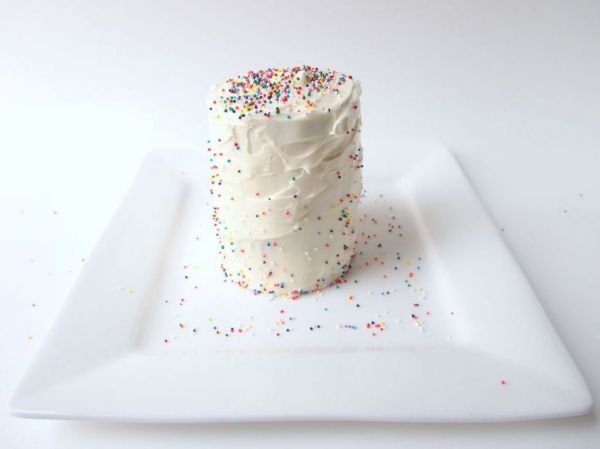
Just stack three donuts and frost them and suddenly, you have yourself an awesome birthday cake. If we could only do this with a few jumbo-sized Texas donuts, this would be John's ultimate office birthday cake.
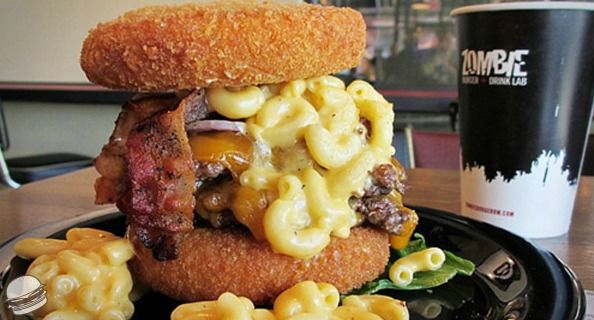
It might not be alive, but the Walking Ched burger from Zombie Burger is certainly dangerous. It's also incredibly alluring, featuring not only two beef patties topped with cheddar cheese slices, bacon and macaroni and cheese, but also a bun that is made out of deep-fried bundles of macaroni and cheese.
If you have a refined and discerning palette, then Châteaux de Bourdeaux, a vintner in France, may have the perfect wine for you. It tastes like cola:
In France, sad to say wine drinking has plummeted in recent years, particularly among the young, who are more attracted to beer and spirits. A BBC story by Hugh Schofield from Paris explains: “Recent figures merely confirm what has been observed for years, that the number of regular drinkers of wine in France is in freefall.” He wrote that in 1980, “more than half of adults were consuming wine on a near-daily basis. Today that figure has fallen to 17%. Meanwhile, the proportion of French people who never drink wine at all has doubled to 38%.”
But will a starter wine flavored with cola and playing to a younger generation’s sweet tooth lead to an interest in learning about — and appreciating — their wine heritage?
Rouge Sucette — “Red Lollipop” — is cheaper than wine. A bottle will cost just under $4 in France and will be sold primarily in hypermarchés (huge supermarkets). How many Red Lollipop drinkers will graduate to something more sophisticated is not yet known.
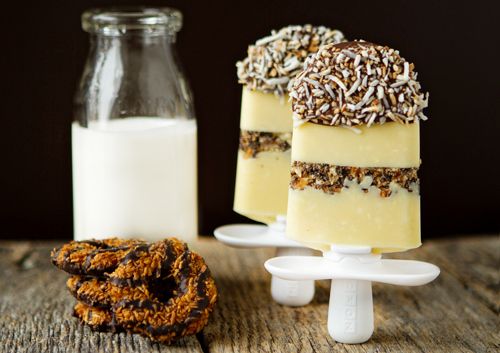
Samoas, and all the rest of the Girl Scout line up are great, but on a hot day, you don't want a cookie, you want a frozen treat. Besides, Girl Scout cookie season is long over and even the official ice cream flavors are out of the stores all ready. If you still have a hankering for a nice, refreshing Samoa though, you can always just make your own thanks to My Baking Addiction's recipe for a Samoa popsicle.
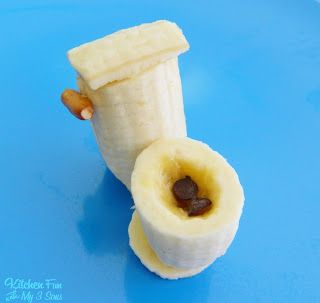
Jill of Kitchen Fun with My Three Sons is now potty training her third child. She made this cute and tasty snack to encourage him. To make your own, all you need is a banana, a pretzel stick and chocolate chips.
Or you could use chocolate syrup, I suppose. But if you need to, then maybe it's time to back off on the Miralax. As a veteran potty trainer, I'll tell you: finding that sweet spot between a toddler's total constipation and total diarrhea is very hard. I could go on at length, if you like.
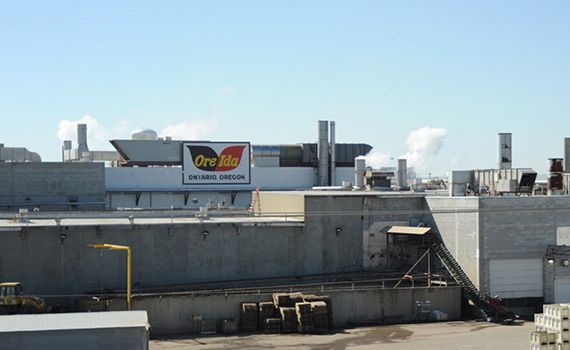
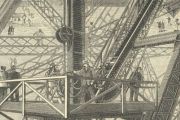
The vast majority of the food in your home depends upon a complicated, energy-dependent infrastructure called "the cold chain." Frozen, fresh, refrigerated, or preserved, at some point, getting that food from the point of origin to your table requires cold storage or transport. This is a system that people rarely see, and are barely aware of. An exhibit by Nicola Twilley on this invisible infrastructure called "Perishable: An Exploration of the Refrigerated Landscape of America" gives us a glimpse of the refrigerated landscape of the food-processing world. Link -via the Atlantic
(Image credit: Center for Land Use Interpretation)
You are my cakey guy and you got me wanting you...for dessert at least. This confectionary creation was crafted by the masters over at Toxic Sweet Shop.
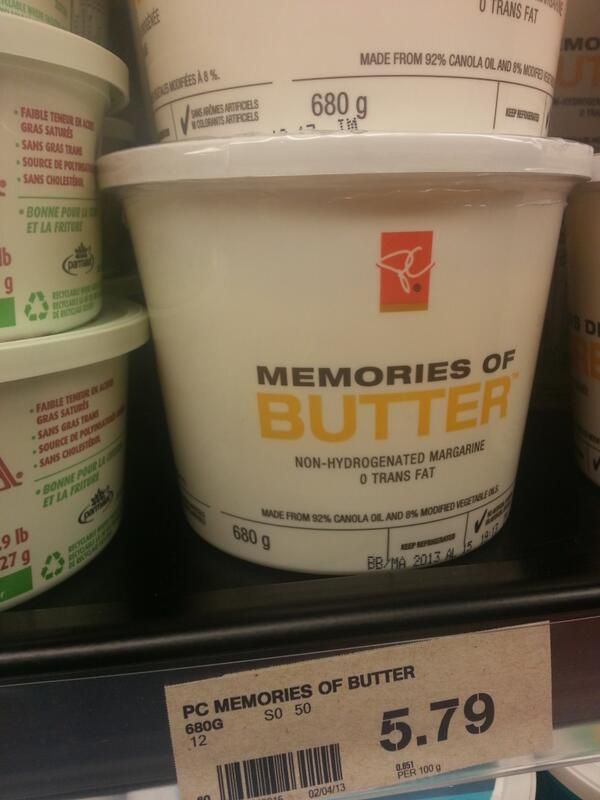
There's a long line of strangely-named knockoffs of the margarine called I Can't Believe It's Not Butter. This picture was headlined "Saddest name for a butter substitute." The top comment had an even better joke:
The title of the Lifetime Original Movie chronicalling Paula Deen's fall from grace.
Of course, the puns fly thick and fast in the reddit thread. Link
Every word in the post title makes this item instantly Neato. You could actually re-arrange the words and have the same result.
Jocelyn made these with birthday cake-flavored Oreos, which apparently exist. She stuffed them inside brownies and then covered them with a healthy layer of cheesecake.
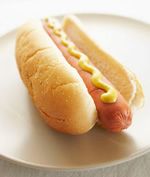
When is a hot dog, a hot dog? When the law says so!
When hot-dog cart owners are being threatened by closure by health inspectors, the Assembly Health Committee in California came up with the legal definition of a hot dog to help them out:
The proposed change to state health laws spells it out: "'Hot dog' means a whole, cured, cooked sausage that is skinless or stuffed in a casing that may be known as a frankfurter, frank, furter, wiener, red hot, Vienna, bologna, garlic bologna or knockwurst and that may be served in a bun or roll." [...]
The definition is needed so health departments can hold hot-dog vendors, who boil already cooked wieners, to a less-stringent sanitation standard than food stands that cook raw foods, such as bratwurst, said Justin Malan of the California Assn. of Environmental Health Administrators.
Marc Lifsher of the Los Angeles Times explains: Link