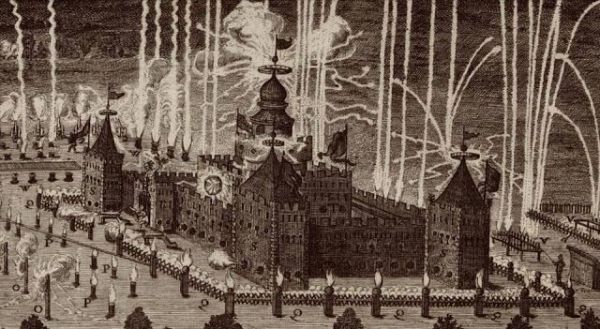
There are those who believe that the great architectural marvels of the past were not designed in their time, but are the remnants of a lost civilization called the Tartarian Empire. This theory is akin to that of ancient aliens, since no one in, say, ancient Egypt was smart enough to build the pyramids (fact check: they were). All the great technology that popped up in different parts of the earth were influenced by this empire, which was somewhere in Central Asia. But it was destroyed by the powers that came after it, and erased from history so that others could take the credit. In some versions of the conspiracy theory, Marco Polo was in on the suppression of the knowledge of Tartaria, and in others, Napoleon and the Russian Tsar made sure that Tartaria never made it into our history books.
The secret of the fictional Tartarian Empire is that they had harnessed the production of unlimited free energy. How they did this is lost to civilization, or was a secret kept so well no other nation knew about it, like Wakanda. While the theory arose in Russia in the 1970s, those who believe point to the 1915 World's Fair in San Francisco as proof of the existence of Tartaria. Read about this really weird conspiracy theory at Messy Nessy Chic.
B Unique Crew is an Indian dance crew with three dancers and one genuine contortionist. They achieved notoriety with this horror dance on the Indian competition TV show Hunarbaaz: Desh ki shaan (Pride of the Country) a few years ago. They are using modified traditional dance moves to illustrate a classic story that was retold in the horror comedy movie Bhool Bhulaiyaa, just in case you want to check out the plot. The dance is replete with scary moves from the one guy who can turn his head completely backwards, so be warned.
The judges were properly horrified, but the act didn't win. Since then, B Unique Crew has appeared on various version of the Got Talent franchise in different countries. See more of their dance routines at YouTube. If you dare. -via Digg
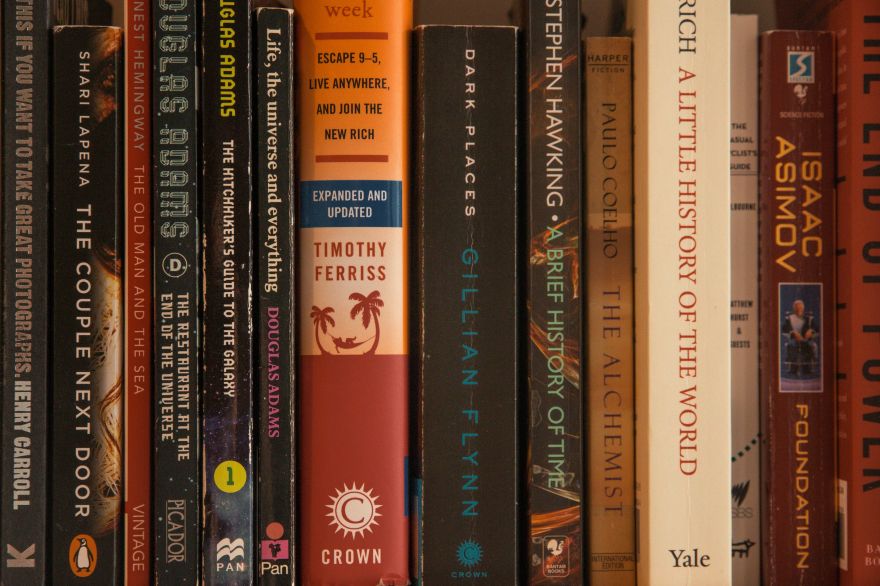
As I have said before, I love books, especially the physical copies of books. There are many factors that make a physical book different from a digital copy. There are the sensations: the smell of the pages, the texture of the paper, the art on the cover of the book. All of these contribute to why I prefer physical books over ebooks. But the publishing industry might not be long for this world.
Recently, the merger between Penguin Random House and Simon & Schuster was denied by the federal courts, otherwise the Big Five publishing houses would have become the Big Four. And there are several reasons why the publishing industry is struggling. But the major one is that nobody is buying books.
To be more specific, publishing houses aren't making much profit. Out of all the books that they publish each year, only a handful of books actually make a return on the investment. And only a select number of titles can be considered cash cows for these businesses. Not only that, but the growth of ebooks and digital distribution have made it even more difficult for traditional publishing houses to stay afloat.
It's a harsh reality to swallow, but for any aspiring writer, really the best option that they have is to build their own base of followers, and become independent. But that takes years of grueling hard work, and the payoff is uncertain. Since the whole publishing industry is dependent on whether titles will have demand in the market, it's oftentimes a complete gamble to even buy the rights to publishing a certain book.
And even titles that are expected to become bestsellers aren't always guaranteed that they're going to sell. It's a hit or miss, and according to many industry veterans, the hits often are just once every five years or so. Much of their profits come from franchise authors or celebrity books.
With the advent of Amazon, the whole ballgame has shifted. Publishing houses pay tons of money to Amazon to help improve their search results. But if Amazon were to start publishing books, or if authors with large fanbases decide to go independent, then that will be the end of publishing houses.
In fact, if a "Netflix" or "Spotify" for books is launched, then that will be the last nail in the coffin. It will truly be the death of the traditional publishing industry as we know it. - via Metafilter
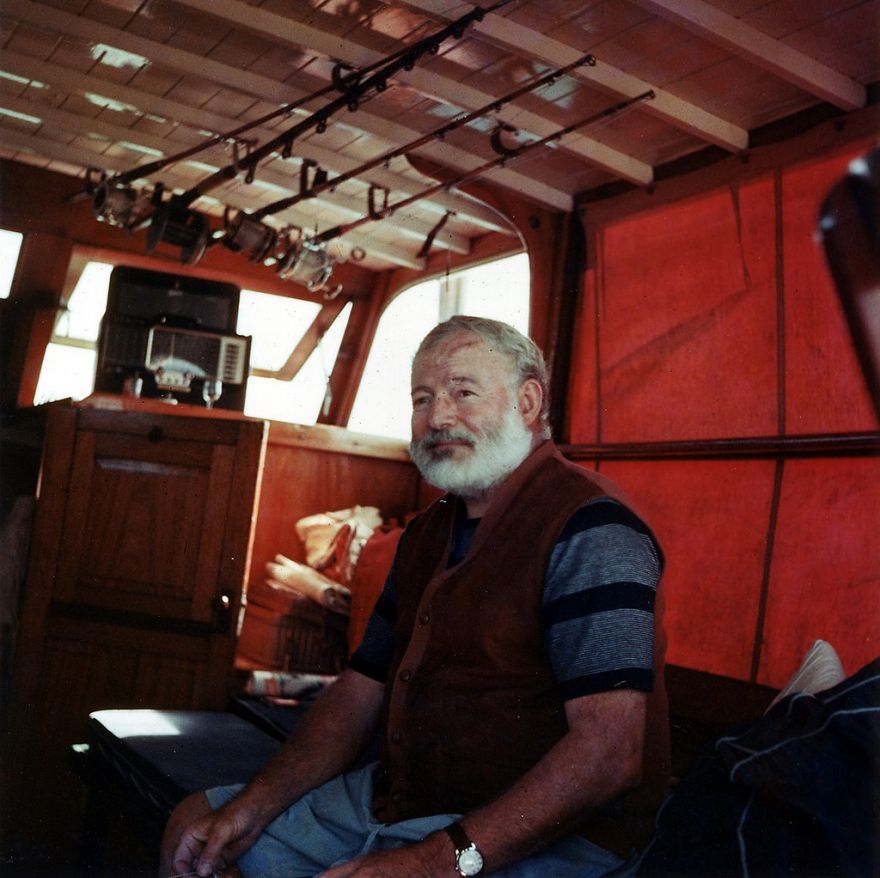
You have probably heard of Hemingway's famous six-word short story, which won him a $10 bet with his writer friends. The story goes that as he was hanging out at lunch with some of his friends at either The Algonquin or Luchow's, he bet them that he can write a short story in just six words.
He wrote the six words on a napkin: "For sale. Baby shoes. Never worn." And started passing around a napkin to collect his winnings. It's a legend that many writing teachers tell their students about how to write a good story. It has a beginning, a middle, and an end. The beauty and magic of it is that it engages the reader or the listener to participate in filling the gaps to the story.
Now, whether or not that actually happened may be slightly questionable, as the first instance that this story was told, was when it appeared in Peter Miller's book Get Published! Get Produced!: A Literary Agent's Tips on How to Sell Your Writing.
Before that, several versions of the story were already published, the earliest being in 1906, on a newspaper classified section titled "Terse Tales of the Town", and the story read, "For sale, baby carriage, never been used. Apply at this office."
Other versions of the story included those by William R. Kane in a 1917 essay, wherein he wrote, "Little Shoes, Never Worn." Roy K. Moulton also wrote about it and attributed the story to someone named Jerry, and his version was, "Baby carriage for sale, never used."
There were other mentions of the story, but in the end, Frederick A. Wright proved that there was no connection of the six-word story to Hemingway at all. Still, the legend most likely grew because of Hemingway's fame as a writer, and how anybody who heard the story would accept is a plausible anecdote, because Hemingway was just that good of a writer.
It all happened in 2018 when she saw an amazing bargain at the local thrift store, and she later realized that this bust was actually an ancient Roman one. So she went around emailing auction houses to see how much it would sell for.
Weeks later, the Head of Antiquities at Sotheby's in London replied to her saying confirming that it indeed was an ancient Roman bust, but that it was actually catalogued under the Bavarian State Antiquities Collection. Which meant that it was highly likely that the bust was stolen.
After the call, she contacted the Germans and the art history departments at the University of Texas to help her return the bust to its rightful owners. When the Germans got back to her, she found out that it was definitely stolen during WWII, when the Allied forces bombed Aschaffenburg where the bust was being kept. And perhaps one of the soldiers looted the bust, brought it home to the US, and kept it in their attic or basement for the next 70 or so years, before being sold to the local thrift shop.
Initially, her plan was to loan the bust to the San Antonio Museum. She had to convince the Bavarian state and the German federal government about the idea, and when everything was all approved, the pandemic happened, putting a halt to all of the plans she had thought of for the bust.
So, it stayed with her for the next four years until the San Antonio Museum was scheduled to pick it up. Then, as the date was nearing, she decided to take a picture with the bust. And that blew the floodgates wide open. The picture became viral online, and news outlets started picking up the story of how she found this stolen ancient bust at a thrift shop.
The rest of her story details how her life became so busy and hectic after it all went public, because of all the interviews, calls, and appearances that she had to do on TV about the bust. And that's Laura Young's happy little accident with the stolen ancient Roman bust at the Austin Goodwill thrift store.
The phrase has been used over and over in films, TV, and in daily life that there's no question as to the meaning of "Roger that." But how it all started will take us back to the 1920s, when radio became a more widespread means of communication.
These days, we have the NATO phonetic alphabet which helps us avoid miscommunication, because it adds clarity. Whenever one is asked to spell a word or a name, we turn to this alphabet to make sure that the listener at the other end understands which letters we are referring to.
But the history of this phonetic alphabet began with the International Telecommunication Union, who put out a list of the first global phonetic alphabet comprised of city names. However, even at that time, military organizations already had their own code words, and so when WWII broke out, they simply consolidated their phonetic alphabets so that it would be a lot easier for Allied units to understand each other.
The US military (Army and Navy) joined with the British forces to develop a standard phonetic alphabet which both parties will use for more fluid communication. And so, they came up with the Able Baker alphabet, which had used Roger for r, since it was one of the recommended intelligible options for r, along with robust, and Robert (the British military's preference).
During WWII, Roger became the shorthand for "received" and so it was understood to mean, "message received" despite what many now believe that it means an affirmative or a confirmation of some action.
Later on, the Able Baker alphabet would be revised by NATO to settle with what we now use as the standard for phonetics, with Romeo replacing Roger. But since soldiers have been using "Roger" since WWII, they continued to use that along with the meaning attached to it.
How "Roger" became more widespread can be attributed to broadcasts during the Apollo 8, 10, and 11 missions in which the communications between the astronauts and Houston often used the phrase "Roger" to mean "message received". And with around 1 billion people worldwide listening to Apollo 8's Christmas Eve message, and about 650 million people watched the Apollo 11 moon landing, "Roger" became understood by the wider population. - via Strange Company
Buoy tenders are ships that maintain buoys in harbors, lakes, rivers, and the open sea to serve as aids to navigation. The US Coast Guard maintains several classes of buoy tenders, which also provide maritime law enforcement and search and rescue services.
The men and women who serve on the buoy tenders take pride in fulfilling the challenges of their work. Slinging around the multi-ton steel buoys while maintaining and deploying them is physically demanding work. The coasties occasionally compete against each other in the key skills of buoy tending in the Buoy Tender Olympics.
Last August, the crews of seven buoy tenders competed to see who could straighten huge chains and drive red hot rivets the fastest, among other coastie sports.
Since university, I have had this curiosity about the concept of a person's individuality. That is, what makes us unique, and how our individual experiences shape our perspective, behavior, preferences, habits, values, and beliefs.
I have also wondered what it would be like to transfer one's consciousness into another person's body, to be able to experience and perceive the world through their lens. And how different their experience of reality is. But, of course, it's quite impossible to have any empirical means of examining that. However, there is this new study that might shed light on some other aspects about our physiology and anatomy, with respect to neuroscience and psychology.
A paper has been recently published that details how organ transplant recipients have experienced personality changes after their surgeries. They recount how their preferences have changed, how they seemingly experience new memories, which apparently they describe as being attached to their donors own experiences, as well as having other changes like delirium and depression.
There were stories when recipients have dreams about their donors last moments of life, like one college professor who received a heart from a police officer who was fatally shot in the face. The professor reported having a dream similar to that moment wherein he saw a flash of light cruising toward his face and feeling his face get very hot.
Another story of a five-year-old boy, who received the heart of a three-year-old boy. Even though the recipient's family had no prior knowledge about the donor, the five-year-old boy mentioned naming his donor Timmy, who enjoyed Power Rangers, and had an accident falling down.
Coincidentally, the recipient's mother later found out that the donor fell from a window ledge as he was trying to reach for a Power Ranger toy. The name of the boy was Thomas, but his family called him Tim.
So there is this theory that our cells may have some form of storage of memories associated with our experiences. Others think that it's the electromagnetic field transfers information from the donor to the recipient. The neurons store these information through chemical neurotransmitters which then gets passed on during surgery.
Psychological theories suggest that these may be a coping mechanism that recipients have to process the transplant surgery or that they may be acting out certain fantasies regarding the donor and the organ. Whatever the case may be, organ transplants definitely change the lives of their recipients in more ways than one.
And in these cases, we just simply don't have enough data to understand the mechanisms behind the neurochemistry, psychology, and biochemical processes going on in our bodies. Further research may uncover more about the subject, but there are certain things that we may not have the technology yet to delve deeper. - via Strange Company
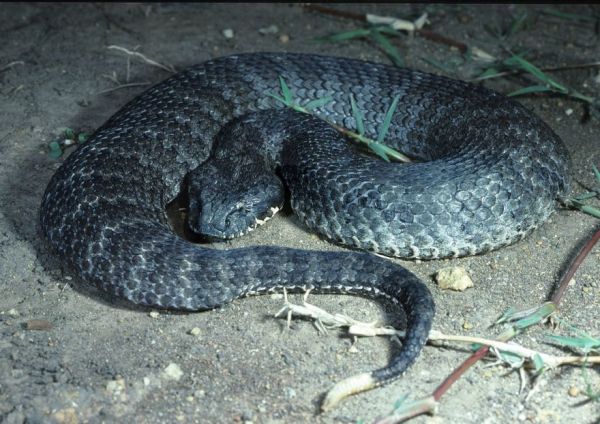
We think of Australians as a tough bunch, because it takes guts to live in a place with so many deadly animals, like snakes. It indeed requires a tough person to catch a snake right after it bit them. But hospitals in Queensland are asking that snake bite patients refrain from bringing those snakes into the hospital for identification. Live, venomous snakes in poorly-secured containers are unnecessary, and pose a danger to hospital staff and other people. Besides, trying to capture it risks you being bitten again. Yet people bring those snakes in more frequently than is comfortable.
It's true that Australia has many species of venomous snakes, but they also have polyvalent antivenom that works on bites from multiple Australian snake species. Hospital staff can tell what kind of snake bite you have by the bite marks and symptoms, much better than they can identify a snake. The same is true for emergency rooms in the US, although the CDC says it may help to take a photograph of the snake from a safe distance if you can. However, hospitals do not want to host the snake itself. -via Boing Boing
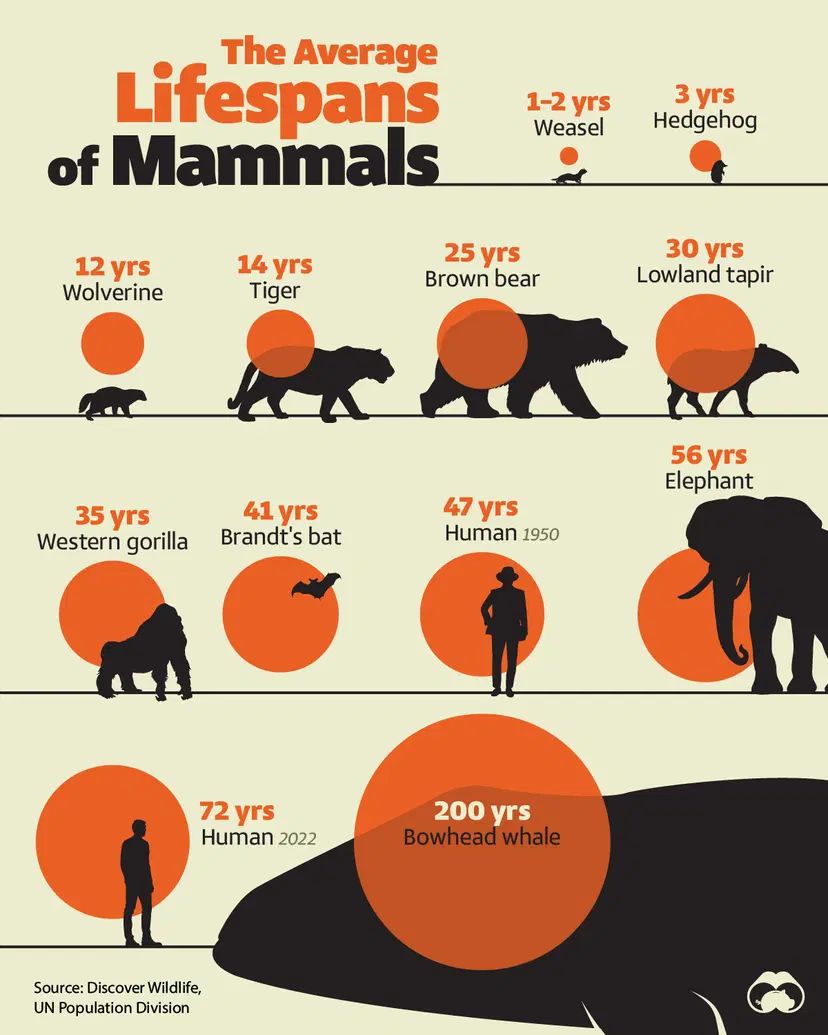
Due to advances in medicine and technologies that help us make healthier choices, the current life expectancy for humans in 2024 is 73.33 years. This is a tremendous leap from 1950, when the average life expectancy of human beings from birth was 45.51 years. How about other mammals? How do they fare?
Visual Capitalist summarizes with the above infographic the average lifespans of mammals. Humans now hold the second spot of the longest lifespan, only next to the bowhead whale which can live up to 200 years.
Within the span of 70 years, the life expectancy of humans increased by 25 years. And the closest to our current life expectancy is the elephant which stands at 56 years, although it is interesting to note how that is even longer than the human life expectancy in 1950.
Of course, there are certain factors that contribute to the lifespan of these mammals. Apart from diet and lifestyle, some of them have been hunted by humans as well. Loss of habitat due to deforestation and commercial development may have also contributed to the general welfare and quality of life of these animals.
Not to mention, we don't exactly have the numbers of their populations. Even though these mammals may be able to live for that long, again due to anthropogenic activities, their numbers may be dwindling, and their futures threatened.
As the Visual Capitalist asserts, the longer humans' life expectancy has been, the larger the reduction in wild mammal biomass. Throughout the years, this biomass has seen an 85% reduction the more that human populations have grown.
Moreover, the majority of mammal biomass is comprised of livestock which is at 62%, and humans at 34%, leaving only 4% for the wild mammals. - via Digg
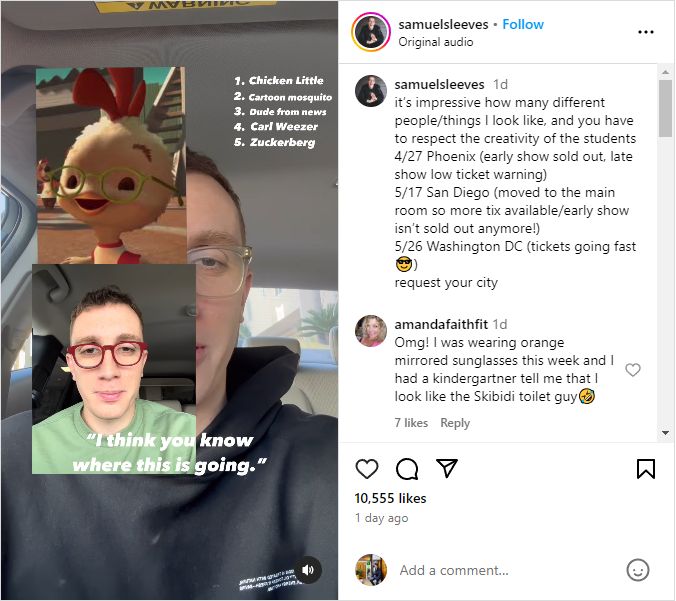
Sam Salem is a stand-up comedian who happens to be a high school teacher, and in a two-part Instagram reel, he shared some of the best burns with which his students roasted him. Now, teachers may not necessarily appreciate being insulted by their students to their face like this, but Salem does appreciate the creativity with which his Gen Z students roast him.
In the first part of the series, he recounted how a student called him Jeffrey Dahmer, as he was standing by the classroom. In another exchange, another student said he looked like Dexter from Dexter's Laboratory, which was fair given he has red hair and glasses. Apparently, #3 on the list was Logic, which a lot of people have already told him although he readily admitted that he did, in fact, look like Logic.
While he was wearing a brown glen check jacket, a student said he looked like Macklemore. And finally, as he was walking along the hallway, he passed by a girl who was filming for Tiktok, to which he made an offhand remark. The girl then looked at him and told him that he looked like a pigeon.
In the second part of the series, we had some very interesting, and quite accurate roasts from his students. Somebody referred to him only as "Mr. Facebook" because he looked like Mark Zuckerberg which, from afar, one can definitely see the resemblance.
There was one student who told him as he was leaving school that he looked like a skinny Carl Weezer, which again, was fair because of the red hair and glasses. From this, you can start to see a pattern in what students are reminded of when they look at Salem. Then, a student remarked that he resembled a random guy in the news.
Perhaps one of the weirdest resemblances that a student said of him was that he looked like a cartoon mosquito. Granted, the student was quite annoyed with him, and uttered the roast under their breath.
And finally, the funniest exchange so far is when a student asked Salem whether he saw the movie Chicken Little, and then quipped, "I think you know where this is going." - via Digg
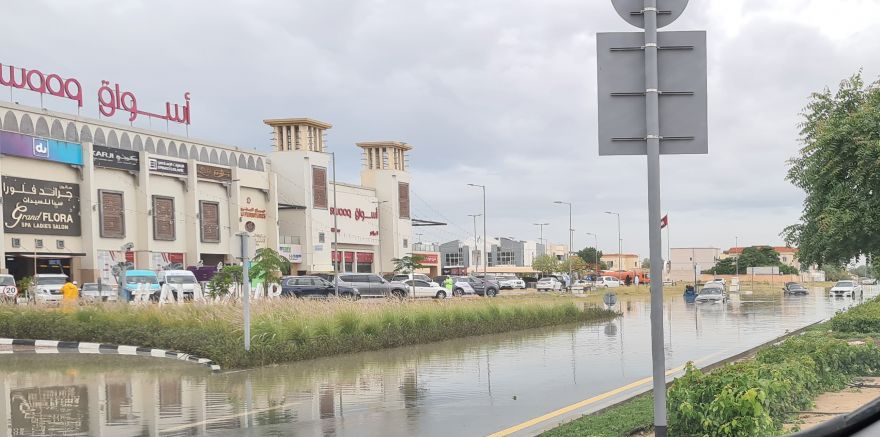
The recent floods experienced in Dubai and Sharjah last week have prompted some people to blame the cloud seeding operations which were done Sunday and Monday. The freak storms occurred on Tuesday of that week. So, that led people to speculate that it was caused by the cloud seeding.
However, experts say that this was not the case as weather forecasts had already predicted that heavy rainfall was going to occur during that time, even without factoring in the effects of the cloud seeding operations.
What caused the rare rainfall event is still uncertain. Climate change may have played a role in it, but the region has always been characterized with long periods of a dry, hot weather, and then, occasionally, heavy rainfall hits. Perhaps, the only unusual thing about the flooding which happened last week is the amount of precipitation.
The annual average rainfall that Dubai experiences, for example, is about 97mm of rain. The city of Al-Ain, last week, experienced about 256mm of rain in just 24 hours. This is the heaviest recorded rainfall in the region in the past 75 years.
Based on statements by meteorologists, the cloud seeding could not have been the culprit to the extreme rainfall that occurred last week in the UAE because, for such an amount of precipitation to have fallen, that amount must have already been present in the atmosphere in the first place. That is, cloud seeding did not produce the rainfall.
So, the most likely explanation is that there was already a low pressure system that developed over the region, which carried that volume of water. It is possible that climate change had a hand in the event, since the warmer temperatures allowed the atmosphere to hold more water, which resulted in heavy flooding.
And as has been said already, they had already expected the region to experience heavy rainfall, so it was not as though the UAE was blindsided with the heavy floods. But, perhaps, it would be high time for new strategies to be developed to respond to unexpected amounts of precipitation such as this.
Infrastructure may need to be improved so that it can withstand heavy floods like the one from last week. Measures and protocols would have to be updated to anticipate the worst-case scenarios.
It has been almost two decades since Pluto was demoted from being a planet to a dwarf planet by the International Astronomical Union. But still, astronomers and astrophysicists are searching for an elusive ninth planet orbiting around the sun. And so far, the places where Planet Nine could be is slowly running out, with about 78% of the sky turning up with nothing.
There were a few candidates over the years. In 2003, Sedna was discovered, although it was still considered a dwarf planet, and the distance between Sedna and the sun was about 11 billion kilometers, at its nearest, and it goes as far as 140 billion kilometers away from the sun.
For perspective, Neptune has an average distance of about 4.5 billion kilometers away from the sun. Pluto, on the other hand, was on average about 5.2 billion kilometers from the sun. So, Sedna could barely be included within the solar system. Another celestial body, 2012 VP113, was also discovered and this gave rise to the possibility that Planet Nine does exist somewhere out there.
In fact, in 2016, Caltech astronomers Konstantin Batygin and Mike Brown asserted that the alignment of the trans-Neptunian objects' orientations was far too close to be coincidental. Furthermore, they shared a similar degree of tilt with respect to Earth's orbit, so this may point to the possibility that Planet Nine does exist.
However, despite the search efforts, astronomers still have not found Planet Nine. So far, they have conducted surveys such as the Dark Energy Survey, covering about 56% of the sky and the Pan-STARRS1 survey, which looked at around 75%. Combining these two, along with their overlaps, about 78% of the sky has been searched.
After these search efforts, only 22% of the sky remains. Moreover, the part which has not yet been surveyed is perhaps the most difficult part to scour because stars are more crowded together, so it will be like finding a needle in a haystack, that is, if the needle was sure to be in the haystack. Whether Planet Nine even exists is still uncertain.
There are clues that point to the possibility of Planet Nine existing, but until the astronomers can spot an actual exoplanet orbiting around the sun, then we can only hope that it does exist. If it does exist, then that will give us more insight into our galaxy, the formation of planets, and how they transformed throughout the years.
And perhaps, apart from the fact that discovering Planet Nine would give scientists more material to analyze and study, it has been more than two centuries since the last solar system planet was discovered, and having a new one might assuage the loss some of us felt when Pluto had been demoted.
The Matrix explored the idea that the world we're living in is actually just a simulation, and that everything has been programmed, and so we have no control over the outcome of our lives, in the final analysis. Once a person is able to escape the matrix by taking the red pill, they can finally be freed from the shackles of determinism.
Of course, the final film of the original trilogy showed us that even then, the outcome was still inevitable, and the simulation will just simply reiterate itself until, at some point in the future, one of the future iterations would find a way to break that cycle. Still, it's a work of fiction and a very elaborate thought experiment imagined.
However, what if our world actually existed that way? Not in the sense that there is a much larger universe beyond our present consciousness, and by some means, we can wake up from the simulated illusion we're currently living in and access true reality. But, in the sense that the world operates in a deterministic manner, much like a simulation.
Melvin Vopson, a physicist from the University of Portsmouth, believes that he may have found signs that we do live in a simulation. That the entire universe is careening toward one particular end. And he says this from the lens of what he calls "the second law of infodynamics (information dynamics)".
According to Vopson, this law states that, as opposed to the second law of thermodynamics in which entropy tends to increase over time, information entropy does exactly the opposite. If that were the case, then he says that as time passes, information will continue to decrease until such point that there is one pathway or direction where the universe will go.
He got this idea from studying the SARS-CoV-2 virus. He observed that the genetic mutations that the virus underwent was not random, which suggests that it is consistent with his second law of infodynamics. A similar experiment in 1972 ended with the same result, in that, the genome of a virus decreased over 74 generations.
If this were to be proven true, then it will completely change the way scientists view evolution and how it works. Instead of mutations or adaptations happening at random, it will become predictable, because the pool of information available has decreased, therefore, it will be a lot easier to determine the outcome and the probability of mutations before they even take place.
Of course, the logistics of trying to prove this theory is near impossible because we don't have the evidence for it. However, there is a possible experiment wherein one tries to prove that information is matter. For example, one can try to measure a hard drive before and after the erasure of information. Although, the change may be too minuscule to measure.
Nevertheless, it's a very interesting experiment to undertake. Furthermore, the estimated cost to conduct such an experiment is quite inexpensive at a mere $180,000, which simulation theory proponents may be able to scrounge up.
I used to watch Cesar Millan's show, Dog Whisperer, and I was so fascinated with his understanding of dog psychology and behavior, that when my family finally got a dog, I was thrilled to test out the stuff that I saw him do. To my surprise, it was more complicated than it looked.
We got our dog when she was just about a month old, so I experienced all the highs and lows of raising a puppy until she matured. It has been about seven years since our dog became a part of the family, and throughout the years, I have learned so much more about taking care of dogs simply by observing her and trying out certain methods from Millan, but with a few tweaks.
I was never very affectionate with our dog during the early years. I would pull away when she tried to lick my face. But now, I find it quite endearing. Whenever she would jump up on my bed while I was sleeping, I would awaken and push her away. These days, I care less whether she sleeps on my bed or not, although I have found a few ways to get her out of my bed and onto her own bed.
Perhaps, because of all these actions that I have recently started to do, my dog has become more attached to me more than to my parents. And I have found it's a lot easier to coax her, for example, to take a bath because of it.
Now, this list, compiled by two veterinarians, gives us 12 things which we may unknowingly do that annoys our dogs. And as I read through them, I'm quite relieved that I have not actually done these things, except for a couple, which fortunately, did not annoy our dog as much.
I will say, however, with regard to our dog, there are a few things that she absolutely hates. Taking baths is one of them, and despite her being okay with me to give her a bath, she still abhors it. For my sake, she bears with it. She also hates being carried. Even with me, she would be annoyed if I were to grab her under her front legs to try and carry her. And she hates food droppers.
Going back to the list on RD, one thing that I have done but, to my knowledge, does not annoy our dog is the fact that I stare back at her when she stares at me. According to the vets, dogs may feel threatened when they are being stared at. In my defense, I don't stare at my dog for long periods of time.
Hugging, apparently is also a big no-no, and I learned this while observing my niece interacting with our dog. When my niece was younger, she would often embrace our dog around her midsection, and our dog would often growl at her for doing that.
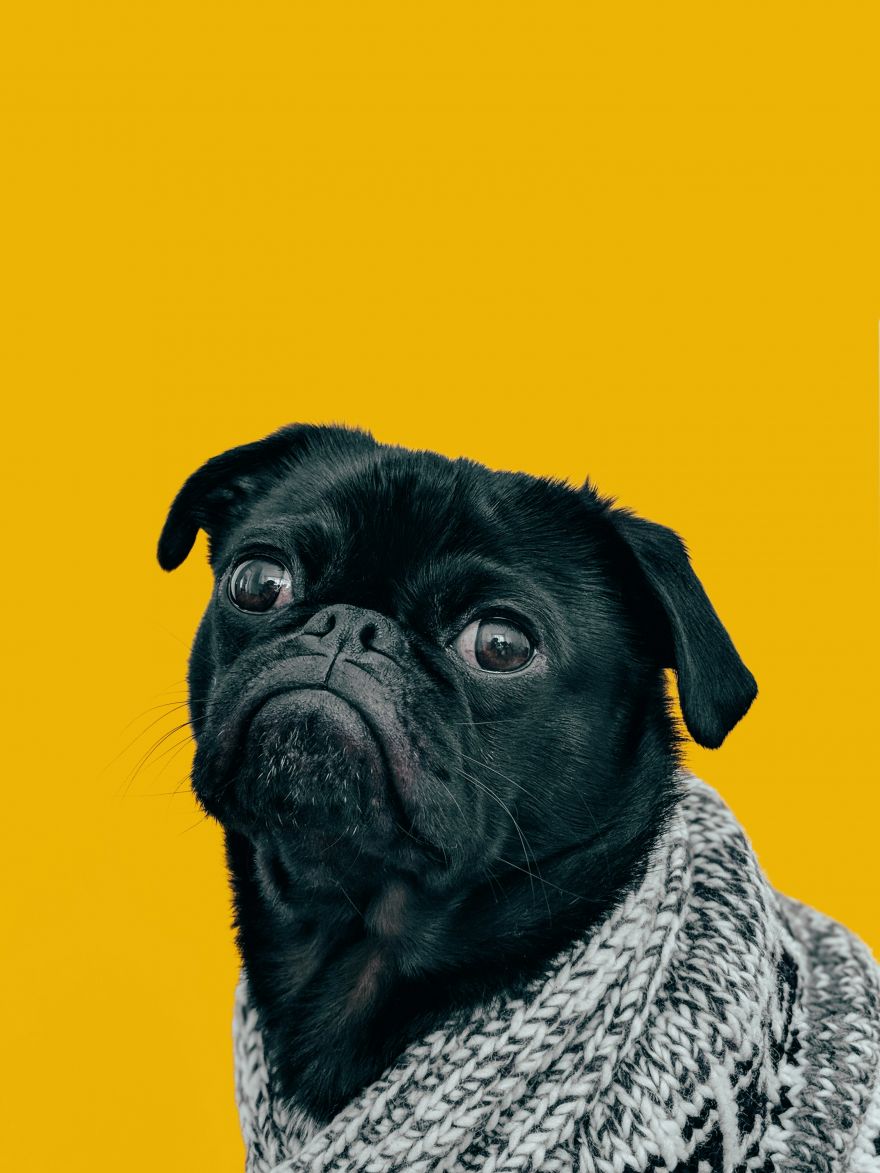
Another thing on the list, which I absolutely agree with, is the fact that dogs hate being dressed up. My mother once bought a small shirt for a dog. And just by looking at the reaction of our dog, it was clear to me, she hated it. Thankfully, we threw that away, and our dog now runs natural around the house.
One thing on the list which I have found to have dire consequences was being inconsistent with routines. When our dog was about two years old, she had a bout with the parvovirus, and thankfully, she survived, but not without scars in the lining of her digestive tract.
So, there are times when we forget to feed her exactly on time, her stomach will react negatively and she will vomit. Then, she will refuse to eat and spend the rest of the day hiding under my bed. The only way to coax her out is to tempt her for a walk, and even then, it's not guaranteed she will come out.