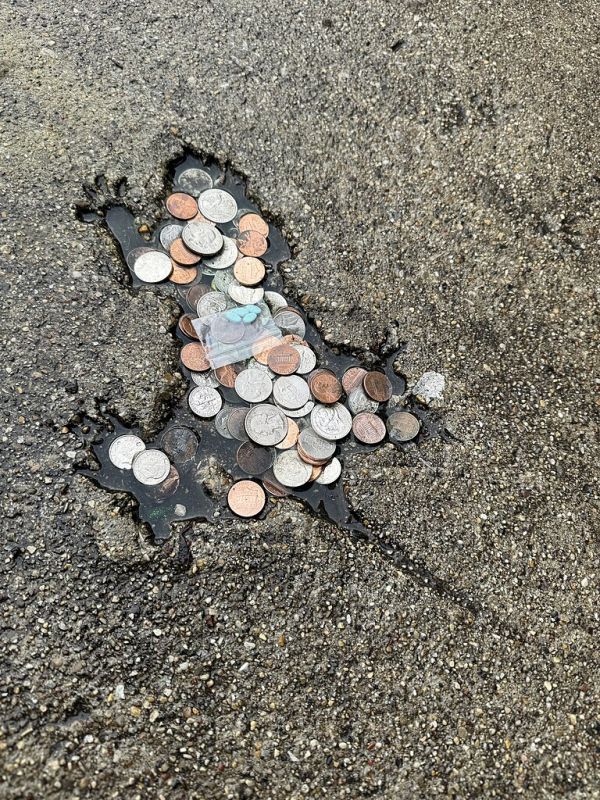
It's the end of an era. Many years ago, no one knows exactly when, a new sidewalk on West Roscoe Street in Chicago was laid, and a rodent left an imprint of its body in the wet cement. In January, the rat-shaped hole went viral. Since then, people have been coming from all over to make a pilgrimage to the site of the Chicago rat hole. They leave coins in the hole, and have left flowers, photographs, signs, and other trinkets. A plaque was made. At least one wedding was staged at the site. Someone filled the hole with plaster, and others dug it out.
This left some of the neighbors in Roscoe Village annoyed with the crowds and the garbage they left behind. The Chicago Department of Transportation had a dilemma: replace that portion of the sidewalk to please the locals, or let tourists and fans have their fun? Some of the neighbors wanted the rat hole to stay. The city finally decided to replace the sidewalk section, which happened on Wednesday, but they took pains to preserve the concrete that contained the rat hole. The square slab was successfully excavated and will be saved. Will we ever see it again? The city has not yet decided on what to do with the rat hole slab, although they are listening to those who say it belongs in a museum. After all, it is now a piece of city history. Read more on the fate of the Chicago rat hole. -via Fark
When we disturb the tombs of ancient mummies, we fear a curse or worse, but we also forget that they were people of their time when they were alive. They had no concept of guns. Sure, you can't kill a mummy, because they are already dead, but it can sure hurt them, and baffle them besides. This mummy has to recalibrate and ponder the possible technological innovations that have occurred since he was buried. But he's still supernatural, otherwise he wouldn't have known the date of his death was 2,600 BC. Think about it. While we marvel at the skill with which they preserved human remains so far back, they had nothing on modern morticians, not to mention plastinationists. When our civilization has ended and another arises, will they fear a resurrection of the bodies we leave behind? Probably not- they can just use their laser weapons.
You might recognize the rotoscope technique of Joel Haver in this video. Redditor WiiFitBalanceBoard, who made this video under the name Cool Giant at YouTube, says he made this after watching Haver's animation tutorial. -via reddit
People love visiting national parks. The Great Smoky Mountains National Park in East Tennessee saw 13.29 million visitors in 2023! In fact, it's getting to the point that a park experience can be diminished by the very number of people in those parks. Like Yogi Berra once said, "Nobody goes there anymore; it's too crowded." However, there are some US National Parks that are quite un-crowded. The least visited is Gates of the Arctic in Alaska, which is quite scenic but has no roads, trails, or campsites. And it can get pretty cold. However, the second least visited US National Park is a tropical paradise. So why do few people visit it?
The name of the park is the National Park of American Samoa. It is our only national park south of the equator, and it's not easy to get to. First, you have to get to Hawaii, then take a plane 2,600 more miles to the island of Tutuila, and flights only happen twice a week. Despite it being American territory, you'll need a passport to prove your citizenship. There are limited hotels, and no visitor center. But once you are at the park, you'll have the solitude of a desert island while you hike, swim, snorkel, or just enjoy the scenery. Read about one intrepid traveler's experience at the National Park of American Samoa at BBC Travel. -via Damn Interesting
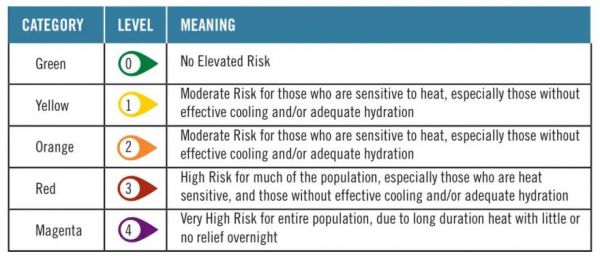
You might or might not be familiar with the warning scale the National Weather Service uses for high temperatures, but it's pretty intuitive. Green is for no danger, yellow and orange are cautionary, and red means danger, just like other scales (blue is reserved for cold weather). But the scale has been adjusted, as 2023 was the hottest year on record. In fact, the ten hottest years since temperature recordings began to be documented have all been in the last ten years.
With temperatures getting hotter every year, the NWS and the Centers for Disease Control (CDC) have instituted a new category of warning, and it's purple, or officially magenta. This category warns us of "rare and/or long-duration extreme heat with little to no overnight relief." This can pose a danger to anyone who doesn't have air conditioning. The weather service will make heat risk maps available for the entire US this year, instead of just the Western US as has been the case. As we go into the summer months, you may want to make a habit of paying attention to heat risk maps, plan your outside activities accordingly, and check on your neighbors when the occasion arises.
Most ordinary distance runners prefer water, but Tom Gilbey is anything but ordinary. He's an expert on wines put his knowledge to the test during the recent London Marathon. He hid two wine glasses in his belt and, at each mile maker, he guessed the identity of each wine given to him by colleagues.
Of the 25 wines, Gilbey got 7 completely correct, 14 mostly correctly, and 4 wrong by the metrics of year, origin, and type. The 52-year old tells BBC News that he didn't do any serious training for this event and hadn't run a marathon since 1996.
By committing to this extreme athleticism, he raised over £10,000 for a hospice. You can watch his compilation video of each stop here.
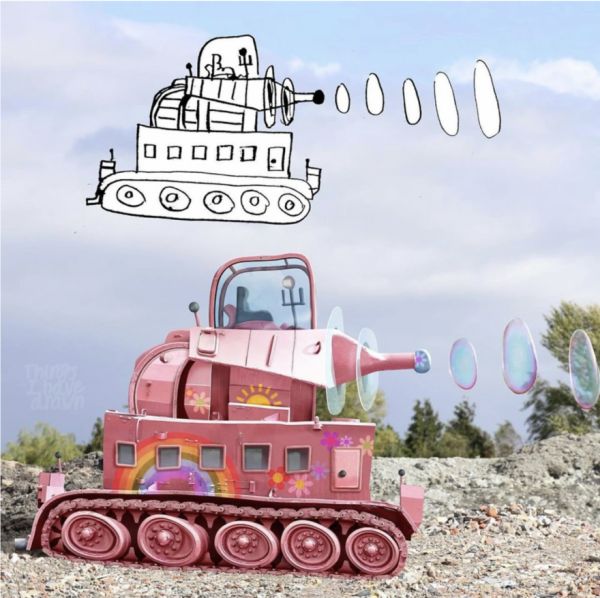
Tom Curtis admired the drawings his six-year-old son Dom drew, and rendered them as something akin to a photograph, by adding color, contours, and backgrounds. It was so much fun he began posting these art pieces at his site Things I Have Drawn, and soon Dom's little brother Al joined in. Eventually, other people started submitting their own children's drawings to be rendered. While Dom and Al are a little old for this sort of thing now, Tom is still mining their earlier art for the site, and turning other people's submissions into colorful renders.
Click on any of the pictures at the main website to bring up an entire category of pictures, or go to Instagram to see the latest artworks submitted by children from all over. Some are presented as humorous videos. You can buy many of these drawings as posters and other gifts. -via Nag on the Lake
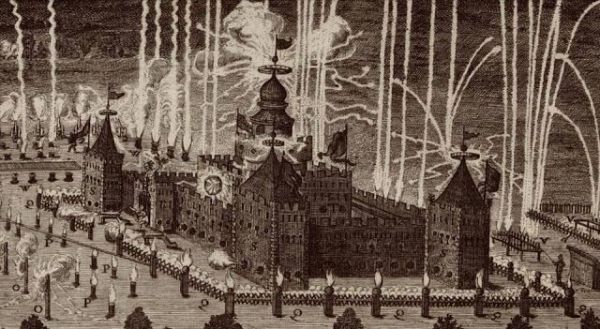
There are those who believe that the great architectural marvels of the past were not designed in their time, but are the remnants of a lost civilization called the Tartarian Empire. This theory is akin to that of ancient aliens, since no one in, say, ancient Egypt was smart enough to build the pyramids (fact check: they were). All the great technology that popped up in different parts of the earth were influenced by this empire, which was somewhere in Central Asia. But it was destroyed by the powers that came after it, and erased from history so that others could take the credit. In some versions of the conspiracy theory, Marco Polo was in on the suppression of the knowledge of Tartaria, and in others, Napoleon and the Russian Tsar made sure that Tartaria never made it into our history books.
The secret of the fictional Tartarian Empire is that they had harnessed the production of unlimited free energy. How they did this is lost to civilization, or was a secret kept so well no other nation knew about it, like Wakanda. While the theory arose in Russia in the 1970s, those who believe point to the 1915 World's Fair in San Francisco as proof of the existence of Tartaria. Read about this really weird conspiracy theory at Messy Nessy Chic.
B Unique Crew is an Indian dance crew with three dancers and one genuine contortionist. They achieved notoriety with this horror dance on the Indian competition TV show Hunarbaaz: Desh ki shaan (Pride of the Country) a few years ago. They are using modified traditional dance moves to illustrate a classic story that was retold in the horror comedy movie Bhool Bhulaiyaa, just in case you want to check out the plot. The dance is replete with scary moves from the one guy who can turn his head completely backwards, so be warned.
The judges were properly horrified, but the act didn't win. Since then, B Unique Crew has appeared on various version of the Got Talent franchise in different countries. See more of their dance routines at YouTube. If you dare. -via Digg
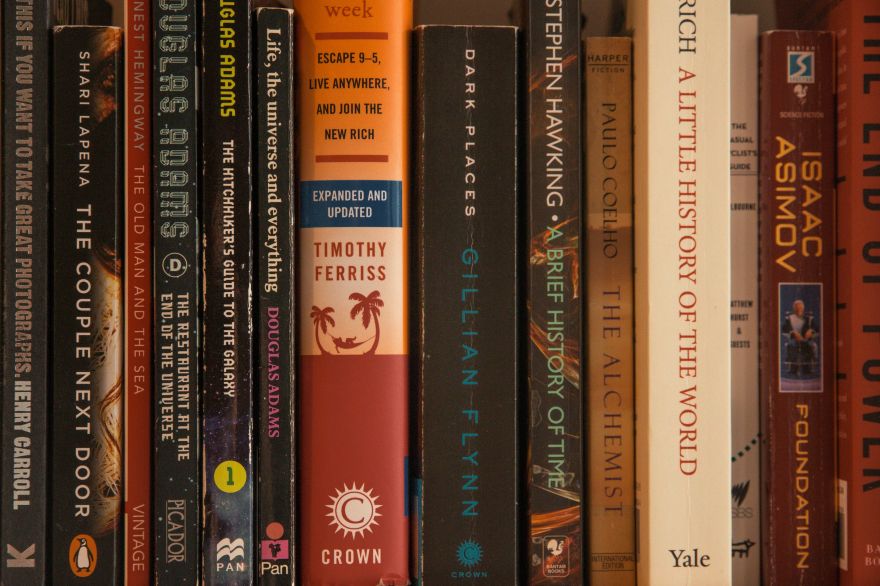
As I have said before, I love books, especially the physical copies of books. There are many factors that make a physical book different from a digital copy. There are the sensations: the smell of the pages, the texture of the paper, the art on the cover of the book. All of these contribute to why I prefer physical books over ebooks. But the publishing industry might not be long for this world.
Recently, the merger between Penguin Random House and Simon & Schuster was denied by the federal courts, otherwise the Big Five publishing houses would have become the Big Four. And there are several reasons why the publishing industry is struggling. But the major one is that nobody is buying books.
To be more specific, publishing houses aren't making much profit. Out of all the books that they publish each year, only a handful of books actually make a return on the investment. And only a select number of titles can be considered cash cows for these businesses. Not only that, but the growth of ebooks and digital distribution have made it even more difficult for traditional publishing houses to stay afloat.
It's a harsh reality to swallow, but for any aspiring writer, really the best option that they have is to build their own base of followers, and become independent. But that takes years of grueling hard work, and the payoff is uncertain. Since the whole publishing industry is dependent on whether titles will have demand in the market, it's oftentimes a complete gamble to even buy the rights to publishing a certain book.
And even titles that are expected to become bestsellers aren't always guaranteed that they're going to sell. It's a hit or miss, and according to many industry veterans, the hits often are just once every five years or so. Much of their profits come from franchise authors or celebrity books.
With the advent of Amazon, the whole ballgame has shifted. Publishing houses pay tons of money to Amazon to help improve their search results. But if Amazon were to start publishing books, or if authors with large fanbases decide to go independent, then that will be the end of publishing houses.
In fact, if a "Netflix" or "Spotify" for books is launched, then that will be the last nail in the coffin. It will truly be the death of the traditional publishing industry as we know it. - via Metafilter
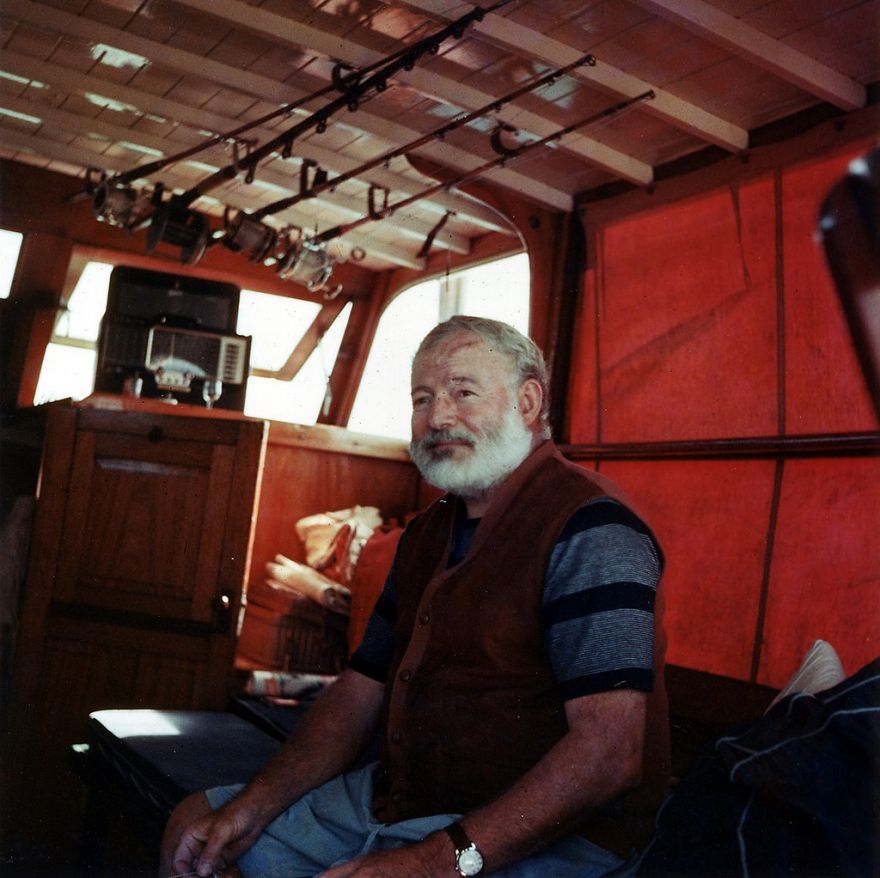
You have probably heard of Hemingway's famous six-word short story, which won him a $10 bet with his writer friends. The story goes that as he was hanging out at lunch with some of his friends at either The Algonquin or Luchow's, he bet them that he can write a short story in just six words.
He wrote the six words on a napkin: "For sale. Baby shoes. Never worn." And started passing around a napkin to collect his winnings. It's a legend that many writing teachers tell their students about how to write a good story. It has a beginning, a middle, and an end. The beauty and magic of it is that it engages the reader or the listener to participate in filling the gaps to the story.
Now, whether or not that actually happened may be slightly questionable, as the first instance that this story was told, was when it appeared in Peter Miller's book Get Published! Get Produced!: A Literary Agent's Tips on How to Sell Your Writing.
Before that, several versions of the story were already published, the earliest being in 1906, on a newspaper classified section titled "Terse Tales of the Town", and the story read, "For sale, baby carriage, never been used. Apply at this office."
Other versions of the story included those by William R. Kane in a 1917 essay, wherein he wrote, "Little Shoes, Never Worn." Roy K. Moulton also wrote about it and attributed the story to someone named Jerry, and his version was, "Baby carriage for sale, never used."
There were other mentions of the story, but in the end, Frederick A. Wright proved that there was no connection of the six-word story to Hemingway at all. Still, the legend most likely grew because of Hemingway's fame as a writer, and how anybody who heard the story would accept is a plausible anecdote, because Hemingway was just that good of a writer.
It all happened in 2018 when she saw an amazing bargain at the local thrift store, and she later realized that this bust was actually an ancient Roman one. So she went around emailing auction houses to see how much it would sell for.
Weeks later, the Head of Antiquities at Sotheby's in London replied to her saying confirming that it indeed was an ancient Roman bust, but that it was actually catalogued under the Bavarian State Antiquities Collection. Which meant that it was highly likely that the bust was stolen.
After the call, she contacted the Germans and the art history departments at the University of Texas to help her return the bust to its rightful owners. When the Germans got back to her, she found out that it was definitely stolen during WWII, when the Allied forces bombed Aschaffenburg where the bust was being kept. And perhaps one of the soldiers looted the bust, brought it home to the US, and kept it in their attic or basement for the next 70 or so years, before being sold to the local thrift shop.
Initially, her plan was to loan the bust to the San Antonio Museum. She had to convince the Bavarian state and the German federal government about the idea, and when everything was all approved, the pandemic happened, putting a halt to all of the plans she had thought of for the bust.
So, it stayed with her for the next four years until the San Antonio Museum was scheduled to pick it up. Then, as the date was nearing, she decided to take a picture with the bust. And that blew the floodgates wide open. The picture became viral online, and news outlets started picking up the story of how she found this stolen ancient bust at a thrift shop.
The rest of her story details how her life became so busy and hectic after it all went public, because of all the interviews, calls, and appearances that she had to do on TV about the bust. And that's Laura Young's happy little accident with the stolen ancient Roman bust at the Austin Goodwill thrift store.
The phrase has been used over and over in films, TV, and in daily life that there's no question as to the meaning of "Roger that." But how it all started will take us back to the 1920s, when radio became a more widespread means of communication.
These days, we have the NATO phonetic alphabet which helps us avoid miscommunication, because it adds clarity. Whenever one is asked to spell a word or a name, we turn to this alphabet to make sure that the listener at the other end understands which letters we are referring to.
But the history of this phonetic alphabet began with the International Telecommunication Union, who put out a list of the first global phonetic alphabet comprised of city names. However, even at that time, military organizations already had their own code words, and so when WWII broke out, they simply consolidated their phonetic alphabets so that it would be a lot easier for Allied units to understand each other.
The US military (Army and Navy) joined with the British forces to develop a standard phonetic alphabet which both parties will use for more fluid communication. And so, they came up with the Able Baker alphabet, which had used Roger for r, since it was one of the recommended intelligible options for r, along with robust, and Robert (the British military's preference).
During WWII, Roger became the shorthand for "received" and so it was understood to mean, "message received" despite what many now believe that it means an affirmative or a confirmation of some action.
Later on, the Able Baker alphabet would be revised by NATO to settle with what we now use as the standard for phonetics, with Romeo replacing Roger. But since soldiers have been using "Roger" since WWII, they continued to use that along with the meaning attached to it.
How "Roger" became more widespread can be attributed to broadcasts during the Apollo 8, 10, and 11 missions in which the communications between the astronauts and Houston often used the phrase "Roger" to mean "message received". And with around 1 billion people worldwide listening to Apollo 8's Christmas Eve message, and about 650 million people watched the Apollo 11 moon landing, "Roger" became understood by the wider population. - via Strange Company
Buoy tenders are ships that maintain buoys in harbors, lakes, rivers, and the open sea to serve as aids to navigation. The US Coast Guard maintains several classes of buoy tenders, which also provide maritime law enforcement and search and rescue services.
The men and women who serve on the buoy tenders take pride in fulfilling the challenges of their work. Slinging around the multi-ton steel buoys while maintaining and deploying them is physically demanding work. The coasties occasionally compete against each other in the key skills of buoy tending in the Buoy Tender Olympics.
Last August, the crews of seven buoy tenders competed to see who could straighten huge chains and drive red hot rivets the fastest, among other coastie sports.
Since university, I have had this curiosity about the concept of a person's individuality. That is, what makes us unique, and how our individual experiences shape our perspective, behavior, preferences, habits, values, and beliefs.
I have also wondered what it would be like to transfer one's consciousness into another person's body, to be able to experience and perceive the world through their lens. And how different their experience of reality is. But, of course, it's quite impossible to have any empirical means of examining that. However, there is this new study that might shed light on some other aspects about our physiology and anatomy, with respect to neuroscience and psychology.
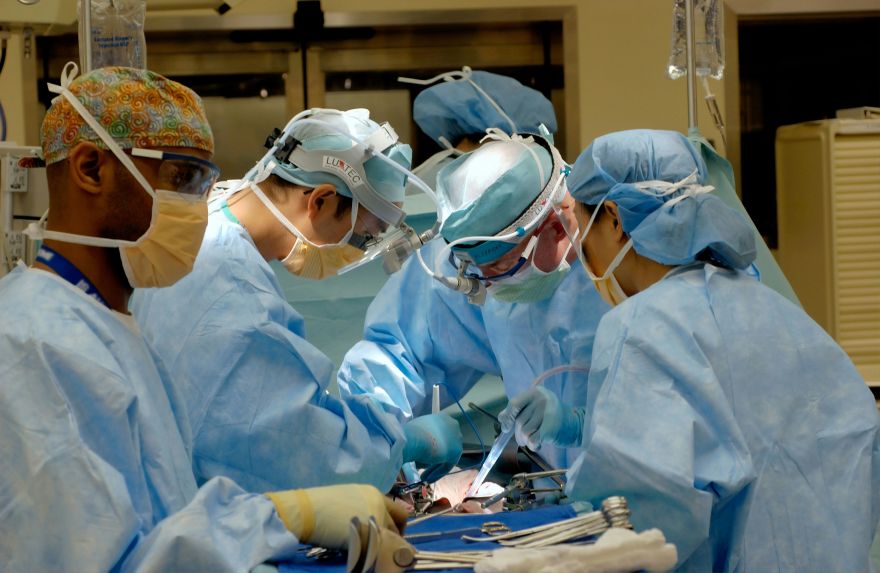
A paper has been recently published that details how organ transplant recipients have experienced personality changes after their surgeries. They recount how their preferences have changed, how they seemingly experience new memories, which apparently they describe as being attached to their donors own experiences, as well as having other changes like delirium and depression.
There were stories when recipients have dreams about their donors last moments of life, like one college professor who received a heart from a police officer who was fatally shot in the face. The professor reported having a dream similar to that moment wherein he saw a flash of light cruising toward his face and feeling his face get very hot.
Another story of a five-year-old boy, who received the heart of a three-year-old boy. Even though the recipient's family had no prior knowledge about the donor, the five-year-old boy mentioned naming his donor Timmy, who enjoyed Power Rangers, and had an accident falling down.
Coincidentally, the recipient's mother later found out that the donor fell from a window ledge as he was trying to reach for a Power Ranger toy. The name of the boy was Thomas, but his family called him Tim.
So there is this theory that our cells may have some form of storage of memories associated with our experiences. Others think that it's the electromagnetic field transfers information from the donor to the recipient. The neurons store these information through chemical neurotransmitters which then gets passed on during surgery.
Psychological theories suggest that these may be a coping mechanism that recipients have to process the transplant surgery or that they may be acting out certain fantasies regarding the donor and the organ. Whatever the case may be, organ transplants definitely change the lives of their recipients in more ways than one.
And in these cases, we just simply don't have enough data to understand the mechanisms behind the neurochemistry, psychology, and biochemical processes going on in our bodies. Further research may uncover more about the subject, but there are certain things that we may not have the technology yet to delve deeper. - via Strange Company
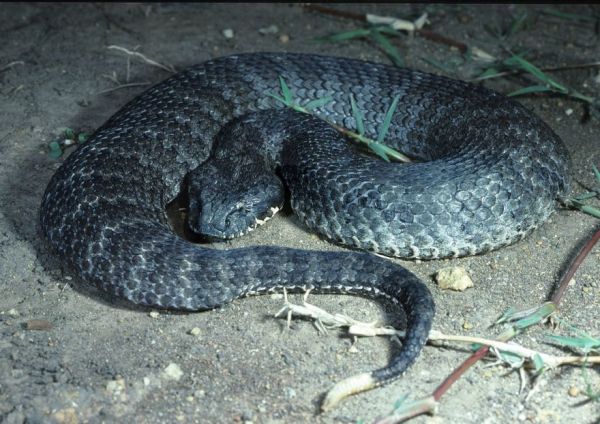
We think of Australians as a tough bunch, because it takes guts to live in a place with so many deadly animals, like snakes. It indeed requires a tough person to catch a snake right after it bit them. But hospitals in Queensland are asking that snake bite patients refrain from bringing those snakes into the hospital for identification. Live, venomous snakes in poorly-secured containers are unnecessary, and pose a danger to hospital staff and other people. Besides, trying to capture it risks you being bitten again. Yet people bring those snakes in more frequently than is comfortable.
It's true that Australia has many species of venomous snakes, but they also have polyvalent antivenom that works on bites from multiple Australian snake species. Hospital staff can tell what kind of snake bite you have by the bite marks and symptoms, much better than they can identify a snake. The same is true for emergency rooms in the US, although the CDC says it may help to take a photograph of the snake from a safe distance if you can. However, hospitals do not want to host the snake itself. -via Boing Boing