Double Falsehood or Distressed Lovers as it is also known is a play that Shakespeare scholar Lewis Theobald claimed to have discovered in 1727. He mounted a production of this allegedly lost script, though many of his contemporaries dismissed the play as a fraud. Now a modern Shakespeare scholar thinks that Theobald may have been correct:
Hammond argues that the language used in this play is highly indicative of Shakespeare's authorship. At the link you can read samples of the text.
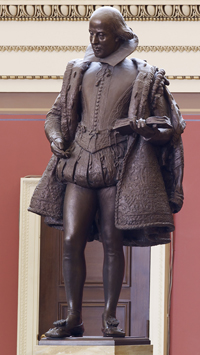
Link via Ace of Spades HQ | Photo: Carol Highsmith, Library of Congress.
The publication of the play, in fully annotated form, comes after a 10-year mission to crack a literary mystery by Professor Brean Hammond, of the University of Nottingham.
He is now convinced that the play originates from a collaboration between Britain's best-known playwright and Jacobean dramatist John Fletcher.
Fletcher went on to become of the most prolific and influential dramatists of his day. By the time of the early Restoration period in the late 1600s, his fame rivaled Shakespeare's.
Hammond argues that the language used in this play is highly indicative of Shakespeare's authorship. At the link you can read samples of the text.
Link via Ace of Spades HQ | Photo: Carol Highsmith, Library of Congress.
It hath parallel means
for to call out names
Correct form is Shakesper.
And to paraphrase Christopher Moore in Fool:
Silence, thou nameless tart. (King Lear rocks)